SystemProcess – a PUP which works on generating profit from numerous ads
SystemProcess - an ad-supported program which collects non-personal details.
SystemProcess is an adware-type program[1] which has the only purpose which is to overload your computer with numerous advertisements. While having this virus on the system, you can be interrupted by in-text ads, banner ads, pop-ups and similar content. SystemProcess PUP might affect various browsers including Google Chrome, Mozilla Firefox, Internet Explorer, and Microsoft Edge, so preventing content that it displays might become a serious issue. If you want to avoid such viruses, note that they can infiltrate your computer together with freeware and shareware as optional components. After modifying web browsers, they start producing various adverts due to redirect their victims to the required websites and then generate income for the program owners.
To continue, System Process virus relies on the pay-per-click method to generate income for its developers. Once clicked by a victim, a particular ad redirects him or her to a particular website what brings money to its owners. The more users click these ads, the more money is generated, so there is no surprise that sometimes your search queries are filled with numerous pop-ups.
Also, to know more about your searches and interests, PUP's developers can track your searches and collect various browsing-related information. Components that are typically collected are the most visited pages, saved bookmarks, computer's IP address, your email address and similar details that additionally are transferred to the program's servers.
If you don't want to put yourself at the risk of identity theft or malware infection, remove SystemProcess virus from your browsers. However, before you reset them to eliminate the infection, go to your Task Manager to uninstall all suspicious entries that you can't remember installing on your system. If you find this procedure too complicated, download FortectIntego.
Beware that wasting time and putting off the elimination might cause additional problems on your web browser. It cannot only start crashing down but can also be infiltrated by other viruses. So, you should better do not hesitate with the System Process removal which will make your computer clean again.
SystemProcess - adware which overloads the infected computer with various adverts due to gain revenue for the developers. Avoid ad-supported programs to keep your browsers safe
According to IT experts[2], all adware-type programs rely on the same distribution techniques. Usually, such PUPs come within various software bundles or come from dubious websites. That's why we highly recommend treating third-party sources with carefulness as they usually lack security. Furthermore, skipping thru installation steps can lead you to a huge risk of getting adware on your computer.
To prevent ad-supported software, you have to be very careful while browsing the web because there are lots of harmful programs hiding in various pages and links. If you ever encounter a suspicious-looking site – close it immediately. Try to use only original installers and download your software from trusted sites[3]. However, if you happen to find yourself on the secondary resource, opt for Custom or Advanced installation mode and look through all incoming downloads to opt-out the unwanted ones.
Last but not least, if you want to increase your security, you should consider downloading an antivirus program. Make sure it is always kept up-to-date to alert you about harmful components posing harm to your computer system.
Get rid of SystemProcess fast and without much effort
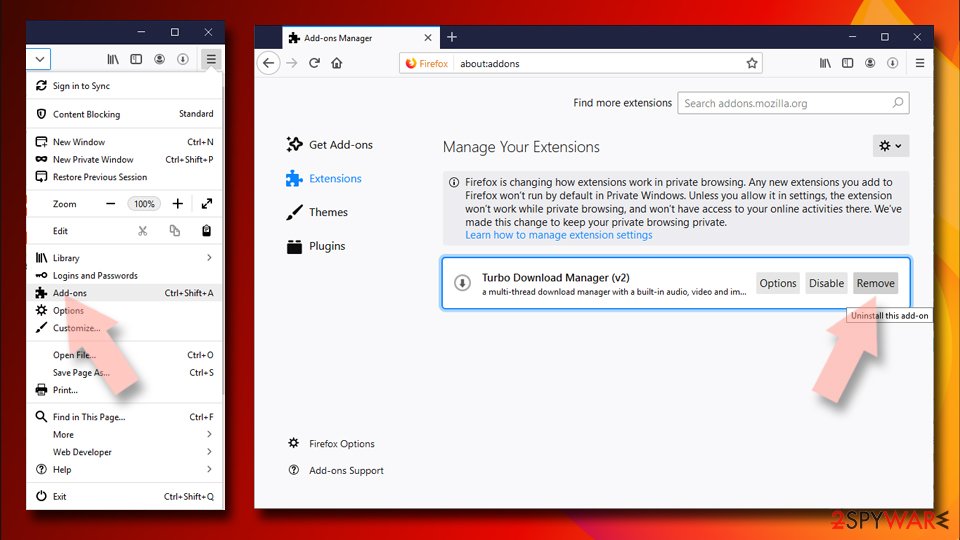
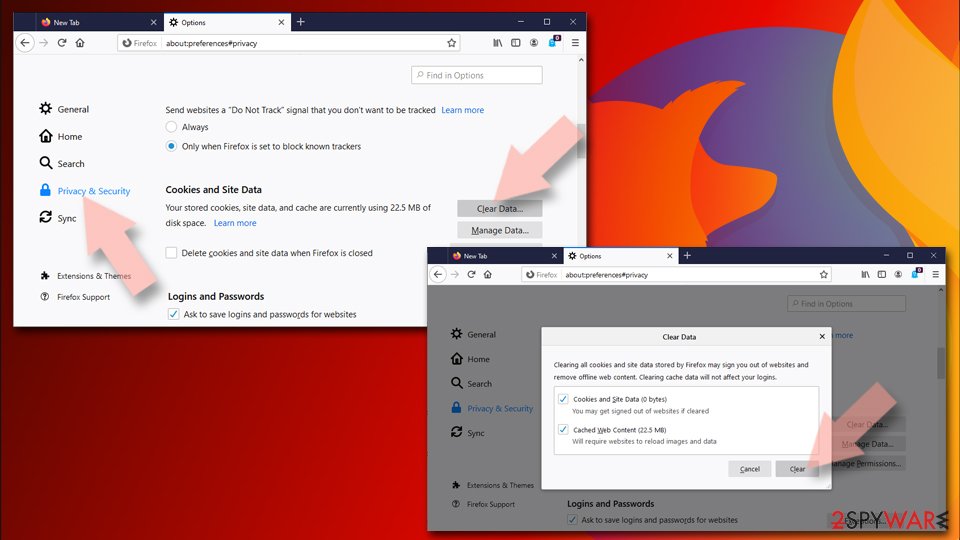
To remove SystemProcess virus from your PC system, you need to get rid of all unwanted browser extensions and related plug-ins. Once they are eliminated from your browsers (the virus can affect Google Chrome, Mozilla Firefox, Microsoft Edge, Safari, etc.), your PC will work like new again. Instructions for this manual removal method are displayed below.
If you want to perform SystemProcess removal which takes only just a few minutes, use anti-malware tool. After the cyberthreat is eliminated from the system, take care of system backups and reset your infected web browsers to ensure that no harmful content is left on your machine.
You may remove virus damage with a help of FortectIntego. SpyHunter 5Combo Cleaner and Malwarebytes are recommended to detect potentially unwanted programs and viruses with all their files and registry entries that are related to them.
Compatible with Microsoft Windows
Compatible with macOS
What to do if failed?
If you failed to fix virus damage using Fortect Intego, submit a question to our support team and provide as much details as possible.
Fortect Intego has a free limited scanner. Fortect Intego offers more through scan when you purchase its full version. When free scanner detects issues, you can fix them using free manual repairs or you can decide to purchase the full version in order to fix them automatically.
If you got an adware infection on your Windows operating system, follow this guide to get rid of SystemProcess adware:
Click Start → Control Panel → Programs and Features (if you are Windows XP user, click on Add/Remove Programs).
If you are Windows 10 / Windows 8 user, then right-click in the lower left corner of the screen. Once Quick Access Menu shows up, select Control Panel and Uninstall a Program.
Uninstall SystemProcess and related programs
Here, look for SystemProcess or any other recently installed suspicious programs.
Uninstall them and click OK to save these changes.
If you are using OS X, click Go button at the top left of the screen and select Applications.
Wait until you see Applications folder and look for SystemProcess or any other suspicious programs on it. Now right click on every of such entries and select Move to Trash.
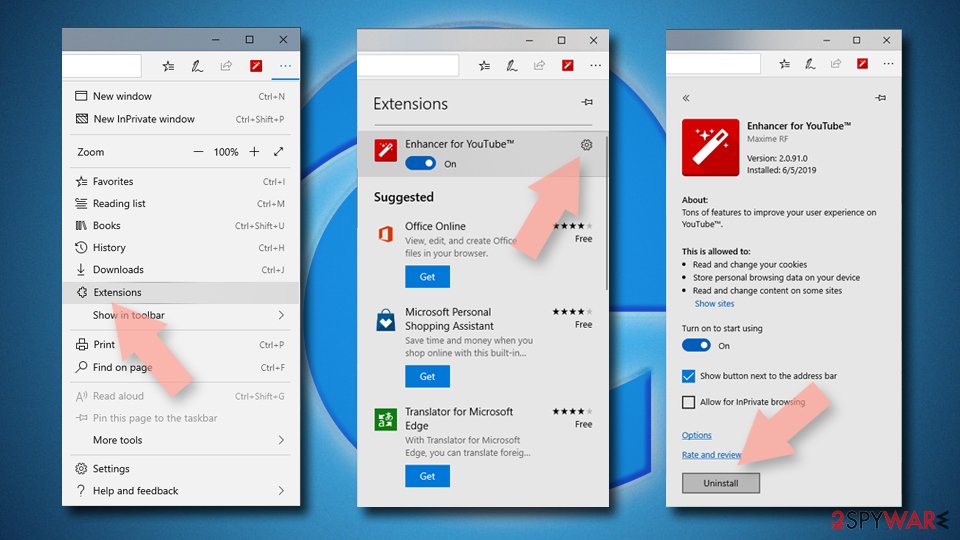
Select Menu (three horizontal dots at the top-right of the browser window) and pick Extensions.
From the list, pick the extension and click on the Gear icon.
Click Remove.
Clear cookies and other browser data:
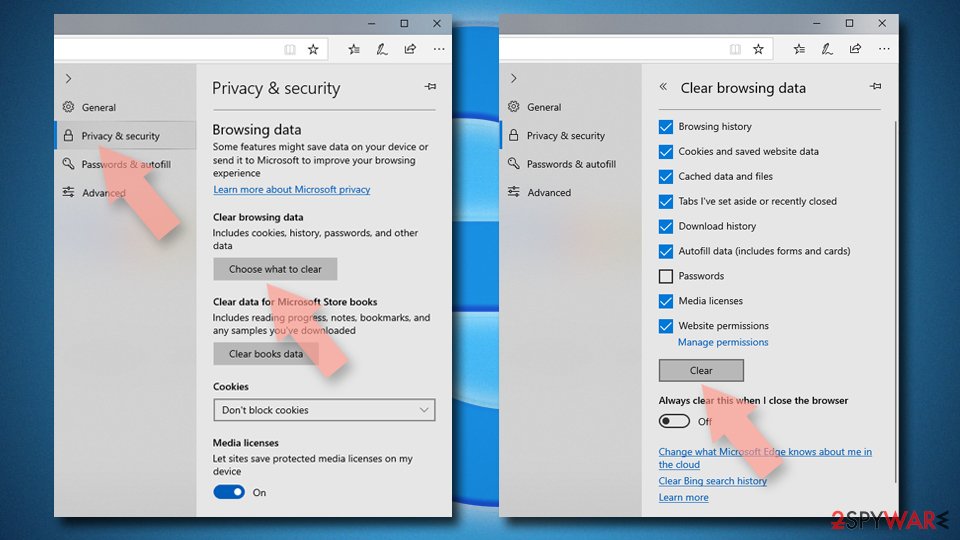
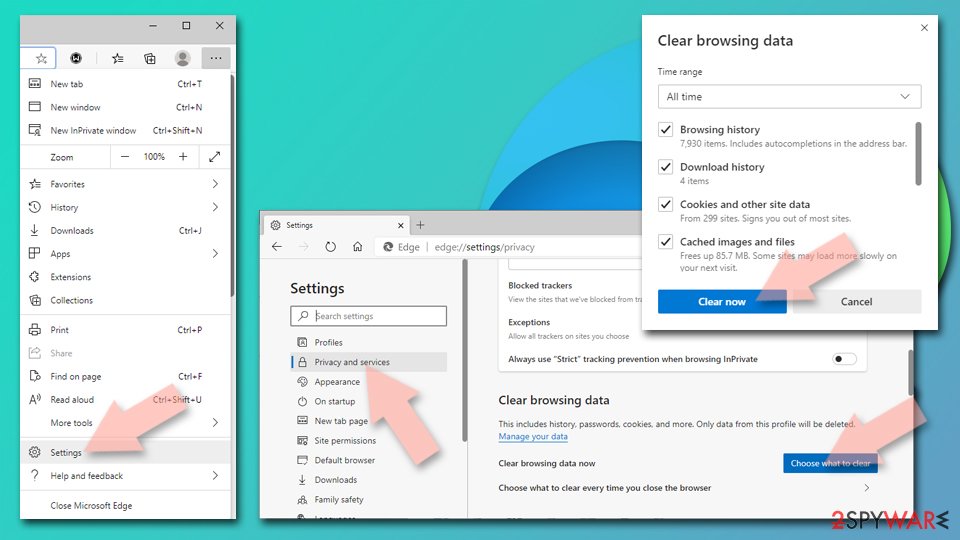
Click on the Menu (three horizontal dots at the top-right of the browser window) and select Settings > Privacy, search, and services..
Under Clear browsing data, pick Choose what to clear.
Select Cookies and other site data and Cached images and files. (apart from passwords, although you might want to include Media licenses as well, if applicable) and click on Clear.
Restore new tab and homepage settings:
Click the menu icon and choose Settings.
Then find On startup section.
Click Remove next to any suspicious startup page.
Reset MS Edge if the above steps did not work:
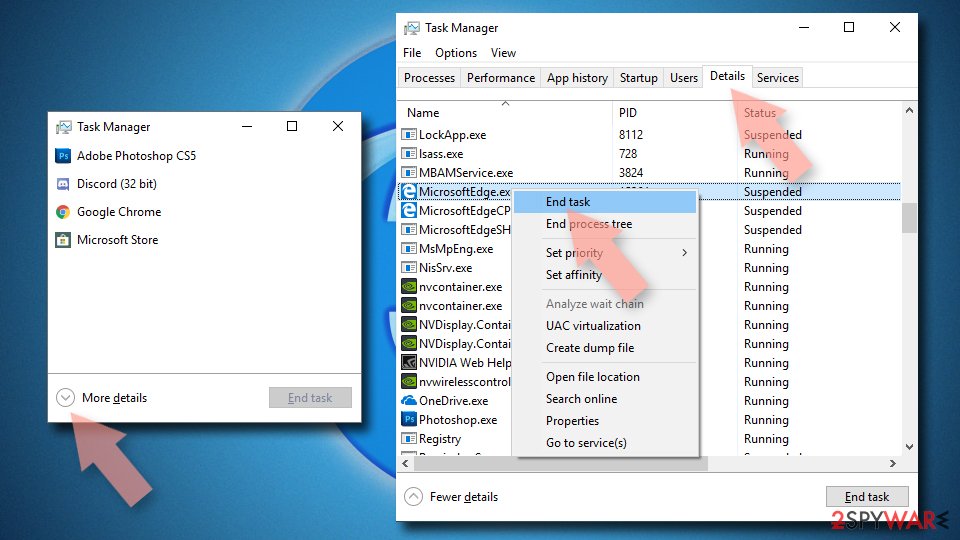
Press on Ctrl + Shift + Esc to open Task Manager.
Click on More details arrow at the bottom of the window.
Select Details tab.
Now scroll down and locate every entry with Microsoft Edge name in it. Right-click on each of them and select End Task to stop MS Edge from running.
Instructions for Chromium-based Edge
Delete extensions from MS Edge (Chromium):
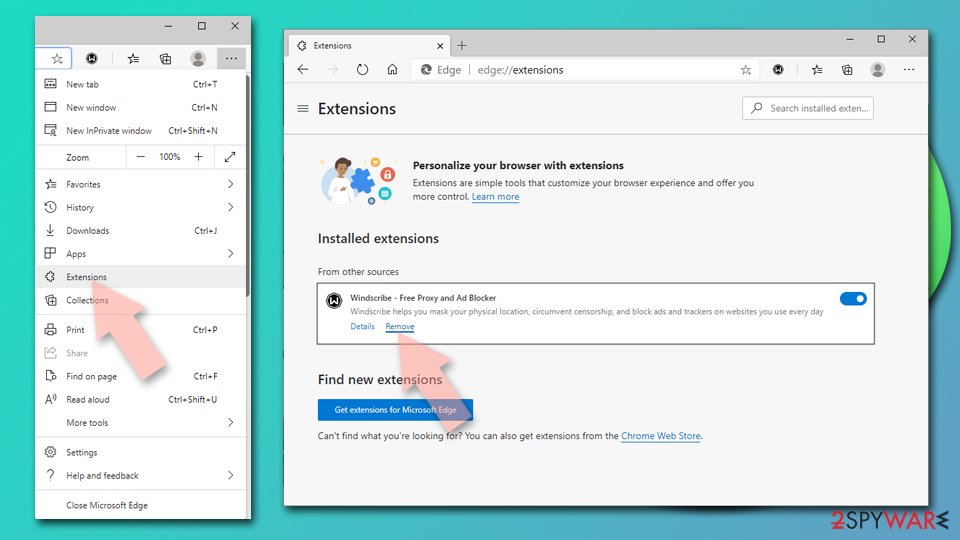
Open Edge and click select Settings > Extensions.
Delete unwanted extensions by clicking Remove.
Clear cache and site data:
Click on Menu and go to Settings.
Select Privacy, search and services.
Under Clear browsing data, pick Choose what to clear.
Under Time range, pick All time.
Select Clear now.
Reset Chromium-based MS Edge:
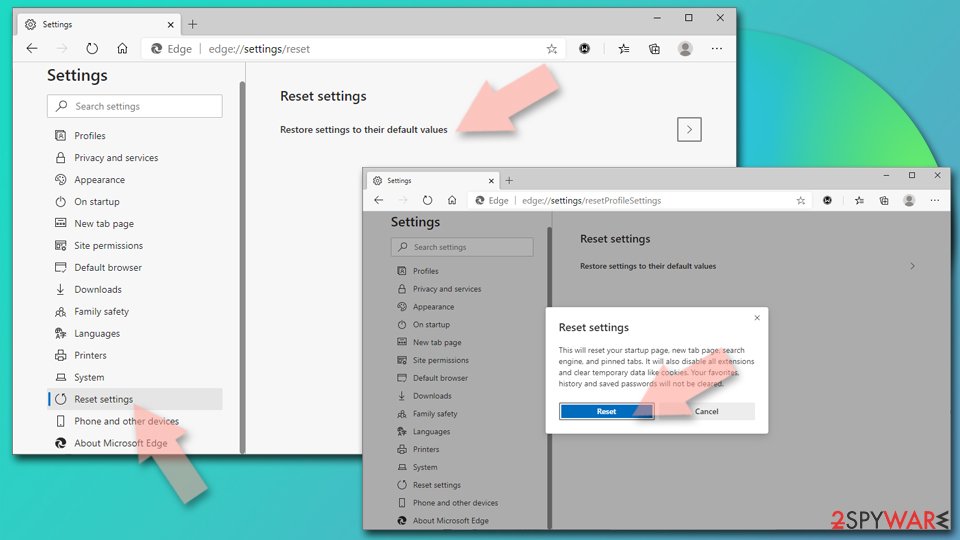
Click on Menu and select Settings.
On the left side, pick Reset settings.
Select Restore settings to their default values.
Confirm with Reset.
This will disable extensions and reset startup pages but will not delete bookmarks, saved passwords, or browsing history.
Look through the following steps to get rid of the ad-supported program:
Delete malicious extensions from Google Chrome:
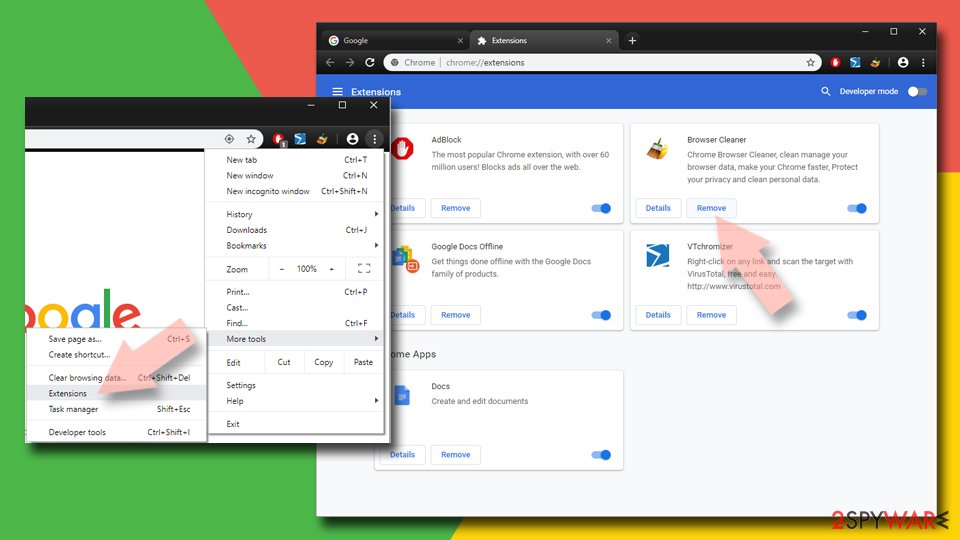
Open Google Chrome, click on the Menu (three vertical dots at the top-right corner) and select More tools > Extensions.
In the newly opened window, you will see all the installed extensions. Uninstall all suspicious extensions related to the unwanted program by clicking Remove.
Clear cache and web data from Chrome:
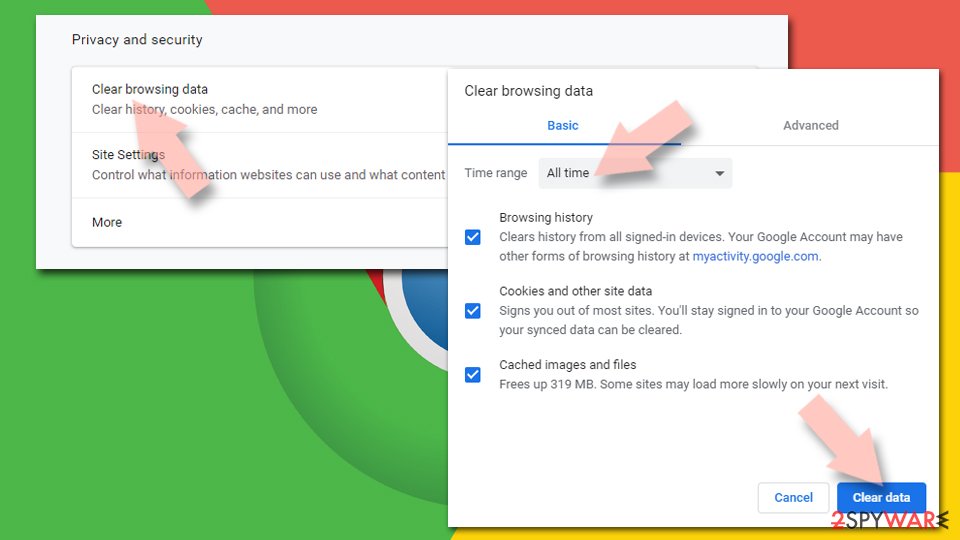
Click on Menu and pick Settings.
Under Privacy and security, select Clear browsing data.
Select Browsing history, Cookies and other site data, as well as Cached images and files.
Click Clear data.
Change your homepage:
Click menu and choose Settings.
Look for a suspicious site in the On startup section.
Click on Open a specific or set of pages and click on three dots to find the Remove option.
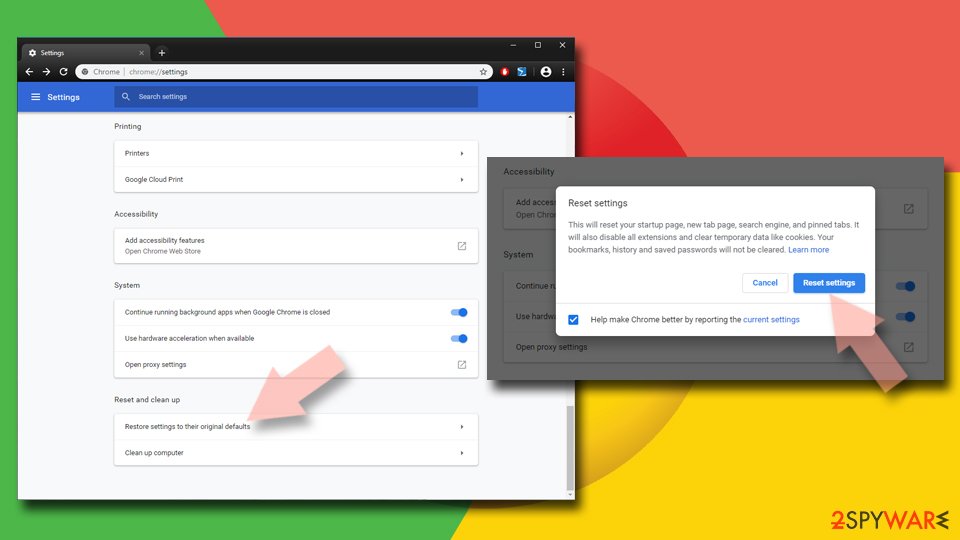
Reset Google Chrome:
If the previous methods did not help you, reset Google Chrome to eliminate all the unwanted components:
Click on Menu and select Settings.
In the Settings, scroll down and click Advanced.
Scroll down and locate Reset and clean up section.
Now click Restore settings to their original defaults.
Remove dangerous extensions
Open Safari web browser and click on Safari in menu at the top left of the screen. Once you do this, select Preferences.
Here, select Extensions and look for SystemProcess or other suspicious entries. Click on the Uninstall button to get rid each of them.
Reset Safari
Open Safari browser and click on Safari in menu section at the top left of the screen. Here, select Reset Safari....
Now you will see a detailed dialog window filled with reset options. All of those options are usually checked, but you can specify which of them you want to reset. Click the Reset button to complete SystemProcess removal process.
After uninstalling this potentially unwanted program (PUP) and fixing each of your web browsers, we recommend you to scan your PC system with a reputable anti-spyware. This will help you to get rid of SystemProcess registry traces and will also identify related parasites or possible malware infections on your computer. For that you can use our top-rated malware remover: FortectIntego, SpyHunter 5Combo Cleaner or Malwarebytes.
How to prevent from getting adware
Access your website securely from any location
When you work on the domain, site, blog, or different project that requires constant management, content creation, or coding, you may need to connect to the server and content management service more often. The best solution for creating a tighter network could be a dedicated/fixed IP address.
If you make your IP address static and set to your device, you can connect to the CMS from any location and do not create any additional issues for the server or network manager that needs to monitor connections and activities. VPN software providers like Private Internet Access can help you with such settings and offer the option to control the online reputation and manage projects easily from any part of the world.
Recover files after data-affecting malware attacks
While much of the data can be accidentally deleted due to various reasons, malware is one of the main culprits that can cause loss of pictures, documents, videos, and other important files. More serious malware infections lead to significant data loss when your documents, system files, and images get encrypted. In particular, ransomware is is a type of malware that focuses on such functions, so your files become useless without an ability to access them.
Even though there is little to no possibility to recover after file-locking threats, some applications have features for data recovery in the system. In some cases, Data Recovery Pro can also help to recover at least some portion of your data after data-locking virus infection or general cyber infection.
If this free guide helped you and you are satisfied with our service, please consider making a donation to keep this service alive. Even a smallest amount will be appreciated.