

Quick review of grand_car@aol.com virus
Get prepared for a recent grand_car@aol.com virus. Unfortunately, this malware joined the ranks of file-encrypting viruses. In comparison with other newbies, this file-encrypting malware does not stand out much. It is known that it employs common AES encryption code to lock out users‘ data. Due to certain features, the virus is suspected to have links with such cyber aggressors as .xtbl and Troldesh viruses. In any case, the sooner you start Grand_car@aol.com removal the better. Though the security program does not decode the files, it secures your system from this threat. Delaying the elimination might result in the lock-out of all files and cause a system wreckage. Remove Grand_car@aol.com with the help of security program, such as FortectIntego.
The virus has been granted quite an ordinary AES-128 encryption method to conduct its misdeeds. Despite the popularity of this encryption technique, locating the files corrupted by the ransomware is not an easy task to do. The virus may infiltrate the system in various ways: spam emails or using exploit kits. After the infiltration process is completed, the ransomware takes some time to locate the important files. By executing the special command, Grand_car AOL virus might delete volume shadow copies. Thus, it is necessary to remove the threat before it starts deleting the copies of your files. After the encryption is finished, the threat will open its ransom note indicating the instructions to recover the files. The virus delivers grand_car@aol.com address for the victims. They are supposed to send their Bitcoin wallets with the unique ID numbers. Do not consider paying the money as you may lose the money and fail to recover the files.
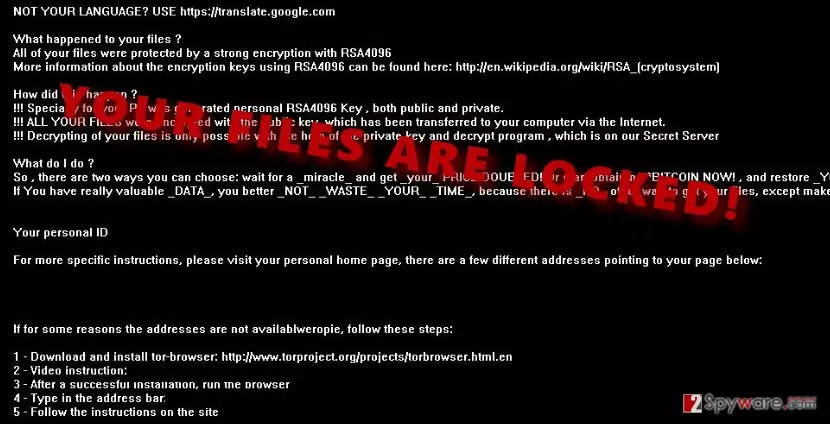
Regarding the encryption code and the email address, there are speculations that the threat might be the creation of the same hackers which published green_ray or gerkaman@aol.com ransomware threats. It seems that, after having a short break, they are now back in business. Speaking of the technical features, grand_car@aol.com malware executes %SystemDrive%\Users\Administrator\AppData\Roaming\Microsoft\Windows\Start Menu\Programs\Startup\Payload.exe. Due to it, it is able to renew its operation after each computer restart. Indeed, the threat may look menacing, but there is a way to get rid of it. Before we move on the elimination section, finding out about the distribution options is of crucial importance.
How does the threat occupy PCs?
Grand_car@aol.com ransomware mainly uses spam email to sneak into the computer to get access to personal files. There has been a rise in tech support scams so you should remain extremely cautious when you receive a spam email addressed to you. Do not let your guard down when receiving a customs declaration form or the email which supposedly informs of the delivery. There have been numerous cases when users recklessly opened the attachment only to find out the ransomware within it.
While you might escape the possible damage by evading to open spam emails, it is not possible to deal with exploit kits manually. They often function as trojans which are able to pass themselves as legitimate files. Thus, only a security application can detect and terminate them.
Grand_car@aol.com removal steps
Eliminating grand_car@aol.com virus should be taken with care. The virus is surely not a minor threat to mingle with. Thus, we recommend automatic elimination method. Install FortectIntego or SpyHunterCombo Cleaner to start grand_car@aol.com removal. The security program will remove the threat effectively. As for the decryption of the files, you might try employing data recovery programs or one of the free decryptors to recover the files. Though they are created for further viruses, as this malware is related to the aforementioned .xtbl virus, there might be a chance. Remember that the decryption should be started only after you remove grand_car@aol.com.
Was this guide helpful?
5 comments