

Things you should learn about RozaLocker ransomware virus:
RozaLocker ransomware virus is a crypto-ransomware [1], in other words, it is a parasite which uses sophisticated encryption to render files unreadable. The hackers may use AES, RSA or any other encryption algorithms [2] to achieve this purpose. When the encryption is done, there is virtually no way to roll the changes back since such code cannot be decrypted without a special key. Luckily, the virus developers don’t leave their victims completely clueless and offer a way to decrypt the files. Hackers ask for a ransom and promise to spare victims the decryption key as soon as the money is transferred to an indicated account, most likely, a Bitcoin wallet. Nevertheless, the collaboration with criminals may not turn out the way you expect. The decryption key that the hackers send may be useless or deliver some additional malware [3] on your computer, this way, damaging your system even more than it already is. RozaLocker removal, however, can help prevent such consequences. Just make sure you use proper tools to eliminate the virus from the computer. FortectIntego is a reliable anti-malware solution you can go for.
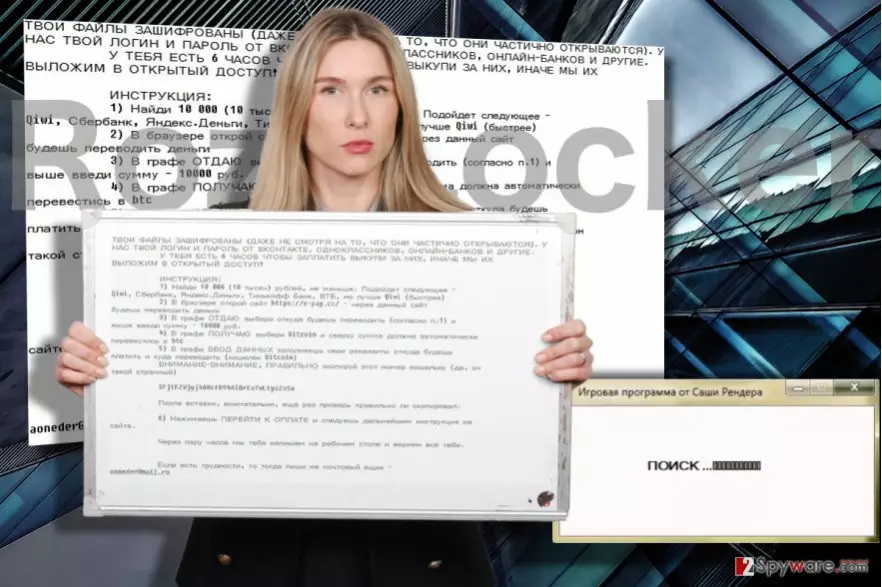
An interesting thing about RozaLocker virus is that it speaks to the users in Russian which suggests that either the virus originates from Russia, or is created to target Russian-speaking users. This should not be surprising knowing that this particular country is famous for its especially proficient hackers [4]. Besides, the hackers also use mail.ru email provider to communicate with their victims. You must send an email to aoneder@mail.ru in order to get started with the data decryption. You will be able to see what files have been affected by the virus by looking at their filenames — the encrypted files will feature .ENC extensions appended at the end. This way, the hackers allow you to evaluate the scale of the attack better and convince you into paying the 10.000 Ruble ransom (around 169 USD). On our behalf, we strongly recommend to refuse making any transactions and remove RozaLocker from the infected computer instead. There is no need to put your system at greater risk.
What are the ransomware distribution approaches?
While RozaLocker is still a new virus, experts are still learning about the ways this virus works. The same goes for its distribution. While the actual strategies of its distribution have not been disclosed, it can be presumed that ransomware developers have been following the typical trends of this category [5]. Usually, ransomware is delivered to the computers via spam emails, hoping that the users would download the attached files and infect their computers themselves. In other cases, ransomware script may be imbedded within the random software update download links or ads. So, the victims may get infected with RozaLocker just by clicking these links.
Where to get started with RozaLocker removal?
If you are dealing with ransomware for the first time, you should have one thing in mind — you must use legal and reliable tools to remove RozaLocker virus from your computer. Otherwise, some of the virus files may remain on the device and continue messing with your system and encrypting newly created files. Most importantly, do not attempt taking on RozaLocker removal yourself. The virus is very complex, and we are certain that its creators do their best to make it difficult to get rid of. It is best to rely on automatic tools that will help you with the removal.
Was this guide helpful?
Be the first to comment