

SparkleBox Toolbar – a browser hijacker related to Conduit
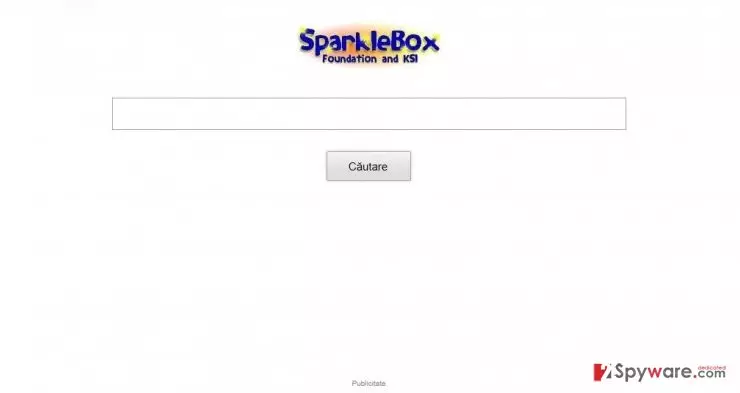
SparkeBox Toolbar is categorized as a browser hijacker that may take overall most popular web browsers, including Google Chrome, Mozilla Firefox, and Internet Explorer, change their settings and may provide you with altered search results. Possibly the most notable trait of this potentially unwanted software is that it changes the homepage to search.conduit.com – a prominent PUP that infected thousands of users worldwide.
While there is no need to panic after seeing sudden browser changes, you should definitely be concerned. Such toolbars are rarely useful for end-users, as they focus on one aspect of the operation the most – delivery of ads. So, if you want an ad-free experience, delete this plugin as soon as possible.
| Name | SparkeBox Toolbar |
| Type | Browser hijacker |
| Symptoms | Unknown extension installed on the browser; all searchers are redirected to a different provider; homepage and new tab URL altered |
| Distribution | Software bundling |
| Elimination | Scan your device with anti-malware and clean your web browsers accordingly |
| System fix | Malware or PUPs might sometimes damage Windows system files, resulting in instability issues. If that is the case for you, use FortectIntego to remediate your OS quickly |
The main reason why this tool is categorized as a potentially unwanted program (PUP) is because of its distribution method – it usually spreads in a bundle with various software, such as:
- download managers
- system optimizers
- PDF converters, etc.
Once inside, it adds the SparkleBox Community toolbar and sets the default search engine to Customized Web Search. At first, you may look like it's your typical engine that shows you results.
Unfortunately, we do not recommend using it because it may deliver search results filled with various sponsored links and advertisements. In fact, this add-on is used to generate revenue by driving visitor's traffic to third-party websites. As a result, not only your browsing may be disrupted, but also you may be redirected to unsafe websites with questionable content.
Be aware that you may be exposed to various advertisements, pop-up notifications, fake software update notifications that may try to trick you into downloading various suspicious programs on your computer.
Besides, information tracking is another unwanted trait of this browsing tool – it monitors users' online behavior, specifically investigates search queries and websites visited in order to complement search results with relevant commercial advertisements.
Do not fall into clicking on them no matter how appealing they may seem because it's just another trick that redirects you to questionable websites. Due to these suspicious activities that the SparkleBox Toolbar virus implements behind the user's back, we highly recommend removing this plug-in and use a more reliable search engine instead.
Third party software often comes bundled with PUPs
This browser hijacker typically travels along with various freeware and sharewares. At the moment of writing, it is known that it is mainly bundled with VAF Player. Of course, there are plenty of other programs that may carry the app, so be aware of that next time you download an application from a third-party source.
To avoid bundled downloads, you should be very careful when installing free programs. Before doing so, it is recommended to make a small research about your needed program by reading End-User License Agreement, Privacy Policy and comments of other users.
Moreover, instead of Quick or Basic installation always selects Advanced or Custom option because it discloses all available check boxes. If you see a check box that offers to 'Set XXX as a default search engine' or to 'Set XXX as a default homepage', do not accept it because otherwise you will allow to install a potentially unwanted program and experience suspicious activities on your computer later on.
SparkleBox Elimination steps explained
We always recommend removing potentially unwanted programs with a reputable anti-spyware because it will easily find all app components along with their registry files and will remove them automatically.
If you don't want to use additional software, you can find manual removal guidelines below. Keep in mind that cleaning web browsers is an absolute must when dealing with a hijacker. While at it, make sure your delete all the extensions that you have not installed yourself.
Uninstall from Windows
Uninstall from Windows 10/8:
- Type Control Panel into the Windows search box and open the result.
- Under Programs, select Uninstall a program.


Uninstall from Windows 7/XP:
- Click on Windows Start > Control Panel (Windows XP users should click on Add/Remove Programs).
- In Control Panel, select Programs > Uninstall a program.


Remove the unwanted program:
- In the Programs and Features window, look for any recently installed suspicious entries, select them, and click Uninstall.
- If User Account Control appears, click Yes to confirm, then complete the removal.


Delete from macOS
Remove the unwanted application:
- From the menu bar, select Go > Applications.
- In the Applications folder, look for any suspicious entries, then drag them to Trash (or right-click and pick Move to Trash).


Delete leftover files and folders:
- Select Go > Go to Folder.
- Enter /Library/Application Support and remove any suspicious folders related to the unwanted program.
- Repeat the same check in the /Library/LaunchAgents and /Library/LaunchDaemons folders, deleting any suspicious entries.

- Finally, empty the Trash to permanently remove the leftovers.

Remove from Microsoft Edge
Delete unwanted extensions from MS Edge:
- Select Menu (three horizontal dots at the top-right of the browser window) and pick Extensions.
- From the list, pick the extension and click on the Gear icon.
- Click Remove.


Clear cookies and other browser data:
- Click on the Menu (three horizontal dots at the top-right of the browser window) and select Settings > Privacy, search, and services..
- Under Clear browsing data, pick Choose what to clear.
- Select Cookies and other site data and Cached images and files. (apart from passwords, although you might want to include Media licenses as well, if applicable) and click on Clear.


Restore new tab and homepage settings:
- Click the menu icon and choose Settings.
- Then find On startup section.
- Click Remove next to any suspicious startup page.
Reset MS Edge if the above steps did not work:
- Press on Ctrl + Shift + Esc to open Task Manager.
- Click on More details arrow at the bottom of the window.
- Select Details tab.
- Now scroll down and locate every entry with Microsoft Edge name in it. Right-click on each of them and select End Task to stop MS Edge from running.


Instructions for Chromium-based Edge
Delete extensions from MS Edge (Chromium):
- Open Edge and click select Settings > Extensions.
- Delete unwanted extensions by clicking Remove.


Clear cache and site data:
- Click on Menu and go to Settings.
- Select Privacy, search and services.
- Under Clear browsing data, pick Choose what to clear.
- Under Time range, pick All time.
- Select Clear now.


Reset Chromium-based MS Edge:
- Click on Menu and select Settings.
- On the left side, pick Reset settings.
- Select Restore settings to their default values.
- Confirm with Reset.
- This will disable extensions and reset startup pages but will not delete bookmarks, saved passwords, or browsing history.


Remove from Mozilla Firefox (FF)
Remove dangerous extensions:
- Open Mozilla Firefox browser and click on the Menu (three horizontal lines at the top-right of the window).
- Select Add-ons.
- In here, select the unwanted extension and click Remove.


Reset the homepage:
- Click three horizontal lines at the top right corner to open the menu.
- Choose Settings.
- Under Home, set your preferred homepage and new tab settings.
Clear cookies and site data:
- Click Menu and pick Settings.
- Go to Privacy & Security section.
- Scroll down to locate Cookies and Site Data.
- Click on Clear Data...
- Select Cookies and Site Data and Temporary cached files and pages, then click Clear.


Reset Mozilla Firefox
If clearing the browser as explained above did not help, reset Mozilla Firefox:
- Open Mozilla Firefox browser and click the Menu.
- Go to Help and then choose Troubleshooting Information.

- Under Give Firefox a tune up section, click on Refresh Firefox...
- Once the pop-up shows up, confirm the action by pressing on Refresh Firefox.



Remove from Google Chrome
Delete malicious extensions from Google Chrome:
- Open Google Chrome, click on the Menu (three vertical dots at the top-right corner) and select More tools > Extensions.
- In the newly opened window, you will see all the installed extensions. Uninstall all suspicious extensions related to the unwanted program by clicking Remove.


Clear cache and web data from Chrome:
- Click on Menu and pick Settings.
- Under Privacy and security, select Clear browsing data.
- Select Browsing history, Cookies and other site data, as well as Cached images and files.
- Click Clear data.


Change your homepage:
- Click menu and choose Settings.
- Look for a suspicious site in the On startup section.
- Click on Open a specific or set of pages and click on three dots to find the Remove option.
Reset Google Chrome:
If the previous methods did not help you, reset Google Chrome to eliminate all the unwanted components:
- Click on Menu and select Settings.
- In the Settings, scroll down and click Advanced.
- Scroll down and locate Reset and clean up section.
- Now click Restore settings to their original defaults.
- Confirm with Reset settings.


Delete from Safari
Remove dangerous extensions:
- Open Safari, click Safari in the menu at the top-left of the screen, and select Preferences.
- Go to the Extensions tab, look for any suspicious entries, and click Uninstall to remove them.


Clear history and website data:
- Click Safari in the menu and pick Clear History.
- Set Clear to all history and confirm with Clear History.


Reset Safari:
- Click Safari in the menu and select Preferences > Advanced.
- Enable Show Develop menu in menu bar.
- From the menu bar, click Develop and select Empty Caches.


Was this guide helpful?
Be the first to comment