

Wholehotposts.com ads show malicious ads on your desktop without consent

Wholehotposts.com is a questionable website that individuals may come across while surfing the web on popular browsers such as Google Chrome or Mozilla Firefox. The site is designed to exploit users through a misleading strategy, aiming to profit from unsolicited advertisements. These ads are cleverly designed to appear over any content being viewed, ensuring they are not missed. The site employs sophisticated social engineering tactics to trick users into enabling push notifications.
The push notifications from Wholehotposts.com represent a significant risk to user privacy and online security. These notifications frequently bombard users with content that could be harmful, thereby increasing the difficulty of avoiding surveillance by these operators. Additionally, they often carry deceptive offers.
For example, users might receive notifications suggesting they have won a valuable prize, urging them to divulge personal information such as their address to claim it. This inadvertently gives cybercriminals access to private data. In some cases, users may be lured into downloading malicious software or other unwanted programs.
| Name | Wholehotposts.com |
| Type | Push notifications, ads, pop-ups, scam |
| Distribution | When the user clicks Allow in the push notification, the website has immediate access to send push notifications |
| Symptoms | Notifications show up at the bottom-right corner of the screen – these include fraudulent content and links to potentially dangerous websites |
| Risks | The ads shown within push notifications might include misleading messages and links to malicious websites. If clicked, you might end up infecting your system with malware, disclosing your personal information, or losing money |
| Removal | You can stop unwanted notifications by accessing web browser settings. If you suspect adware infection, you should use SpyHunterCombo Cleaner security software to get rid of it |
| Tips | Remove caches and other web data after eliminating adware to prevent data tracking with the FortectIntego repair and maintenance utility. You can also repair damaged system components using it |
Scammers use cheap tricks to mislead users
Cybercriminals use various techniques to trick users into accepting unwanted push notifications from Wholehotposts.com. It might seem counterintuitive for anyone to willingly disrupt their online experience with intrusive ads that appear out of nowhere. Yet, scammers have developed a cheap strategy to make this happen.
This usually begins with an unexpected redirect from another site, initiated by clicking on a malicious link or encountering a dangerous script. These abrupt redirects are highly effective for phishing, as the sudden switch can catch individuals off guard, increasing the likelihood of accidental missteps.
Upon being redirected to Wholehotposts.com, users are met with messages that appear harmless and familiar, mimicking legitimate online prompts. These messages could take various forms, including fake captcha verifications, age confirmation requests, or prompts suggesting technical requirements:
- Press “Allow” to verify, that you are not a robot.
- If you are 18+, click Allow.
- Please tap Allow to continue.
- Click “Allow” to start downloading.
- Can't play this video! Perhaps your browser doesn't allow video playback. Please click the Allow button to watch the video.
- Click “Allow” to win a prize and get it in our shop!
These deceptive messages cleverly disguise the true purpose behind the “Allow” button, suggesting it's necessary for functionality such as video streaming, robot verification bypass, or accessing special content. Regardless of the user's choice to “Allow” or “Block,” they are often led to another webpage employing similar deceitful tactics. Engaging with these prompts by consenting to push notifications results in an onslaught of further unwanted advertisements.

What can happen if you accept the request?
Push notifications, when coming from reputable sources, serve as a handy tool for keeping up-to-date with the latest news or exclusive deals. However, when these notifications are from disreputable sites like Wholehotposts.com, they present a considerable security risk.
Allowing such notifications grants them the power to disrupt your activities at any moment, even if your browser is closed. This feature allows con artists to target users with a variety of harmful or misleading adverts in an effort to make money illegally.
The advertisements from these dubious sources are typically of poor quality and carry a significant risk. Scammers, for example, may utilize push notifications to lure people into questionable investment opportunities by making exaggerated promises of quick profits. In order to give the impression of credibility, these scams frequently include fake testimonials and made-up success stories.
Additionally, users may receive fake virus notifications that falsely assert that their system has been compromised and recommend using an anti-malware program right away. These warnings can be particularly misleading because they might seem much like notifications from reputable security vendors, fooling people into downloading malicious software.
Moreover, fraudsters may use fictitious gift cards or giveaway schemes in which they pose as representatives of well-known companies like Google or Amazon. These scams aim to obtain users' personal information with the intention of causing them to lose money or experience other negative consequences. It is essential to be aware of and cautious when using these strategies in order to protect your money and personal data.
Check your device and remove Wholehotposts.com ads
Unintentional visits to questionable websites might occur from time to time, but if you find yourself visiting these sites frequently along with encountering intrusive pop-ups, dubious offers, or being redirected to questionable URLs while surfing, these could be signs that your browser is infected with adware. With websites like Wholehotposts.com, this is frequently the case.
It is advised to carry out a comprehensive system scan with dependable security software, like SpyHunterCombo Cleaner or MalwarebytesMalwarebytes, in order to resolve this issue. Adware, browser hijackers, trojans, backdoors, and other malware that could seriously damage systems must be removed with this scan. It also fortifies your defenses against malware attacks in the future.
Once the scan has successfully identified and removed any potentially dangerous apps, it's a good idea to use a specialized utility FortectIntego to clean your browsers and repair any damage caused by viruses. By taking this action, you fortify your computer's defenses against future breaches in addition to solving immediate issues.
If you're seeing intrusive advertisements from Wholehotposts.com, you can disable these annoying push notifications by adjusting the settings on your browser. This solution saves your surfing experience by stopping the website from sending you notifications. Follow these steps:
Google Chrome
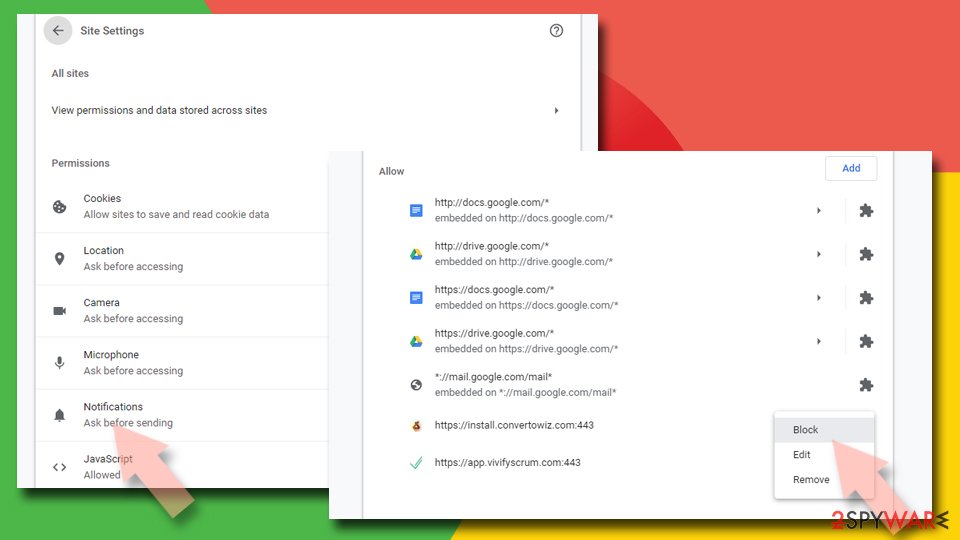
- Open the Google Chrome browser and go to Menu > Settings.
- Scroll down and click on Advanced.
- Locate the Privacy and security section and pick Site Settings > Notifications.
- Look at the Allow section and look for a suspicious URL.
- Click the three vertical dots next to it and pick Block. This should remove unwanted notifications from Google Chrome.

Google Chrome (Android)
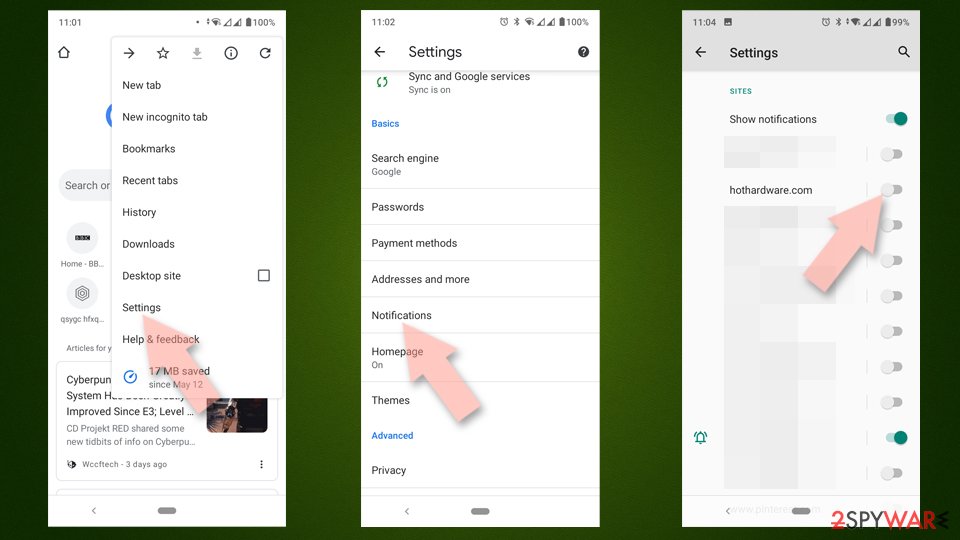
- Open Google Chrome and tap on Settings (three vertical dots).
- Select Notifications.
- Scroll down to the Sites section.
- Locate the unwanted URL and toggle the button to the left (Off position).

Mozilla Firefox
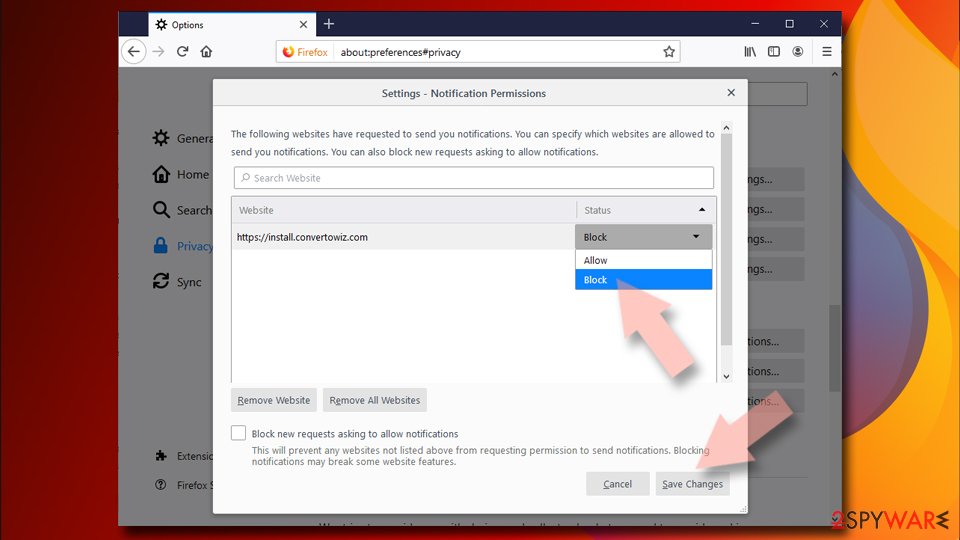
- Open Mozilla Firefox and go to Menu > Options.
- Click on Privacy & Security section.
- Under Permissions, you should be able to see Notifications. Click the Settings button next to it.
- In the Settings – Notification Permissions window, click on the drop-down menu by the URL in question.
- Select Block and then click on Save Changes. This should remove unwanted notifications from Mozilla Firefox.

Safari
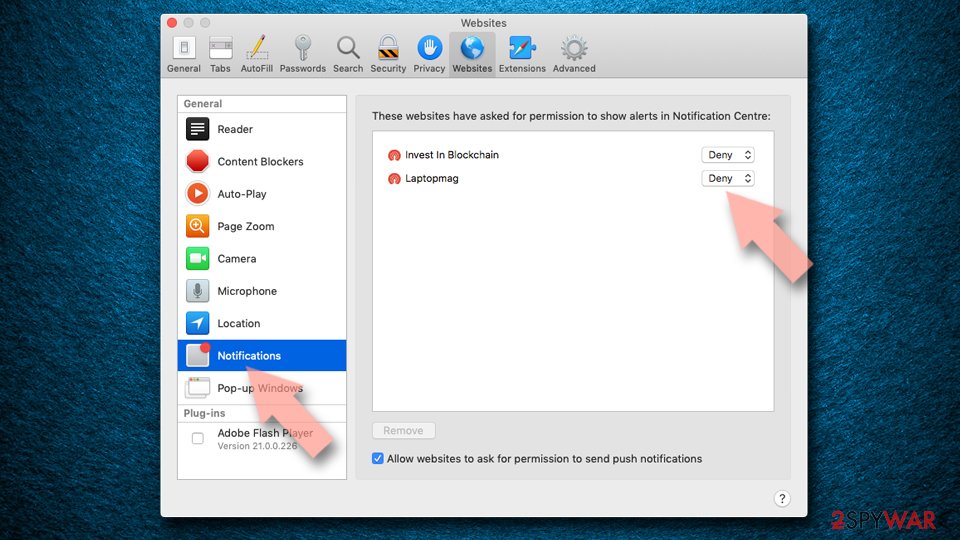
- Click on Safari > Preferences…
- Go to the Websites tab and, under General, select Notifications.
- Select the web address in question, click the drop-down menu and select Deny.

MS Edge (Chromium)
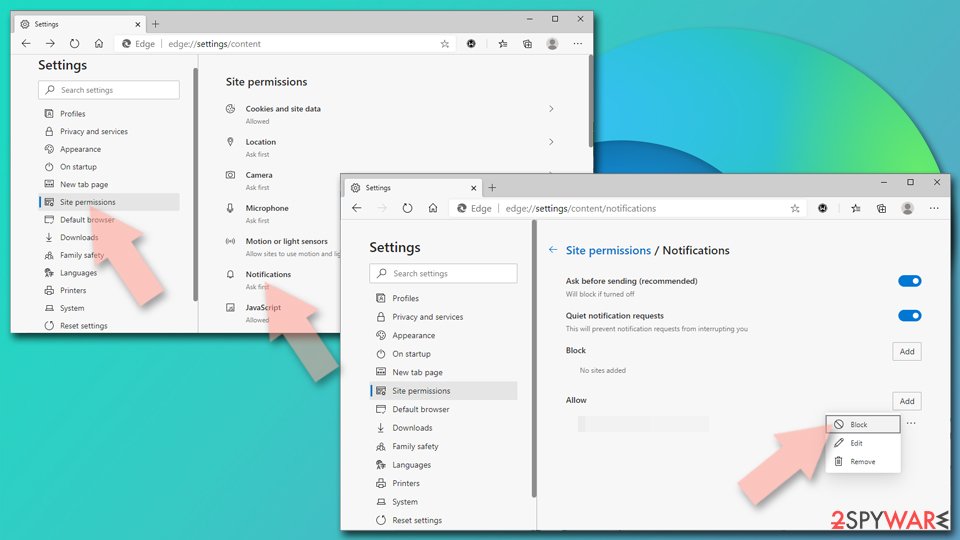
- Open Microsoft Edge, and go to Settings.
- Select Site permissions.
- Go to Notifications on the right.
- Under Allow, you will find the unwanted entry.
- Click on More actions and select Block.

Internet Explorer
- Open Internet Explorer, and click on the Gear icon at the top-right of the window.
- Select Internet options and go to the Privacy tab.
- In the Pop-up Blocker section, click on Settings.
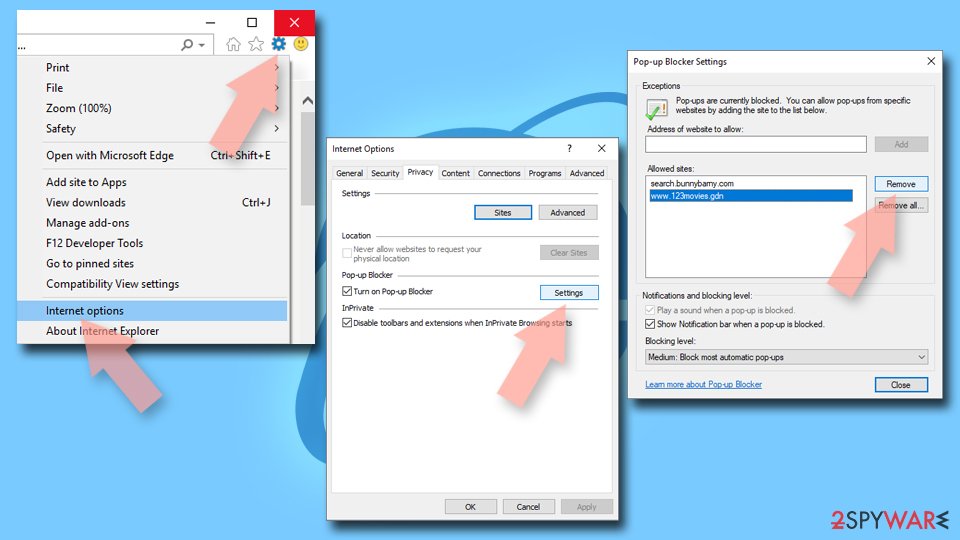
- Locate the web address in question under Allowed sites and pick Remove.

Did this guide help?
Be the first to comment