

News-xnazojo.cc is a push notification scam site that tricks users into subscribing to intrusive and potentially harmful notifications

News-xnazojo.cc is a questionable website that users might encounter while visiting untrustworthy platforms, such as illegal streaming sites or torrent networks. Upon being redirected, visitors are often shown a deceptive message urging them to click the “Allow” button in the notification prompt.
Agreeing to this request immediately enables News-xnazojo.cc to send notifications, which later appear as intrusive ads. These notifications can disrupt your browsing experience by overlaying other applications and may even interrupt full-screen activities.
The real risk lies in the content of these ads, which often include phishing scams, fake virus alerts, or fraudulent schemes. These can lead to significant privacy and security risks. To stay safe, it is best to avoid interacting with any ads or links from News-xnazojo.cc and follow a removal guide to eliminate them.
| Name | News-xnazojo.cc |
| Type | Push notifications, ads, pop-ups, scam |
| Distribution | Users enable push notifications by selecting the “Allow” button in the prompt displayed on the website |
| Symptoms | After being enabled, notifications from malicious websites may display deceptive or suspicious content on your screen. These links could redirect you to sites containing malware, scams, phishing attempts, or other harmful activities |
| Risks | You could face financial losses, unintentionally install malware or unwanted programs, or expose sensitive information to cybercriminals |
| Termination | Access browser settings to stop intrusive push notifications. After that, make sure that your system is not infected with adware or malware – scan it with SpyHunterCombo Cleaner |
| Recovery | After removing the adware, utilize FortectIntego to clear caches and web data, effectively preventing tracking. This tool can also repair any damaged system components. |
Familiar messages might not be what they seem: how scammers trick people online
Most users do not intentionally visit websites that are harmful or lack meaningful content. Scammers are aware of this and often employ deceptive tactics to lure users to their fake sites. They typically rely on unsafe websites or rogue advertising networks to drive traffic to these pages.
For instance, users might find themselves redirected to News-xnazojo.cc after clicking on questionable links from unreliable websites. In some cases, automatic scripts on these sites can trigger redirects without user interaction. Adware on a device can also cause unexpected browser behavior, leading to suspicious pages.
These sudden redirects catch users off guard, increasing their vulnerability to scams. Upon reaching News-xnazojo.cc, visitors are often presented with misleading prompts, such as:
- “Click 'Allow' to confirm you're not a robot.”
- “Just one more step! Click 'Allow' to continue.”
- “If you're 18+, click 'Allow'.”
- “Your file is ready to download. Press 'Allow' to proceed.”
- “Video can't be played! Click 'Allow' to enable playback.”
These messages are designed to make users believe that clicking “Allow” is necessary for legitimate purposes, such as verifying age or confirming they are not a robot. However, this action grants News-xnazojo.cc permission to deliver intrusive push notifications. These notifications often contain misleading or harmful content, making it crucial to avoid interacting with them.

What is the push notification feature actually for?
The push notification feature in browsers was designed with good intentions, much like other useful browser tools. For example, a news website may ask if visitors want to receive notifications, allowing them to stay updated on current events while also boosting the site's engagement and popularity.
This feature works through an API, or Application Programming Interface, a common tool utilized by website creators to integrate various prompts and functionalities. Through the use of the push notification API, users are prompted through a pop-up as to whether they want to enable notifications on the first visit to a site.
While many legitimate websites use push notifications, most users are quite wary and avoid enabling them because of unfamiliarity. It is this knowledge gap that cybercriminals take advantage of by creating scam sites like News-xnazojo.cc. Sites of this kind operate by tricking users into subscribing to notifications and then spamming their screens with unwanted ads.
Since many users aren't aware of how to manage or remove these notifications, they end up overwhelmed. Fortunately, removing these pop-ups is straightforward, and we’ll explain how to do so below.
Getting rid of unwanted pop-up ads is easy: follow these steps
Many people may think that the sudden appearance of intrusive pop-ups is caused by a virus, but this is not entirely accurate. While adware or malware could be on your device, they are not the main cause of push notifications from News-xnazojo.cc.
Push notifications are a legitimate feature of web browsers and cannot be completely disabled. However, you can adjust your browser settings to block sites from sending notification prompts in the future. Fortunately, stopping a site from sending notifications is almost as easy as enabling them. All it takes is a few simple steps in your browser's settings.
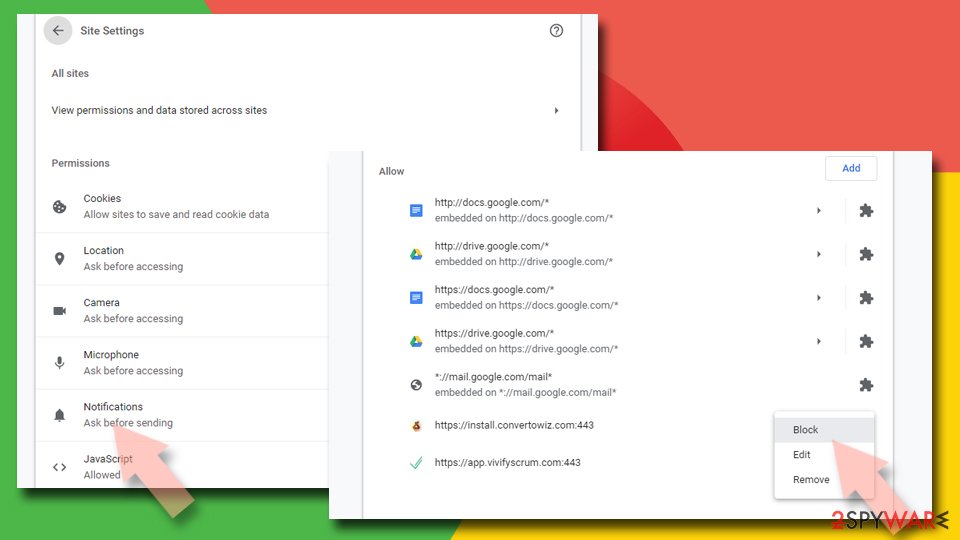
Google Chrome
- Open the Google Chrome browser and go to Menu > Settings.
- Scroll down and click on Advanced.
- Locate the Privacy and security section and pick Site Settings > Notifications.
- Look at the Allow section and look for a suspicious URL.
- Click the three vertical dots next to it and pick Block. This should remove unwanted notifications from Google Chrome.

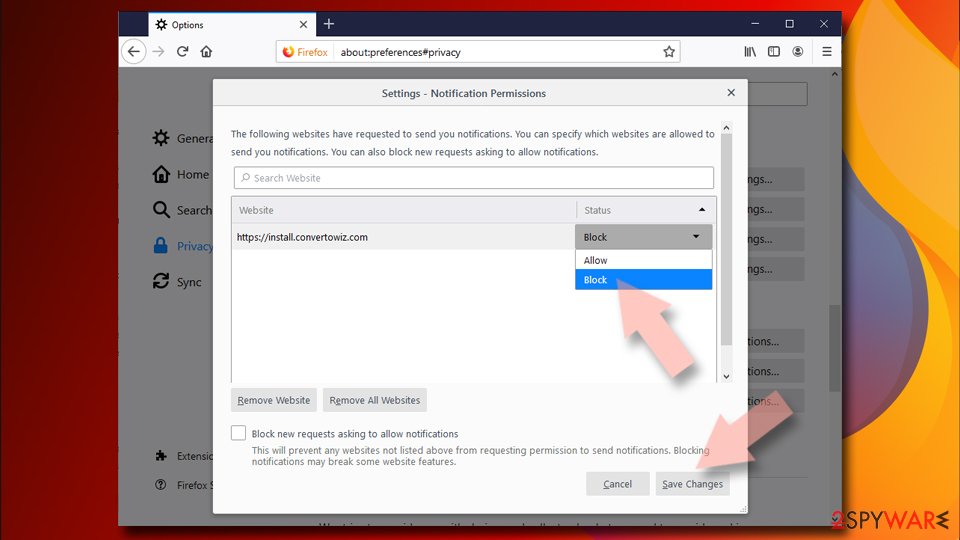
Mozilla Firefox
- Open Mozilla Firefox and go to Menu > Options.
- Click on Privacy & Security section.
- Under Permissions, you should be able to see Notifications. Click the Settings button next to it.
- In the Settings – Notification Permissions window, click on the drop-down menu by the URL in question.
- Select Block and then click on Save Changes. This should remove unwanted notifications from Mozilla Firefox.

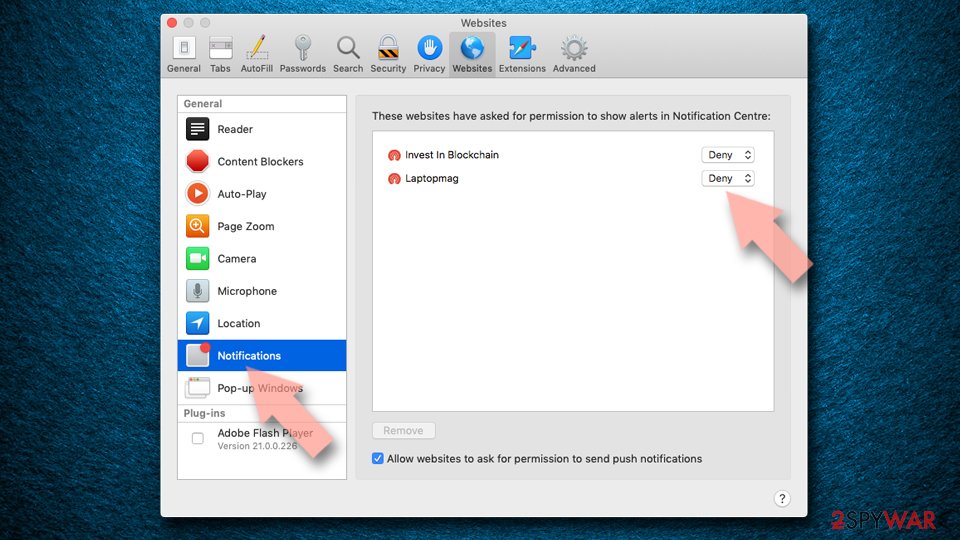
Safari
- Click on Safari > Preferences…
- Go to the Websites tab and, under General, select Notifications.
- Select the web address in question, click the drop-down menu and select Deny.

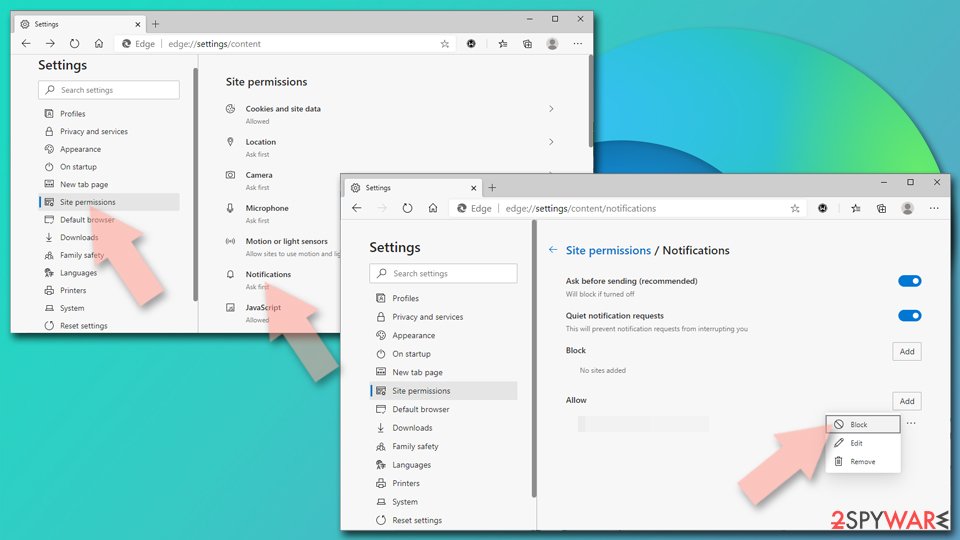
MS Edge (Chromium)
- Open Microsoft Edge, and go to Settings.
- Select Site permissions.
- Go to Notifications on the right.
- Under Allow, you will find the unwanted entry.
- Click on More actions and select Block.

Internet Explorer
- Open Internet Explorer, and click on the Gear icon at the top-right of the window.
- Select Internet options and go to the Privacy tab.
- In the Pop-up Blocker section, click on Settings.
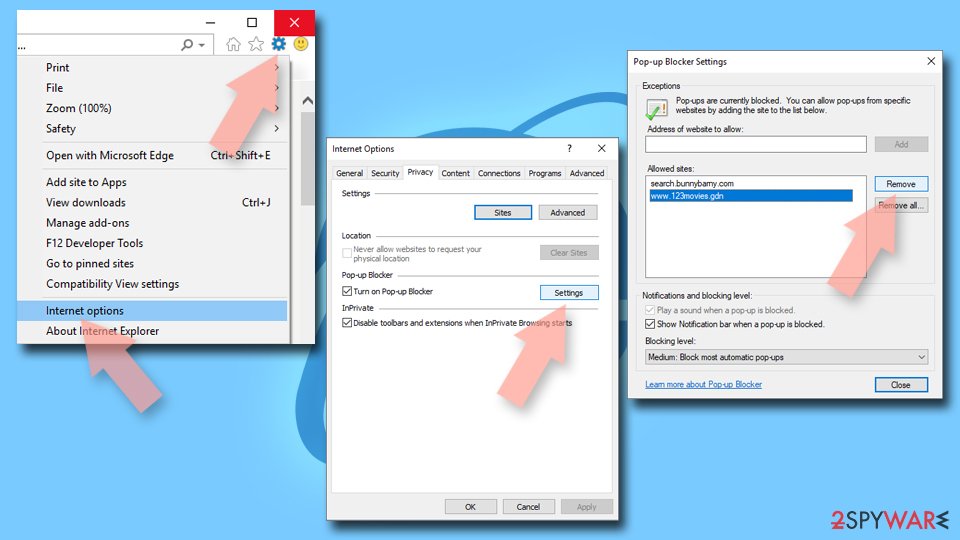
- Locate the web address in question under Allowed sites and pick Remove.

Along with the constant barrage of push notifications, you may notice strange behavior in your browser, such as unexpected changes to your homepage or new tab settings. These alterations are often associated with browser hijacking. You might also encounter suspicious ads in unusual places or be redirected to phishing and scam sites.
To resolve this, it’s strongly advised to check your system for possible infections, as adware could be running in the background. Running a scan with SpyHunterCombo Cleaner, MalwarebytesMalwarebytes, or other trusted security tools can help detect and remove adware from your device. While it is possible to manually check installed extensions or programs, using reliable anti-malware software makes this unnecessary. Additionally, scanning with FortectIntego will ensure that any remaining traces of malware are completely removed and help protect your privacy by clearing browser caches and tracking files.
For users who prefer a manual approach, detailed instructions are available below. However, keep in mind that if adware is not fully removed, it could reappear later.
Did this guide help?
Be the first to comment