GetTab virus – a web browser extension that might negatively impact your browsing habits
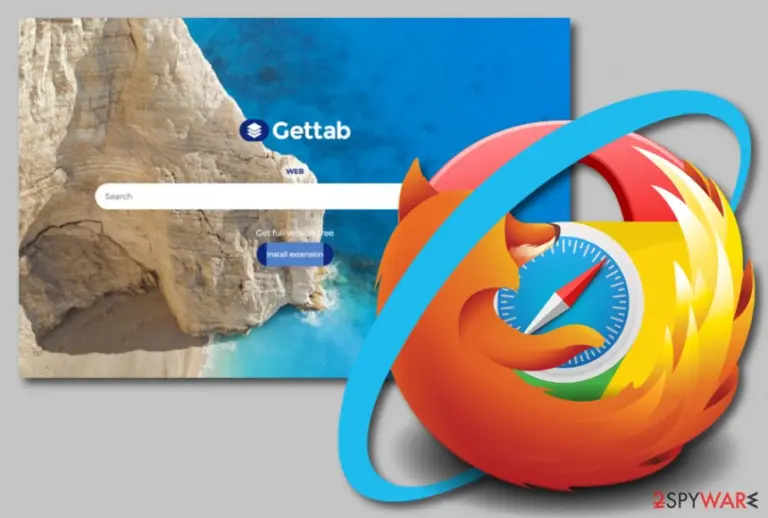
GetTab virus, also known as GetTab New Tab by Nevada Enterprise Ltd, is a suspicious extension that operates as a browser hijacker[1] and is available on the Google Chrome web store. If you ever encounter it on the web store, you see that it includes many attractive features such as free setting customization, viewing weather and news within one click, easily accessing to-do lists, managing background images, etc. However, the main goal of this potentially unwanted program is to modify the main engine and homepage to http://gettab.info. After, the hijack happens, be prepared to face unexpected changes in your browsing speed, experience unwanted adverts, and similar.
Name
GetTab
Alternative name
GetTab New Tab
Creator/developer
Nevada Enterprise Ltd
Available on
Google Chrome store, can also be installed via bundling
Search engine
http://gettab.info
Main activities
Modifying browser settings, forcing redirects to affiliate sources, loading intrusive advertising posts, tracking non-personal information
Distribution techniques
Online store, software bundling, on unprotected networks
Prevention tips
Reading users' reviews about particular programs before downloading them to the system, opting for th Custom/Advanced installation mode, preventing entering bogus websites
Elimination tool
Use FortectIntego that should help you to investigate suspicious content on your computer system. Afterward, use automatical or manual removal guidelines to get rid of the cyber threat completely
Once inside the computer, GetTab virus might alter Windows Registry,[2] the Task Manager section, and browser’s settings in order to become default startup page and prevent users from the elimination. Thus, once it is installed, users see the new search engine as soon as they launch the browser and are forced to use it every time while completing browsing sessions.
However, GetTab extension is not that useful as it might seem for a number of users from the first view. The main thing it does is providing search results from a well-known browser engine – Bing.[3] So, why not use just Bing instead and prevent other potentially suspicious activities from interrupting your computing work and slowing you down?
The application is presented as a tool that allows customizing Chrome web browser with nature pictures. It also offers quick access to popular websites, apps, and bookmarks, as well as many other features. However, in exchange for that, the app wants:
Read and change your data on all gettab.info sites
Replace the page you see when opening a new tab
Read your browsing history
Communicate with cooperating native applications
All these activities mean one major thing – GetTab New Tab virus might control your browsing experience and the content you see on websites. However, most of the time these activities are related to marketing. The hijacker is most likely to be used for generating pay-per-click revenue or collecting income from gathered data.
According to the Privacy Policy that is provided by GetTab developers, the plug-in is capable of collecting different types of data after it is installed on the browser application. This information usually refers to content found on particular websites visited, users' reviews on pages and networks, hyperlinks clicked, and similar details:
When you use GetTab plugin, we may collect information about the websites you visit and the advertisements that you see on those websites, the searches you perform using search engines, the ways in which you use various features, and the pages you view (especially social media pages). For example, we may collect information about page views, impressions and clicks, as well as similar web usage information.
Nevertheless, GetTab virus might place third-party ads on each website you visit some of which might promote unreliable security services, etc. Additionally, it might redirect you to commercial sites from the search results page. The biggest problem is that you can never be sure of what websites you might land. Some of them are shady and might be infected with dangerous malware forms.
To avoid privacy-related issues, intrusive advertising moves during your browsing activities, or decrease the risk of unintentional installations of malicious programs, you should remove GetTab from the browser. However, some hijacker-related entries might be left on the system. Thus, you have to delete them as well.
The quickest and simplest GetTab removal solution is system scan with anti-malware, for instance, FortectIntego. However, you can uninstall the extension manually by following our prepared guide at the end of the article. These instructions are here to help you to clean web browsers such as Google Chrome, Mozilla Firefox, Internet Explorer, Microsoft Edge, and Safari from potentially unwanted content.
Explaining how the hijacker can get installed silently
Some browser-hijacking programs have official websites and can be found in the Chrome Web store[4] under Productivity category. Always check the reviews of an application that you are wanting to download to your computer system. If you doubt the usefulness or security of the program, do not download/install it.
However, browser hijackers and similar potentially unwanted programs can invade the system by using other stealth and secret techniques. For example, developers very often employ bundling – a software marketing method that allows spreading the app with the help of other free programs in one solid package.
You can find a bogus component offered to download in a software installer if you opt for Advanced/Custom installation and be able to prevent its downloading process from continuation or just deselect it from the list. Otherwise, if you rely on Quick/Recommended setup, the hijacker might be installed without your knowledge.
Security experts from Los Virus[5] warn that the latter settings do not openly disclose about third-party programs that are included in the software package. Thus, using them is not recommended. Besides, you need to be very careful while using third-party platforms and services as they might also include suspicious content in hyperlinks and similar locations.
Elimination of GetTab New Tab browser hijacker
Uninstalling the extension might not be enough to remove GetTab entirely. The application may have installed related components to the system as well. Sometimes, potentially unwanted content such as bogus registry keys and processes might come unexpected and be placed in the Windows Registry and Task Manager sections.
Our team has also provided manual GetTab removal guidelines at the end of the article. There you will find instructing steps available for different browser types, including Chrome, Firefox, Explorer, Edge, and Safari. However, if the instructions seem too complicated or you want a quicker solution, opt for the automatic elimination method.
Uninstall from Windows
Uninstall from Windows 10/8:
Type Control Panel into the Windows search box and open the result.
Under Programs, select Uninstall a program.
Uninstall from Windows 7/XP:
Click on Windows Start > Control Panel (Windows XP users should click on Add/Remove Programs).
In Control Panel, select Programs > Uninstall a program.
Remove the unwanted program:
In the Programs and Features window, look for any recently installed suspicious entries, select them, and click Uninstall.
If User Account Control appears, click Yes to confirm, then complete the removal.
Delete from macOS
Remove the unwanted application:
From the menu bar, select Go > Applications.
In the Applications folder, look for any suspicious entries, then drag them to Trash (or right-click and pick Move to Trash).
Delete leftover files and folders:
Select Go > Go to Folder.
Enter /Library/Application Support and remove any suspicious folders related to the unwanted program.
Repeat the same check in the /Library/LaunchAgents and /Library/LaunchDaemons folders, deleting any suspicious entries.
Finally, empty the Trash to permanently remove the leftovers.
Reset Internet Explorer
Remove dangerous add-ons:
Open Internet Explorer, click on the Gear icon (IE menu) on the top-right corner of the browser
Pick Manage Add-ons.
You will see a Manage Add-ons window. Here, look for suspicious plugins. Click on these entries and select Disable.
Change your homepage if it was altered:
Open IE and click on the Gear icon.
Select Internet Options.
In the General tab, delete the Home page address and replace it by your preferred one (for example, Google.com).
Click Apply and then select OK.
Delete temporary files:
Press on the Gear icon and select Internet Options.
Under Browsing history, click Delete...
Select relevant fields and press Delete.
Reset Internet Explorer:
Click on Gear icon > Internet options and select Advanced tab.
Select Reset.
In the new window, check Delete personal settings and select Reset.
Remove from Microsoft Edge
Delete unwanted extensions from MS Edge:
Select Menu (three horizontal dots at the top-right of the browser window) and pick Extensions.
From the list, pick the extension and click on the Gear icon.
Click Remove.
Clear cookies and other browser data:
Click on the Menu (three horizontal dots at the top-right of the browser window) and select Settings > Privacy, search, and services..
Under Clear browsing data, pick Choose what to clear.
Select Cookies and other site data and Cached images and files. (apart from passwords, although you might want to include Media licenses as well, if applicable) and click on Clear.
Restore new tab and homepage settings:
Click the menu icon and choose Settings.
Then find On startup section.
Click Remove next to any suspicious startup page.
Reset MS Edge if the above steps did not work:
Press on Ctrl + Shift + Esc to open Task Manager.
Click on More details arrow at the bottom of the window.
Select Details tab.
Now scroll down and locate every entry with Microsoft Edge name in it. Right-click on each of them and select End Task to stop MS Edge from running.
Instructions for Chromium-based Edge
Delete extensions from MS Edge (Chromium):
Open Edge and click select Settings > Extensions.
Delete unwanted extensions by clicking Remove.
Clear cache and site data:
Click on Menu and go to Settings.
Select Privacy, search and services.
Under Clear browsing data, pick Choose what to clear.
Under Time range, pick All time.
Select Clear now.
Reset Chromium-based MS Edge:
Click on Menu and select Settings.
On the left side, pick Reset settings.
Select Restore settings to their default values.
Confirm with Reset.
This will disable extensions and reset startup pages but will not delete bookmarks, saved passwords, or browsing history.
Remove from Mozilla Firefox (FF)
Remove dangerous extensions:
Open Mozilla Firefox browser and click on the Menu (three horizontal lines at the top-right of the window).
Select Add-ons.
In here, select the unwanted extension and click Remove.
Reset the homepage:
Click three horizontal lines at the top right corner to open the menu.
Choose Settings.
Under Home, set your preferred homepage and new tab settings.
Clear cookies and site data:
Click Menu and pick Settings.
Go to Privacy & Security section.
Scroll down to locate Cookies and Site Data.
Click on Clear Data...
Select Cookies and Site Data and Temporary cached files and pages, then click Clear.
Reset Mozilla Firefox
If clearing the browser as explained above did not help, reset Mozilla Firefox:
Open Mozilla Firefox browser and click the Menu.
Go to Help and then choose Troubleshooting Information.
Under Give Firefox a tune up section, click on Refresh Firefox...
Once the pop-up shows up, confirm the action by pressing on Refresh Firefox.
Remove from Google Chrome
Delete malicious extensions from Google Chrome:
Open Google Chrome, click on the Menu (three vertical dots at the top-right corner) and select More tools > Extensions.
In the newly opened window, you will see all the installed extensions. Uninstall all suspicious extensions related to the unwanted program by clicking Remove.
Clear cache and web data from Chrome:
Click on Menu and pick Settings.
Under Privacy and security, select Clear browsing data.
Select Browsing history, Cookies and other site data, as well as Cached images and files.
Click Clear data.
Change your homepage:
Click menu and choose Settings.
Look for a suspicious site in the On startup section.
Click on Open a specific or set of pages and click on three dots to find the Remove option.
Reset Google Chrome:
If the previous methods did not help you, reset Google Chrome to eliminate all the unwanted components:
Click on Menu and select Settings.
In the Settings, scroll down and click Advanced.
Scroll down and locate Reset and clean up section.
Now click Restore settings to their original defaults.
Confirm with Reset settings.
Delete from Safari
Remove dangerous extensions:
Open Safari, click Safari in the menu at the top-left of the screen, and select Preferences.
Go to the Extensions tab, look for any suspicious entries, and click Uninstall to remove them.
Clear history and website data:
Click Safari in the menu and pick Clear History.
Set Clear to all history and confirm with Clear History.
Reset Safari:
Click Safari in the menu and select Preferences > Advanced.
Enable Show Develop menu in menu bar.
From the menu bar, click Develop and select Empty Caches.























































Be the first to comment