

Lazyovertime.com sends untrustworthy ads straight to your desktop

Push notifications can be very beneficial to people. Since Apple first introduced this function in 2009, they have been providing the ability to receive the latest news, important updates, and so on. Unfortunately, this helpful tool was not unseen by people who want to earn some passive income.
Some websites act as middlemen between the business and the user. The problem arises when creators of these websites care just about clicks and not users' safety. Lazyovertime.com is one of those pages that does not have any content besides a message meant to trick people into subscribing to push notifications.
Fake pages like this go extinct every day, and new ones take their place. There does not seem to be an end to this, as they are so easily reproduced. If a person allows these notifications by mistake, he will be met with intrusive pop-ups, banners, and other commercial content.
It is not a good idea to believe everything you see on the internet and be careful when clicking links. Scammers and hackers have thought of different methods to steal peoples' information or infect their devices.
| NAME | Lazyovertime.com |
| TYPE | Push notification spam; adware |
| SYMPTOMS | Pop-up ads, banners appear on the screen even when the browser is closed |
| DANGERS | Deceptive advertisements can lead to dangerous websites where users are at risk of giving away their personal information or downloading malicious software |
| DISTRIBUTION | Freeware installations; shady websites |
| ELIMINATION | Remove website permissions via browser settings |
| FURTHER STEPS | Use FortectIntego for remediation, fix any damage left after removal |
Ways people open fake websites
Usually, people do not find websites like Lazyovertime.com by using the search engine. They get redirected to it by other shady websites like illegal streaming platforms.[1] As fake pages use social engineering tactics[2] to fool people into clicking the “Allow” button, they can trick not so technologically-savvy people quite often.
There are a couple of most commonly used messages that are displayed on these pages:
Click Allow to watch the video
Download is ready. Click Allow to download your file
Press Allow to verify that you are not a robot
As you can see, people might think that they are giving permission to play the video, download something, or performing a Captcha verification which is very common and does not seem anything out of the ordinary. People fail to notice that the window that appears is not in the page itself but rather a window displayed by the browser, which asks if you want to grant permission to this website to send you push notifications.
If a person was visiting an illegal streaming site and pushed on a “Download” button that redirected them to this site, it is a smooth operation. Of course, after clicking the “Allow” button, the user does not receive anything. Instead, he/she starts getting spammed with advertisements from all kinds of sources.

Avoid being tricked online
The advertisements you will start receiving can come from legitimate sources too, so it means it will be harder to determine which ones are fake and which ones are real. You can look for a few different things that will help you determine if a link is safe to click on.
First, read the text and check if there are no spelling or grammar mistakes. Look at the imaging and see if it looks professional, not outdated. The next steps can seem a bit more difficult. You need to look at the link and see if it looks trustworthy. Shady websites most often use rarely seen extensions in their domains like .top, .org, .io, .xyz. Those, who have the .com, like Lazyovertime.com, have gone the extra mile to look legitimate.
When you are already on the website, look if it has HTTP or HTTPS in the link. If it is the first one, it is not recommended to enter any sensitive information as it does not use encryption,[3] and anyone can access that data. Next, browse through the website, look if it does have the Privacy Policy, Terms of Use sections.
Appearances matter too. It is usually not a good sign if a text is hard to read, and the styling makes it hard to navigate. Most website owners want their pages to be simple to use and understand for their users.
If you have received ads on your screen from Lazyovertime.com, you will have to remove website permissions manually by going to your browser settings. You can follow our simple guide below. This method might not work if you have adware installed in your computer. It is advised to use FortectIntego after removal to clear your browsers completely.
Google Chrome (desktop):
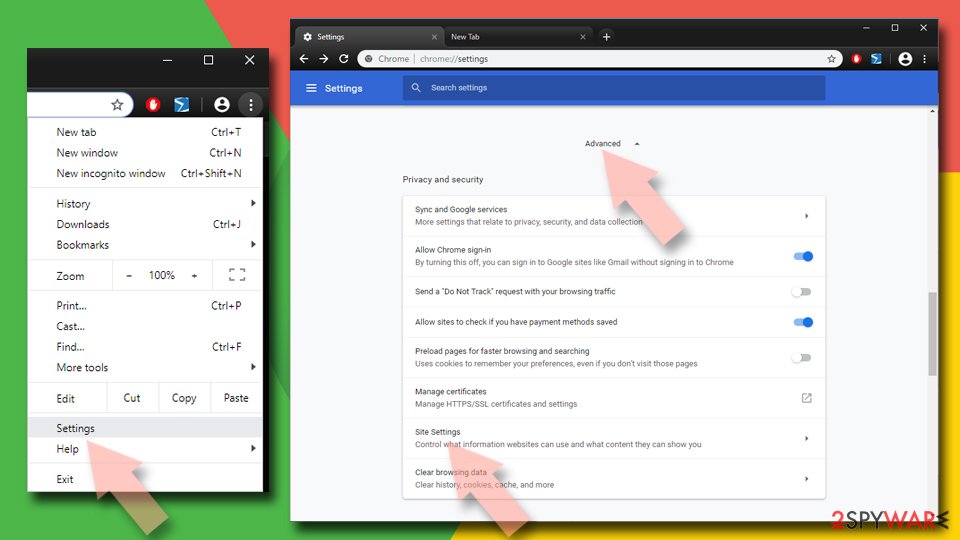
- Open Google Chrome browser and go to Menu > Settings.
- Scroll down and click on Advanced.
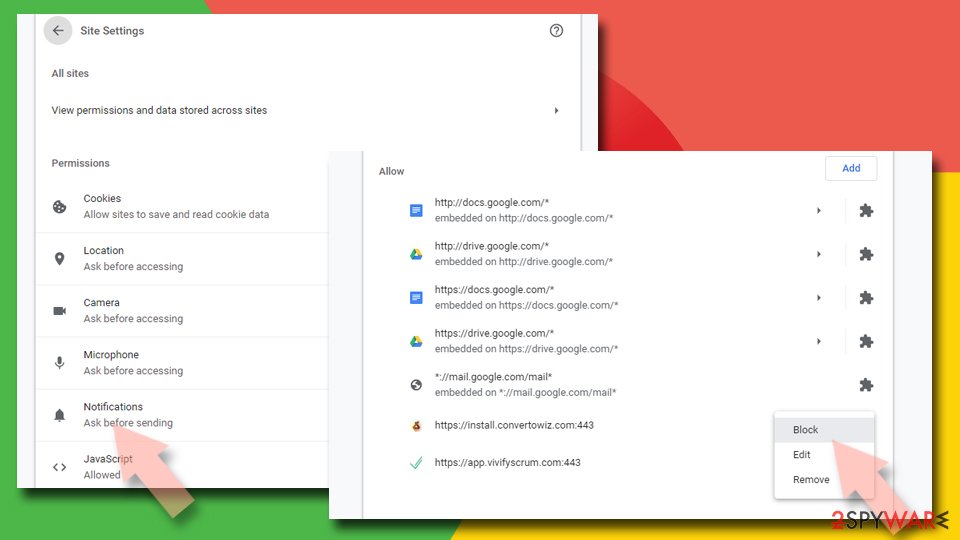
- Locate the Privacy and security section and pick Site Settings > Notifications.
- Look at the Allow section and look for a suspicious URL.
- Click the three vertical dots next to it and pick Block. This should remove unwanted notifications from Google Chrome.


Google Chrome (Android):
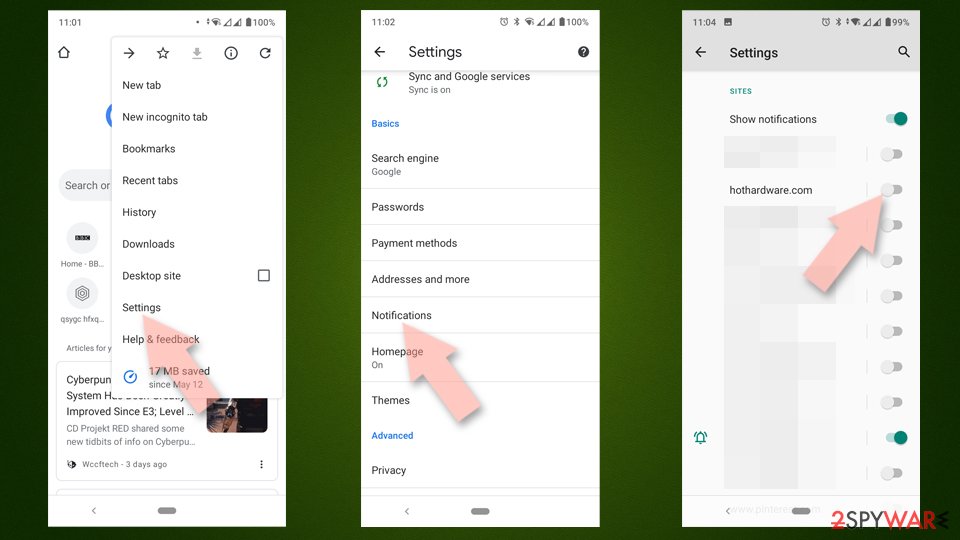
- Open Google Chrome and tap on Settings (three vertical dots).
- Select Notifications.
- Scroll down to Sites section.
- Locate the unwanted URL and toggle the button to the left (Off setting).

Mozilla Firefox:
- Open Mozilla Firefox and go to Menu > Options.
- Click on Privacy & Security section.
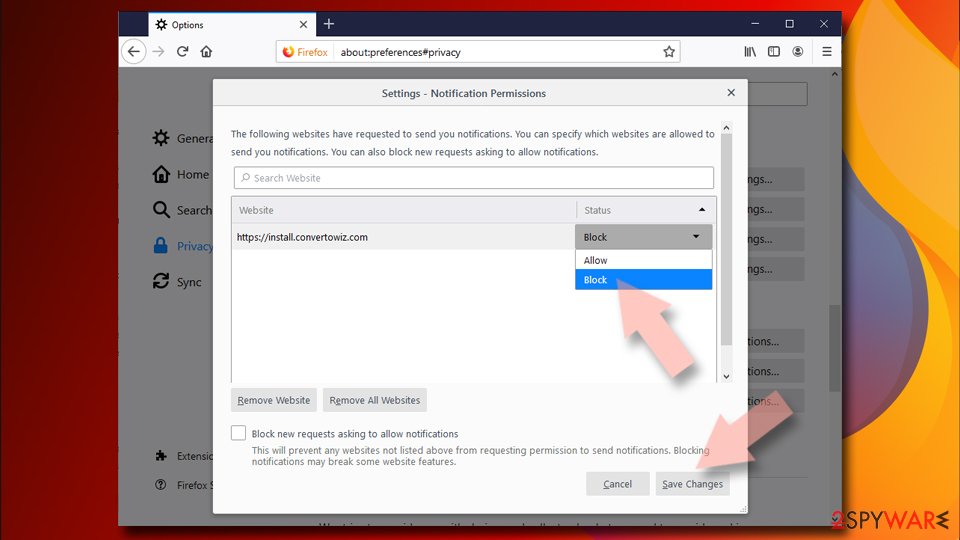
- Under Permissions, you should be able to see Notifications. Click Settings button next to it.
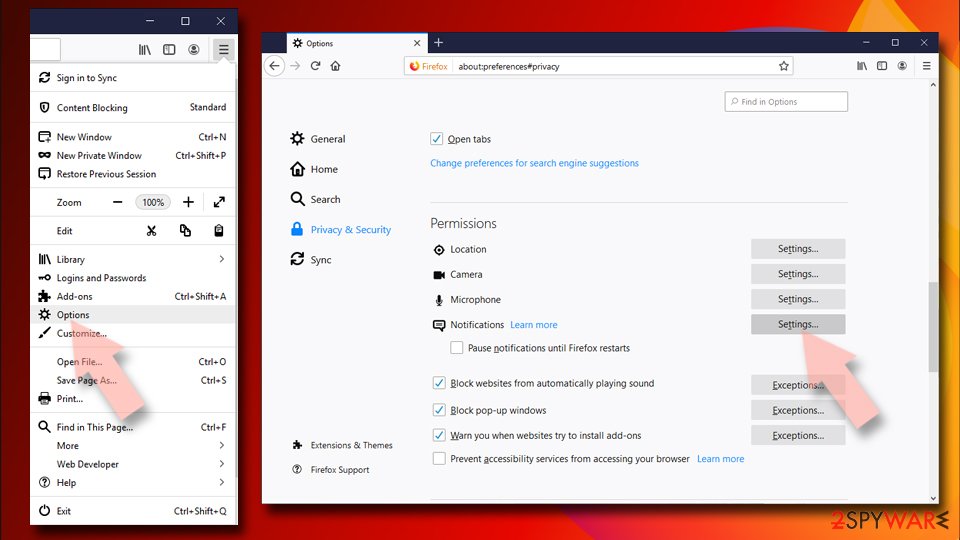
- In the Settings – Notification Permissions window, click on the drop-down menu by the URL in question.
- Select Block and then click on Save Changes. This should remove unwanted notifications from Mozilla Firefox.


Safari:
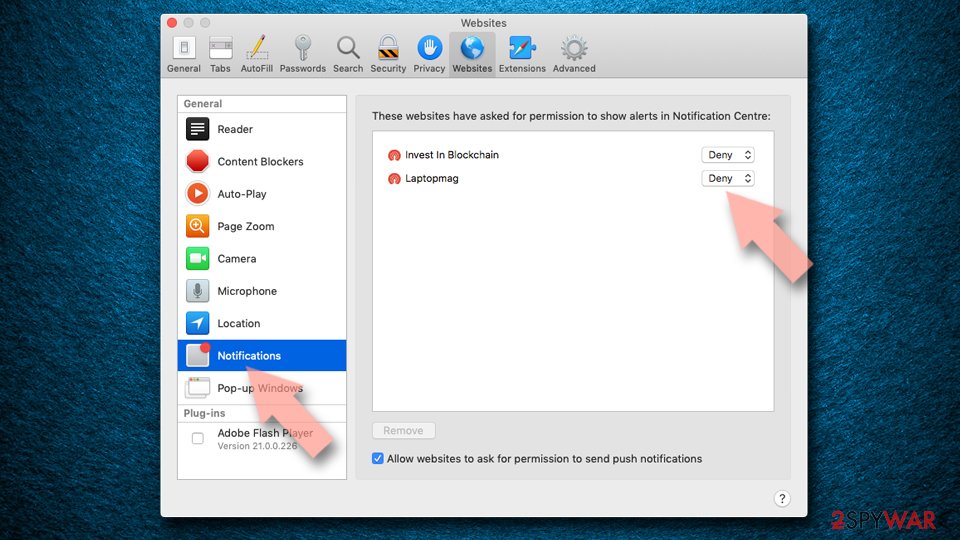
- Click on Safari > Preferences…
- Go to Websites tab and, under General, select Notifications.
- Select the web address in question, click the drop-down menu and select Deny.

MS Edge:
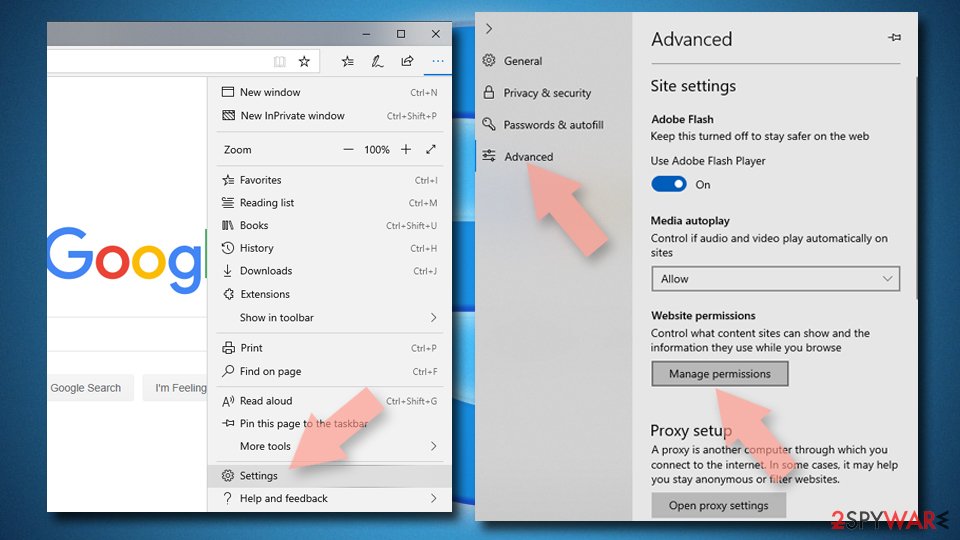
- Open Microsoft Edge, and click the Settings and more button (three horizontal dots) at the top-right of the window.
- Select Settings and then go to Advanced.
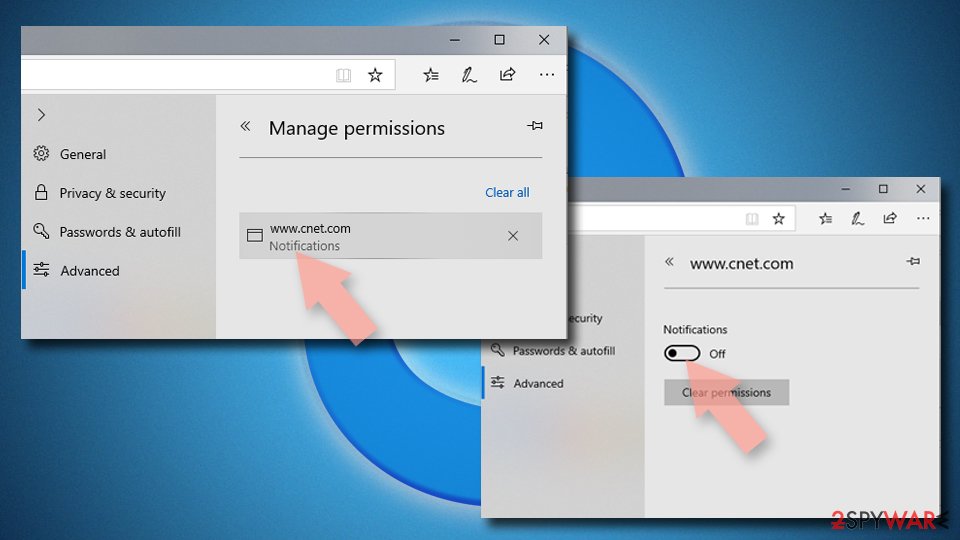
- Under Website permissions, pick Manage permissions and select the URL in question.
- Toggle the switch to the left to turn notifications off on Microsoft Edge.


MS Edge (Chromium):
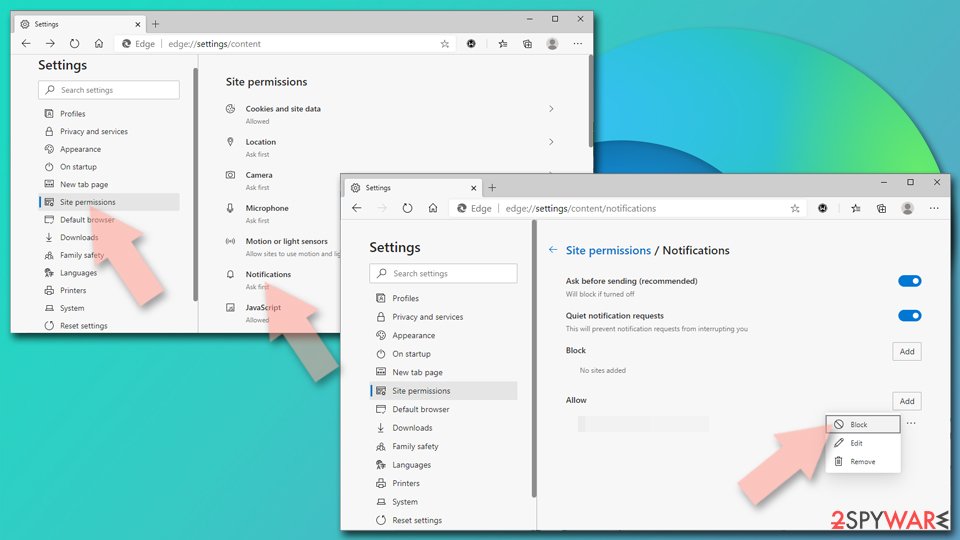
- Open Microsoft Edge, and go to Settings.
- Select Site permissions.
- Go to Notifications on the right.
- Under Allow, you will find the unwanted entry.
- Click on More actions and select Block.

Internet Explorer:
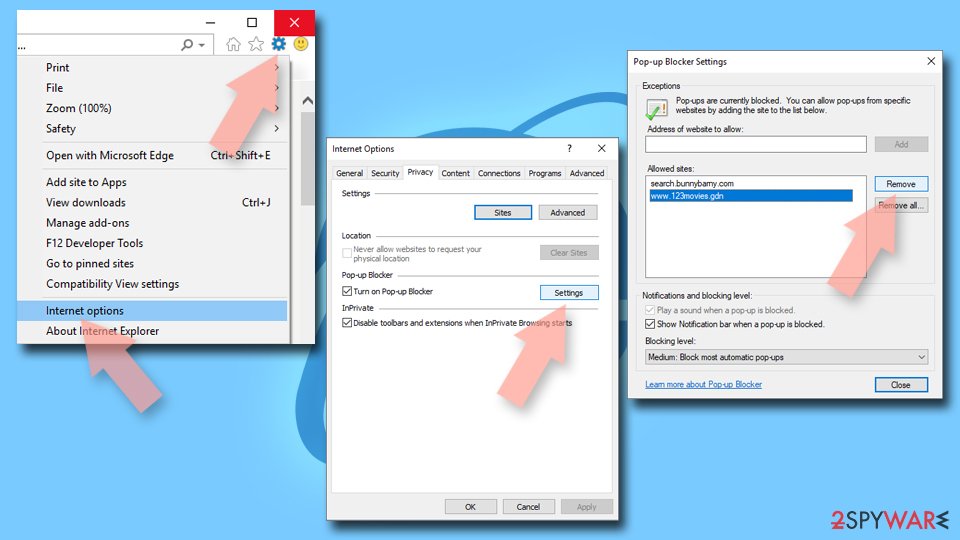
- Open Internet Explorer, and click on the Gear icon at the top-right on the window.
- Select Internet options and go to Privacy tab.
- In the Pop-up Blocker section, click on Settings.
- Locate web address in question under Allowed sites and pick Remove.

Potentially unwanted programs
If the above removal method did not work, you might have a PUP installed. This might have happened when you were downloading freeware from unofficial sources. Software bundling is a common method to spread PUAs because most people rush through the installation process. It is important to check if there are no additional programs included as a package when you download something for free.
If it is a program operating in the background without your knowledge, you will probably want to use anti-malware tools like SpyHunterCombo Cleaner and MalwarebytesMalwarebytes to scan your system. It can be difficult to determine which program is responsible for unwanted behavior by yourself. Professional security tools will do this automatically and prevent such infections in the future.
If you still want to proceed with the manual removal, you can look for the instructions below for Windows and macOS operating systems.
Uninstall from Windows
Uninstall from Windows 10/8:
- Type Control Panel into the Windows search box and open the result.
- Under Programs, select Uninstall a program.


Uninstall from Windows 7/XP:
- Click on Windows Start > Control Panel (Windows XP users should click on Add/Remove Programs).
- In Control Panel, select Programs > Uninstall a program.


Remove the unwanted program:
- In the Programs and Features window, look for any recently installed suspicious entries, select them, and click Uninstall.
- If User Account Control appears, click Yes to confirm, then complete the removal.


Delete from macOS
Remove the unwanted application:
- From the menu bar, select Go > Applications.
- In the Applications folder, look for any suspicious entries, then drag them to Trash (or right-click and pick Move to Trash).


Delete leftover files and folders:
- Select Go > Go to Folder.
- Enter /Library/Application Support and remove any suspicious folders related to the unwanted program.
- Repeat the same check in the /Library/LaunchAgents and /Library/LaunchDaemons folders, deleting any suspicious entries.

- Finally, empty the Trash to permanently remove the leftovers.

Remove from Microsoft Edge
Delete unwanted extensions from MS Edge:
- Select Menu (three horizontal dots at the top-right of the browser window) and pick Extensions.
- From the list, pick the extension and click on the Gear icon.
- Click Remove.


Clear cookies and other browser data:
- Click on the Menu (three horizontal dots at the top-right of the browser window) and select Settings > Privacy, search, and services..
- Under Clear browsing data, pick Choose what to clear.
- Select Cookies and other site data and Cached images and files. (apart from passwords, although you might want to include Media licenses as well, if applicable) and click on Clear.


Restore new tab and homepage settings:
- Click the menu icon and choose Settings.
- Then find On startup section.
- Click Remove next to any suspicious startup page.
Reset MS Edge if the above steps did not work:
- Press on Ctrl + Shift + Esc to open Task Manager.
- Click on More details arrow at the bottom of the window.
- Select Details tab.
- Now scroll down and locate every entry with Microsoft Edge name in it. Right-click on each of them and select End Task to stop MS Edge from running.


Instructions for Chromium-based Edge
Delete extensions from MS Edge (Chromium):
- Open Edge and click select Settings > Extensions.
- Delete unwanted extensions by clicking Remove.


Clear cache and site data:
- Click on Menu and go to Settings.
- Select Privacy, search and services.
- Under Clear browsing data, pick Choose what to clear.
- Under Time range, pick All time.
- Select Clear now.


Reset Chromium-based MS Edge:
- Click on Menu and select Settings.
- On the left side, pick Reset settings.
- Select Restore settings to their default values.
- Confirm with Reset.
- This will disable extensions and reset startup pages but will not delete bookmarks, saved passwords, or browsing history.


Remove from Mozilla Firefox (FF)
Remove dangerous extensions:
- Open Mozilla Firefox browser and click on the Menu (three horizontal lines at the top-right of the window).
- Select Add-ons.
- In here, select the unwanted extension and click Remove.


Reset the homepage:
- Click three horizontal lines at the top right corner to open the menu.
- Choose Settings.
- Under Home, set your preferred homepage and new tab settings.
Clear cookies and site data:
- Click Menu and pick Settings.
- Go to Privacy & Security section.
- Scroll down to locate Cookies and Site Data.
- Click on Clear Data...
- Select Cookies and Site Data and Temporary cached files and pages, then click Clear.


Reset Mozilla Firefox
If clearing the browser as explained above did not help, reset Mozilla Firefox:
- Open Mozilla Firefox browser and click the Menu.
- Go to Help and then choose Troubleshooting Information.

- Under Give Firefox a tune up section, click on Refresh Firefox...
- Once the pop-up shows up, confirm the action by pressing on Refresh Firefox.



Remove from Google Chrome
Delete malicious extensions from Google Chrome:
- Open Google Chrome, click on the Menu (three vertical dots at the top-right corner) and select More tools > Extensions.
- In the newly opened window, you will see all the installed extensions. Uninstall all suspicious extensions related to the unwanted program by clicking Remove.


Clear cache and web data from Chrome:
- Click on Menu and pick Settings.
- Under Privacy and security, select Clear browsing data.
- Select Browsing history, Cookies and other site data, as well as Cached images and files.
- Click Clear data.


Change your homepage:
- Click menu and choose Settings.
- Look for a suspicious site in the On startup section.
- Click on Open a specific or set of pages and click on three dots to find the Remove option.
Reset Google Chrome:
If the previous methods did not help you, reset Google Chrome to eliminate all the unwanted components:
- Click on Menu and select Settings.
- In the Settings, scroll down and click Advanced.
- Scroll down and locate Reset and clean up section.
- Now click Restore settings to their original defaults.
- Confirm with Reset settings.


Delete from Safari
Remove dangerous extensions:
- Open Safari, click Safari in the menu at the top-left of the screen, and select Preferences.
- Go to the Extensions tab, look for any suspicious entries, and click Uninstall to remove them.


Clear history and website data:
- Click Safari in the menu and pick Clear History.
- Set Clear to all history and confirm with Clear History.


Reset Safari:
- Click Safari in the menu and select Preferences > Advanced.
- Enable Show Develop menu in menu bar.
- From the menu bar, click Develop and select Empty Caches.


Did this guide help?
Be the first to comment