

C1024 ransomware can encrypt your personal files making them impossible to view or open

Ransomware attacks have been dominating the headlines in 2021. It seems like the targets are becoming bigger and bigger as hackers aim for the highest returns possible. But home users are also not forgotten as their systems can be infiltrated without any hacking skills whatsoever.
One of the most recent data-locking malware variants is the C1024 ransomware which belongs to the Dharma family. The file was flagged by 59 security vendors and 1 sandbox as malicious. Once the virus enters the system, it begins the encryption process which appends personal files, like photos, videos, and documents with the .C1024 extension, victim ID, and the cybercriminals' email address.
So if a file was previously named picture.jpg after the encryption process is complete, the name would be changed to picture.jpg.victimID.[code1024@keemail.me].C1024. The appearance of the files also gets altered. Users can no longer see the thumbnails, only white pages. After the encryption is complete, a ransom note is usually generated on the victim's device. In this case, a pop-up window and an info.txt file appear.
| NAME | C1024 |
| TYPE | Ransomware, cryptovirus, data-locking malware |
| MALWARE FAMILY | Dharma ransomware |
| DISTRIBUTION | Email attachments, torrent websites, malicious ads |
| FILE EXTENSION | .C1024 |
| RANSOM NOTE | code1024@keemail.me pop-up window and info.txt |
| FILE RECOVERY | If no backups are available, recovering data is almost impossible. We list alternative methods that could help you in some cases below |
| MALWARE REMOVAL | Scan your machine with anti-malware software to eliminate the malicious program and all the related files |
| SYSTEM FIX | Malware can cause system errors, crashes, lag, and other stability issues. To remediate the OS and avoid its reinstallation, we recommend using the FortectIntego repair tool |
The ransom note

The ransom note is a place for cybercriminals to tell their demands and conditions. The text presented in the pop-up window:
YOUR FILES ARE ENCRYPTED
1024
Don't worry, you can return all your files!
If you want to restore them, write to the mail: code1024@keemail.me YOUR ID –
If you have not answered by mail within 12 hours, write to us by another mail:code1024@onionmail.org
ATTENTION!
We recommend you contact us directly to avoid overpaying agents
Do not rename encrypted files.
Do not try to decrypt your data using third party software, it may cause permanent data loss.
Decryption of your files with the help of third parties may cause increased price (they add their fee to our) or you can become a victim of a scam.
The message in info.txt:
all your data has been locked us
You want to return?
write email code1024@keemail.me or code1024@onionmail.org
In these notes, the threat actors inform victims of what has happened to their files asks them to write to the provided in emails. It is unknown how much they want for the decryption key[1] and how they want the sum to be paid. Generally, ransomware developers ask people to pay in Bitcoin[2] because it provides anonymity.
As the price is not stated in the notes, it is most likely negotiated with each victim individually. You can also see that the criminals use scare tactics to make victims act based on emotions. They do not want you to think, they want you to contact them as soon as possible because they can manipulate you into sending the payment more easily.
They lay out some ground rules that are meant to prevent you from trying alternative file recovery options. We strongly advise against contacting cybercriminals as they cannot be trusted. They do not have to keep their word because there are no repercussions for it.
In the past, a lot of ransomware victims have come out and said that after paying the ransom, they never heard back from the cybercriminals. Because most ransom payments are made in cryptocurrencies, there is no way to get the money back once it is sent to the fraudsters' wallets. Please be wise and follow our guide that can help you eliminate the threat and recover your files.
Use professional security tools to eliminate malicious files
The thing that you have to do immediately is to disconnect the affected machine from the local network. For home users, disconnecting the ethernet cable or disabling the Wi-Fi should do the job. If this happened at your workplace, doing that might be complicated, so we have separate instructions for you at the bottom of this post.
If you try to recover your data first, it can result in permanent loss. Malware can also encrypt your files the second time if it is not eliminated first. It will not stop until you remove the malicious files causing it. You should not attempt removing the malicious program yourself unless you have excellent IT skills.
Use anti-malware tools like SpyHunterCombo Cleaner or MalwarebytesMalwarebytes to scan your system. This security software should find all the related files and entries and remove them automatically for you. In some cases, malware can prevent you from using antivirus software, so you need to access Safe Mode and perform a full system scan from there:
Windows 7 / Vista / XP
- Click Start > Shutdown > Restart > OK.
- When your computer becomes active, start pressing the F8 button (if that does not work, try F2, F12, Del, etc. – it all depends on your motherboard model) multiple times until you see the Advanced Boot Options window.
- Select Safe Mode with Networking from the list.
Windows 10 / Windows 8
- Right-click on the Start button and select Settings.
- Scroll down to pick Update & Security.
- On the left side of the window, pick Recovery.
- Now scroll down to find the Advanced Startup section.
- Click Restart now.
- Select Troubleshoot.
- Go to Advanced options.
- Select Startup Settings.
- Click Restart.
- Press 5 or click 5) Enable Safe Mode with Networking.
Fix system errors to prevent Windows reinstallation
Performance, stability, and usability issues, to the point where a complete Windows reinstall is required, are expected after malware infection. These types of viruses can alter the Windows registry database, damage vital bootup, and other functions, delete or corrupt DLL files, etc. Once a system file is damaged by malware, antivirus software will not able to repair it.
This is why FortectIntego was developed. This powerful software can fix a lot of the damage caused by C1024 ransomware. Blue Screen errors, freezes, registry errors, damaged DLLs, etc., can make your computer completely unusable. By using this maintenance tool, you could avoid Windows reinstallation.
- Download the application by clicking on the link above
- Click on the ReimageRepair.exe
- If User Account Control (UAC) shows up, select Yes
- Press Install and wait till the program finishes the installation process
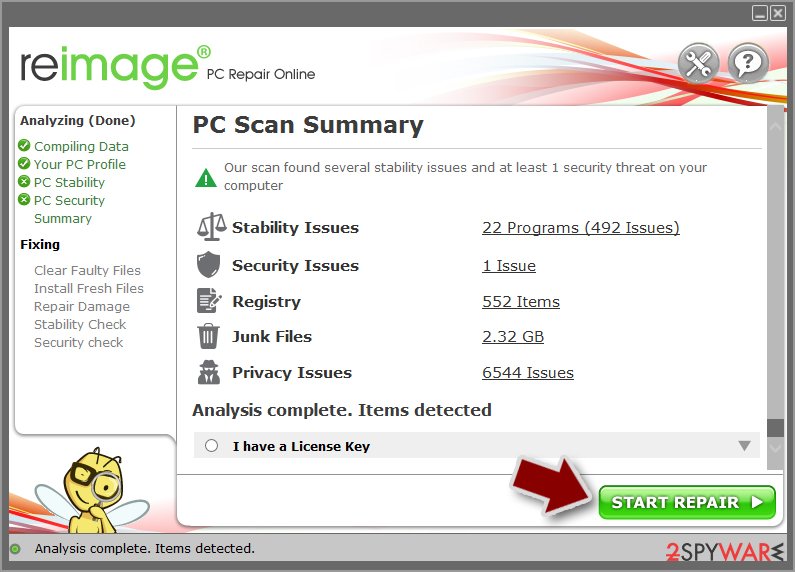
- The analysis of your machine will begin immediately
- Once complete, check the results – they will be listed in the Summary
- You can now click on each of the issues and fix them manually
- If you see many problems that you find difficult to fix, we recommend you purchase the license and fix them automatically.

File recovery options
Many people think that they can fix their files with anti-malware tools, but that is not what they are designed for. All the security tools can do is detect suspicious processes in your system and eliminate them. The truth is, the files can be restored only with a decryption key or software that only the cybercriminals have.
If you did not back up your data previously, it might be possible that you will never get them back. You can try using data recovery software, but we have to note that third-party programs cannot always decrypt the files. We suggest at least trying this method. Before proceeding, you have to copy the corrupted files and place them in a USB flash drive or another storage. And remember – only do this if you have already removed the C1024 ransomware.
Before you begin, several pointers are essential while dealing with this situation:
- Since the encrypted data on your computer might permanently be damaged by security or data recovery software, you should first make backups of it – use a USB flash drive or another storage.
- Only attempt to recover your files using this method after you perform a scan with anti-malware software.
Install data recovery software
- Download Data Recovery Pro.
- Double-click the installer to launch it.
- Follow on-screen instructions to install the software.
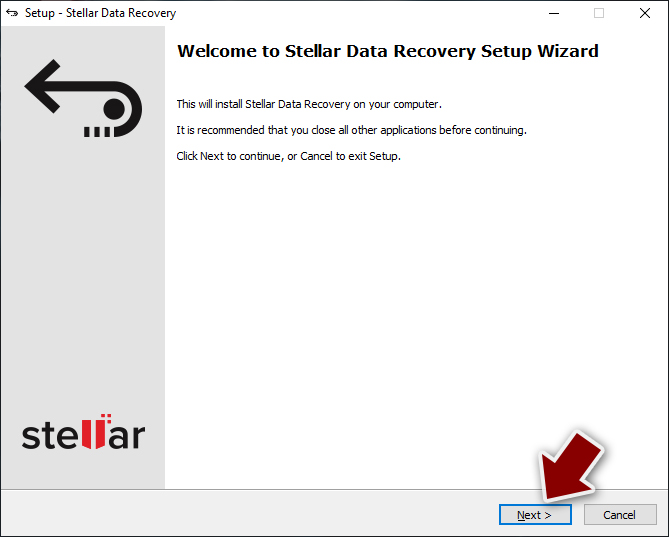
- As soon as you press Finish, you can use the app.
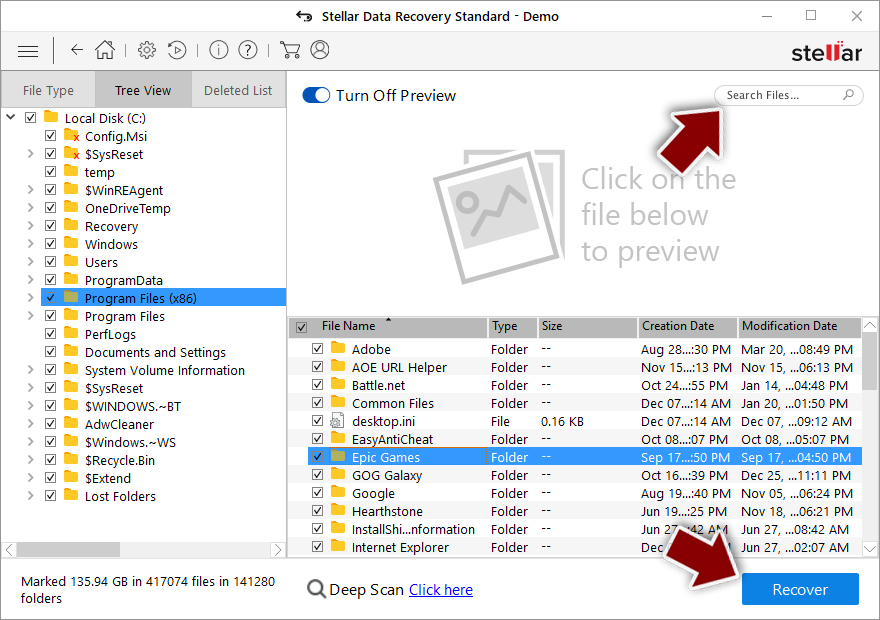
- Select Everything or pick individual folders where you want the files to be recovered from.
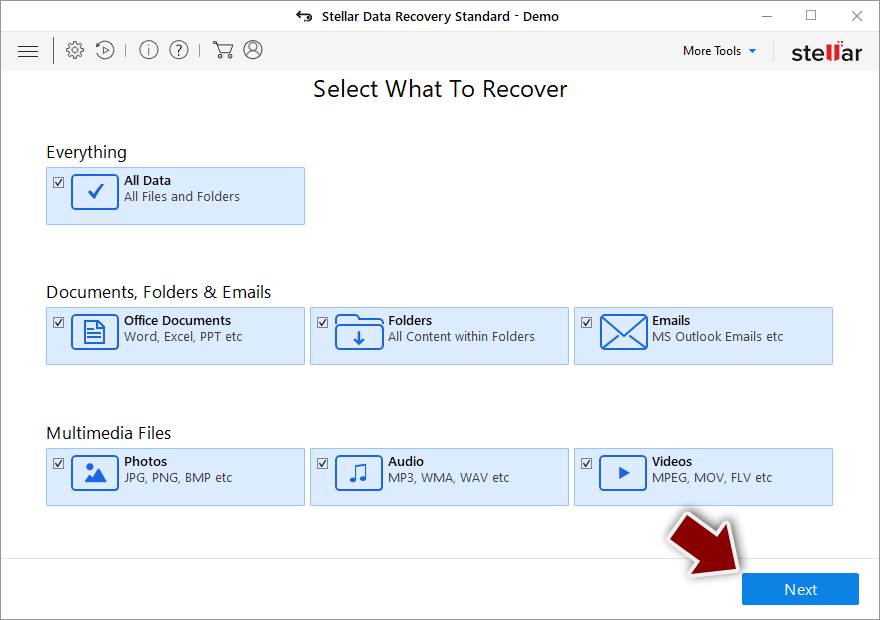
- Press Next.
- At the bottom, enable Deep scan and pick which Disks you want to be scanned.
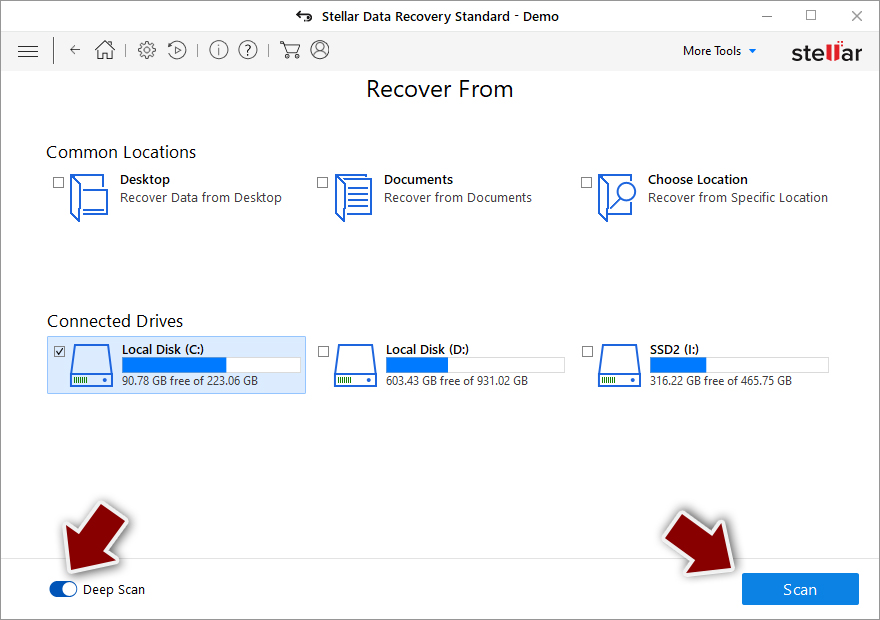
- Press Scan and wait till it is complete.
- You can now pick which folders/files to recover – don't forget you also have the option to search by the file name!
- Press Recover to retrieve your files.


Ransomware distribution methods
As you eliminate the threat you can learn about the ways this could have happened in the first place. The most common ransomware distribution methods are:
- Email attachments
Ransomware is often spread through email with encouraging messages to open malicious attachments. The file can be delivered in a variety of formats, including a ZIP file, PDF, Word document, Excel spreadsheet, and more. When users open the attachment, malware can be deployed immediately.
Criminals use clever social engineering tactics[3] to persuade people to download the infected attachments. Sometimes they do extensive research on their targets to make the email seem as legitimate as possible. It is best not to open random email attachments. If it is sent from a person you know, double-check with them through a different platform to see if it was really them who sent it.
- Malvertising and malicious URLs
Threat actors also like to use social media platforms to spread their malicious programs. They can insert malicious links into messages or ads. Typically, attackers purchase ad space, which is linked to an exploit kit. To encourage users to click on the link, the messages usually evoke a sense of urgency. This could be a provocative image or an offer to download some kind of software for free. Clicking on such links triggers the download of ransomware, which encrypts user data for ransom.
- Torrent sites
Pirated software[4] is an easy way for ransomware to enter the system. We urge you not to use peer-to-peer file-sharing platforms as they are full of malicious programs. You might think that you are lucky you found software for free that normally costs money but you can never know if that program is safe to install.
- Drive-by downloads
A drive-by download occurs without your knowledge. Unlike many other attack routes, drive-by downloads do not require any action from the user. You do not have to click, open or install anything. Visiting an infected website is all it takes to become a ransomware victim. When users visit the infected website, the malicious content looks for specific vulnerabilities in your device and automatically executes the ransomware in the background.
Because of these distribution methods, it is very important to keep your system and software up-to-date. Professional security tools like SpyHunterCombo Cleaner and MalwarebytesMalwarebytes can also prevent such attacks by warning you about malware trying to enter your system. Of course, sometimes malicious files can be made to look like legitimate system files so there is no guarantee you will never get infected again, but if you are aware of the different distribution methods that we talked about, you can take action and always be on the lookout.
Did this guide help?
Be the first to comment