

Avics.live imitates McAfee security scans to profit from software downloads and clicks on ads

Avics.live is one of the thousands of malicious websites one could come across completely by accident while browsing the internet on Google Chrome or another browser. Right upon entry, users would be shown what seems to be a malware scan performed by a well-known security software provider McAfee, which would soon return alarming results – the system has been infected with five viruses.
However, there is nothing legitimate about this message, and Avics.live is a website operated by scammers, not a security software provider. The main goal of crooks is to frighten people by showing them fake virus infection alerts, so they would visit affiliated links and purchase the software. If proceeded, people may be rerouted to other malicious websites, or they may also be asked to enable push notifications, which would result in the further intrusive activity of malicious ads.
If you have noticed that your browser is frequently redirecting you to Avics.live and similar suspicious websites, you might have adware[1] installed on your system without your knowledge. In this article, we will provide all the information needed on how to tackle adware, malware, and unwanted push notifications.
| Name | Avics.live |
| Type | Scam, fraud, phishing, redirect |
| Operation | Shows a message which claims that the antivirus subscription has expired and needs to be updated; it also asks to enable push notifications |
| Distribution | Redirects from other malicious websites, adware |
| Risks | Loss of finances due to fake subscriptions; redirects to other malware-laden, scam websites; installation of potentially unwanted or malicious software |
| Removal | Make sure you scan your system with SpyHunterCombo Cleaner – especially if you downloaded and installed software from a scam site |
| Other tips | Remove caches and other web data to prevent data tracking – use the FortectIntego repair and maintenance tool. You can also repair damaged system components with it |
Operation of the scam
Users might access Avics.live whenever they are visiting high-risk websites – torrents, illegal video streaming, and similar. These places tend to be poorly secured by their owners; in fact, they may even be created by cybercriminals to lure unsuspecting users in and make them download malware. In addition to that, malicious links and ads are also prevalent on these sites, so it is not uncommon for users to end up on phishing pages when visiting them.
Once redirected, people are shown several loading bars in what looks like a security software window, with numerous triggers being shown. Just a few seconds later, the result is there, and it reads as follows:
Your PC is infected with 5 viruses!
ACTION REQUIRED!
Your McAfee Subscription Has Expired!
Renew now to keep your pc protected.
If your PC is unprotected, it is at risk for viruses and other malware.
This message is designed to exploit people's emotions of fear – a typical social engineering[2] technique. Once people are frightened, they might not think straight and just proceed with what scammers are asking them to do and press the “Proceed” button. While it might lead to the official website of McAfee to purchase software, it may also redirect to fake versions of security software, which may end up in malware infections.

Always check the website's URL when dealing with questionable content; in fact, none of the claims that your device is infected are ever real because only a dedicated anti-malware tool can provide such diagnostics.
Remove adware from your system
It's time to check your device for infection if you notice that your browser is being redirected to ad-filled or otherwise suspicious websites. Adware, for example, is questionable software that specializes in introducing users to sales, discounts, pop-ups, redirects, and other intrusive advertisements while gathering their data in the background.
In order to stop the Avics.live redirects, you will need to find and delete any adware present on your device. Manual removal can be tricky and time-consuming, so we recommend using SpyHunterCombo Cleaner, MalwarebytesMalwarebytes, or a similar anti-malware program to do it for you. This way, you can be sure that all traces of malware are found and removed quickly and effectively.
The manual steps are unnecessary if you have already used security software. However, it is advisable to clear web browsers because it helps to protect your privacy, as cookies[3] can remain within local caches even after adware is deleted. Use FortectIntego for an automatic solution that can also fix any inconsistencies or damage done to the system. Alternatively, you can proceed with the following steps:
Google Chrome
- Click the Menu and pick Settings.
- Under Privacy and security, select Clear browsing data.
- Select Browsing history, Cookies and other site data, as well as Cached images and files.
- Click Clear data.


Mozilla Firefox
- Click Menu and pick Options.
- Go to Privacy & Security section.
- Scroll down to locate Cookies and Site Data.
- Click on Clear Data…
- Select Cookies and Site Data, as well as Cached Web Content and press Clear.


MS Edge (Chromium)
- Click on Menu and go to Settings.
- Select Privacy and services.
- Under Clear browsing data, pick Choose what to clear.
- Under Time range, pick All time.
- Select Clear now.


Safari
- Click Safari > Clear History…
- From the drop-down menu under Clear, pick all history.
- Confirm with Clear History.


Tackle unwanted push notifications
If you're asked to enable push notifications while you're on the site, it's because they wish to send you advertising via this feature directly to your desktop. If you click “Allow” within the prompt by accident or not, an intrusive pop-up will appear at any time when the browser is running, even if it isn't being actively used.
Furthermore, Avics.live would frequently display false messages about virus infections and call-to-action buttons that link to malicious websites. So please take care not to engage with any of these. The best way to stop this website from causing any more trouble is by going into your browser settings and blocking the URL from the “Allowed” list:
Google Chrome
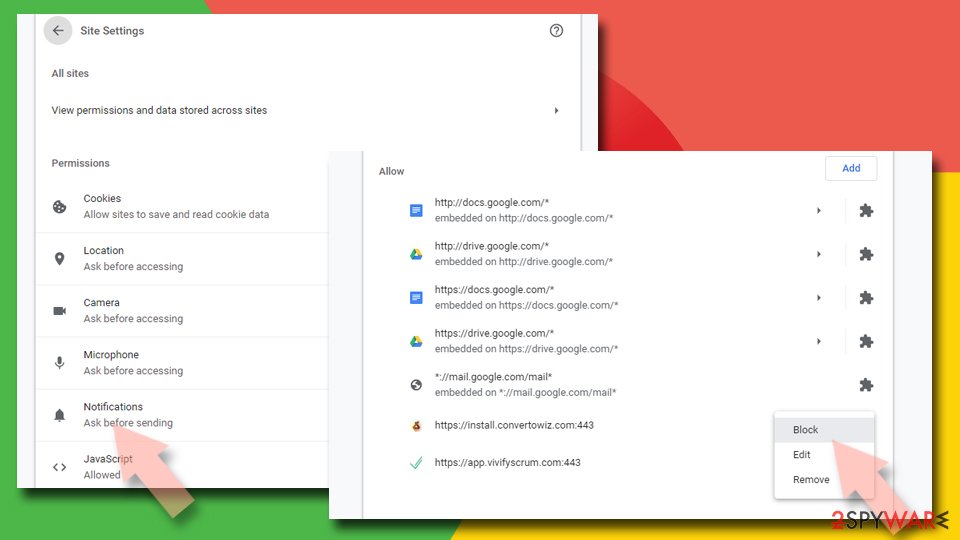
- Open the Google Chrome browser and go to Menu > Settings.
- Scroll down and click on Advanced.
- Locate the Privacy and security section and pick Site Settings > Notifications.
- Look at the Allow section and look for a suspicious URL.
- Click the three vertical dots next to it and pick Block. This should remove unwanted notifications from Google Chrome.

Mozilla Firefox
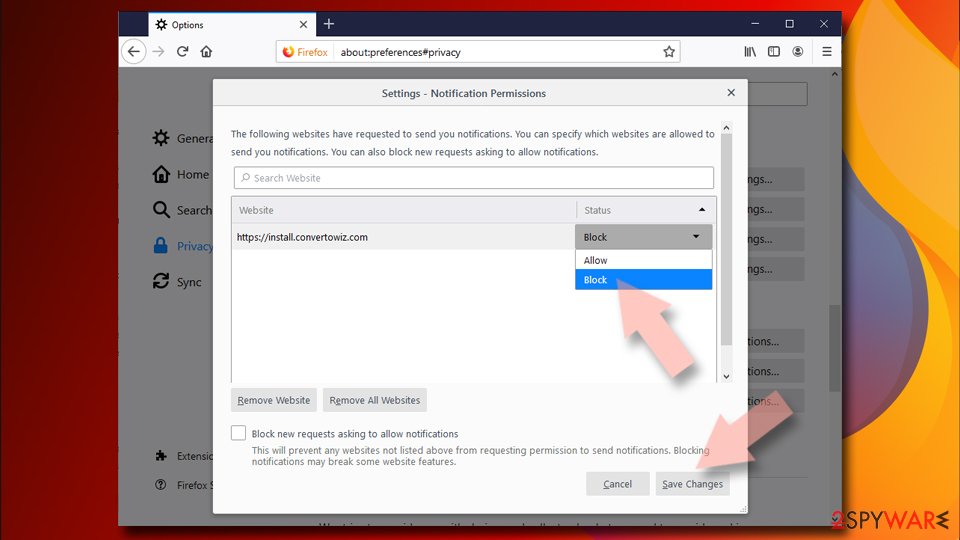
- Open Mozilla Firefox and go to Menu > Options.
- Click on Privacy & Security section.
- Under Permissions, you should be able to see Notifications. Click the Settings button next to it.
- In the Settings – Notification Permissions window, click on the URL's drop-down menu.
- Select Block and then click on Save Changes. This should remove unwanted notifications from Mozilla Firefox.

MS Edge (Chromium)
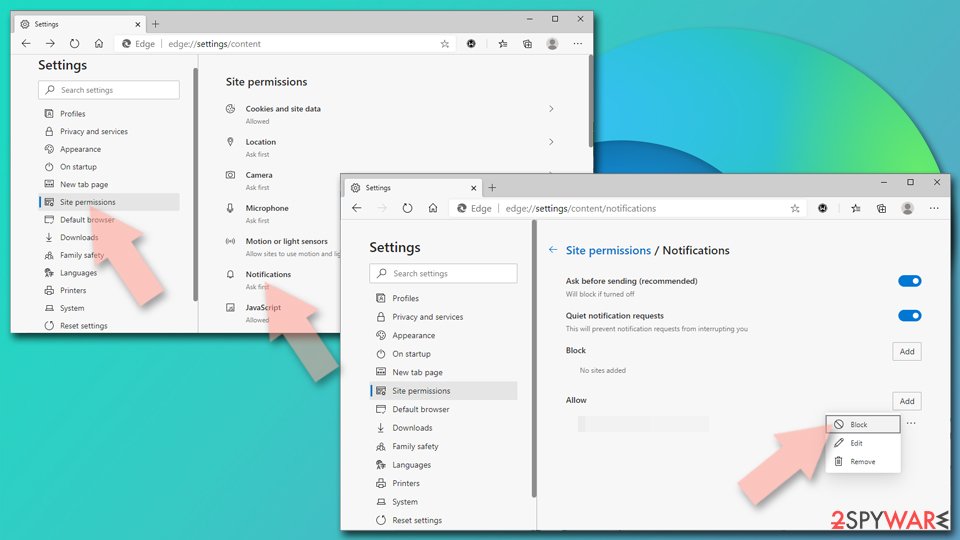
- Open Microsoft Edge, and go to Settings.
- Select Site permissions.
- Go to Notifications on the right.
- Under Allow, you will find the unwanted entry.
- Click on More actions and select Block.

Safari
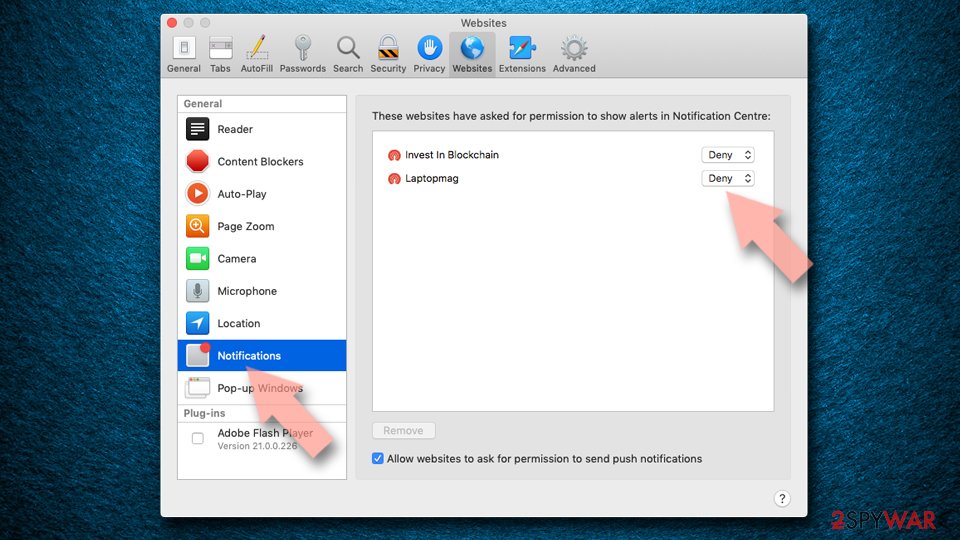
- Click on Safari > Preferences…
- Go to the Websites tab and, under General, select Notifications.
- Select the web address in question, click the drop-down menu and select Deny.

Did this guide help?
Be the first to comment