
Bluestringline.com ads: what it is and how to remove it
Bluestringline.com ads could start showing up on your desktop regardless of which browser - Google Chrome, Mozilla Firefox, MS Edge, or Safari - is open at the time. If this condition is not met, the suspicious activity will disappear immediately, as the push notifications are shown due to the calls from the website with the help of the browser's API.
Facts checked October 6, 2026. Removal steps tested on Windows 11 (26H2) and checked against Microsoft's and the browser makers' current documentation. Sections marked as our earlier report are the original text: they describe the threat as it was then and have not been reviewed since. The 2026 status, the removal steps and the questions are current.
Automatic
Get a free scan and check if your PC is infected.
Fortect finds malware, unwanted programs and the Windows damage they leave behind, and repairs it in one pass.
If notifications from bluestringline.com led you to download something, a free scan can check the PC for anything that came with it.
Do it yourself · free Remove Bluestringline.com ads yourself 2 steps, about 6 minutes, no software needed.
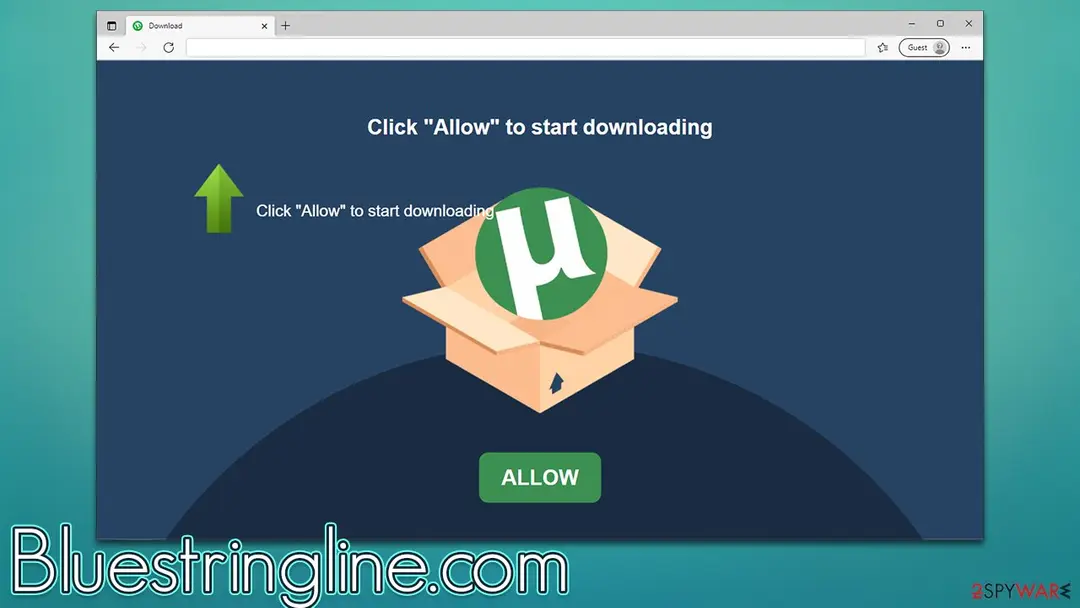
Bluestringline.com ads: summary
| Distribution | The website gains access to deliver any information as soon as the "Allow" button is pressed within the push notification prompt |
|---|---|
| Damage | If you click on links provided by the website, you might end up infecting your system with malware/PUPs, disclosing your personal information to cybercriminals, or losing money for useless services |
| Name | Bluestringline.com |
| Type | Push notifications, ads, scam, pop-ups |
| Symptoms | Pop-ups show up on a regular basis on the screen – these ads often include inappropriate, scam, phishing, or other similar content |
| Detection names | No Microsoft detection name is known |
| Removal | Scan the PC with security software to find and remove the malware and anything installed with it. Fortect scans Windows for malware and repairs the system files and settings it damaged. Remove it nowTo use the full-featured product, you have to purchase a license for Fortect. The scan is free. |
Show 7 more facts
| Evidence | 4 write-ups by security sites; details still limited |
|---|---|
| Domains | bluestringline.com |
| Ads shown as | Desktop notifications |
| Browsers | Chrome, Edge and Firefox |
| Installed on the PC | Nothing; a browser notification permission only |
| First seen | 13 May 2022 |
| Facts checked | 6 October 2026 |
Is Bluestringline.com ads dangerous?
From our report of May 2022 · not reviewed since
Bluestringline.com is a fraudulent website that tricks users into subscribing to push notifications
Bluestringline.com ads could start showing up on your desktop regardless of which browser - Google Chrome, Mozilla Firefox, MS Edge, or Safari - is open at the time.
If this condition is not met, the suspicious activity will disappear immediately, as the push notifications are shown due to the calls from the website with the help of the browser's API.
While the push notification feature was designed having no malicious intent in mind, cybercriminals find ways to abuse it. When it comes to the Bluestringline.com scam, users are typically tricked with misleading messages which encourage them to press the "Allow" button within the prompt.
Those who get tricked later see push notifications from the site, which usually include more phishing messages and malicious links - we do not recommend clicking them and instead block the website from showing you push notifications. Likewise, it is recommended to check the system for adware, as continuous redirects might be a sign of an infection.
From our report of May 2022 · not reviewed since
How did I end up on Bluestringline.com?
Most users would not visit potentially dangerous websites, so how do they end up there in the first place?
While it is true that most people don't intentionally put themselves in danger online, some of them are willing to risk it despite the known risks. We are talking about peer-to-peer networks and illegal video converting/streaming websites that are known to be the main cause of malicious links and redirects.
It is true that some users are unaware of the dangers of these websites, or they significantly underestimate how malicious they can be and visit them regardless. High-risk sites are known to be poorly secured, which allows cybercriminals to insert malicious links and rend ad-space, which embeds them with automatic scripts.
By clicking any of these, you risk being redirected to Bluestringline.com or other scam sites rather quickly. In addition, you might also download malicious installers without realizing it and install ransomware or other dangerous malware on your system. Thus, please refrain from visiting dubious websites, as they are more dangerous than they might seem.
From our report of May 2022 · not reviewed since
More from our earlier report on Bluestringline.com
- You can stop the unwanted notifications by accessing web browser settings.
- If you suspect adware infection, you should use security software to get rid of it
- Make sure you clean your browsers after you delete PUPs from the system.
- To do that automatically, you can use
Check your browser and PC
- Address:
bluestringline.com
How to remove Bluestringline.com ads
How to stop Bluestringline.com notifications
Do this in every browser you use, and in every profile inside it: each keeps its own list of sites allowed to send notifications.
Nothing has to be uninstalled for the notifications themselves.
Which browser shows the ads?
Step 1: Remove bluestringline.com from Chrome's notification list
Open More (the three dots) > Settings > Privacy and security > Site settings > Notifications, or paste
chrome://settings/content/notificationsinto the address bar.Under Allowed to send notifications, open the menu next to
bluestringline.comand choose Remove or Block, and do the same for any other address you do not recognise.Next to Not allowed to send notifications, click Add and enter bluestringline.com, so the site cannot ask again. The menus are the same in Chrome on Windows 11 and Windows 10, and each Chrome profile keeps its own list.
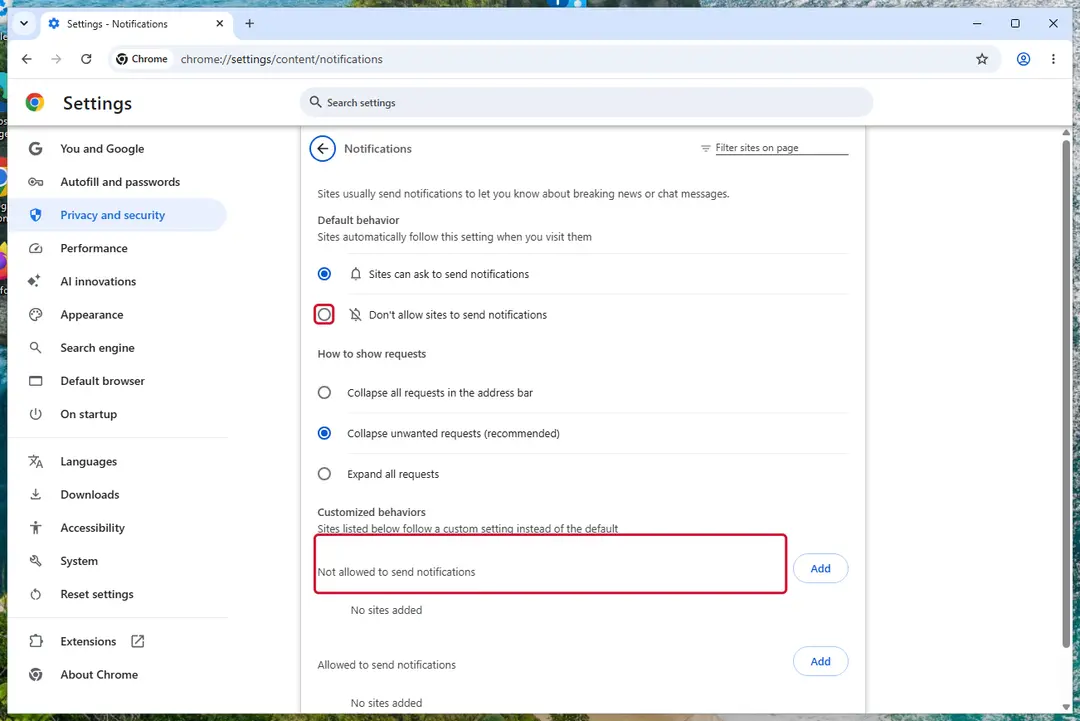
Chrome on Windows 11: Settings > Privacy and security > Site settings > Notifications. Full procedure with screenshots: Stop website notifications and pop-ups
Instructions for Google Chrome
Remove from Google Chrome
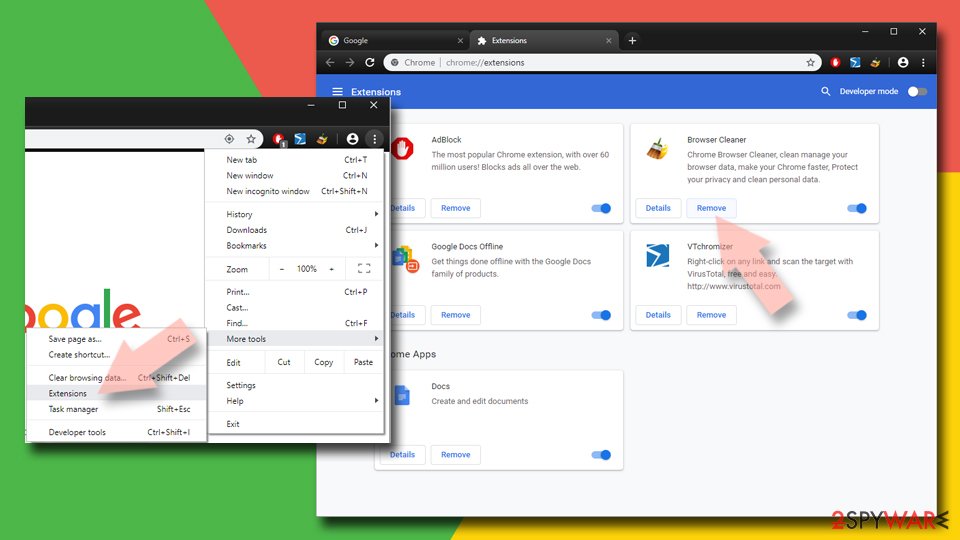
Delete malicious extensions from Google Chrome:
- Open Google Chrome, click on the Menu (three vertical dots at the top-right corner) and select More tools > Extensions.
- In the newly opened window, you will see all the installed extensions. Uninstall all suspicious extensions related to the unwanted program by clicking Remove.
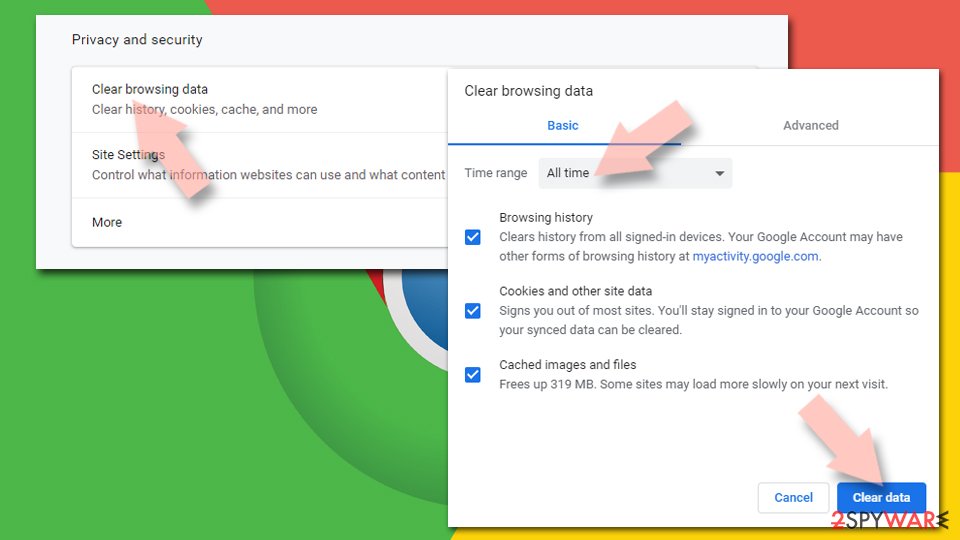
Clear cache and web data from Chrome:
- Click on Menu and pick Settings.
- Under Privacy and security, select Clear browsing data.
- Select Browsing history, Cookies and other site data, as well as Cached images and files.
- Click Clear data.
Change your homepage:
- Click menu and choose Settings.
- Look for a suspicious site in the On startup section.
- Click on Open a specific or set of pages and click on three dots to find the Remove option.
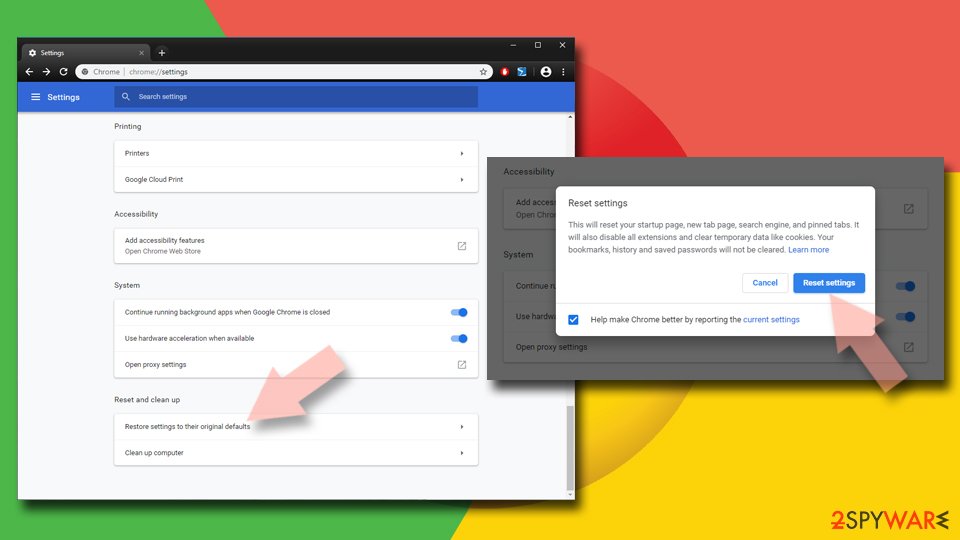
Reset Google Chrome:
If the previous methods did not help you, reset Google Chrome to eliminate all the unwanted components:
- Click on Menu and select Settings.
- In the Settings, scroll down and click Advanced.
- Scroll down and locate Reset and clean up section.
- Now click Restore settings to their original defaults.
- Confirm with Reset settings.
Step 1: Remove bluestringline.com from Edge's notification list
Edge stores its own permission list, separate from Chrome's, and it is often the browser behind these pop-ups on Windows 11 and Windows 10.
Go to Settings > Privacy, search, and services > Site permissions > All permissions > Notifications, or paste
edge://settings/content/notifications. Removebluestringline.comfrom Allowed, then add it under Not allowed to send notifications. Notifications that show the Edge logo come from this list.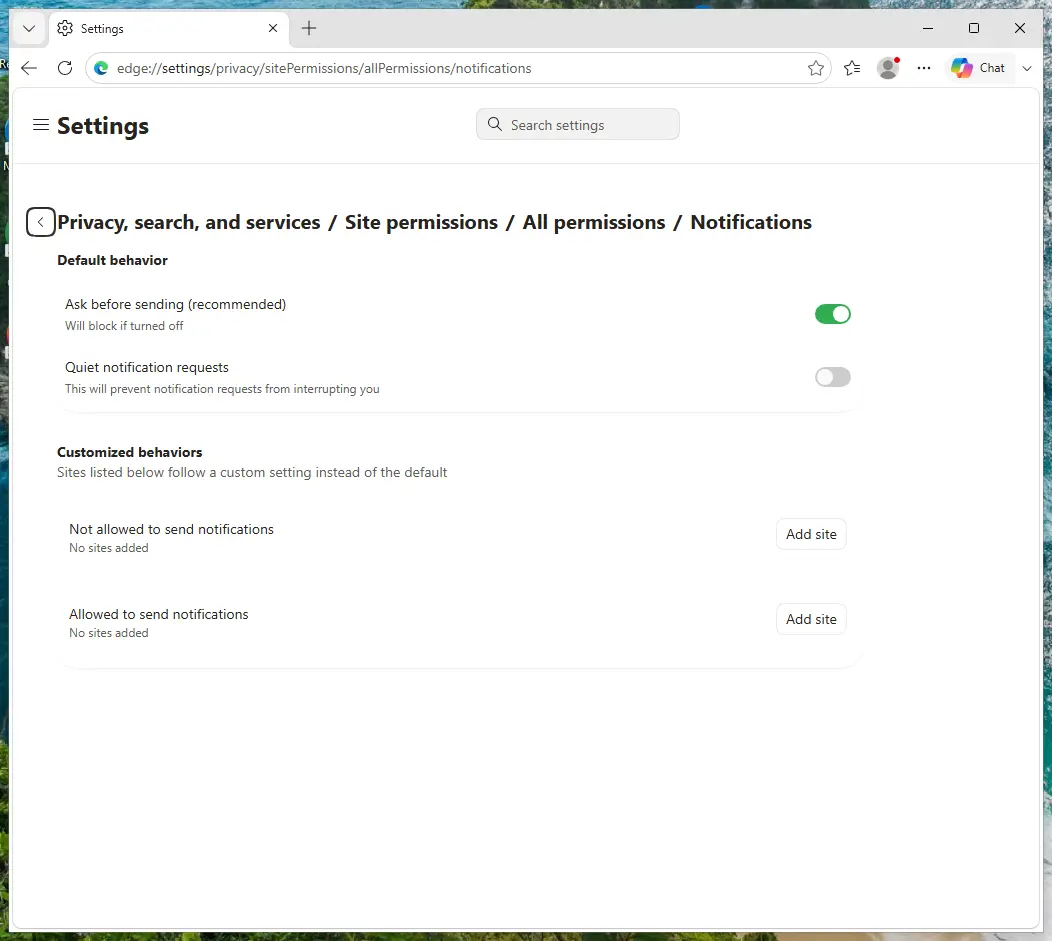
Edge on Windows 11: Site permissions > All permissions > Notifications. Full procedure with screenshots: Stop website notifications and pop-ups
Instructions for Microsoft Edge
Remove from Microsoft Edge
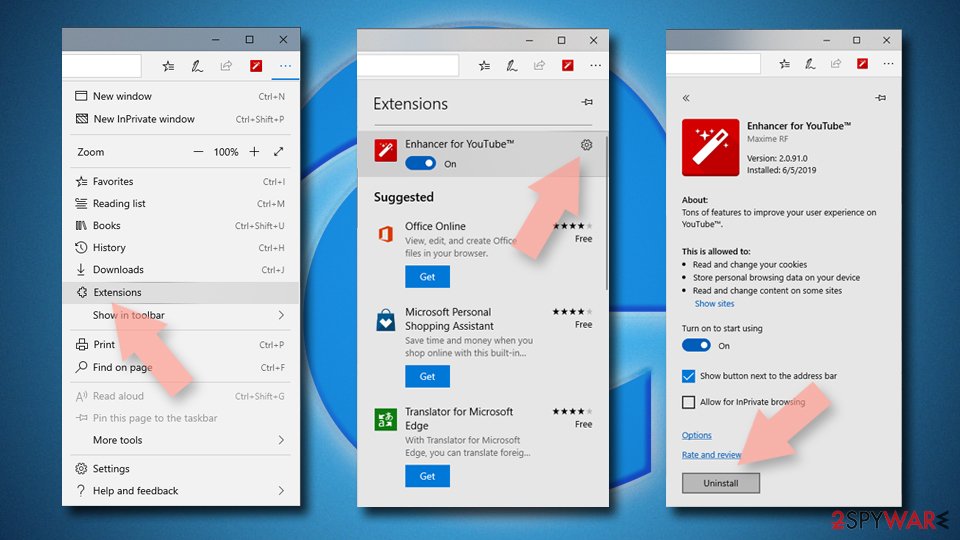
Delete unwanted extensions from MS Edge:
- Select Menu (three horizontal dots at the top-right of the browser window) and pick Extensions.
- From the list, pick the extension and click on the Gear icon.
- Click Remove.
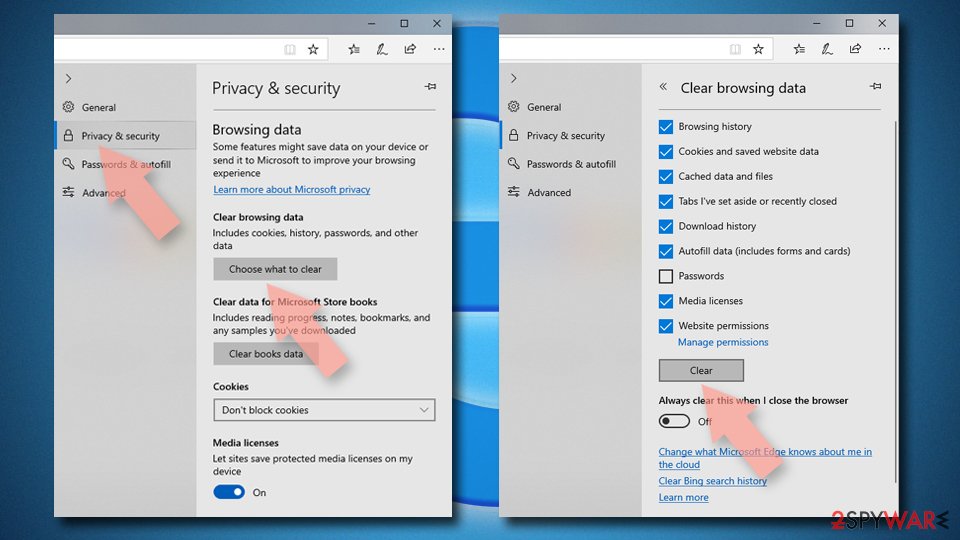
Clear cookies and other browser data:
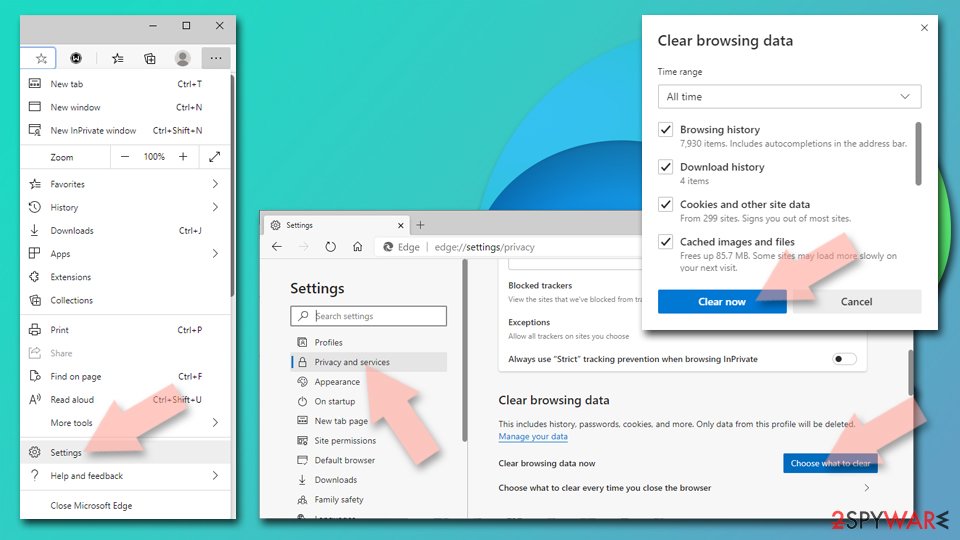
- Click on the Menu (three horizontal dots at the top-right of the browser window) and select Settings > Privacy, search, and services..
- Under Clear browsing data, pick Choose what to clear.
- Select Cookies and other site data and Cached images and files. (apart from passwords, although you might want to include Media licenses as well, if applicable) and click on Clear.
Restore new tab and homepage settings:
- Click the menu icon and choose Settings.
- Then find On startup section.
- Click Remove next to any suspicious startup page.
Reset MS Edge if the above steps did not work:
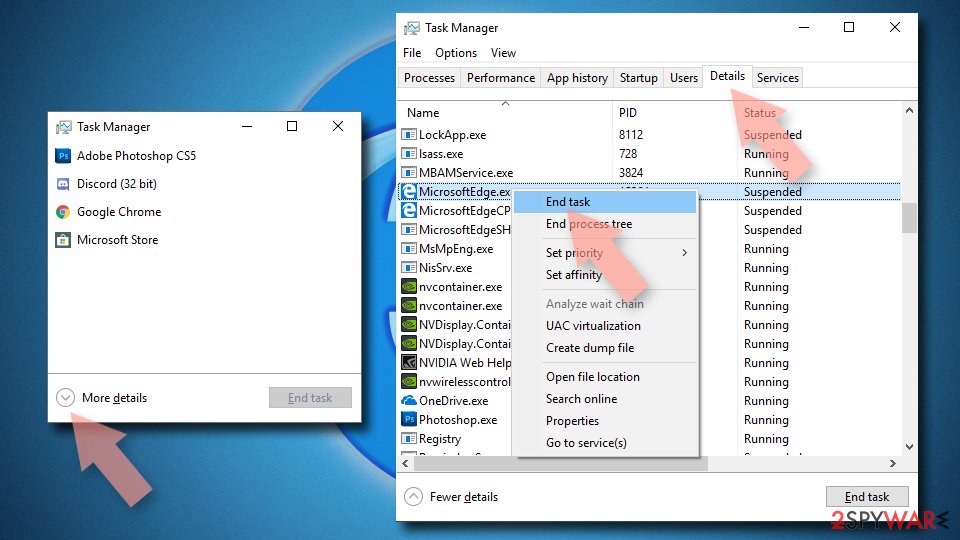
- Press on Ctrl + Shift + Esc to open Task Manager.
- Click on More details arrow at the bottom of the window.
- Select Details tab.
- Now scroll down and locate every entry with Microsoft Edge name in it. Right-click on each of them and select End Task to stop MS Edge from running.
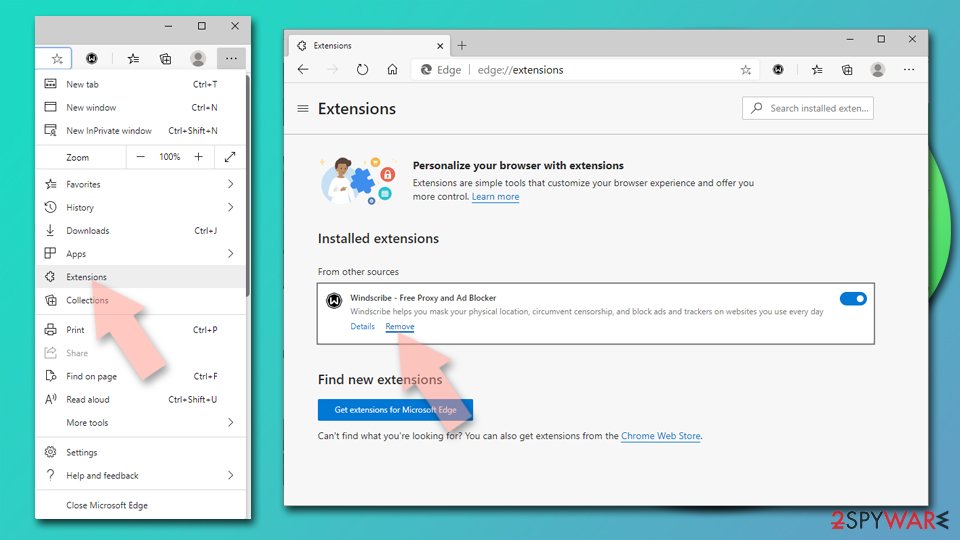
Delete extensions from MS Edge (Chromium):
- Open Edge and click select Settings > Extensions.
- Delete unwanted extensions by clicking Remove.
Clear cache and site data:
- Click on Menu and go to Settings.
- Select Privacy, search and services.
- Under Clear browsing data, pick Choose what to clear.
- Under Time range, pick All time.
- Select Clear now.
Reset Chromium-based MS Edge:
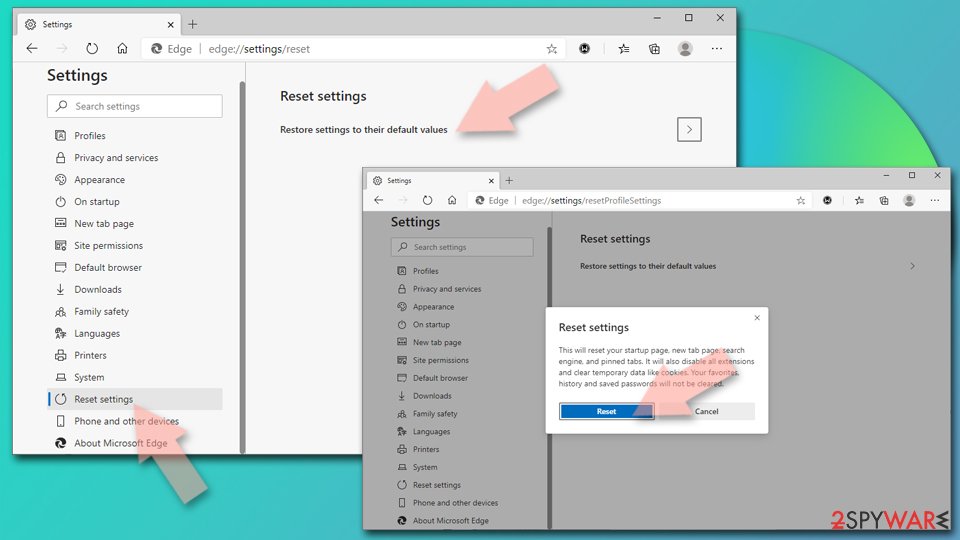
- Click on Menu and select Settings.
- On the left side, pick Reset settings.
- Select Restore settings to their default values.
- Confirm with Reset.
- This will disable extensions and reset startup pages but will not delete bookmarks, saved passwords, or browsing history.
Step 1: Remove bluestringline.com from Firefox's notification permissions
In Firefox the permission sits in Settings > Permissions and data > Notifications (in older versions Privacy & Security > Notifications > Settings). Select
bluestringline.comin the list, click Remove Website, and confirm with Save Changes.Firefox only shows these notifications while it is open, so if they stopped after closing Firefox, this is the browser to clean. The steps are the same on Windows 11 and Windows 10.
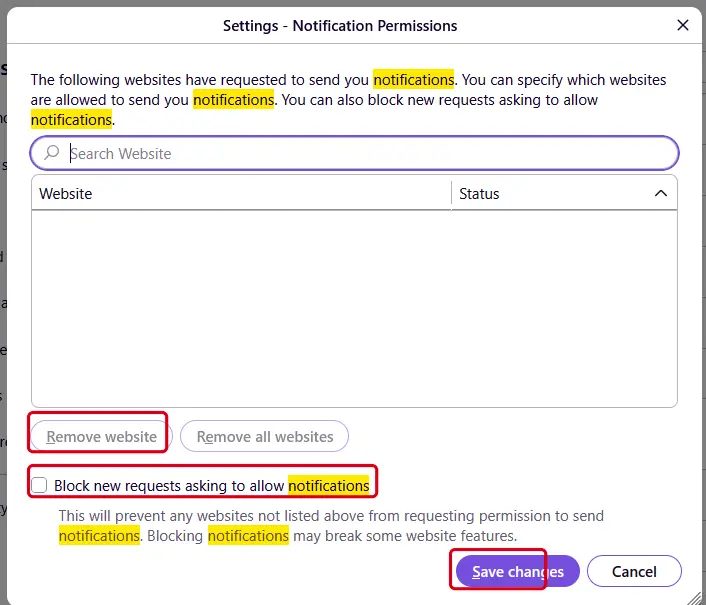
Firefox on Windows 11: the Notification Permissions window. Full procedure with screenshots: Stop website notifications and pop-ups
Instructions for Mozilla Firefox
Remove from Mozilla Firefox (FF)
Remove dangerous extensions:
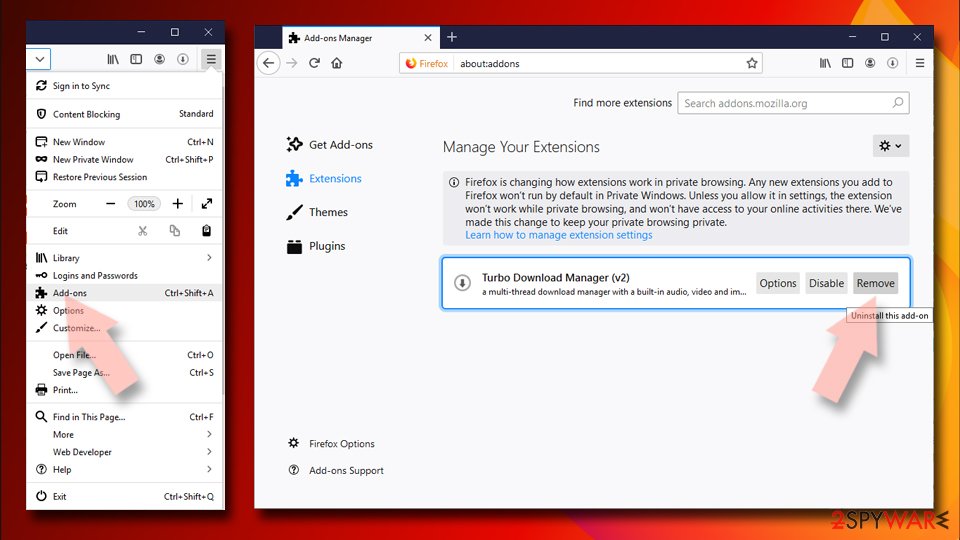
- Open Mozilla Firefox browser and click on the Menu (three horizontal lines at the top-right of the window).
- Select Add-ons.
- In here, select the unwanted extension and click Remove.
Reset the homepage:
- Click three horizontal lines at the top right corner to open the menu.
- Choose Settings.
- Under Home, set your preferred homepage and new tab settings.
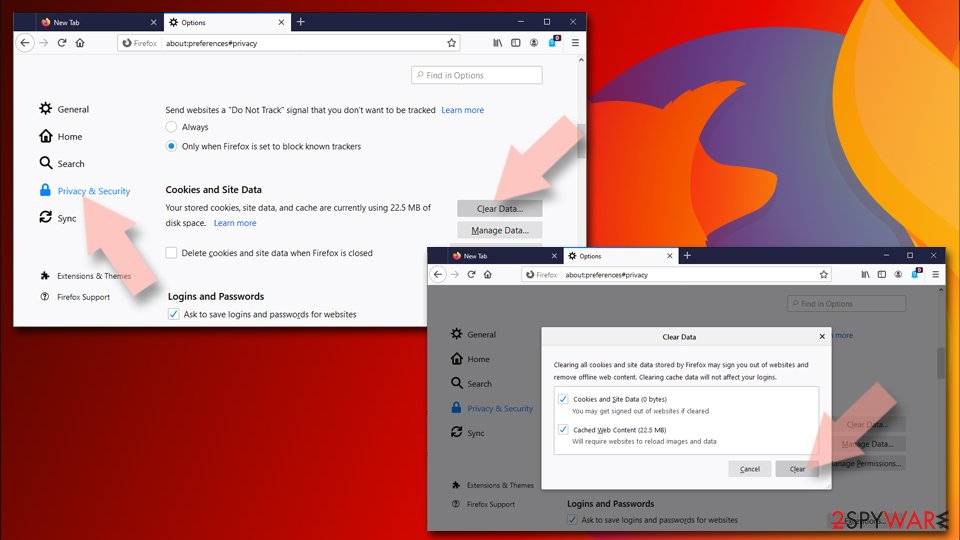
Clear cookies and site data:
- Click Menu and pick Settings.
- Go to Privacy & Security section.
- Scroll down to locate Cookies and Site Data.
- Click on Clear Data...
- Select Cookies and Site Data and Temporary cached files and pages, then click Clear.
Reset Mozilla Firefox
If clearing the browser as explained above did not help, reset Mozilla Firefox:
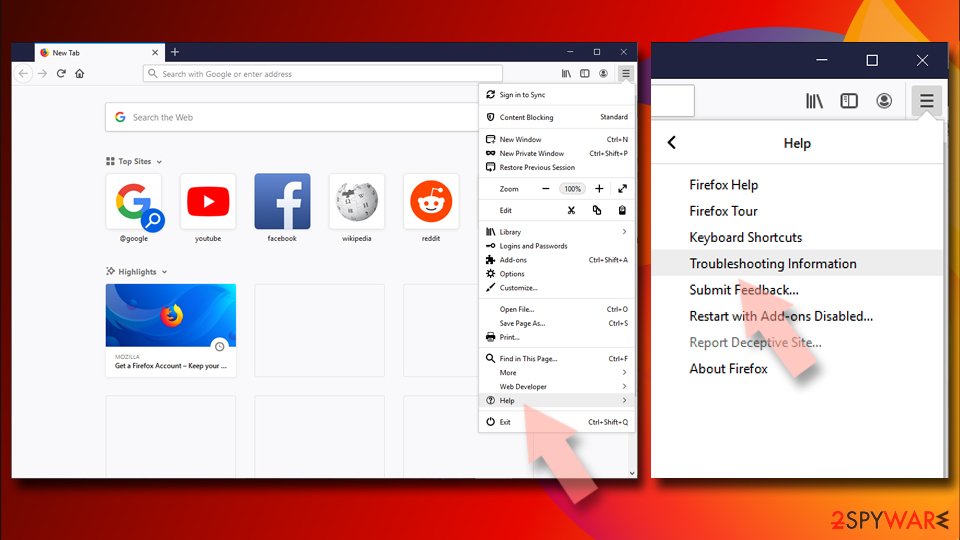
- Open Mozilla Firefox browser and click the Menu.
- Go to Help and then choose Troubleshooting Information.
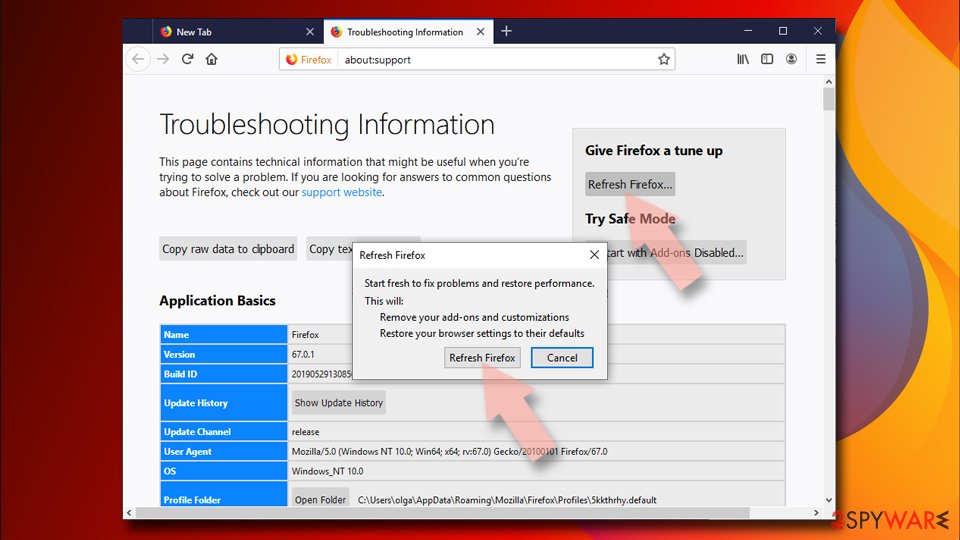
- Under Give Firefox a tune up section, click on Refresh Firefox...
- Once the pop-up shows up, confirm the action by pressing on Refresh Firefox.
Our tested steps are for Windows 11 and 10. For Safari (Mac), use the instructions below.
Instructions for Safari (Mac)
Delete from Safari
Remove dangerous extensions:
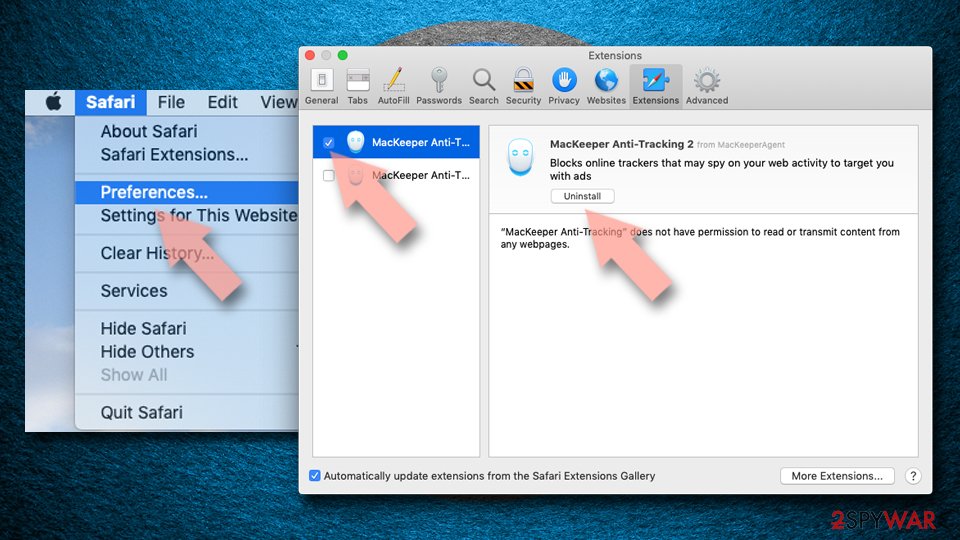
- Open Safari, click Safari in the menu at the top-left of the screen, and select Preferences.
- Go to the Extensions tab, look for any suspicious entries, and click Uninstall to remove them.
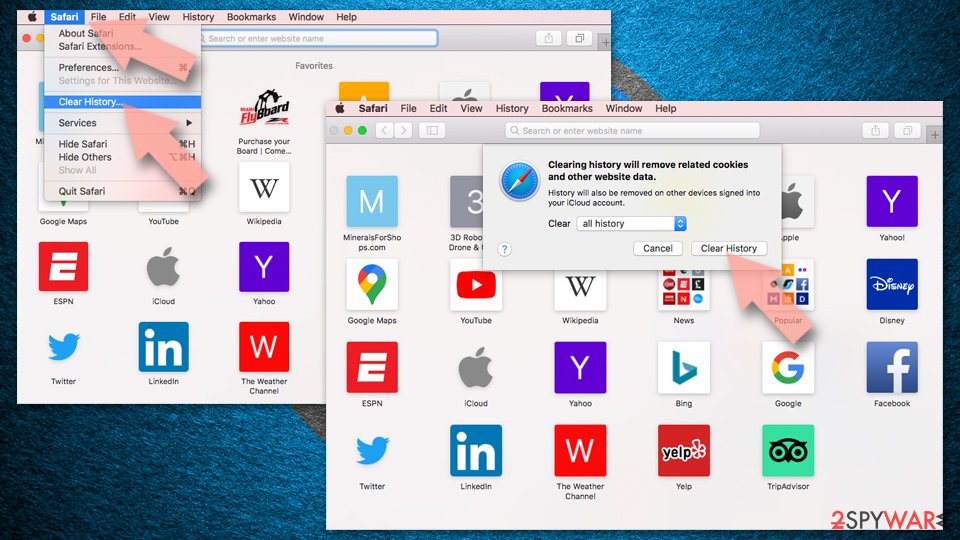
Clear history and website data:
- Click Safari in the menu and pick Clear History.
- Set Clear to all history and confirm with Clear History.
Reset Safari:
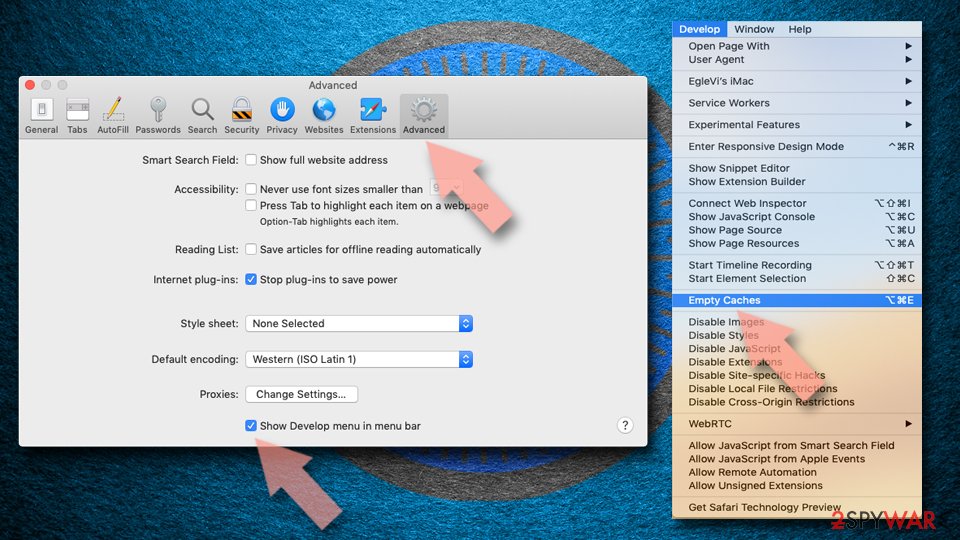
- Click Safari in the menu and select Preferences > Advanced.
- Enable Show Develop menu in menu bar.
- From the menu bar, click Develop and select Empty Caches.
Then, whichever browser you use
Step 2: Scan the PC if you downloaded anything from the ads
Most people who only saw the notifications can skip this step. If a notification or the page it opened made you download or run a file, delete the file and run a full scan, then a Microsoft Defender Offline scan.
In Windows 11 and Windows 10 open Windows Security > Virus & threat protection > Scan options, select Microsoft Defender Antivirus (offline scan) and click Scan now. The PC restarts and the scan takes about 15 minutes, so save your work first.
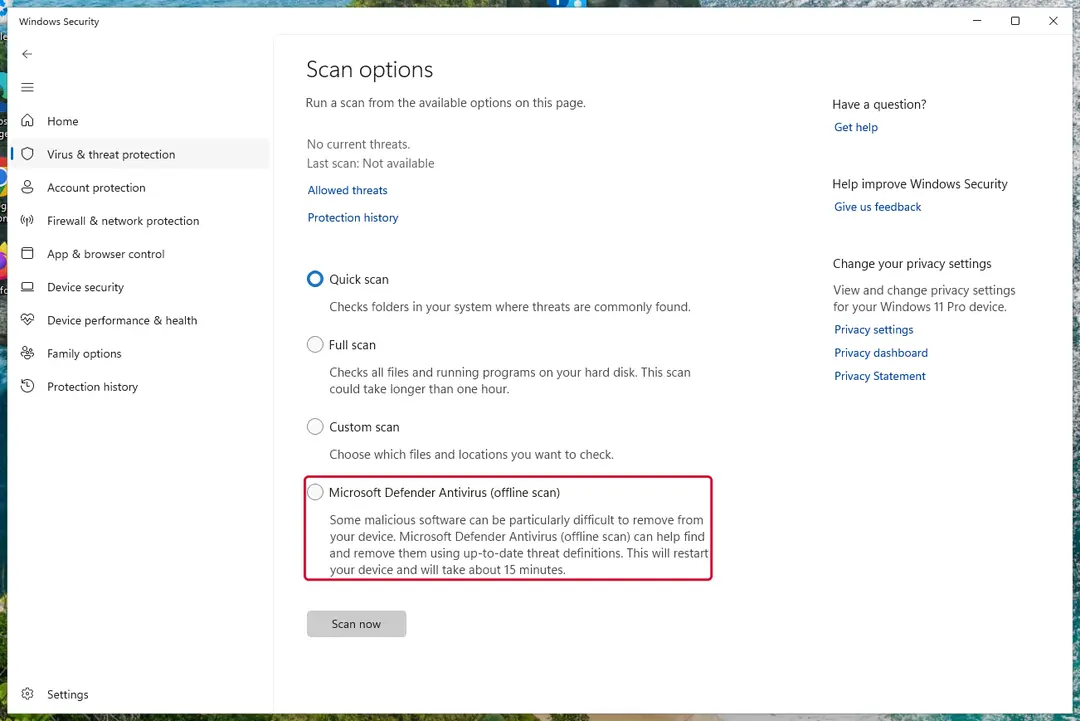
Windows 11: Windows Security > Virus & threat protection > Scan options. Full procedure with screenshots: Run a Microsoft Defender Offline scan
More removal instructions
For programs installed on the PC and older browsers. Open the one you need.
How to avoid being scammed?
After being redirected, users are usually taken by surprise - they are usually met with what looks like a simple request.
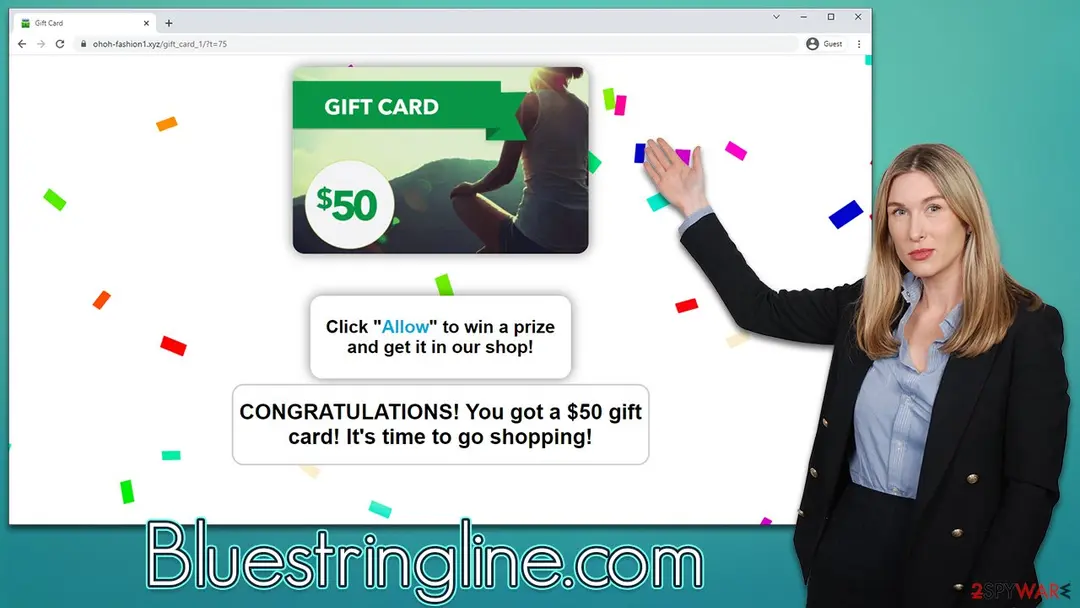
If not thinking of it carefully, it is easy to get caught up in a scam rather easily and, due to peculiarities of how it works, only notice the activity much later. These are the messages you might expect upon arriving at Bluestringline.com:
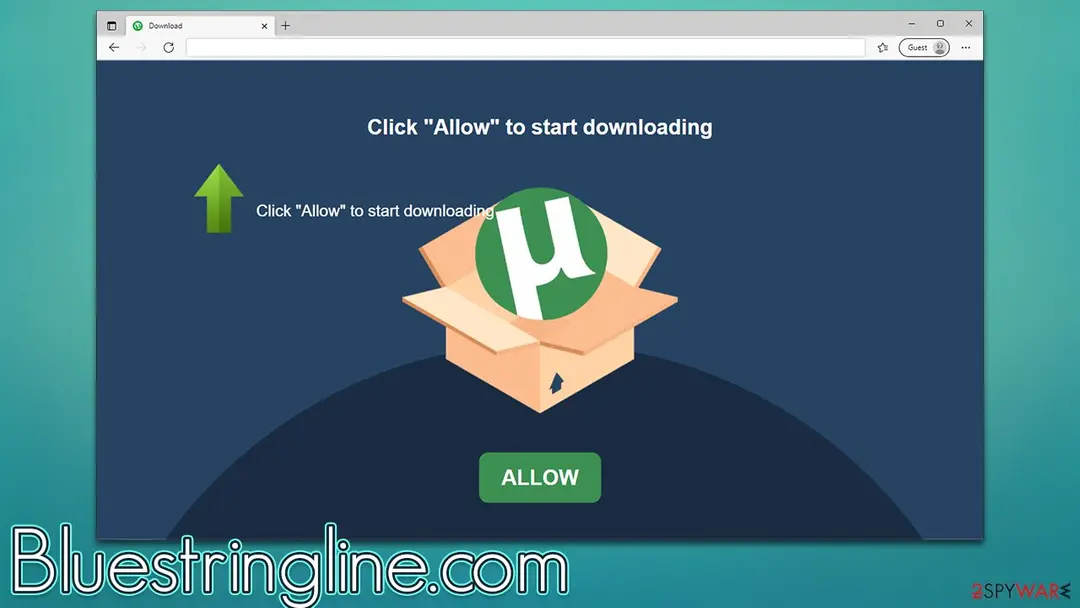
Scammers attempt to present the request to enable notifications as something entirely different - it allegedly is to enable video playback or bypass a simple robot check. However, regardless if "Allow" or "Block" is selected, users are simply forwarded to another malicious page, such as Nathanaeldan.pro, News-fesihe.cc, Computeradshub.com, and others.
- Your file is ready to download. Press Allow to continue
- Just one more step! "Allow" to continue
- Click Allow to confirm you are not a robot
- If you are 18+, click Allow
- Click Allow to win a prize and get it in our shop!
Removal of Bluestringline.com ads
You can block a website from showing you push notifications easily - all you have to do is access browser settings.
Since many users consider pop-ups as such a virus, they are unaware that a simple block is a way of getting rid of a rather annoying and sometimes even dangerous issue.
MS Edge (Chromium)
- Open Google Chrome browser and go to Menu > Settings.
- Locate the Privacy and security section and pick Site Settings > Notifications.
- Look at the Allow section and look for a suspicious URL.
- Click the three vertical dots next to it and pick Block. This should remove unwanted notifications from Google Chrome.
- Open Mozilla Firefox and go to Menu > Options.
- Click on Privacy & Security section.
- Under Permissions, you should be able to see Notifications. Click the Settings button next to it.
- In the Settings – Notification Permissions window, click on the drop-down menu by the URL in question.
- Select Block and then click on Save Changes. This should remove unwanted notifications from Mozilla Firefox.
- Click on Safari > Preferences...
- Go to the Websites tab and, under General, select Notifications.
- Select the web address in question, click the drop-down menu and select Deny.
- Open Microsoft Edge, and click the Settings and more button (three horizontal dots) at the top-right of the window.
- Select Settings and then go to Advanced.
- Under Website permissions, pick Manage permissions and select the URL in question.
- Toggle the switch to the left to turn notifications off on Microsoft Edge.
- Open Microsoft Edge, and go to Settings.
- Select Site permissions.
- Go to Notifications on the right.
- Under Allow, you will find the unwanted entry.
- Click on More actions and select Block.
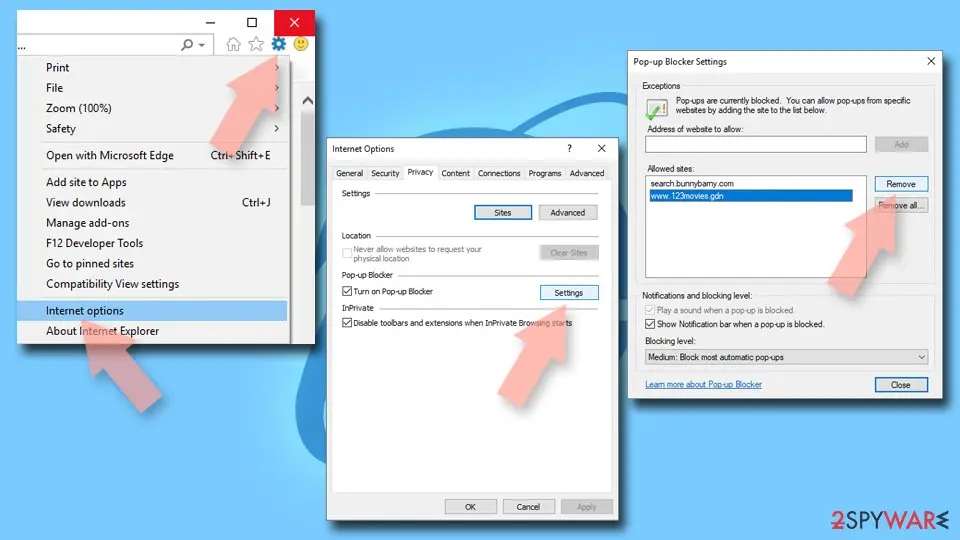
- Open Internet Explorer, and click on the Gear icon at the top-right of the window.
- Select Internet options and go to the Privacy tab.
- In the Pop-up Blocker section, click on Settings.
- Locate web address in question under Allowed sites and pick Remove.
Adware elimination explained
While users enter push notification scam sites during visits to high-risk sites, there is also a possibility that adware is causing these redirects.
Adware is a type of potentially unwanted software that is commonly installed with freeware accidentally. As a result, many people might not even suspect that they have it running in the background.
Make sure that the security app is fully updated, and then perform a full system scan. This way, you can be sure that no aggressive adware or malware is running on your system.
After removing all the infections, you are less likely to encounter suspicious content online and reduce the amount of advertising you see while browsing the web. We also recommend cleaning your web browsers as explained below or employing for a quicker solution.
Access your website securely from any location
When you work on the domain, site, blog, or different project that requires constant management, content creation, or coding, you may need to connect to the server and content management service more often. The best solution for creating a tighter network could be a dedicated/fixed IP address.
If you make your IP address static and set to your device, you can connect to the CMS from any location and do not create any additional issues for the server or network manager that needs to monitor connections and activities. VPN software providers like can help you with such settings and offer the option to control the online reputation and manage projects easily from any part of the world.
Recover files after data-affecting malware attacks
While much of the data can be accidentally deleted due to various reasons, malware is one of the main culprits that can cause loss of pictures, documents, videos, and other important files.
More serious malware infections lead to significant data loss when your documents, system files, and images get encrypted. In particular, ransomware is is a type of malware that focuses on such functions, so your files become useless without an ability to access them.
Even though there is little to no possibility to recover after file-locking threats, some applications have features for data recovery in the system. In some cases, can also help to recover at least some portion of your data after data-locking virus infection or general cyber infection.
Questions about Bluestringline.com ads
How do I stop notifications from bluestringline.com?
Remove its permission in the browser. The bottom line of each notification names the browser, so open that browser's notification settings and look under Allowed. Remove bluestringline.com and any other site you do not recognise.
In Chrome and Edge this is under the site settings for notifications; in Firefox it is under Settings, Permissions and data, Notifications. Do this in every browser profile, because each one keeps its own list.
Restart the browser and wait a few minutes. If a message still arrives, read its bottom line again: the sending address can differ from the site you remember, and that is the entry still left in the list.
Did a notification from bluestringline.com infect my computer?
A notification cannot infect a PC. It is a short text with a link that the browser displays. Clicking it opens a page, and a page cannot install anything unless you agree to a download and run the file.
So the answer depends on what you did after clicking. Looked and closed: you are fine. Downloaded but did not open: delete the file.
Opened a downloaded file: uninstall what it added and scan the PC. Typed card or login details: contact the bank and change the password. In every case, remove bluestringline.com from the browser's allowed notifications so the messages stop.
What is Bluestringline.com?
Bluestringline.com is a push-notification spam site, a kind of adware. It earns money by showing desktop notifications, and each view, click or redirect pays whoever runs it. It is not something people usually choose; it arrives through a free download, a fake button or a misleading prompt.
Bluestringline.com does not encrypt files or take control of Windows, but its ads are sold to anyone, including scam operators, so they can lead to fake virus warnings and unwanted downloads. The steps in this guide remove it from Windows and from each browser.
Why does bluestringline.com keep showing up?
There are two possible reasons. If it appears as desktop notifications, a browser on this PC was given permission to receive them from bluestringline.com, usually through a misleading prompt. That permission stays until you remove it in the browser's site settings.
If it appears as tabs or redirects, an ad on a site you visit is opening it, or an extension or program on the PC is. Test a private window: if bluestringline.com never appears there, an extension is the likely cause. The plan above covers each case.
Do I have to change settings in every browser?
Only in the browsers that allowed bluestringline.com, but checking all of them takes a minute and is worth it. We saw the notifications in Chrome, Edge and Firefox. Chrome and Edge keep their notification lists under site settings, and Firefox under Privacy & Security > Permissions.
Remove bluestringline.com and any other unfamiliar site from each list, then turn off new notification requests if you do not need them. Remember that every browser profile has its own list, so a second profile can keep the messages coming after you clean the first.
Are the pop-ups I see really from Bluestringline.com?
Compare them with the details in the table above. Bluestringline.com produces desktop notifications, and the clearest sign of it is notifications from bluestringline.com. Other adware looks similar, so check the name of the sending site at the bottom of a notification, the address in the tab that opened, or the newest entries on the extensions page.
If those match, this guide fits. If you see a different name, the same kind of steps apply, but remove the item you actually find rather than guessing.
My scan found nothing, but the ads continue. Why?
Because the source may not be a file a scanner looks for. Browser notifications are a permission stored in the browser, and many adware extensions are not flagged because they come from an official store.
Some ad-supported programs are only reported if you enable detection of potentially unwanted apps. So a clean scan does not mean the job is done. Check each browser's notification permissions and extension list by hand, and turn on Potentially unwanted app blocking in Windows Security before scanning again.
Can an adware pop-up infect my PC just by appearing?
No. A pop-up, a notification or a new tab is only a web page or a message. It cannot run programs on Windows by itself, provided the browser and Windows are up to date. Infection needs a step from you:
- running a downloaded file
- installing an extension
- giving a stranger remote access
That is why scam pages work so hard to make you click. Close such pages with the tab's X or by closing the browser, not with buttons inside the page, which may start a download.
Can I turn off the pop-ups in Windows settings instead?
You can hide them, but that is not the fix. In Windows 11, Settings > System > Notifications lets you switch off notifications for a whole browser, which silences the spam together with every useful notification from that browser.
The site keeps its permission and can still send messages when you switch them back on. It is better to remove the specific site in the browser's own notification settings and block new requests. That stops the messages at the source and leaves the rest of your notifications working.
Will Fortect remove Bluestringline.com?
No program removes Bluestringline.com itself, because there is nothing on the PC to remove: the notifications come through a permission saved in the browser, and only the browser's settings take it away, as the steps above show.
What Fortect can do is check the rest of Windows. Its free scan looks for malware, unwanted programs and damaged system files, which is useful if you clicked the ads, downloaded something from the pages they opened, or are not sure what else changed on the PC.
If the scan finds nothing and the notifications stopped after you removed the permission, this problem is solved. Use Microsoft Defender as a second opinion whenever you have downloaded files from pages like these.
Sources
- IBM: Application Programming Interface (API) (read October 6, 2026)
- Wikipedia: Phishing (read October 6, 2026)
- Google Chrome Help: Use notifications to get alerts (no longer online) (read October 6, 2026)
- FTC: How to recognize, remove and avoid malware (read October 6, 2026)
- Microsoft Learn: Microsoft Defender Offline (read October 6, 2026)