

Cbirka.com – a suspicious website that can bring malicious ads to your screen

Cbirka.com is a questionable site that users often encounter through unexpected pop-up ads. These notifications can appear directly on the desktop, regardless of what webpage the user is browsing, which can cause confusion and surprise.
Many users might not be aware that Cbirka.com notifications started because they previously allowed push notifications, often unknowingly. The site employs various deceptive tactics to trick people into subscribing. Since the unwanted behavior typically begins later, it can be challenging for users to identify how or when it started.
The biggest concern with enabling Cbirka.com alerts is their intrusive nature and the potential risk they carry. These ads frequently promote malicious or fraudulent content, which could lead to malware infections, loss of sensitive data, or financial scams involving worthless products or services.
| Name | Cbirka.com |
| Type | Push notifications, ads, scam, pop-ups |
| Distribution | Push notifications show up at some point after the “Allow” button in the notification prompt is clicked |
| Symptoms | Pop-ups show up on a regular basis on the screen – these ads often include inappropriate, scam, phishing, or other similar content |
| Risks | Push notification prompts might include links to malicious websites, resulting in financial losses, personal information disclosure, or malware infections |
| Removal | Access browser settings to stop intrusive push notifications. After that, make sure that your system is not infected with adware or malware – scan it with SpyHunterCombo Cleaner |
| Other tips | It is important to clean web browser caches to prevent further data tracking and other issues related to web data corruption – use FortectIntego to do this quicker |
Push notifications – what are they?
Many users often mix up pop-up ads and push notifications, which is understandable, as they appear quite similar. Both show up as separate windows at unexpected times, displaying promotional content. Although they share the same purpose of generating ad revenue, their operations are fundamentally different.
Typically, pop-up ads activate as soon as a user visits a specific website that hosts them. In this case, users have the option to avoid such sites if they wish to steer clear of these intrusive ads. On the other hand, Cbirka.com notifications function differently, as they rely on the browser's push notification API (Application Programming Interface).
This means that push notifications from Cbirka.com can appear regardless of the websites a user is currently viewing, and they don't even need to have their browser open actively. In some cases, users might even be interrupted from full-screen activities like watching videos or gaming, simply because the browser is running in the background.
How users get scammed?
Most people would not choose to subscribe to notifications that flood their desktops with intrusive or harmful content. Scammers operating push notification schemes, like those on Cbirka.com, know this well and use social engineering techniques to deceive users into doing what they typically wouldn't.
Because, as noted, redirects to Cbirka.com occur unexpectedly, users might not have the time to fully consider what they are doing and may follow the website's prompts, especially when the messages appear familiar. Some common examples include:
- Press “Allow” to verify that you are not a robot
- If you are 18+, click Allow
- Click Allow to watch the video
- Browser verification in progress – click the “Allow” button to access
- Click “Allow” to win a prize and claim it in our shop!

These messages may pop up once you access the site, as scam pages like Cbirka.com often change their content dynamically based on factors like user location, browser settings, or the source of the redirect. Such strategies are common among various fraudulent websites, using different methods to target unsuspecting users.
Removing unwanted pop-ups
Before dealing with notifications from Cbirka.com, it’s essential to inspect your system for any signs of malware or adware infections. If your device is compromised, you might experience an increase in ads and frequent redirects to suspicious sites during browsing.
To detect and remove such threats effectively, use trusted security programs like SpyHunterCombo Cleaner or MalwarebytesMalwarebytes. These tools are designed to perform a thorough system scan and eliminate any malicious software. Additionally, utilizing a repair tool such as FortectIntego can help remove trackers and repair any damage caused by malware, ensuring that your system remains stable and performs optimally.
To disable unwanted push notifications, access the settings or options menu in your browser. Most browsers include a dedicated privacy and security section where you can manage permissions for various sites. Within this section, there is usually an option for notifications management.
In the notifications settings, you’ll find a list of sites that have permission to send push alerts. If you notice a site like Cbirka.com in the list, you can change its status from “Allow” to “Block” or “Ask” to stop further notifications. Refer to the following browser-specific instructions for detailed steps.
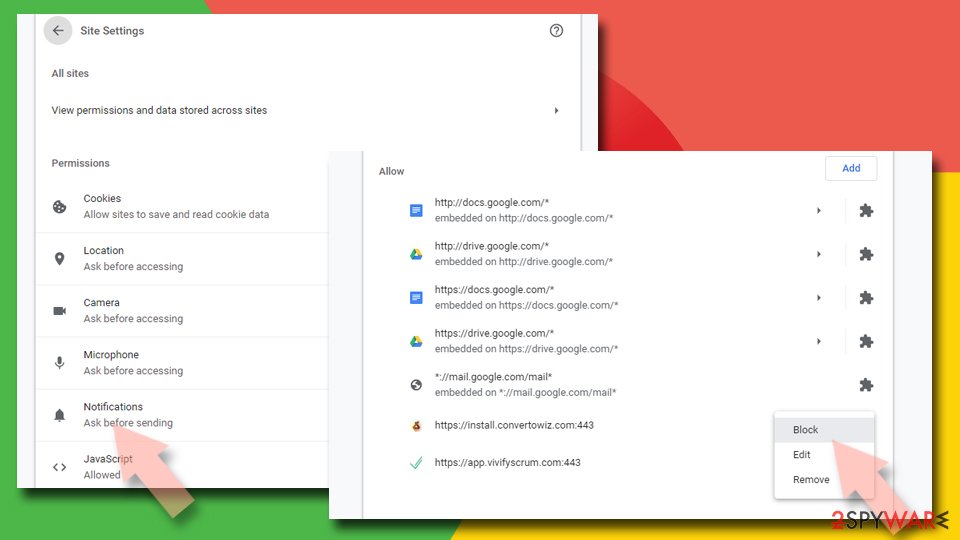
Google Chrome (desktop)
- Open the Google Chrome browser and go to Menu > Settings.
- Scroll down and click on Advanced.
- Locate the Privacy and security section and pick Site Settings > Notifications.
- Look at the Allow section and look for a suspicious URL.
- Click the three vertical dots next to it and pick Block. This should remove unwanted notifications from Google Chrome.

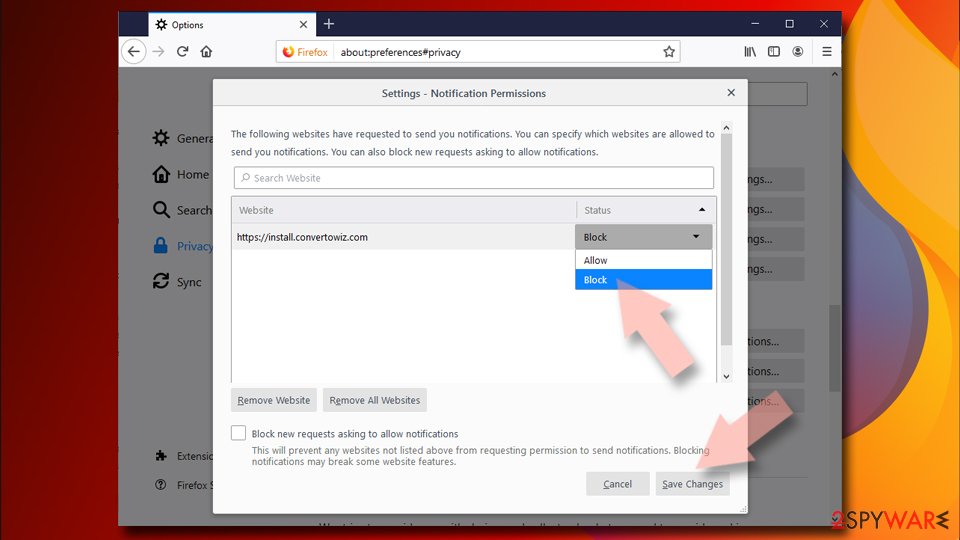
Mozilla Firefox
- Open Mozilla Firefox and go to Menu > Options.
- Click on Privacy & Security section.
- Under Permissions, you should be able to see Notifications. Click the Settings button next to it.
- In the Settings – Notification Permissions window, click on the drop-down menu by the URL in question.
- Select Block and then click on Save Changes. This should remove unwanted notifications from Mozilla Firefox.

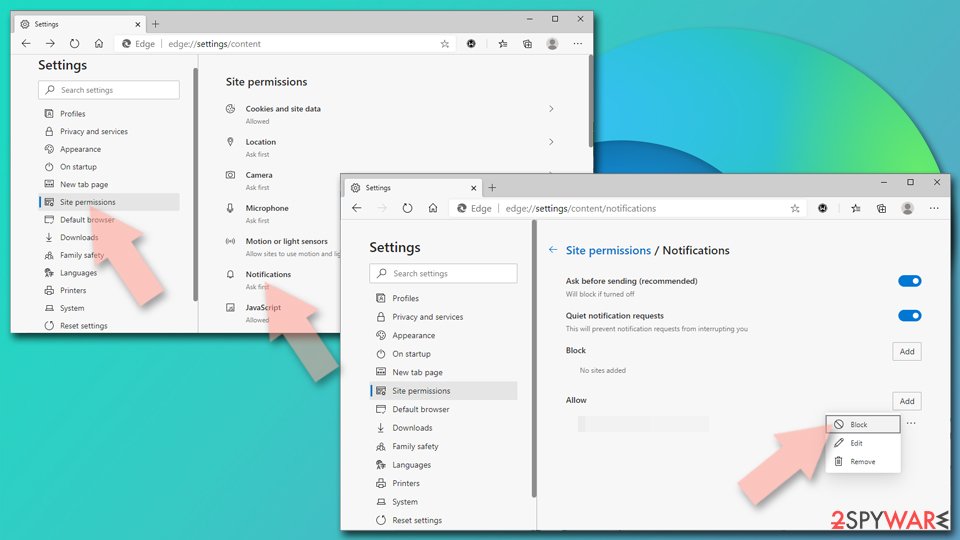
MS Edge (Chromium)
- Open Microsoft Edge, and go to Settings.
- Select Site permissions.
- Go to Notifications on the right.
- Under Allow, you will find the unwanted entry.
- Click on More actions and select Block.

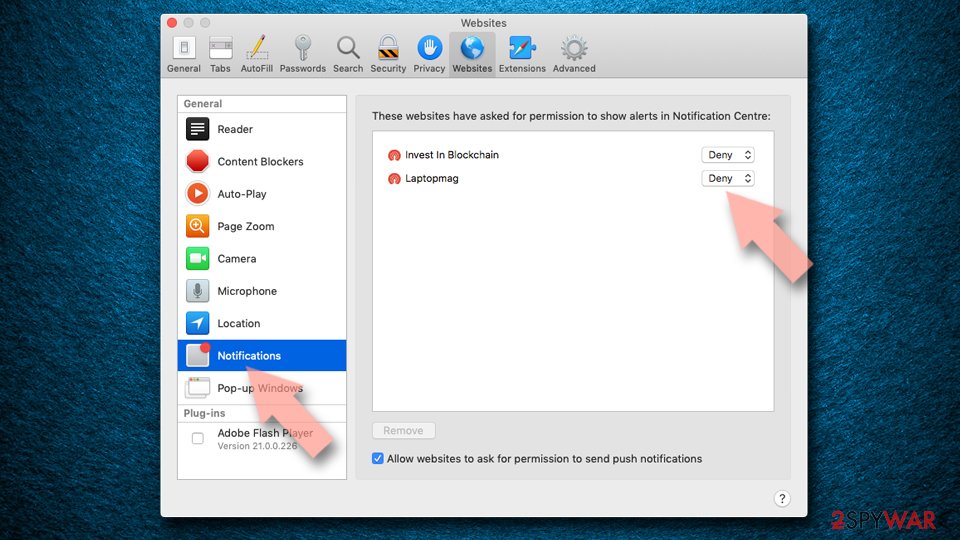
Safari
- Click on Safari > Preferences…
- Go to the Websites tab and, under General, select Notifications.
- Select the web address in question, click the drop-down menu and select Deny.

Internet Explorer
- Open Internet Explorer, and click on the Gear icon at the top-right of the window.
- Select Internet options and go to the Privacy tab.
- In the Pop-up Blocker section, click on Settings.
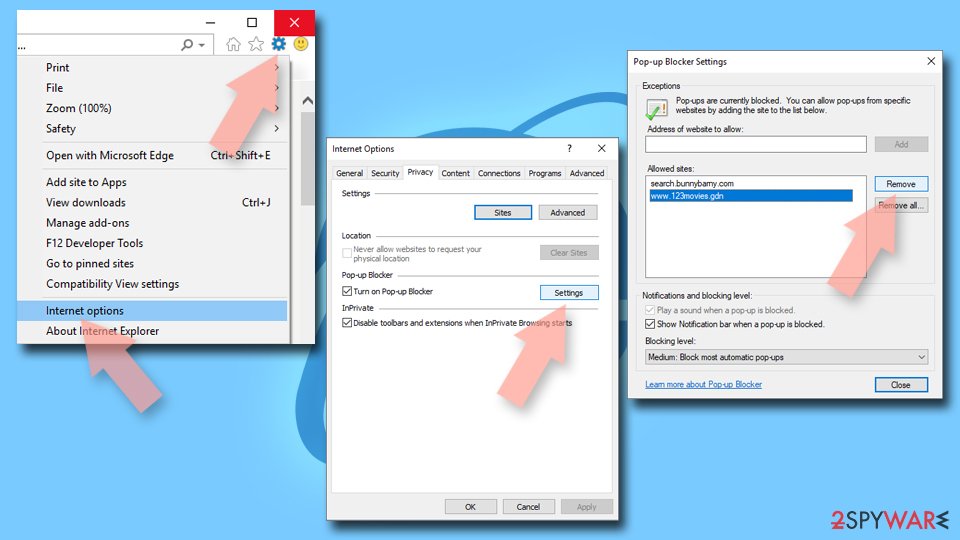
- Locate the web address in question under Allowed sites and pick Remove.

Did this guide help?
Be the first to comment