

Nexaapptwp.top is a push notification scam website that uses cheap tricks to mislead users

Nexaapptwp.top is a deceptive website created by individuals aiming to exploit user interactions for their own gain. The site manipulates users by sending false messages about the functionality of push notifications. If users agree to these notifications, they will receive intrusive pop-ups at any time, whether they are actively using their browser or it is running in the background.
The content on Nexaapptwp.top is frequently low-quality because it is associated with unreliable advertising networks. These notifications might advertise fake surveys or schemes that promise quick money, lead to websites with harmful software, or falsely warn that your device is infected with multiple viruses.
We advise you to avoid visiting any sites connected to these suspicious advertisements. Additionally, check if your computer is infected with adware and disable the unwanted push notifications by adjusting your browser settings, following the guidelines we have provided below.
| Name | Nexaapptwp.top |
| Type | Push notifications, pop-ups, ads, scam |
| Distribution | When the user clicks Allow in the push notification, the website has immediate access to send push notifications |
| Symptoms | Pop-ups show up on a regular basis on the screen – these ads often include inappropriate, scam, phishing, or other similar content |
| Risks | Push notification prompts might include links to malicious websites, resulting in financial losses, personal information disclosure, or malware infections |
| Removal | Push notifications from any website can be disabled through browser settings. Running a system scan with SpyHunterCombo Cleaner can also guarantee its security |
| Other tips | Delete web caches and other data from your browsers to protect your privacy and prevent information leaks – FortectIntego can quicken this process |
How users end up on scam websites
Nexaapptwp.top uses deceptive methods to trap users through unexpected redirects from risky websites and hidden adware infections. While browsing torrent sites or illegal software platforms, users might unknowingly encounter a scam, as these platforms are notorious for hosting various online scams and distributing malware, including harmful ransomware.
Adware, a particularly sneaky type of malware, can also lead users to Nexaapptwp.top without their awareness. By quietly injecting malicious code into a user's browser, adware changes the default browser settings, causing unintentional redirects to dangerous sites. Once on the site, users are tricked into enabling push notifications, which are later used to send out malicious ads and fraudulent links.
Adware is especially dangerous because it can operate secretly, making it hard to detect and remove. This allows it to continuously threaten a user's online security and privacy. Therefore, knowing these potential entry points can significantly help in avoiding dangerous websites online.
Crooks base their tricks based on real requests you might encounter on legitimate sites
Scammers behind sites like Nexaapptwp.top often catch users off guard with their tricky tactics. The surprise element is crucial, as users encounter seemingly harmless prompts when they visit these sites. These prompts often appear as routine checks, like confirming if someone is human or over a certain age, but are actually clever social engineering tricks used in online scams.
The main aim of these scammers is to deceive users into clicking the “Allow” button under false pretenses. They use various manipulative messages and visuals, which are common across many scam sites using push notification tactics. Examples of these misleading prompts include:
- If you are 18+, click Allow
- Click Allow to watch the video
- Press “Allow” if you are not a robot
- Your file is ready to download – press Allow to continue
- Click “Allow” to win a prize and get it in our shop!

It's important for users to realize that agreeing to these prompts allows the site to send push notifications. This means Nexaapptwp.top can send a variety of misleading information, including fraudulent links and messages, through the browser's API, as long as the browser is open or running in the background.
The good news is that stopping these intrusive notifications is simple once you know the steps. The next section will provide a detailed guide on how to disable these notifications, improving the safety and quality of your browsing experience.
Removal of Nexaapptwp.top ads
Many users quickly assume their systems are infected when they see questionable pop-up ads. It's easy to understand why, as scam sites often display get-rich-quick schemes, false claims of winning expensive gifts, and similar things through push notifications.
Seeing these malicious or suspicious ads can make users think their system is infected, which is understandable. However, scanning the system with security software won't remove Nexaapptwp.top push notifications, so the problem persists.
When users click the “Allow” button on a website's notification prompt, they permit it to send push notifications as long as the browser is open. Security software can't change these permissions because the push notification feature itself is legitimate; it's just that scammers misuse it. Therefore, you need to go into your browser settings and revoke the permission for the site to send push notifications.
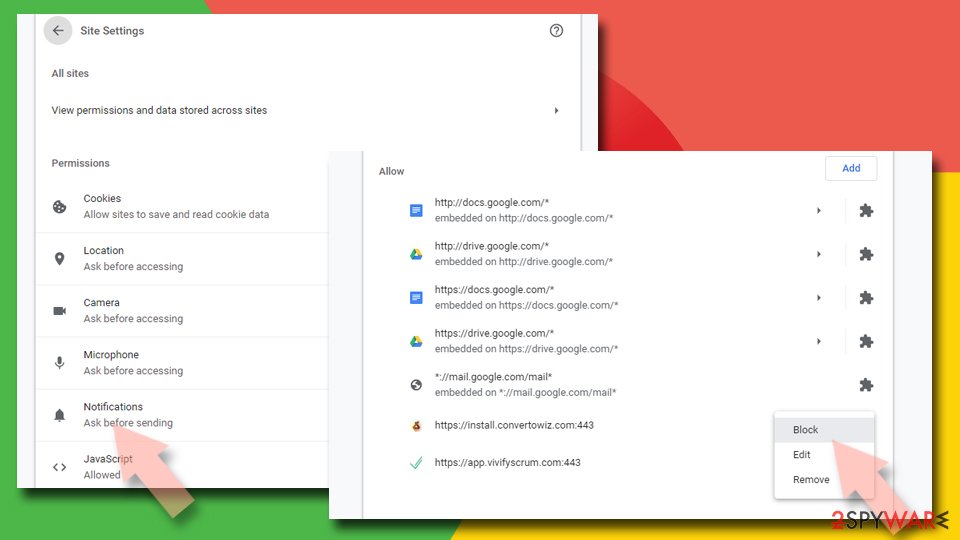
Google Chrome
- Open the Google Chrome browser and go to Menu > Settings.
- Scroll down and click on Advanced.
- Locate the Privacy and security section and pick Site Settings > Notifications.
- Look at the Allow section and look for a suspicious URL.
- Click the three vertical dots next to it and pick Block. This should remove unwanted notifications from Google Chrome.

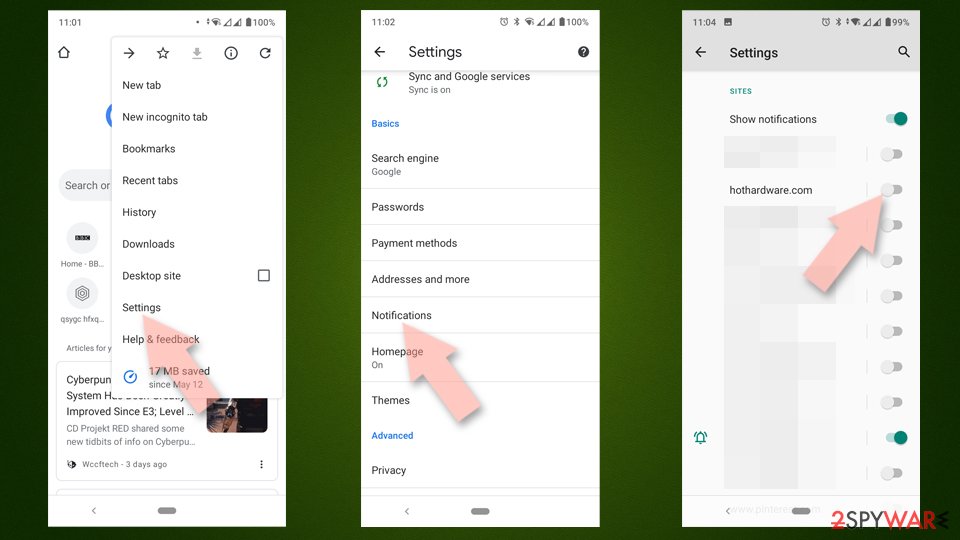
Google Chrome (Android)
- Open Google Chrome and tap on Settings (three vertical dots).
- Select Notifications.
- Scroll down to the Sites section.
- Locate the unwanted URL and toggle the button to the left (Off position).

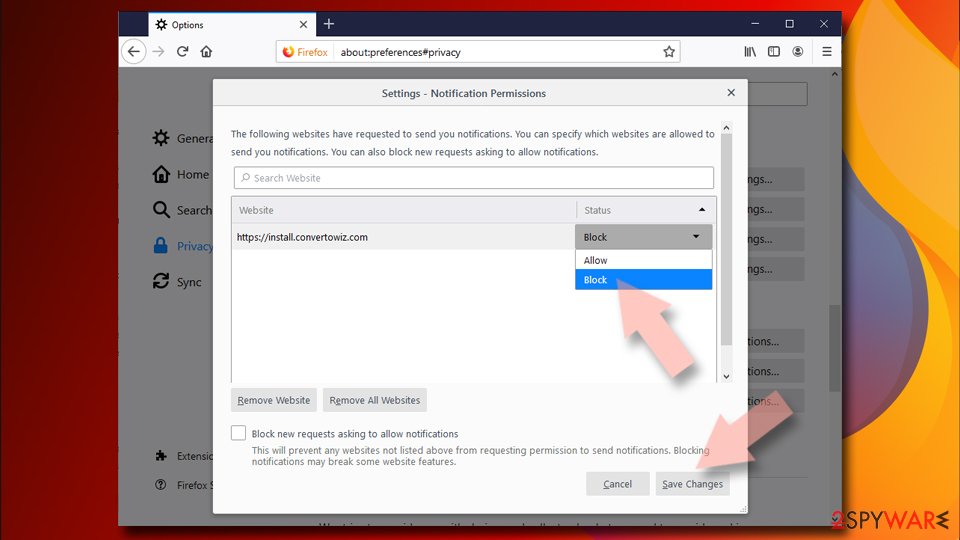
Mozilla Firefox
- Open Mozilla Firefox and go to Menu > Options.
- Click on Privacy & Security section.
- Under Permissions, you should be able to see Notifications. Click the Settings button next to it.
- In the Settings – Notification Permissions window, click on the drop-down menu by the URL in question.
- Select Block and then click on Save Changes. This should remove unwanted notifications from Mozilla Firefox.

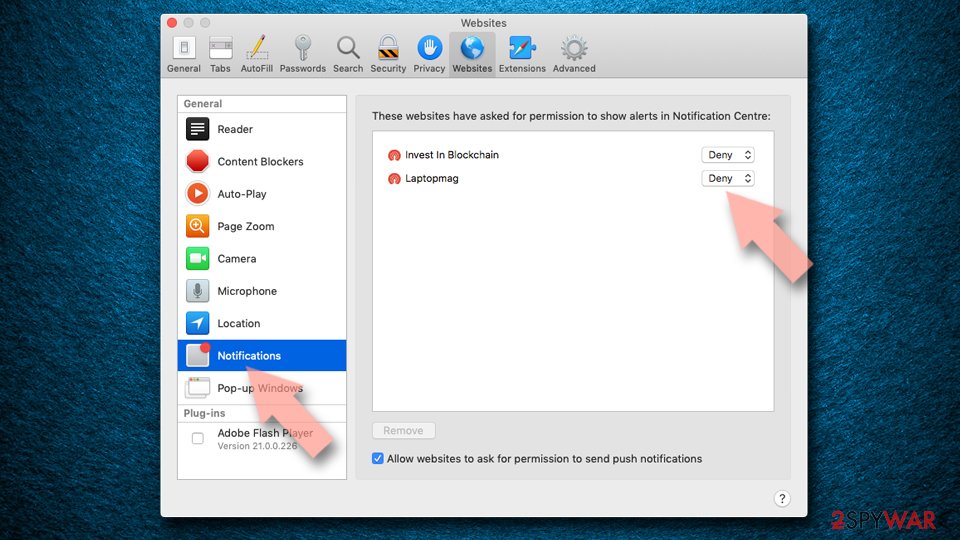
Safari
- Click on Safari > Preferences…
- Go to the Websites tab and, under General, select Notifications.
- Select the web address in question, click the drop-down menu and select Deny.

MS Edge
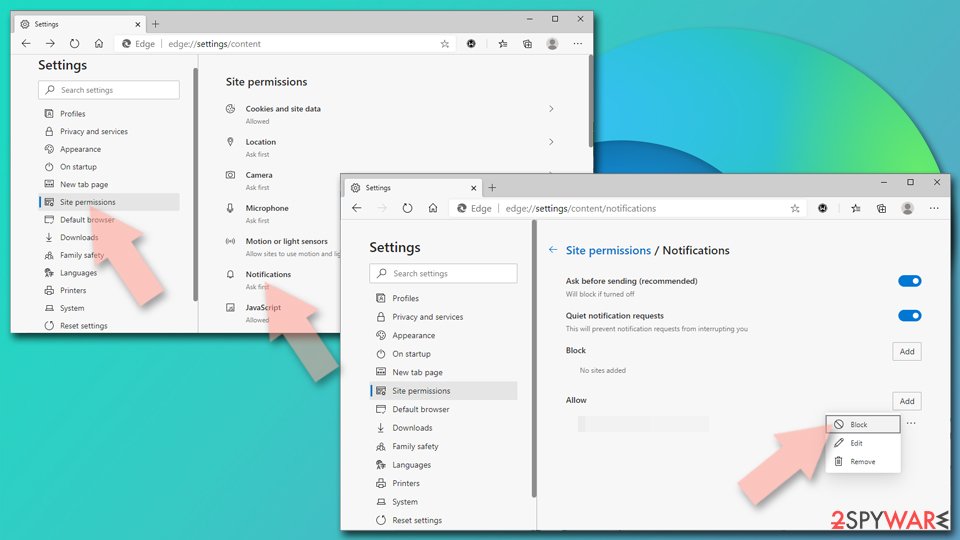
- Open Microsoft Edge, and go to Settings.
- Select Site permissions.
- Go to Notifications on the right.
- Under Allow, you will find the unwanted entry.
- Click on More actions and select Block.

Internet Explorer
- Open Internet Explorer, and click on the Gear icon at the top-right of the window.
- Select Internet options and go to the Privacy tab.
- In the Pop-up Blocker section, click on Settings.
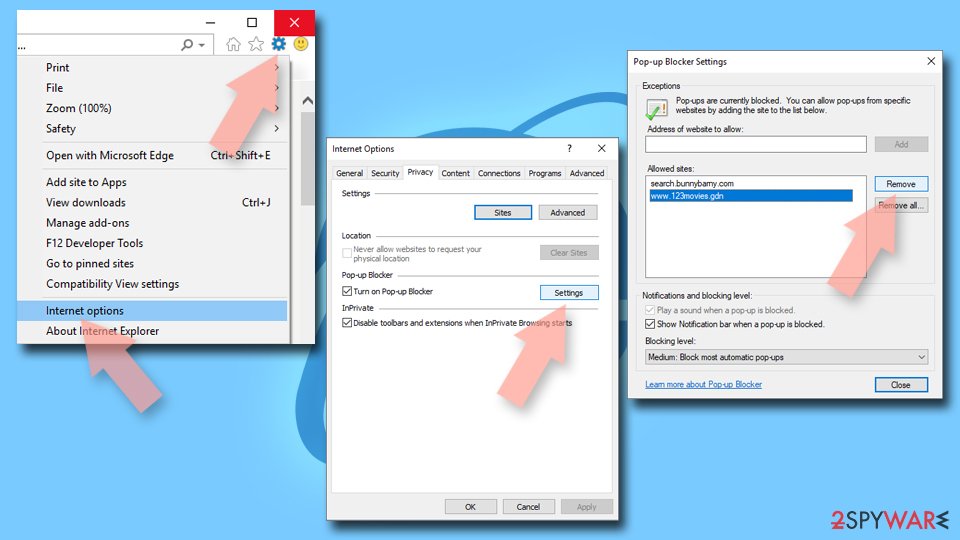
- Locate the web address in question under Allowed sites and pick Remove.

Check your system for potential threats
While a virus is not directly responsible for the Nexaapptwp.top push notification spam, it may be indirectly related. Many people accidentally land on questionable websites, and this can be avoided by steering clear of high-risk sites. However, some redirects are beyond users' control, making it inevitable to encounter potentially dangerous sites occasionally.
Firstly, always ensure that your browsers and other installed software are updated to the latest versions. Keeping software current helps to close any security vulnerabilities. Additionally, using security tools and ad-blocking extensions can be very helpful.
If you haven't already, download and install SpyHunterCombo Cleaner, MalwarebytesMalwarebytes, or another reputable antivirus program to make sure no malware is present on your device. Adware and other intrusive applications are often bundled together, and many users may not realize they have been installed. This can lead them to believe their computer is clean when it is not.
Lastly, performing a system health check and clearing web browser caches can enhance security. This can be easily achieved with the advanced repair and maintenance features of the FortectIntego optimization tool.
Did this guide help?
Be the first to comment