

Topeasyvisits.com is a fraudulent website that seeks to profit from illegal ads
Many individuals have been startled by the Topeakvisits.com ads lately, as suspicious pop-ups would start to appear on their computers on a regular basis. No matter which websites people are visiting at the time or even if they're using their browsers, it continues to happen. Another annoying feature of this oddity is that the pop-ups display over other apps running in the background and can even force users out of fullscreen mode, making them highly invasive.
Users who visit Topeakvisits.com may be lured into clicking the “Allow” button inside the notification prompt, which allows the website to send the push notifications without limitations as long as the browser is open (it doesn't need to be actively used). The feature is known to operate via the browser's API,[1] so it is not malicious by itself – it's the website that's sending suspicious ads that's the problem here.
A fraudulent site's notifications always result in more phishing[2] content, and malicious links appear directly on your screen. If you're having trouble with these pop-ups, we recommend that you don't respond to them in any way and instead follow the instructions below to completely eliminate the suspicious behavior.
The scam messages
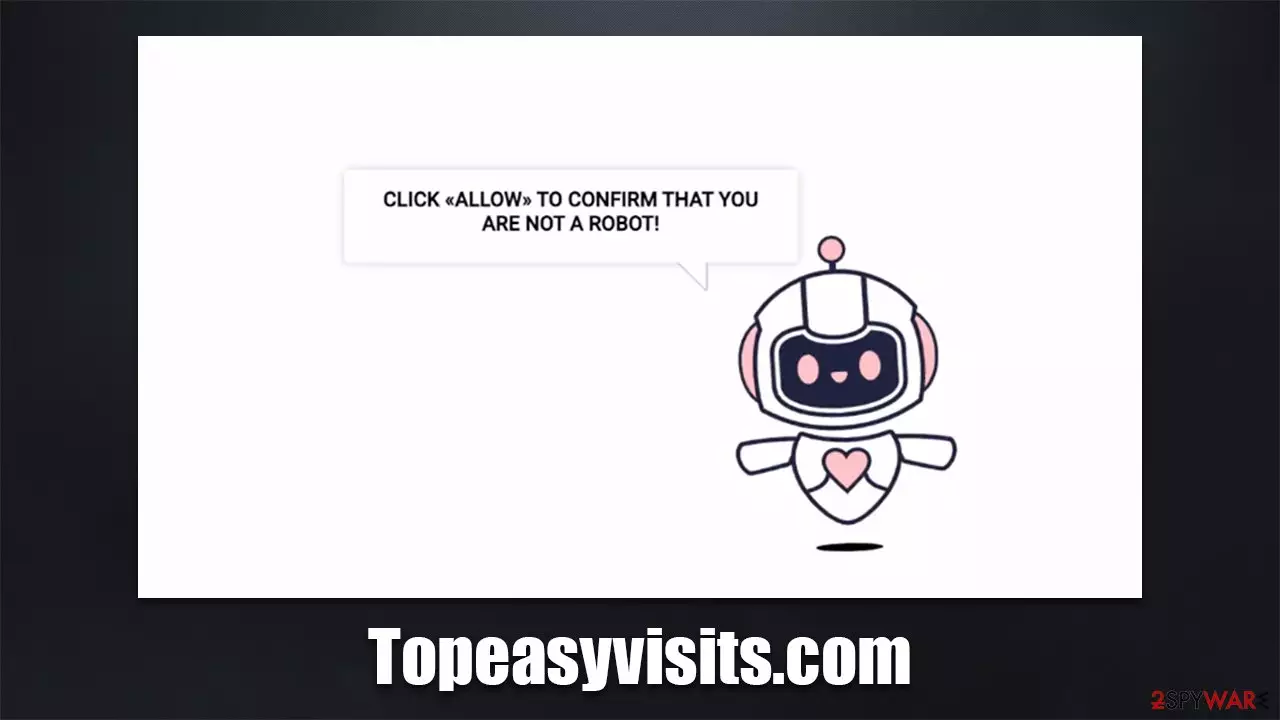
Many users would never subscribe to push notifications from an insecure website – unless, of course, they were scammed into doing so. In order to trick people, scammers will send phishing messages that appear convincing. For example, the message below is one of the most popular types found on scam websites like Topeasyvisits.com:
Click Allow if you are not a robot
There may be minor differences in wording, and distinct background pictures of a robot might be utilized, however, the concept is the same – users are asked to confirm that they are human. Because this check is one of the most popular experiences individuals encounter while surfing (choosing the correct photos or bypassing captcha texts is a regular practice), so it's not difficult to see how they might mix these two elements together.
The image and the text contained within it may be different each time, so users may receive different requests instead of this one. They might be informed that their browsers are preventing a video playback or that they have won a gift, or that they must confirm their age, for example. Always keep in mind that, regardless of what the background picture and the message are saying, the push notification prompt would always result in that website being able to send you alerts.
| Name | Topeasyvisits.com |
| Type | Push notifications, ads, pop-ups, scam |
| Distribution | Users start seeing intrusive pop-ups at some point after they click the “Allow” button within the site's notification prompt |
| Symptoms | Push notifications that include misleading information links would show up on the desktop at random times |
| Risks | The ads shown within push notifications might include misleading messages and links to malicious websites. If clicked, you might end up infecting your system with malware, disclosing your personal information, or losing money |
| Removal | To delete notifications, go to your browser settings and alter them, as we explain below. You should also run a SpyHunterCombo Cleaner check on your system for adware and other infections |
| Recovery | Make sure you clean your browsers after you delete adware and malware from the system – employ FortectIntego to quicken this process |
The push notification feature is used by many legitimate sites and abused by scammers
Push notifications are frequently misunderstood, despite the fact that they may be enabled on numerous websites. The feature first debuted on the Google Chrome browser in 2015 and has since been adapted across most platforms. This is why you're likely to see a push notification request when you visit practically any entertainment or news website. It is not difficult to see how push notifications can benefit both parties:
- users who subscribe to them from websites they are interested in can receive the latest information in real-time since they would be notified as soon as the website sends the request automatically;
- website owners can expect more traffic and interactions from users thanks to the push notifications.
However, the reality is quite different, and most users are unwilling to have more pop-ups on their browsers/devices. According to the study done by Mozilla a few years ago, 99% of push notification prompts remained unaccepted by users, with approximately half of them ending up actively denying the prompt.[3]

Probably because of this, not so many people have a lot of experience with this feature, and if they are tricked by websites such as Topeasyvisits.com, they won't even have an idea what they are dealing with. Luckily, it is not that difficult to get rid of – we explain how below.
Remove Topeasyvisits.com ads easily
Push notification scam sites are extremely common: just recently, we have covered Mscmart.com, News-ganusa.cc, and Rplnd50.com. All of these sites operate in the exact same manner – they even use the same messages and images to convince people to subscribe to push notifications.
Even if you have accepted push notifications from a dubious website, it is not the worst thing that can happen, especially if you didn't interact with pop-up links and downloaded software. If you did, you should immediately employ SpyHunterCombo Cleaner or MalwarebytesMalwarebytes and perform a full system scan to ensure it is safe. In fact, we recommend using security software regardless of whether or not you downloaded anything, as the adware can be the reason you've ended up on Topeasyvisits.com in the first place.
To clean your browsers from cookies and other leftover files, we recommend using FortectIntego. The app can also fix any virus damage that could have occurred during infection and also fix any malware-unrelated technical issues you may be experiencing on your device.
To stop intrusive push notifications from Topeasyvisits.com, you should access browser settings and perform the following:
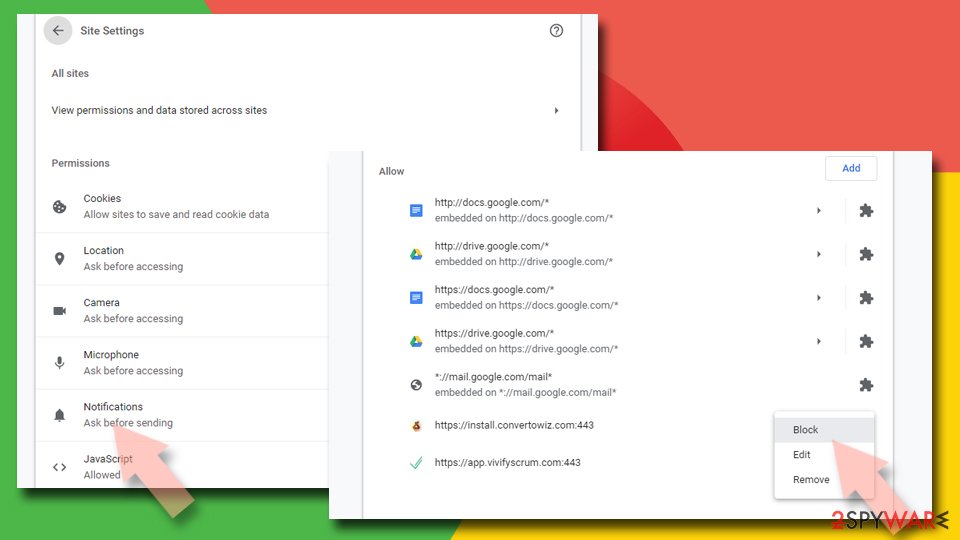
Google Chrome (desktop)
- Open the Google Chrome browser and go to Menu > Settings.
- Scroll down and click on Advanced.
- Locate the Privacy and security section and pick Site Settings > Notifications.
- Look at the Allow section and look for a suspicious URL.
- Click the three vertical dots next to it and pick Block. This should remove unwanted notifications from Google Chrome.

Google Chrome (Android)
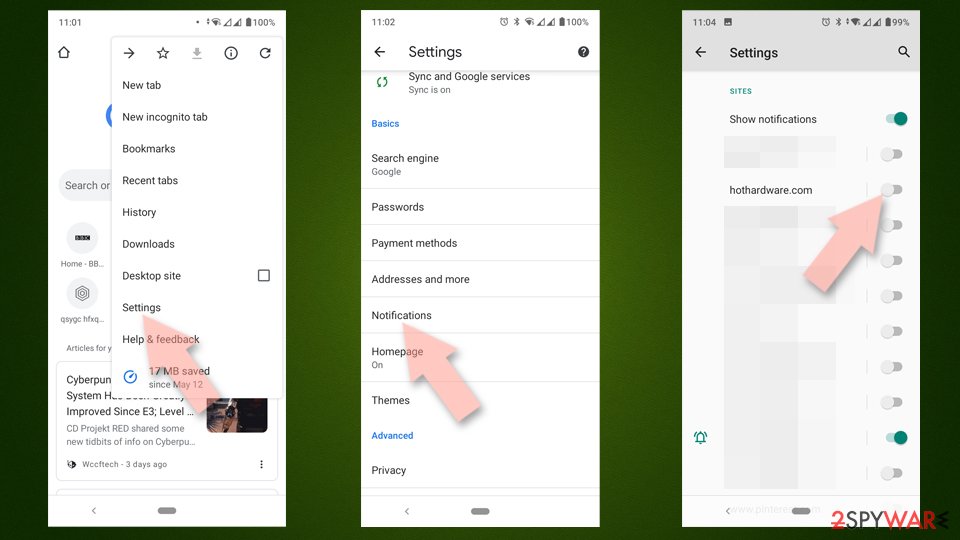
- Open Google Chrome and tap on Settings (three vertical dots).
- Select Notifications.
- Scroll down to the Sites section.
- Locate the unwanted URL and toggle the button to the left (Off setting).

Mozilla Firefox
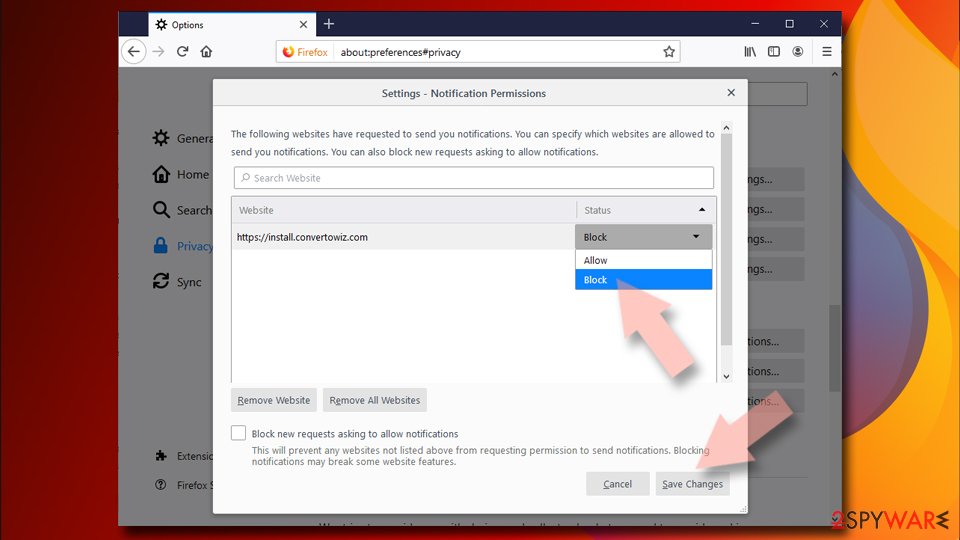
- Open Mozilla Firefox and go to Menu > Options.
- Click on Privacy & Security section.
- Under Permissions, you should be able to see Notifications. Click the Settings button next to it.
- In the Settings – Notification Permissions window, click on the drop-down menu by the URL in question.
- Select Block and then click on Save Changes. This should remove unwanted notifications from Mozilla Firefox.

MS Edge (Chromium)
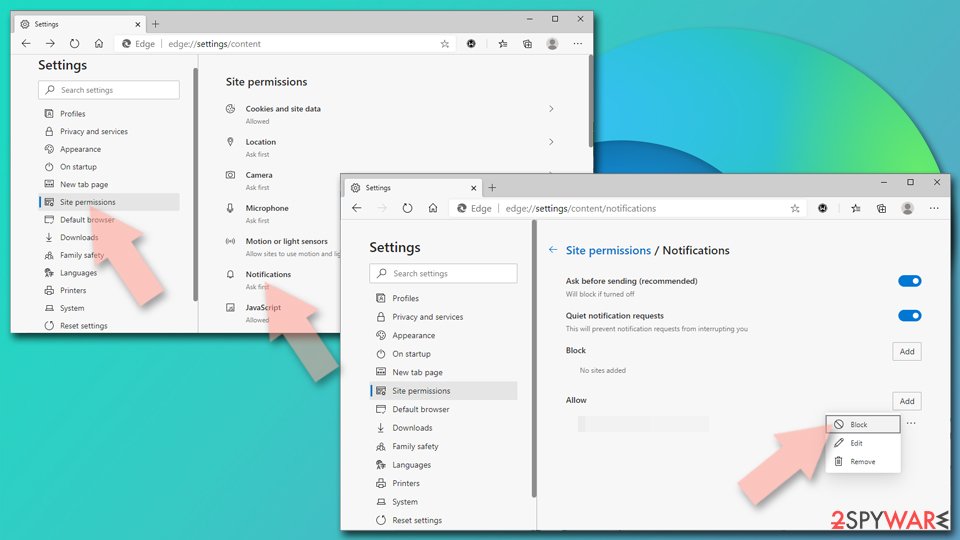
- Open Microsoft Edge, and go to Settings.
- Select Site permissions.
- Go to Notifications on the right.
- Under Allow, you will find the unwanted entry.
- Click on More actions and select Block.

Safari
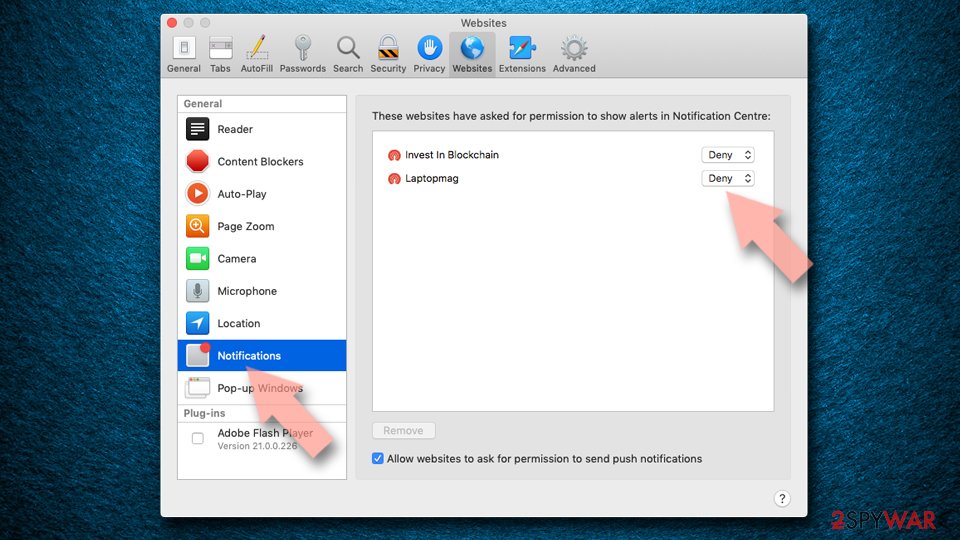
- Click on Safari > Preferences…
- Go to the Websites tab and, under General, select Notifications.
- Select the web address in question, click the drop-down menu and select Deny.

Internet Explorer
- Open Internet Explorer, and click on the Gear icon at the top-right of the window.
- Select Internet options and go to the Privacy tab.
- In the Pop-up Blocker section, click on Settings.
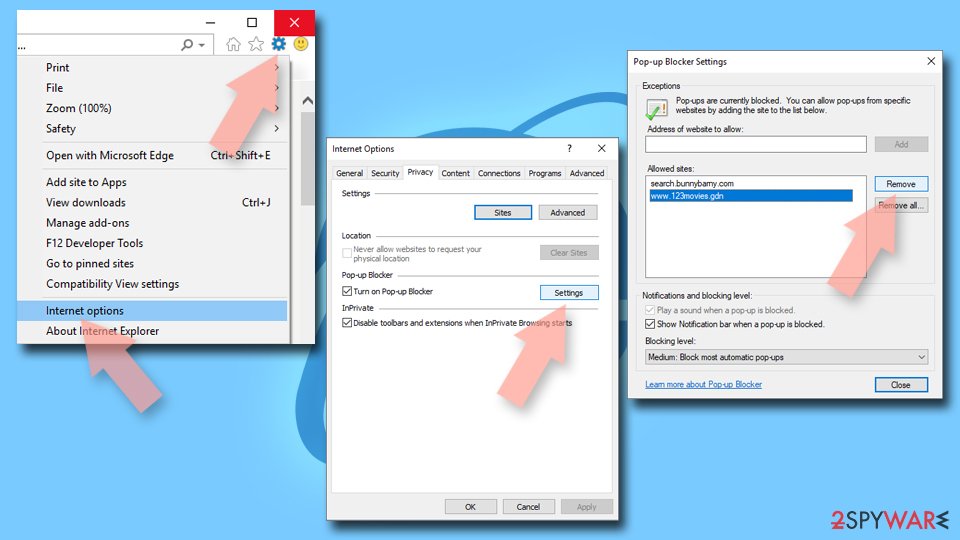
- Locate the web address in question under Allowed sites and pick Remove.

Did this guide help?
Be the first to comment