

Stercrepily.com is a pop-up spam site created by crooks to generate revenue

Stercrepily.com is a push notification spam website that uses social engineering[1] tactics to trick users into clicking the “Allow” button. The site poses as a human verification page, leading users to believe that granting permission will allow them to continue.
However, aside from the misleading message and image, the page provides no additional content. When users allow push notifications, they are bombarded with intrusive pop-up advertisements. These advertisements may contain links that take users to dangerous websites.
Visitors may end up on suspicious pages that try to trick them into disclosing personal information, downloading potentially unwanted programs (PUPs),[2] or even installing malware. Cybercriminals may use rogue advertising networks[3] to display advertisements that lead to fake antivirus alerts, fraudulent giveaways, and deceptive surveys.
| NAME | Stercrepily.com |
| TYPE | Push notification spam; adware |
| SYMPTOMS | Intrusive pop-up ads start appearing in the corner of the screen |
| DISTRIBUTION | Shady websites, misleading advertisements, bundled software |
| DANGERS | The website could be using unsafe advertising networks that place ads leading to dangerous websites |
| ELIMINATION | Go to your browser settings and disable push notifications |
| FURTHER STEPS | Use a repair tool FortectIntego to fix any remaining damage and clear your browsers |
Protection against cyber threats
Although push notification spam sites such as Stercrepily.com are considered mild infections, they can still result in more serious consequences. It is critical to follow certain security measures while browsing the internet to protect your system and files from intruders.
One aspect that is frequently overlooked is keeping your devices up to date. It is critical to keep your operating system and software up to date because developers frequently release security patches that help protect against malicious cyber activities. Furthermore, exercising caution while browsing the web is critical. Avoid clicking on random links and buttons, and double-check the pages' security before interacting with them.
Another growing concern is adware, which has become a major issue. Adware is a type of potentially unwanted program (PUP) that generates commercial content while running in the background invisibly. When downloading bundled software from freeware distribution platforms, users frequently unintentionally install adware. When installing software, choose “Custom” or “Advanced” installation methods to reduce the risk of adware infection. This enables you to uncheck boxes associated with unnecessary files or programs.

The danger of cookies
Cookies are small data files that can track your browsing activity and store data such as your IP address, geolocation, visited websites, clicked links, and online purchases. While cookies were originally used to personalize the user experience, they are increasingly being used for commercial gain.
These data files can be sold to advertising networks and other third parties, which frequently results in targeted advertising campaigns. However, there is a risk of cookies being hijacked and used for malicious purposes. As a result, security experts recommend clearing cookies on a regular basis to protect your privacy and security.
Using a maintenance tool like FortectIntego can help to simplify this process and ensure proper cookie management. Furthermore, such powerful software provides additional benefits such as fixing system errors, repairing corrupted files, and resolving registry issues, making it especially useful after a virus infection.
Block notifications via settings
Because push notifications are based on a subscription model, users need to disable them manually. Here are the instructions for the most popular browsers:
Google Chrome (desktop):
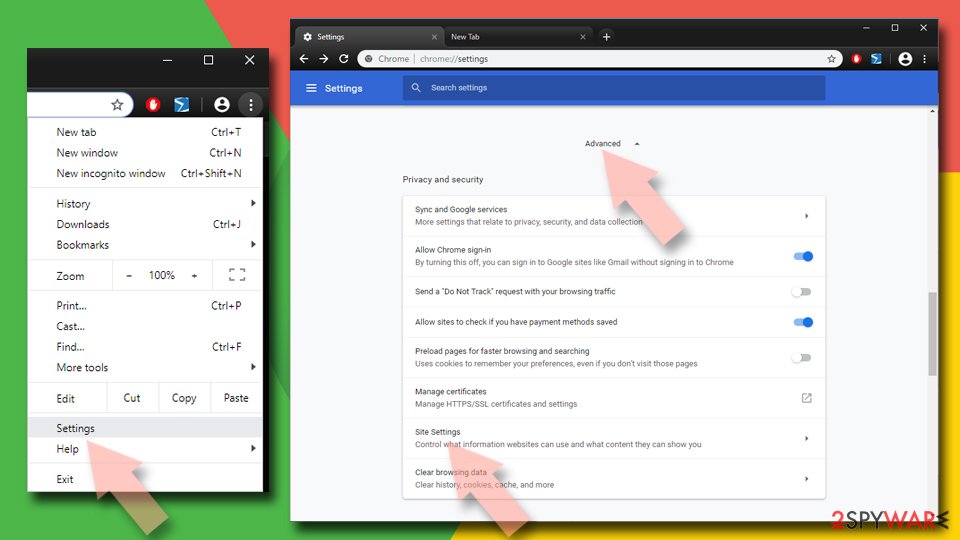
- Open Google Chrome browser and go to Menu > Settings.
- Scroll down and click on Advanced.
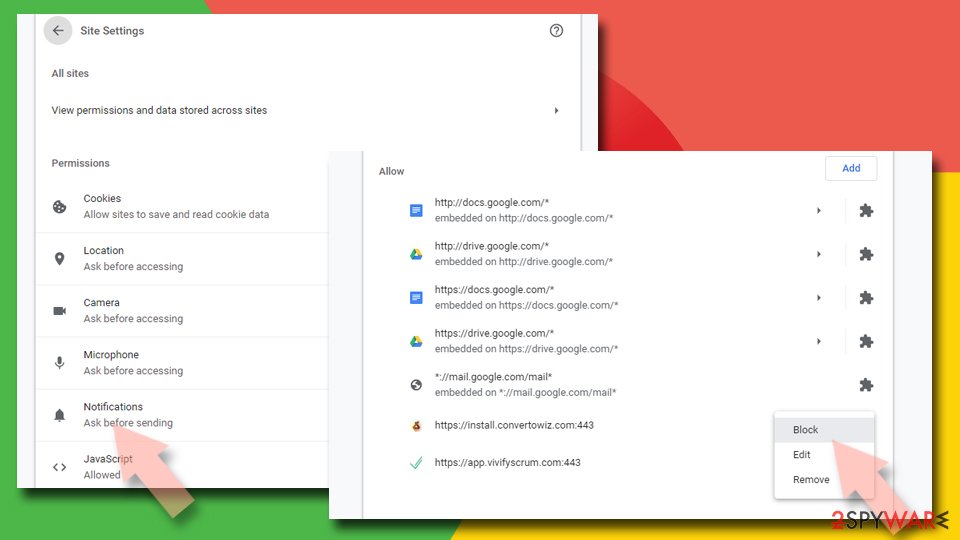
- Locate the Privacy and security section and pick Site Settings > Notifications.
- Look at the Allow section and look for a suspicious URL.
- Click the three vertical dots next to it and pick Block. This should remove unwanted notifications from Google Chrome.


Google Chrome (Android):
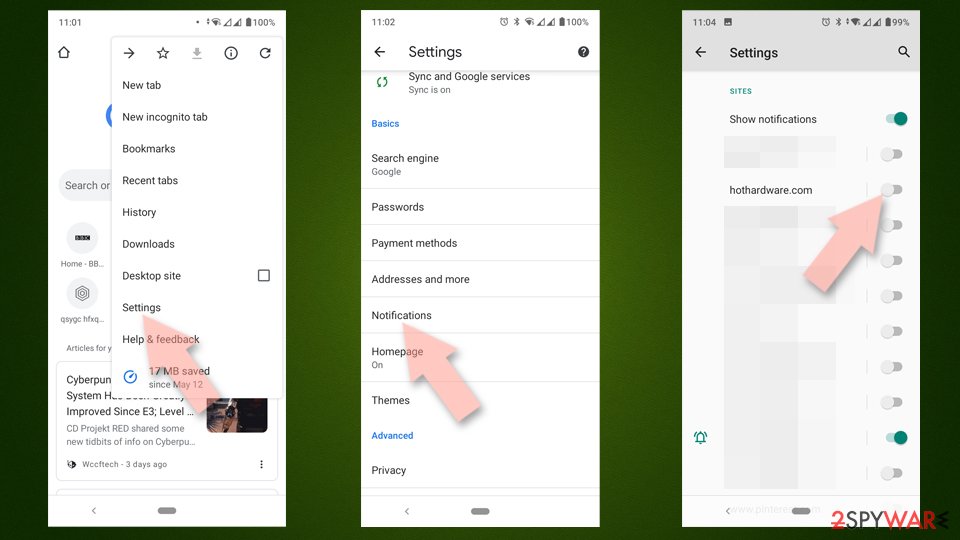
- Open Google Chrome and tap on Settings (three vertical dots).
- Select Notifications.
- Scroll down to Sites section.
- Locate the unwanted URL and toggle the button to the left (Off setting).

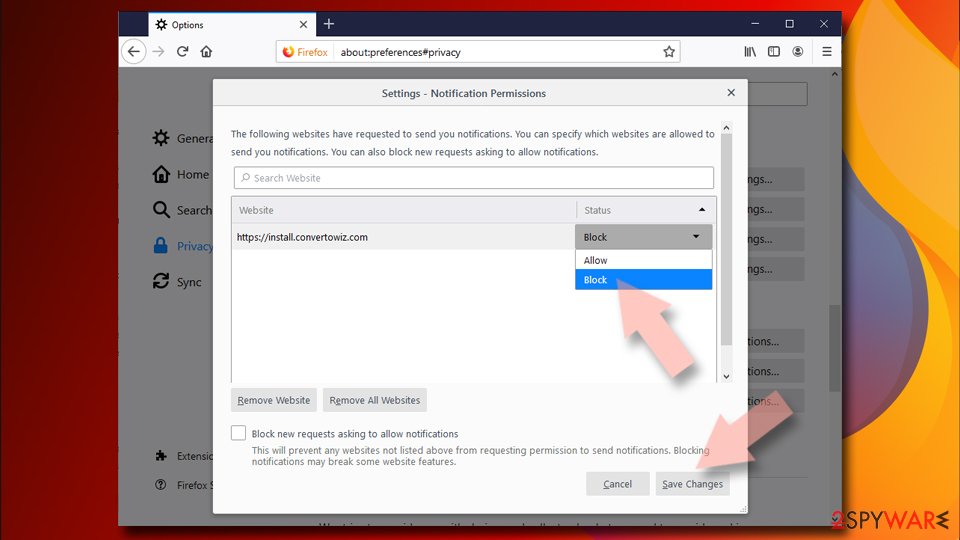
Mozilla Firefox:
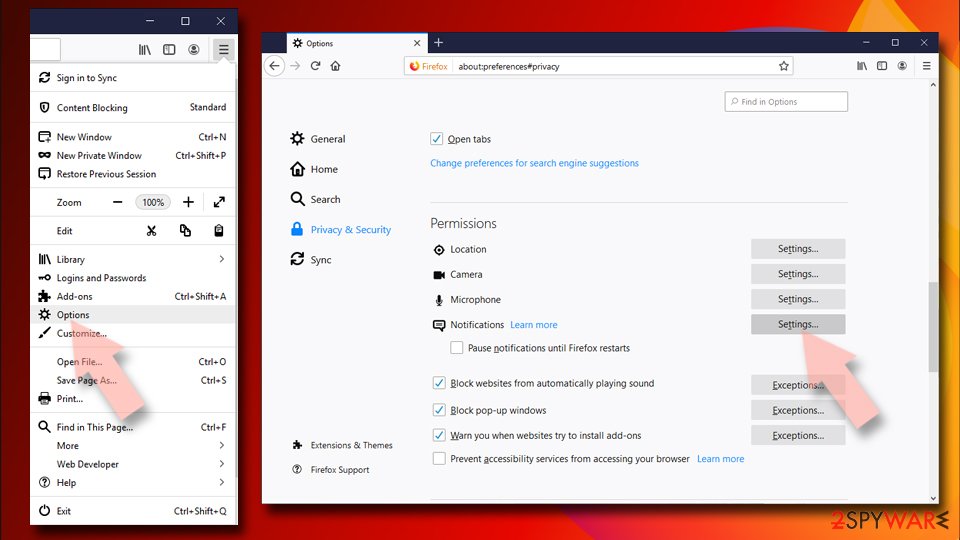
- Open Mozilla Firefox and go to Menu > Options.
- Click on Privacy & Security section.
- Under Permissions, you should be able to see Notifications. Click Settings button next to it.
- In the Settings – Notification Permissions window, click on the drop-down menu by the URL in question.
- Select Block and then click on Save Changes. This should remove unwanted notifications from Mozilla Firefox.


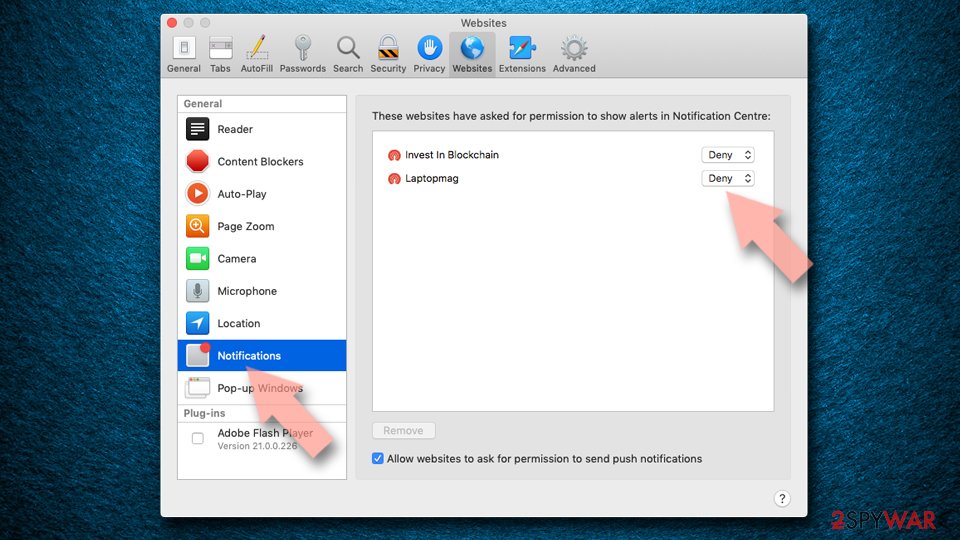
Safari:
- Click on Safari > Preferences…
- Go to Websites tab and, under General, select Notifications.
- Select the web address in question, click the drop-down menu and select Deny.

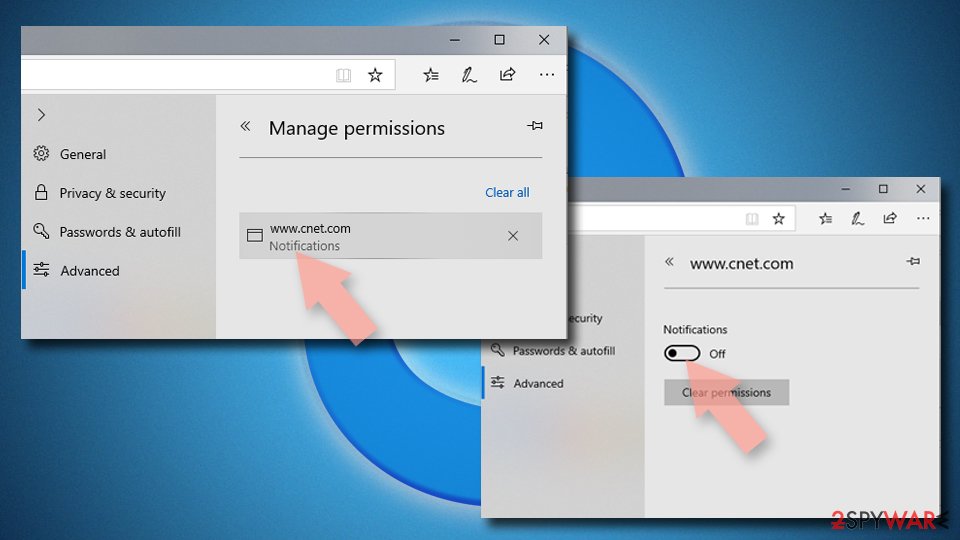
MS Edge:
- Open Microsoft Edge, and click the Settings and more button (three horizontal dots) at the top-right of the window.
- Select Settings and then go to Advanced.
- Under Website permissions, pick Manage permissions and select the URL in question.
- Toggle the switch to the left to turn notifications off on Microsoft Edge.

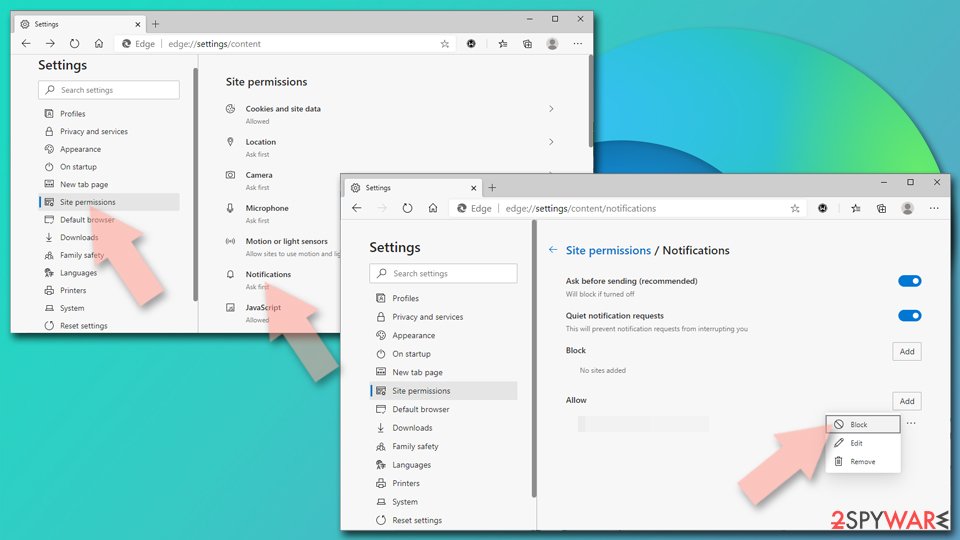
MS Edge (Chromium):
- Open Microsoft Edge, and go to Settings.
- Select Site permissions.
- Go to Notifications on the right.
- Under Allow, you will find the unwanted entry.
- Click on More actions and select Block.

Check your system for adware
If you have tried and failed to block push notifications through your browser settings, or if the website responsible for the ad spam is not listed, a potentially unwanted application (PUA) may be lurking within your system. Being redirected to suspicious websites and experiencing an influx of commercial content such as banners or surveys are common indicators of such an infection.
We strongly recommend using professional security tools such as SpyHunterCombo Cleaner or MalwarebytesMalwarebytes to perform a thorough scan of your PC because it is difficult to pinpoint the exact application causing these disruptive behaviors. Anti-malware software can detect suspicious programs running in the background and completely remove them, as well as any associated files. However, if you know which application is to blame, you can resolve the problem by following manual guides designed for Windows and Mac machines.
Windows 10/8:
- Enter Control Panel into Windows search box and hit Enter or click on the search result.
- Under Programs, select Uninstall a program.

- From the list, find the entry of the suspicious program.
- Right-click on the application and select Uninstall.
- If User Account Control shows up, click Yes.
- Wait till uninstallation process is complete and click OK.



Windows 7/XP:
- Click on Windows Start > Control Panel located on the right pane (if you are Windows XP user, click on Add/Remove Programs).
- In Control Panel, select Programs > Uninstall a program.

- Pick the unwanted application by clicking on it once.
- At the top, click Uninstall/Change.
- In the confirmation prompt, pick Yes.
- Click OK once the removal process is finished.

Mac:
- From the menu bar, select Go > Applications.
- In the Applications folder, look for all related entries.
- Click on the app and drag it to Trash (or right-click and pick Move to Trash)


To fully remove an unwanted app, you need to access Application Support, LaunchAgents, and LaunchDaemons folders and delete relevant files:
- Select Go > Go to Folder.
- Enter /Library/Application Support and click Go or press Enter.
- In the Application Support folder, look for any dubious entries and then delete them.
- Now enter /Library/LaunchAgents and /Library/LaunchDaemons folders the same way and terminate all the related .plist files.


Did this guide help?
Be the first to comment