

Eudstudio.com is a dubious site planted by crooks to lure users to push notifications

Eudstudio.com is a deceptive website that tricks users into signing up for push notifications by using social engineering techniques. By asking users to click the “Allow” button, it obtains consent to bombard them with bothersome pop-up adverts that continue to show up even when the browser is not open.
Unfortunately, crooks may display ads that send viewers to dangerous websites by taking advantage of rogue advertising networks.[1] This can cause consumers to fall for phony websites that are trying to spread malware, spread potentially unwanted programs (PUPs),[2] or both.
Many users have complained about coming across adverts for phony antivirus software, software deals, polls, giveaways, and more. It is essential to immediately turn off the pop-up notifications if you have fallen victim to this website's ploys. This step is especially important if other people use the same compromised device.
| NAME | Eudstudio.com |
| TYPE | Push notification spam; adware |
| SYMPTOMS | Various pop-ups start appearing on the screen unexpectedly even when the browser is closed |
| DISTRIBUTION | Shady websites; deceptive ads; freeware installations |
| DANGERS | Links embedded in the pop-ups can lead to dangerous websites since crooks may use rogue advertising networks |
| ELIMINATION | Disable push notifications by going to your browser settings; scan your system with professional security tools |
| FURTHER STEPS | Use a repair tool like FortectIntego to fix any remaining damage and optimize the machine |
Distribution methods
Pages like Eudstudio.com are uncommon to find in search results. They typically remain hidden on suspicious websites that are full of deceptive adverts and covert redirects. These websites, like unlawful streaming services, typically lack enough control. Google promised to get rid of fake “Download” and “Play” buttons, yet they still exist.
Users may be sent to spam-filled pages using these buttons. It is advisable to restrict your online activity to domains that you are comfortable and confident with. Even if they seem to support legitimate items and services, use caution and avoid clicking on random links and adverts. Consider using official streaming services like Netflix or Hulu, which have a small monthly subscription cost, for content viewing.

Get rid of cookies
Cookies are used by nearly all browser plugins and websites you visit to keep track of your online activities. Cookies are a type of little data file that can store data such as your IP address, geolocation, links that have clicked, online purchases, and more. Usually, this information is used to tailor your browsing experience.
However, a discernible trend shows that cookies are being used more frequently to profit from user activity. The information acquired might be sold to advertising networks or other outside parties. Additionally, there have been cases where cookies were used for malicious purposes.
We advise routinely cleaning the cache in your browser because of this. Consider using a maintenance program like FortectIntego, which can automate this operation, to make life easier. This powerful program also takes care of BSODs, corrupted files, and registry issues. This is very useful after a virus infection.
Disable browser pop-ups
If you allowed the website to show you push notifications, all you have to do is go to your browser settings and block Eudstudio.com permissions:
Google Chrome (desktop):
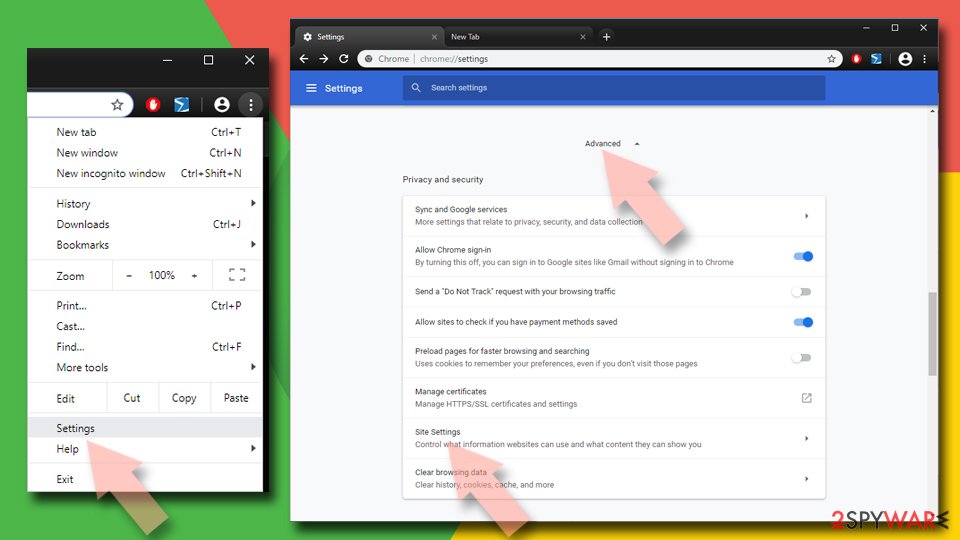
- Open Google Chrome browser and go to Menu > Settings.
- Scroll down and click on Advanced.
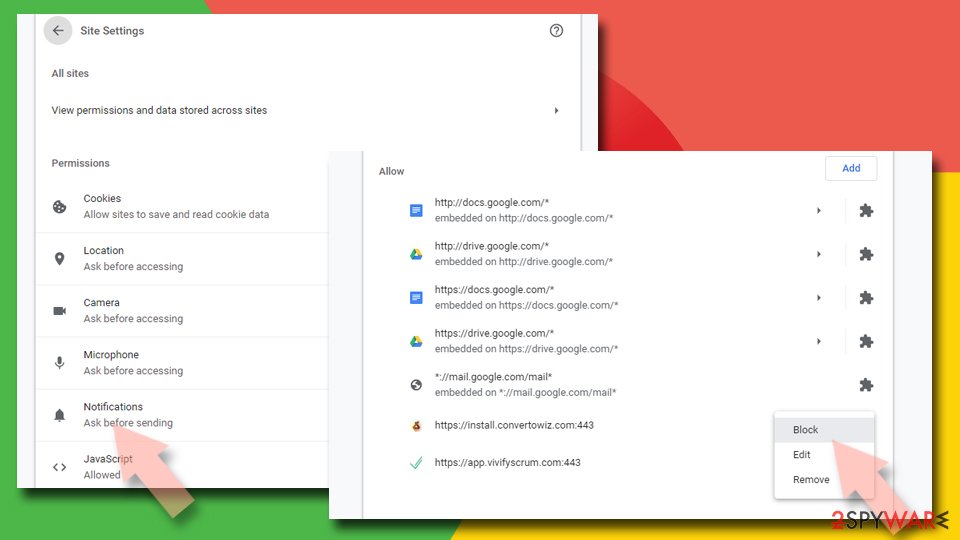
- Locate the Privacy and security section and pick Site Settings > Notifications.
- Look at the Allow section and look for a suspicious URL.
- Click the three vertical dots next to it and pick Block. This should remove unwanted notifications from Google Chrome.


Google Chrome (Android):
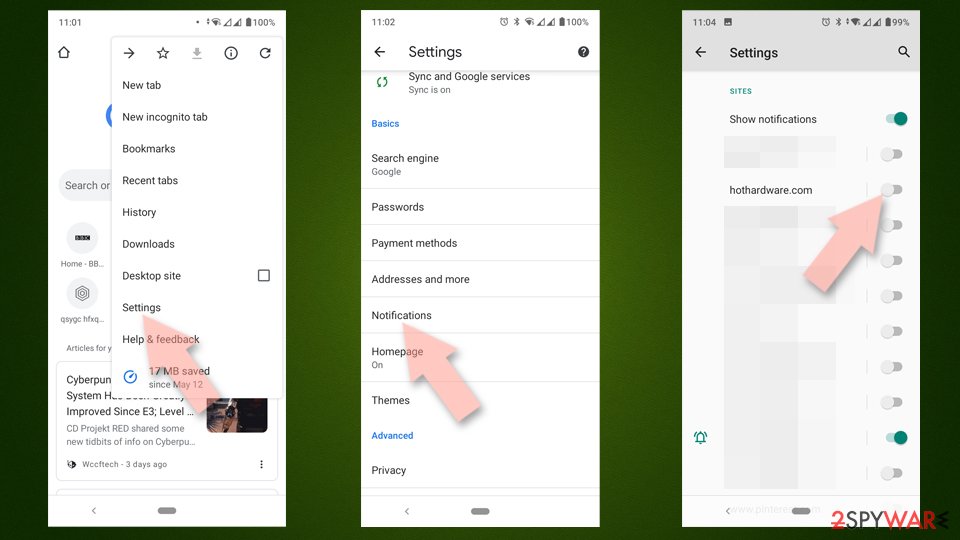
- Open Google Chrome and tap on Settings (three vertical dots).
- Select Notifications.
- Scroll down to Sites section.
- Locate the unwanted URL and toggle the button to the left (Off setting).

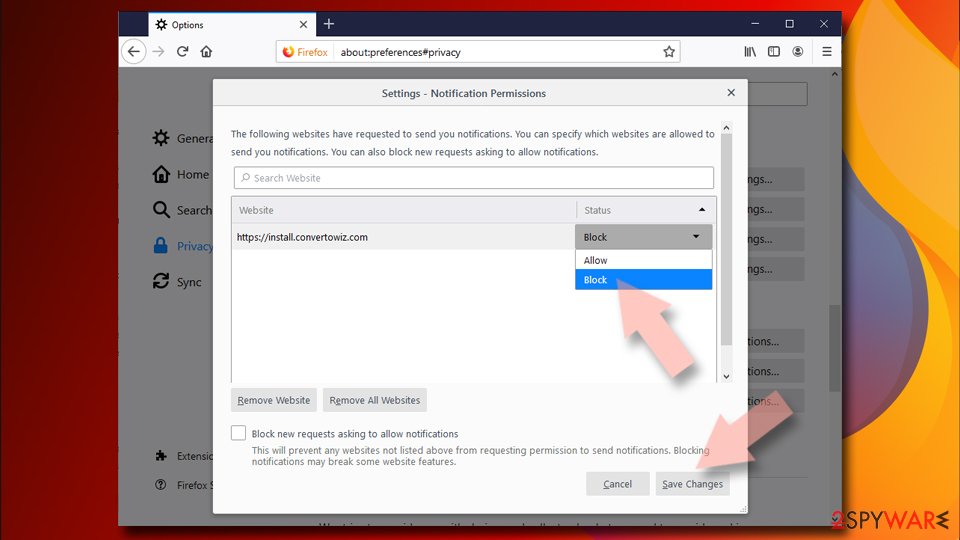
Mozilla Firefox:
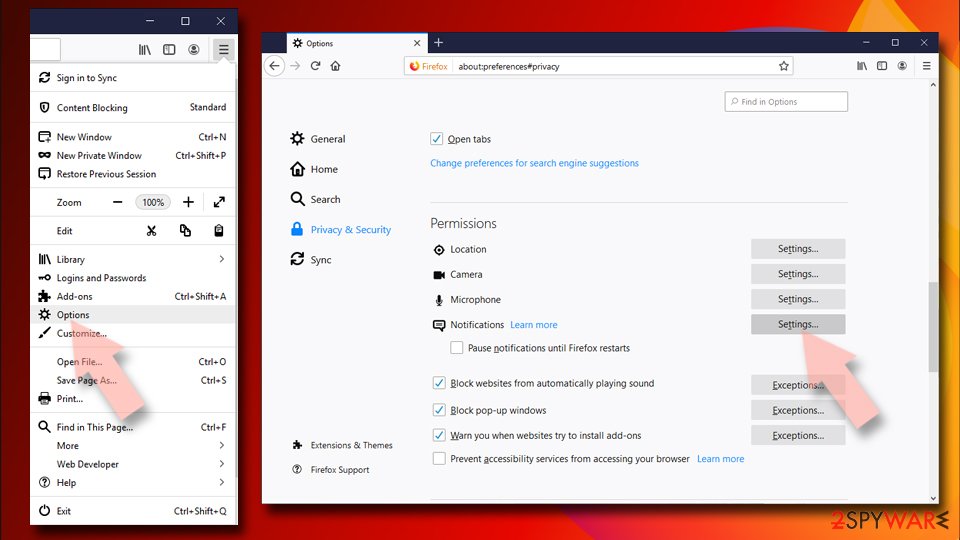
- Open Mozilla Firefox and go to Menu > Options.
- Click on Privacy & Security section.
- Under Permissions, you should be able to see Notifications. Click Settings button next to it.
- In the Settings – Notification Permissions window, click on the drop-down menu by the URL in question.
- Select Block and then click on Save Changes. This should remove unwanted notifications from Mozilla Firefox.


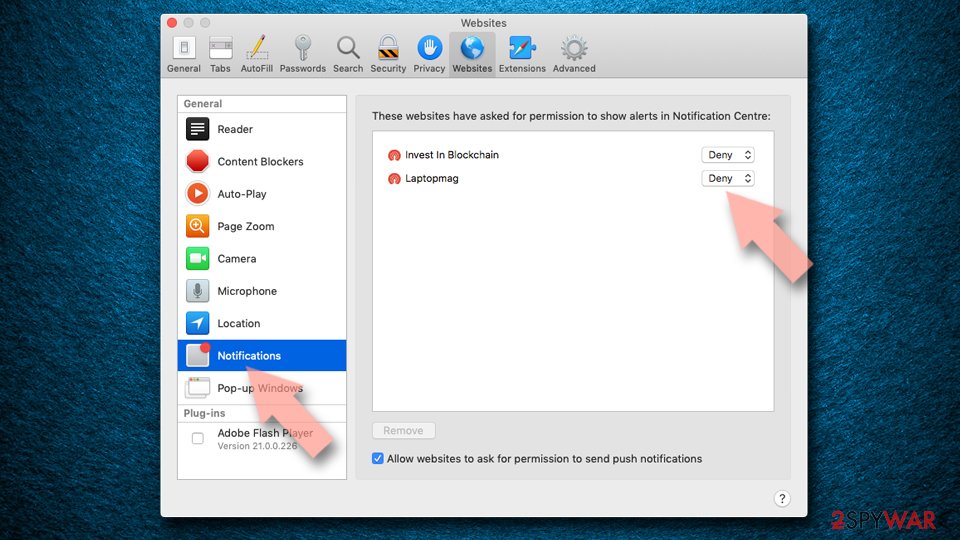
Safari:
- Click on Safari > Preferences…
- Go to Websites tab and, under General, select Notifications.
- Select the web address in question, click the drop-down menu and select Deny.

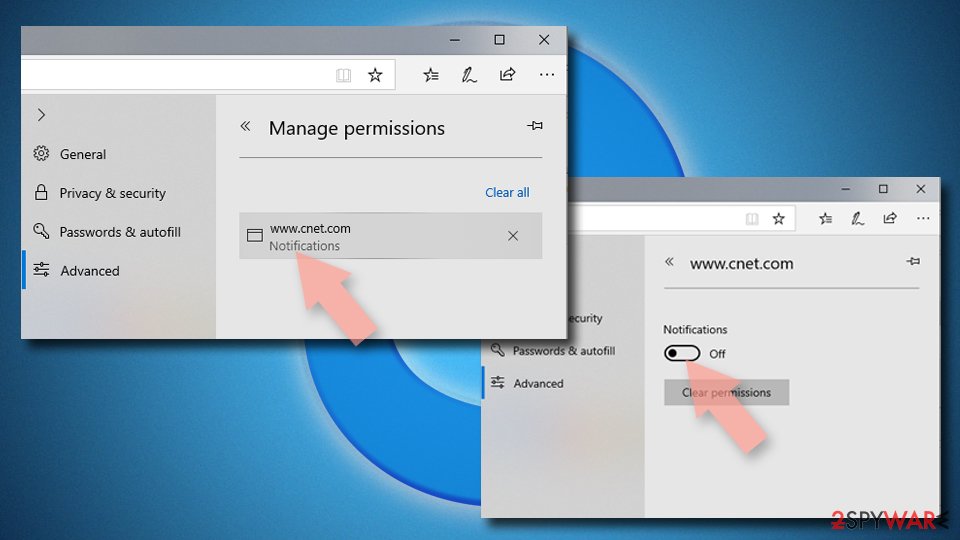
MS Edge:
- Open Microsoft Edge, and click the Settings and more button (three horizontal dots) at the top-right of the window.
- Select Settings and then go to Advanced.
- Under Website permissions, pick Manage permissions and select the URL in question.
- Toggle the switch to the left to turn notifications off on Microsoft Edge.

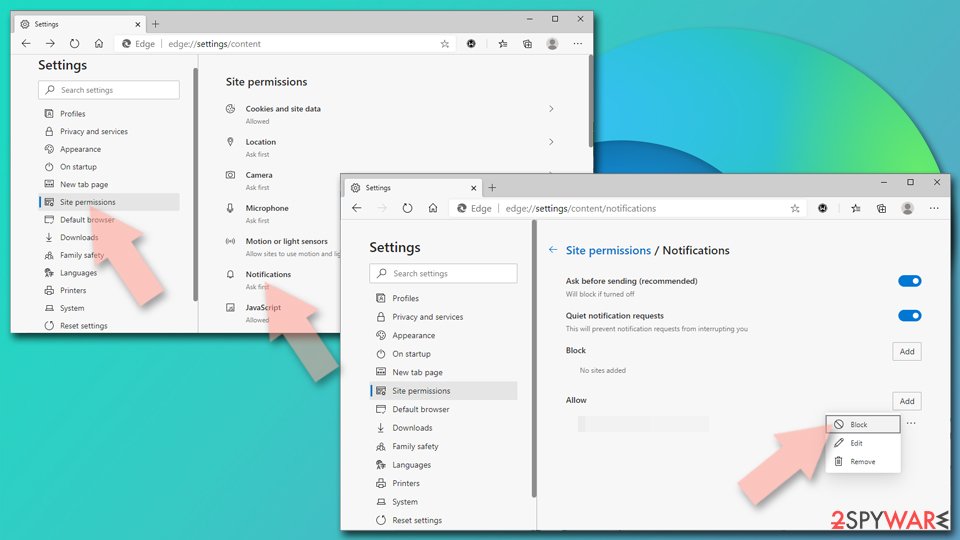
MS Edge (Chromium):
- Open Microsoft Edge, and go to Settings.
- Select Site permissions.
- Go to Notifications on the right.
- Under Allow, you will find the unwanted entry.
- Click on More actions and select Block.

Freeware distribution platforms
When looking for software downloads, choosing freeware[3] is not the best option. These products typically include adware and other kinds of potentially unwanted programs (PUAs) in their packages. Developers frequently include supplemental programs in the installation files without getting the consumers' informed agreement in order to profit from the distribution of freeware.
This may result in pop-ups, banners, and redirects being continuously displayed as adverts. Unexpected page opens or bookmarks could also happen. Adware developers frequently promote the user's advertising profile, which includes information like IP addresses, search history, and websites visited.
It is advised to always choose the “Custom” or “Advanced” installation option, carefully read the Privacy Policy and Terms of Use, and most importantly, carefully examine the list of files to be installed in order to avoid these situations. It is crucial that you deselect the boxes next to any unrelated programs that you do not want to install.
Scan your system with professional security tools
It can be quite difficult to get rid of potentially unwanted applications (PUPs) manually. To avoid detection, offenders frequently disguise PUPs as useful programs that seem to be safe. We strongly advise using an anti-malware program like SpyHunterCombo Cleaner or MalwarebytesMalwarebytes to ensure complete removal of the infection. With the help of these programs, the virus and all related files and registry entries can be completely removed. PUPs can go by many different names, making it challenging to manually identify them.
Additionally, manual eradication procedures may unintentionally leave behind leftovers, which could cause the infection to resurface. In the event you suspect that recently installed freeware is responsible for unwanted symptoms, you can attempt self-removal. Below are instructions to aid you in this process:
Windows
- Enter Control Panel into Windows search box and hit Enter or click on the search result.
- Under Programs, select Uninstall a program.

- From the list, find the entry of the suspicious program.
- Right-click on the application and select Uninstall.
- If User Account Control shows up, click Yes.
- Wait till the uninstallation process is complete and click OK.



macOS
- From the menu bar, select Go > Applications.
- In the Applications folder, look for all related entries.
- Click on the app and drag it to Trash (or right-click and pick Move to Trash)


To fully remove an unwanted app, you need to access Application Support, LaunchAgents, and LaunchDaemons folders and delete relevant files:
- Select Go > Go to Folder.
- Enter /Library/Application Support and click Go or press Enter.
- In the Application Support folder, look for any dubious entries and then delete them.
- Now enter /Library/LaunchAgents and /Library/LaunchDaemons folders the same way and terminate all the related .plist files.


Did this guide help?
Be the first to comment