

Precludestore.com is a malicious website trying to convince users to allow notifications for deceptive reasons

Precludestore.com is recognized as a deceptive site, and its associated links are unreliable. Users often encounter the site through unexpected pop-up ads that display its URL during everyday online activities, whether that’s streaming videos, browsing social media, or other internet engagements. While closing your browser might temporarily remove these pop-ups, this method is hardly ideal.
Many visitors to Precludestore.com aren't immediately aware that they've agreed to receive its push notifications; deceptive tactics on the site frequently trick users. The site employs various phishing techniques designed to sow confusion, making it easy for users to inadvertently consent to these intrusive alerts.
If you've been trapped by one of these scams and are now plagued by annoying advertisements, you're in the right place. We’ll outline effective steps to disable these persistent notifications and provide advice on how to deal with any adware that might have been inadvertently installed on your system.
| Name | Precludestore.com |
| Type | Push notifications, pop-ups, ads, scam |
| Distribution | Push notifications can start showing up at some point after the “Allow” button is pressed within the notification prompt |
| Symptoms | Pop-ups show up on a regular basis on the screen – these ads often include inappropriate, scam, phishing, or other similar content |
| Risks | You might suffer from monetary losses, install malware or potentially unwanted programs, or disclose sensitive data to cybercriminals |
| Removal | Push notifications can be stopped by blocking the web address of the malicious website via browser settings. Checking the device with SpyHunterCombo Cleaner security software is also recommended |
| Other checks | Employ FortectIntego to clean your system from data trackers and fix any damage done by adware or other unwanted software |
A few tips about online fraud
In recent times, the prevalence of push notification scams has escalated, with sophisticated methods effectively convincing users to activate unwanted notifications. A common tactic seen in these scams is to lure individuals to deceptive sites. Often, these platforms exploit vulnerabilities in ad networks and sites lacking robust security measures.
Users may inadvertently land on these questionable websites after following links from high-risk environments like torrent sites. These environments typically use misleading cues, such as deceptive “Download” buttons or scripts that redirect users to the scam website when they interact with seemingly harmless page elements. To safeguard their digital security, it's wise for users to steer clear of unverified sites and instead, rely on reputable sources that prioritize user safety.
Occasionally, users find themselves redirected to sites like Precludestore.com due to adware that has quietly installed itself on their devices. This type of software can sneak in through legitimate-looking software downloads or through other underhanded techniques, often without the user's knowledge. This covert introduction of adware underscores the importance of cautious browsing and software installation habits, helping users avoid the pitfalls of such deceptive strategies.
Scam techniques and what to look out for
Scammers behind websites like Precludestore.com frequently employ surprise tactics to deceive users. Upon arriving at these sites, users are met with what appear to be harmless prompts, cleverly crafted as part of a sophisticated social engineering strategy. These prompts might ask users to verify their humanity or age, but their real intent is far from benign.
The core objective of these scammers is to trick users into clicking the “Allow” button under deceptive circumstances. They utilize a range of manipulative messages and visuals that are consistent with many scam sites known for using push notification scams. Here are a few typical examples of these misleading prompts:
- Press “Allow” to verify, that you are not a robot.
- If you are 18+, click Allow.
- Click “Allow” to start downloading.
- Can't play this video! Perhaps your browser doesn't allow video playback. Please click the Allow button to watch the video.
- Please tap Allow to continue.
- Click “Allow” to win a prize and get it in our shop!

It's essential for users to realize that by consenting to these prompts, they are permitting the site to send push notifications. This authorization allows Precludestore.com to bombard them with a slew of deceptive links and messages via the browser’s API, continuing as long as the browser is open or running in the background.
Fortunately, managing these intrusive notifications is straightforward once you know the required steps. The subsequent section will offer a comprehensive guide on how to disable these notifications, thus enhancing your browsing safety and integrity.
Remove Precludestore.com ads
Dealing with unwanted push notifications can seem daunting if you're not familiar with the process, but it's actually quite straightforward. For many users, the necessity to disable these notifications might be a new experience. Despite their long-standing presence, the feature to manage push notifications is often underutilized. If you're looking to stop the flood of unsolicited ads on your screen from Precludestore.com, here are some simple steps to follow:
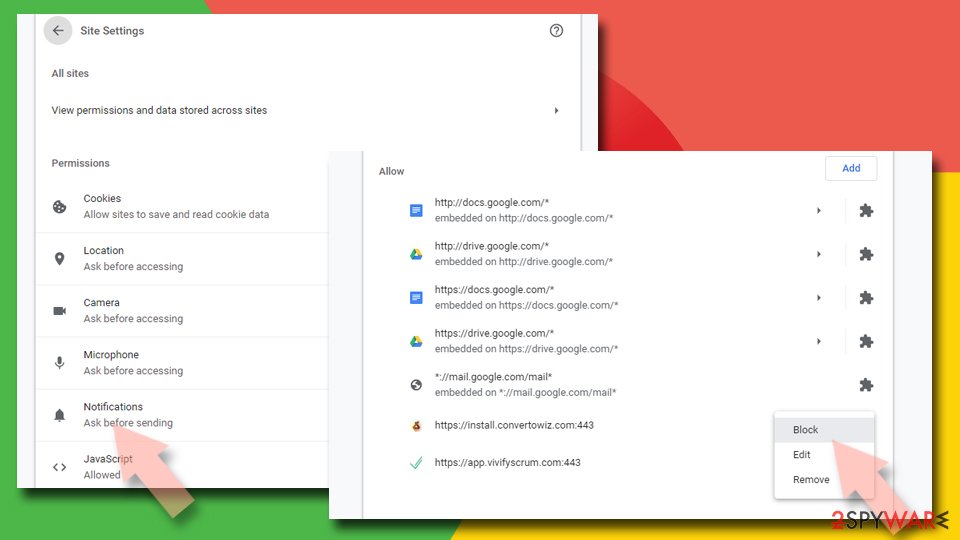
Google Chrome
- Open the Google Chrome browser and go to Menu > Settings.
- Scroll down and click on Advanced.
- Locate the Privacy and security section and pick Site Settings > Notifications.
- Look at the Allow section and look for a suspicious URL.
- Click the three vertical dots next to it and pick Block. This should remove unwanted notifications from Google Chrome.

Mozilla Firefox
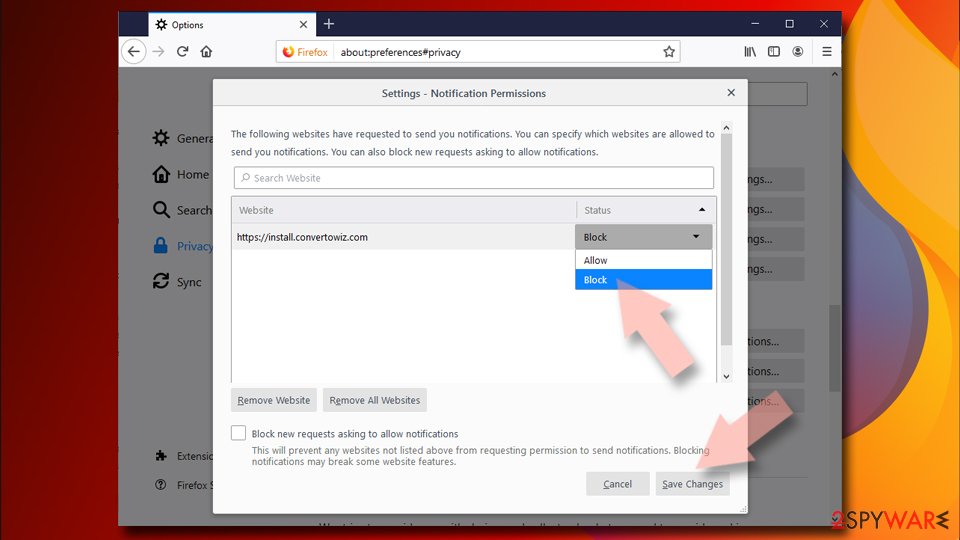
- Open Mozilla Firefox and go to Menu > Options.
- Click on Privacy & Security section.
- Under Permissions, you should be able to see Notifications. Click the Settings button next to it.
- In the Settings – Notification Permissions window, click on the drop-down menu by the URL in question.
- Select Block and then click on Save Changes. This should remove unwanted notifications from Mozilla Firefox.

Safari
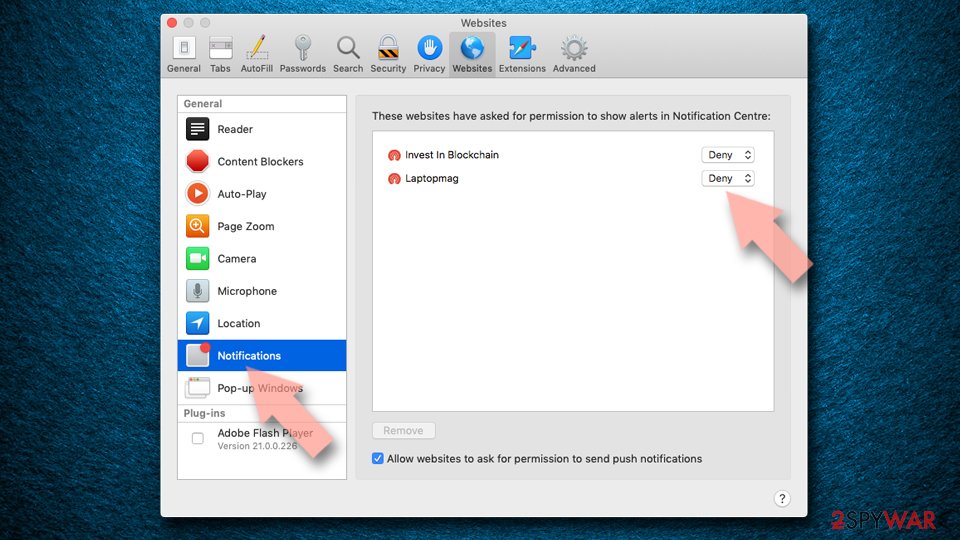
- Click on Safari > Preferences…
- Go to the Websites tab and, under General, select Notifications.
- Select the web address in question, click the drop-down menu and select Deny.

MS Edge (Chromium)
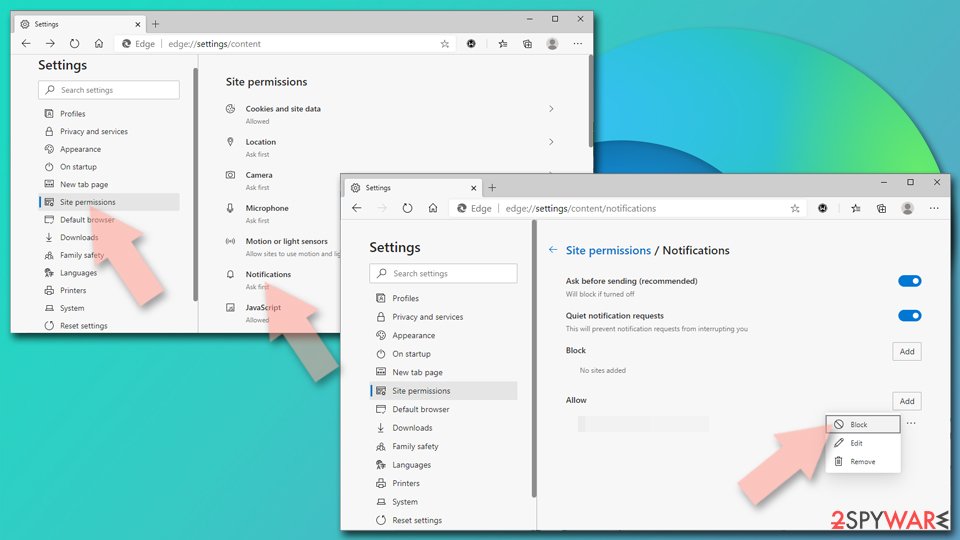
- Open Microsoft Edge, and go to Settings.
- Select Site permissions.
- Go to Notifications on the right.
- Under Allow, you will find the unwanted entry.
- Click on More actions and select Block.

Internet Explorer
- Open Internet Explorer, and click on the Gear icon at the top-right of the window.
- Select Internet options and go to the Privacy tab.
- In the Pop-up Blocker section, click on Settings.
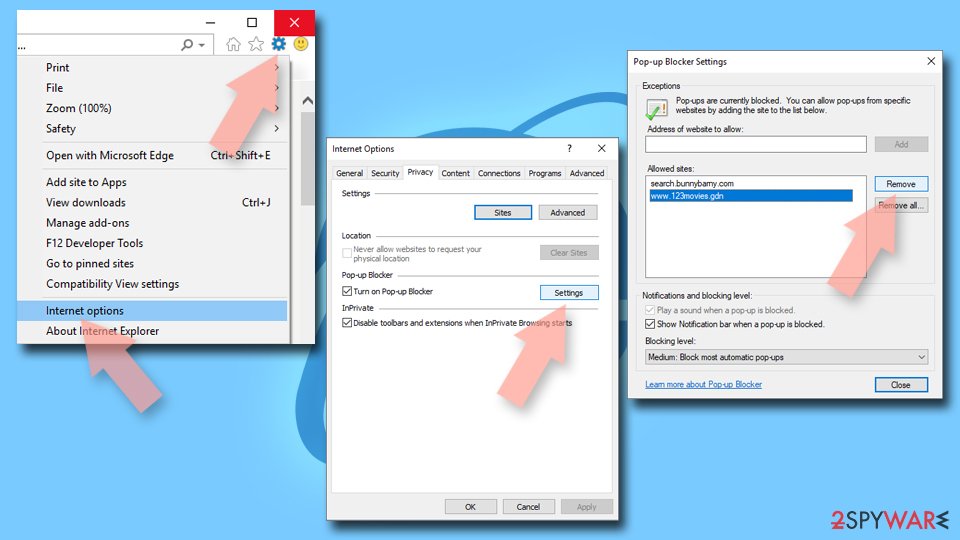
- Locate the web address in question under Allowed sites and pick Remove.

Don't forget to check for infections
If you've followed the earlier instructions, you should have stopped receiving the pesky push notifications from Precludestore.com, but there's more to do if you aim to fully secure your device. Security software is crucial for detecting and removing adware and other potentially harmful software lurking on your computer, though it doesn't affect push notifications directly.
Adware is a type of potentially unwanted software that can operate silently in the background, often spread through deceptive means such as fake software updates or misleading freeware installers. If you're experiencing an increase in phishing attempts and unwanted ads as you browse, it’s important to check your system thoroughly.
To ensure a comprehensive cleanup, start by scanning your system with powerful anti-malware tools such as SpyHunterCombo Cleaner and MalwarebytesMalwarebytes. After the scan, use FortectIntego to clear your browser caches, enhancing your privacy. This step is vital as it removes lingering trackers like cookies that can continue to monitor your online activities for years. Below, we provide steps for manually removing adware, should you choose to take a hands-on approach.
Uninstall from Windows
Uninstall from Windows 10/8:
- Type Control Panel into the Windows search box and open the result.
- Under Programs, select Uninstall a program.


Uninstall from Windows 7/XP:
- Click on Windows Start > Control Panel (Windows XP users should click on Add/Remove Programs).
- In Control Panel, select Programs > Uninstall a program.


Remove the unwanted program:
- In the Programs and Features window, look for any recently installed suspicious entries, select them, and click Uninstall.
- If User Account Control appears, click Yes to confirm, then complete the removal.


Delete from macOS
Remove the unwanted application:
- From the menu bar, select Go > Applications.
- In the Applications folder, look for any suspicious entries, then drag them to Trash (or right-click and pick Move to Trash).


Delete leftover files and folders:
- Select Go > Go to Folder.
- Enter /Library/Application Support and remove any suspicious folders related to the unwanted program.
- Repeat the same check in the /Library/LaunchAgents and /Library/LaunchDaemons folders, deleting any suspicious entries.

- Finally, empty the Trash to permanently remove the leftovers.

Remove from Microsoft Edge
Delete unwanted extensions from MS Edge:
- Select Menu (three horizontal dots at the top-right of the browser window) and pick Extensions.
- From the list, pick the extension and click on the Gear icon.
- Click Remove.


Clear cookies and other browser data:
- Click on the Menu (three horizontal dots at the top-right of the browser window) and select Settings > Privacy, search, and services..
- Under Clear browsing data, pick Choose what to clear.
- Select Cookies and other site data and Cached images and files. (apart from passwords, although you might want to include Media licenses as well, if applicable) and click on Clear.


Restore new tab and homepage settings:
- Click the menu icon and choose Settings.
- Then find On startup section.
- Click Remove next to any suspicious startup page.
Reset MS Edge if the above steps did not work:
- Press on Ctrl + Shift + Esc to open Task Manager.
- Click on More details arrow at the bottom of the window.
- Select Details tab.
- Now scroll down and locate every entry with Microsoft Edge name in it. Right-click on each of them and select End Task to stop MS Edge from running.


Instructions for Chromium-based Edge
Delete extensions from MS Edge (Chromium):
- Open Edge and click select Settings > Extensions.
- Delete unwanted extensions by clicking Remove.


Clear cache and site data:
- Click on Menu and go to Settings.
- Select Privacy, search and services.
- Under Clear browsing data, pick Choose what to clear.
- Under Time range, pick All time.
- Select Clear now.


Reset Chromium-based MS Edge:
- Click on Menu and select Settings.
- On the left side, pick Reset settings.
- Select Restore settings to their default values.
- Confirm with Reset.
- This will disable extensions and reset startup pages but will not delete bookmarks, saved passwords, or browsing history.


Remove from Mozilla Firefox (FF)
Remove dangerous extensions:
- Open Mozilla Firefox browser and click on the Menu (three horizontal lines at the top-right of the window).
- Select Add-ons.
- In here, select the unwanted extension and click Remove.


Reset the homepage:
- Click three horizontal lines at the top right corner to open the menu.
- Choose Settings.
- Under Home, set your preferred homepage and new tab settings.
Clear cookies and site data:
- Click Menu and pick Settings.
- Go to Privacy & Security section.
- Scroll down to locate Cookies and Site Data.
- Click on Clear Data...
- Select Cookies and Site Data and Temporary cached files and pages, then click Clear.


Reset Mozilla Firefox
If clearing the browser as explained above did not help, reset Mozilla Firefox:
- Open Mozilla Firefox browser and click the Menu.
- Go to Help and then choose Troubleshooting Information.

- Under Give Firefox a tune up section, click on Refresh Firefox...
- Once the pop-up shows up, confirm the action by pressing on Refresh Firefox.



Remove from Google Chrome
Delete malicious extensions from Google Chrome:
- Open Google Chrome, click on the Menu (three vertical dots at the top-right corner) and select More tools > Extensions.
- In the newly opened window, you will see all the installed extensions. Uninstall all suspicious extensions related to the unwanted program by clicking Remove.


Clear cache and web data from Chrome:
- Click on Menu and pick Settings.
- Under Privacy and security, select Clear browsing data.
- Select Browsing history, Cookies and other site data, as well as Cached images and files.
- Click Clear data.


Change your homepage:
- Click menu and choose Settings.
- Look for a suspicious site in the On startup section.
- Click on Open a specific or set of pages and click on three dots to find the Remove option.
Reset Google Chrome:
If the previous methods did not help you, reset Google Chrome to eliminate all the unwanted components:
- Click on Menu and select Settings.
- In the Settings, scroll down and click Advanced.
- Scroll down and locate Reset and clean up section.
- Now click Restore settings to their original defaults.
- Confirm with Reset settings.


Delete from Safari
Remove dangerous extensions:
- Open Safari, click Safari in the menu at the top-left of the screen, and select Preferences.
- Go to the Extensions tab, look for any suspicious entries, and click Uninstall to remove them.


Clear history and website data:
- Click Safari in the menu and pick Clear History.
- Set Clear to all history and confirm with Clear History.


Reset Safari:
- Click Safari in the menu and select Preferences > Advanced.
- Enable Show Develop menu in menu bar.
- From the menu bar, click Develop and select Empty Caches.


Did this guide help?
Be the first to comment