

Toqutor.com is a scam site that users can face after being redirected here accidentally

Recently, many users have been surprised by the frequent pop-ups from Toqutor.com, which tend to appear unexpectedly on their computers. These intrusive notifications show up regardless of the website or app in use, and they often interrupt other activities by appearing over active programs, even pushing users out of fullscreen mode. This makes the behavior particularly invasive and frustrating for users.
Toqutor.com prompts users to press the “Allow” button within a notification prompt. Accepting this permission enables the site to send unlimited push notifications directly through the browser, even when it is not in active use. This setup relies on the browser’s API, which is a standard feature; however, Toqutor.com abuses it to deliver suspicious ads, leading to these unwanted notifications.
Once a user grants permission, the notifications quickly turn into a stream of phishing content and harmful links that pop up on the screen. If you are dealing with such persistent pop-ups, it is best not to interact with them and instead follow appropriate steps to remove the unwanted behavior completely.
| Name | Toqutor.com |
| Type | Push notifications, ads, scam, pop-ups |
| Distribution | Intrusive pop-ups can start showing up at some point after the “Allow” button is pressed within the notification prompt |
| Symptoms | Once enabled, notifications from malicious websites would bring misleading or other suspicious content to your screen. These links could lead to malware-laden, scam, phishing, or similar malicious sites |
| Risks | Push notification prompts might include links to malicious websites, resulting in financial losses, personal information disclosure, or malware infections |
| Removal | You can disable the push notifications from any website via browser settings. Scanning the system with SpyHunterCombo Cleaner can also ensure that it's clean and secure |
| Other tips | Some remnants of apps stay in browsers and can be used for tracking. Delete these with FortectIntego, which can also fix any virus damage found on the system |
What are push notifications, exactly?
It’s common for users to confuse pop-up ads with push notifications since both can appear unexpectedly and often look alike. While both serve a similar purpose—promoting content for ad revenue—they actually work in distinct ways.
Pop-up ads are usually triggered when someone accesses a specific website that hosts these ads. Users can avoid these by staying away from certain sites known for displaying pop-ups. However, Toqutor.com notifications operate differently because they utilize the browser’s push notification API (Application Programming Interface).
As a result, notifications from Toqutor.com can show up regardless of which site a user is viewing, or even if they aren’t actively using the browser. This can lead to interruptions during full-screen activities like video streaming or gaming, as long as the browser is open in the background, causing significant annoyance.
How people get tricked by misleading messages
Most users wouldn’t choose to allow disruptive ads to invade their online activities. Yet, scammers employ clever tactics to trick people into unknowingly subscribing to these push notifications. It often begins with an unexpected redirect from a different site – triggered by a misleading link or hidden script. This sudden redirect adds a surprising element, making users more vulnerable to phishing traps when caught off guard.
On reaching Toqutor.com, users may encounter a seemingly routine message, designed to look familiar or necessary. For instance, messages might mimic captcha verifications or age confirmations, displaying prompts like:
- Click Allow to verify you are not a robot.
- Confirm you’re 18+ by clicking Allow.
- Press Allow to proceed.
- Your download is ready; press Allow to continue.
- Browser verification in progress – click the button 'Allow' to access
- Click Allow to claim your prize in our store!

These prompts are deliberately misleading, intending to push users into clicking “Allow” on the notification. When they comply, nothing noticeable happens, so users tend to forget the interaction. Later, they’re caught off guard by intrusive Toqutor.com ads. This deceptive tactic is used by many other sites as well, so browsing attentively is crucial.
Removal of Toqutor.com ads
Before addressing notifications from Toqutor.com, it’s crucial to check your system for any malware or adware that may be responsible. If your device has been compromised, you might experience an increase in ads and frequent redirects to questionable sites while browsing.
For effective detection and removal, utilize reputable security tools like SpyHunterCombo Cleaner or MalwarebytesMalwarebytes. These programs are equipped to conduct in-depth system scans and eliminate malicious software. Additionally, employing a repair tool such as FortectIntego can assist in removing tracking elements and repairing any damage left by malware, ensuring your system's stability and peak performance.
To manage unwanted push notifications, go to your browser's settings or options menu. Most browsers offer a privacy and security section where you can adjust permissions for various sites, including notifications.
In the notifications settings, you should see a list of sites allowed to send push alerts. If Toqutor.com appears on this list, change its status from “Allow” to “Block” or “Ask” to prevent further notifications. Refer to browser-specific instructions below for more detailed steps.
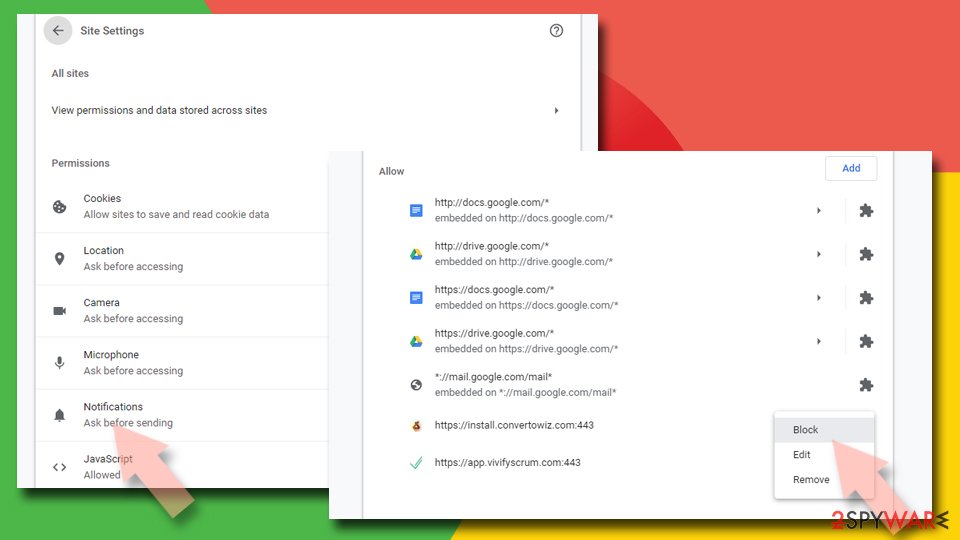
Google Chrome
- Open the Google Chrome browser and go to Menu > Settings.
- Scroll down and click on Advanced.
- Locate the Privacy and security section and pick Site Settings > Notifications.
- Look at the Allow section and look for a suspicious URL.
- Click the three vertical dots next to it and pick Block. This should remove unwanted notifications from Google Chrome.

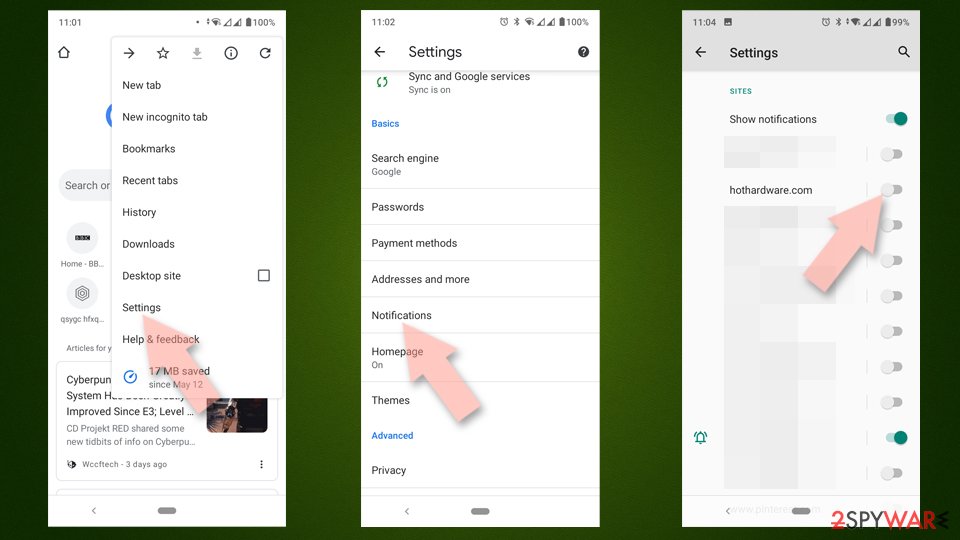
Google Chrome (Android)
- Open Google Chrome and tap on Settings (three vertical dots).
- Select Notifications.
- Scroll down to the Sites section.
- Locate the unwanted URL and toggle the button to the left (Off position).

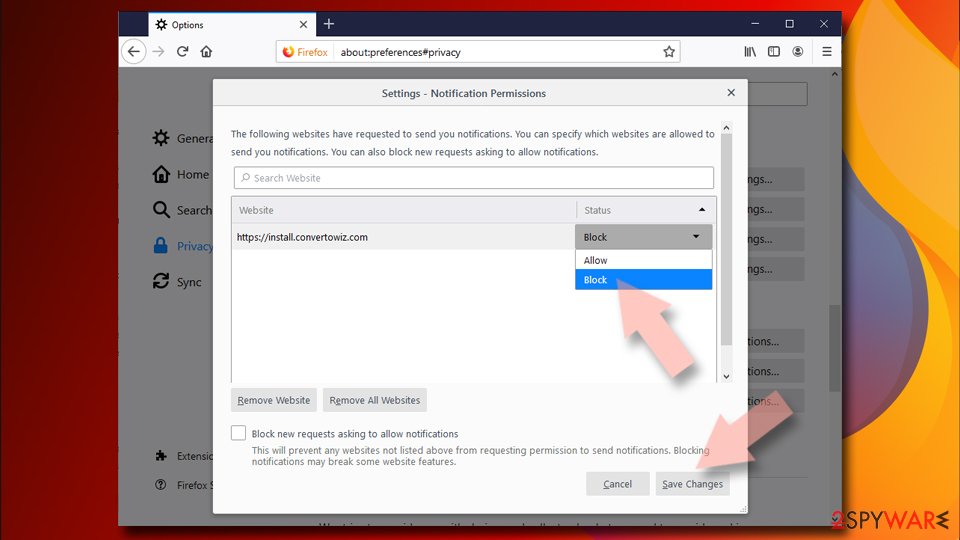
Mozilla Firefox
- Open Mozilla Firefox and go to Menu > Options.
- Click on Privacy & Security section.
- Under Permissions, you should be able to see Notifications. Click the Settings button next to it.
- In the Settings – Notification Permissions window, click on the drop-down menu by the URL in question.
- Select Block and then click on Save Changes. This should remove unwanted notifications from Mozilla Firefox.

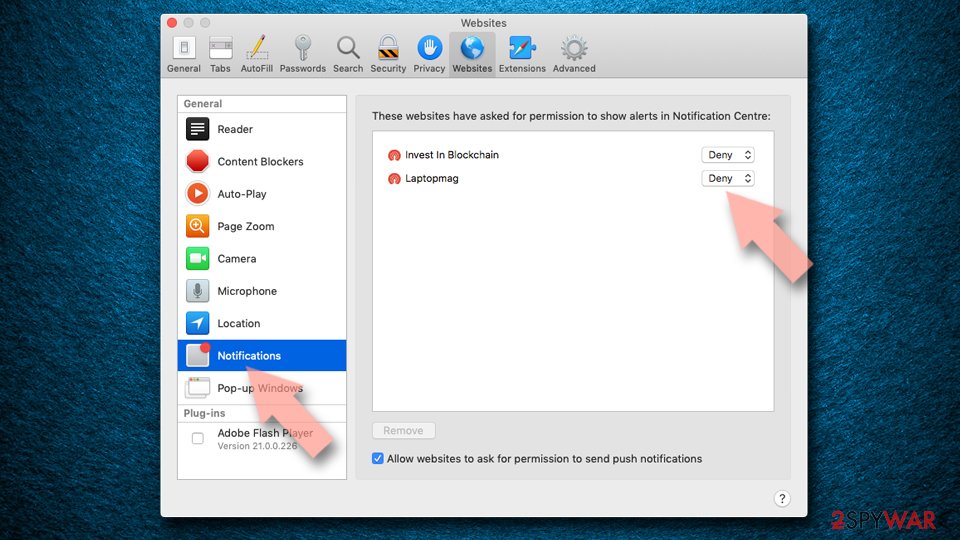
Safari
- Click on Safari > Preferences…
- Go to the Websites tab and, under General, select Notifications.
- Select the web address in question, click the drop-down menu and select Deny.

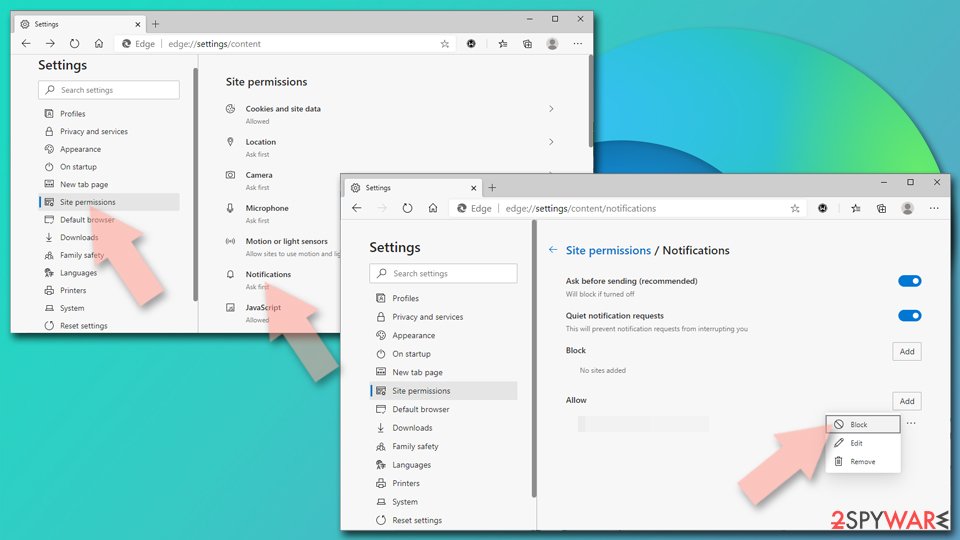
MS Edge
- Open Microsoft Edge, and go to Settings.
- Select Site permissions.
- Go to Notifications on the right.
- Under Allow, you will find the unwanted entry.
- Click on More actions and select Block.

Internet Explorer
- Open Internet Explorer, and click on the Gear icon at the top-right of the window.
- Select Internet options and go to the Privacy tab.
- In the Pop-up Blocker section, click on Settings.
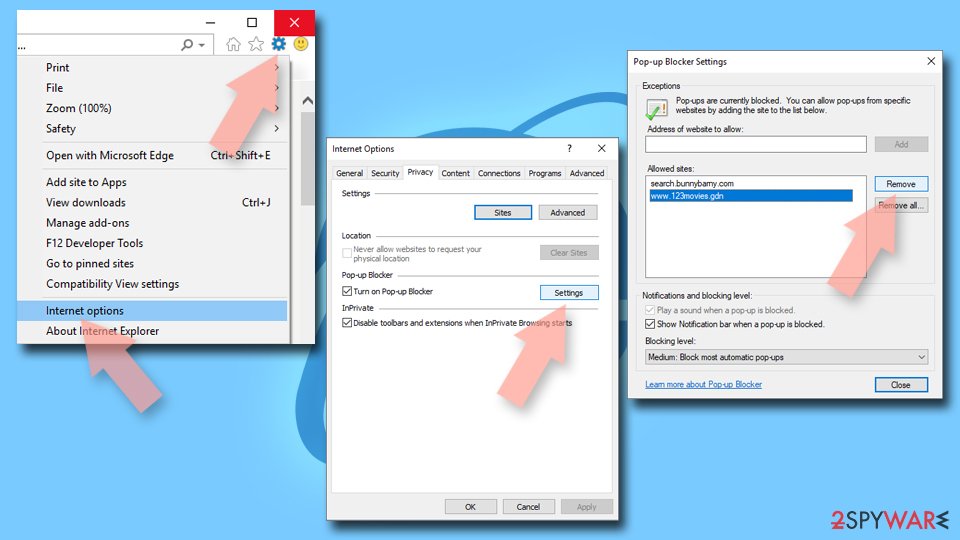
- Locate the web address in question under Allowed sites and pick Remove.

Did this guide help?
Be the first to comment