

Mass.blenvor.com – a suspicious website that can be related to adware infection

Mass.blenvor.com is a deceptive website designed by scammers to lure users into allowing push notifications. These notifications enable them to deliver intrusive advertisements directly to users' desktops. Most individuals only realize the connection to this site after noticing frequent, unwanted pop-ups disrupting their devices.
This issue can occur whether users are actively browsing or not, as having a browser open is the sole requirement for these notifications to appear. The intrusive nature of this behavior allows notifications to overlay all active applications, causing interruptions even during activities like watching videos or gaming.
Interacting with Mass.blenvor.com ads is highly discouraged, as they can be misleading or potentially harmful. Users may encounter fake promises of easy money, false alerts about detected viruses, or deceptive claims of winning expensive prizes. Falling for these schemes could lead to downloading malicious software, exposing personal information to fraudsters, or suffering financial losses.
| Name | Mass.blenvor.com |
| Type | Push notifications, ads, pop-ups, scam |
| Distribution | When the user clicks Allow in the push notification, the website has immediate access to send push notifications |
| Symptoms | Push notifications show on the desktop at random time intervals. These pop-ups show fake notices and push scams. Links can also lead to malware-laden sites |
| Risks | If you click on links provided by the website, you might end up infecting your system with malware/PUPs, disclosing your personal information to cybercriminals, or losing money for useless services |
| Removal | You can stop unwanted notifications by accessing web browser settings. If you suspect adware infection, you should use SpyHunterCombo Cleaner security software to get rid of it |
| Tips | Remove caches and other web data to prevent data tracking – use the FortectIntego repair and maintenance tool. You can also repair damaged system components with it |
How scammers trick users
Mass.blenvor.com uses notification scams to deceive users through misleading prompts that seem harmless at first. These scams are cleverly disguised as routine internet requests, making it easy for unsuspecting individuals to fall victim. The true nature of these scams only becomes evident after users interact with the site.
When accessing Mass.blenvor.com or similar deceptive websites, visitors are often greeted with alerts that mimic standard verification requests. Examples of such prompts include:
- Click Allow to confirm you're not a robot
- If you are 18+ tap Allow
- Click “Allow” to continue streaming
- Can't play this video! Perhaps, your browser doesn't allow video playback. Click “Allow” button to play video
- Just one more step! “Allow” to continue, etc.
These requests appear routine and trustworthy, encouraging users to respond without hesitation. However, on sites like Mass.blenvor.com, clicking “Allow” grants the site permission to send push notifications. Instead of offering any genuine benefit, the primary goal is to build a subscriber base for delivering harmful or unwanted content.
Once subscribed, users face a relentless stream of pop-up notifications on their devices, interrupting their activities. These notifications typically include deceptive messages, such as fake malware warnings or bogus offers for “free” software, all designed to mislead and exploit users.

Key characteristics of Mass.blenvor.com notifications
When users agree to receive push notifications from suspicious sites like Mass.blenvor.com, they may not notice immediate changes. However, over time, intrusive pop-ups begin appearing on their screens, often at the bottom or top-right corner, depending on their operating system.
Here are a few examples of the system behavior you can expect when affected by this issue:
- System-level interruptions. These notifications appear even when the user isn’t actively browsing, as they operate directly at the system level.
- Disruptive behavior. Notifications can force users out of full-screen mode, interrupting activities like watching videos or playing games.
- Unreliable advertisements. Ads displayed often belong to insecure advertising networks, increasing the risk of exposure to harmful or misleading content.
Examples of such ads include:
- Promises of easy money through get-rich-quick schemes
- False claims of lottery or prize winnings
- Deceptive technical support alerts
To protect yourself, avoid interacting with notifications from Mass.blenvor.com. Engaging with such ads can lead to significant disturbances or expose you to harmful scams.
Remove unwanted pop-ups permanently
Frequent redirections to scam websites like Mass.blenvor.com can indicate the presence of adware on your system. This becomes even more likely if you notice additional unusual behavior, such as an increase in pop-ups, fake coupons, misleading offers, sponsored links, or unexpected reroutes to suspicious web addresses during browsing.
To resolve these issues, conducting a comprehensive system scan with SpyHunterCombo Cleaner, MalwarebytesMalwarebytes, or another reliable security tool is strongly recommended. Such scans not only eliminate adware but also detect and remove other threats, including browser hijackers, trojans, and backdoors, reducing the likelihood of future infections. Once harmful software has been removed, it’s advisable to use FortectIntego to clean your browser and repair any damage that might have been caused by malware.
If you’re dealing with persistent push notifications from Mass.blenvor.com, accessing your browser settings to block the URL is crucial. Identifying the appropriate settings for your specific browser and following the steps to revoke permissions can help restore normal browsing behavior.
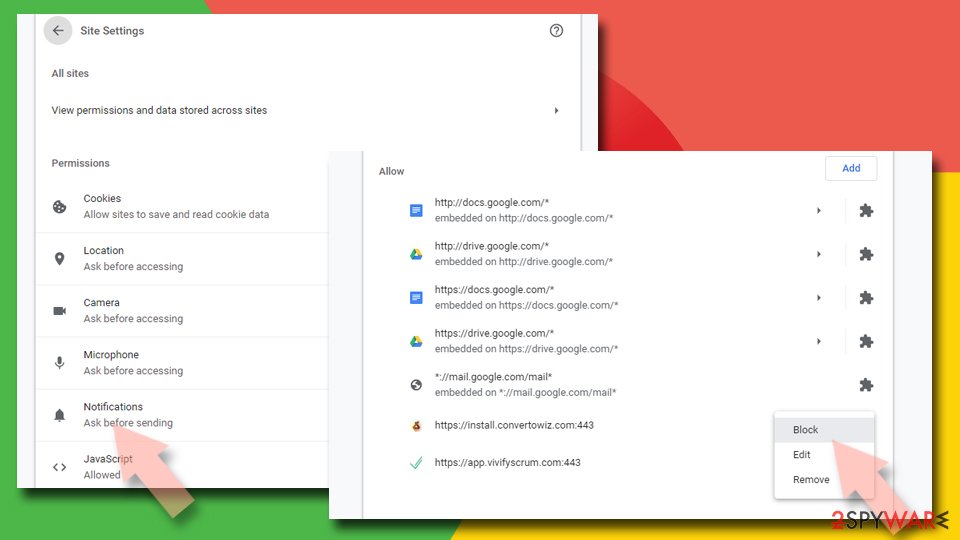
Google Chrome (desktop)
- Open the Google Chrome browser and go to Menu > Settings.
- Scroll down and click on Advanced.
- Locate the Privacy and security section and pick Site Settings > Notifications.
- Look at the Allow section and look for a suspicious URL.
- Click the three vertical dots next to it and pick Block. This should remove unwanted notifications from Google Chrome.

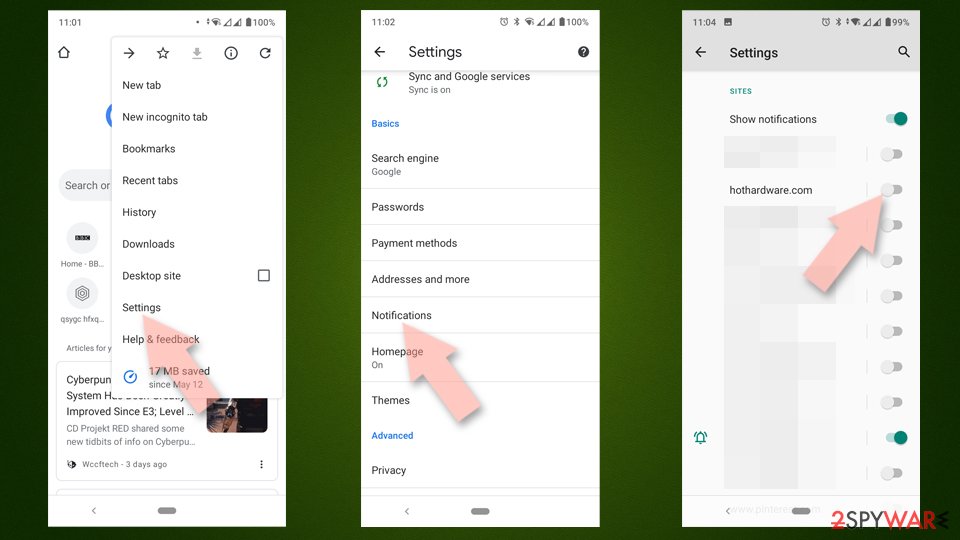
Google Chrome (Android)
- Open Google Chrome and tap on Settings (three vertical dots).
- Select Notifications.
- Scroll down to the Sites section.
- Locate the unwanted URL and toggle the button to the left (Off setting).

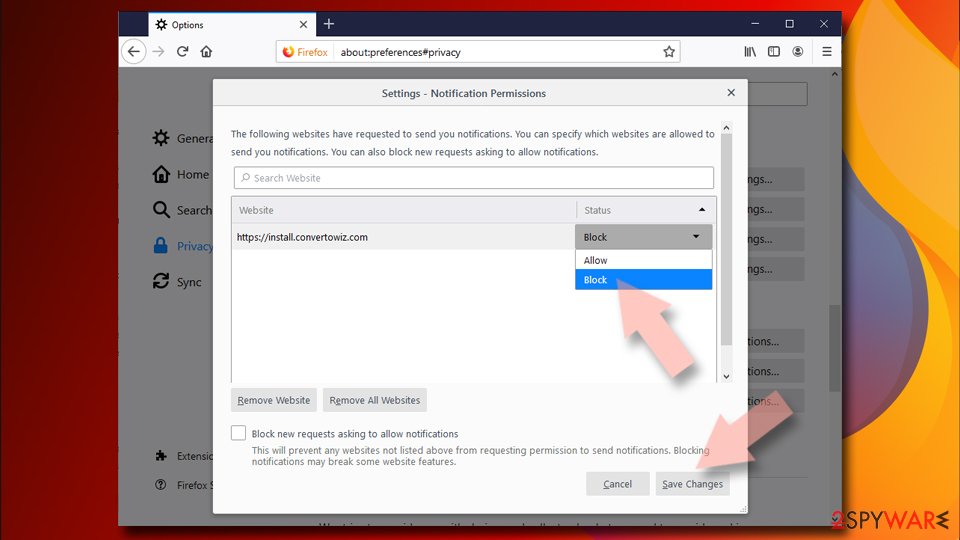
Mozilla Firefox
- Open Mozilla Firefox and go to Menu > Options.
- Click on Privacy & Security section.
- Under Permissions, you should be able to see Notifications. Click the Settings button next to it.
- In the Settings – Notification Permissions window, click on the drop-down menu by the URL in question.
- Select Block and then click on Save Changes. This should remove unwanted notifications from Mozilla Firefox.

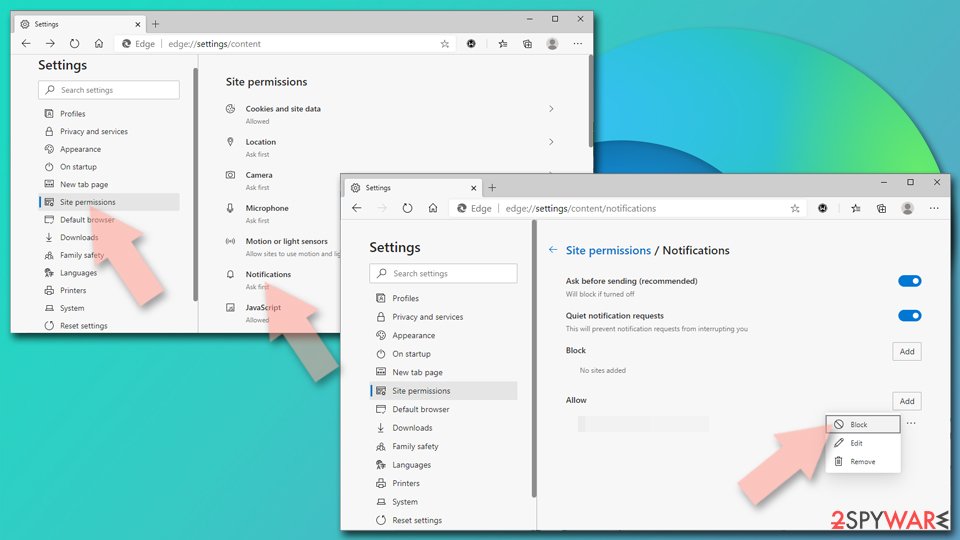
MS Edge (Chromium)
- Open Microsoft Edge, and go to Settings.
- Select Site permissions.
- Go to Notifications on the right.
- Under Allow, you will find the unwanted entry.
- Click on More actions and select Block.

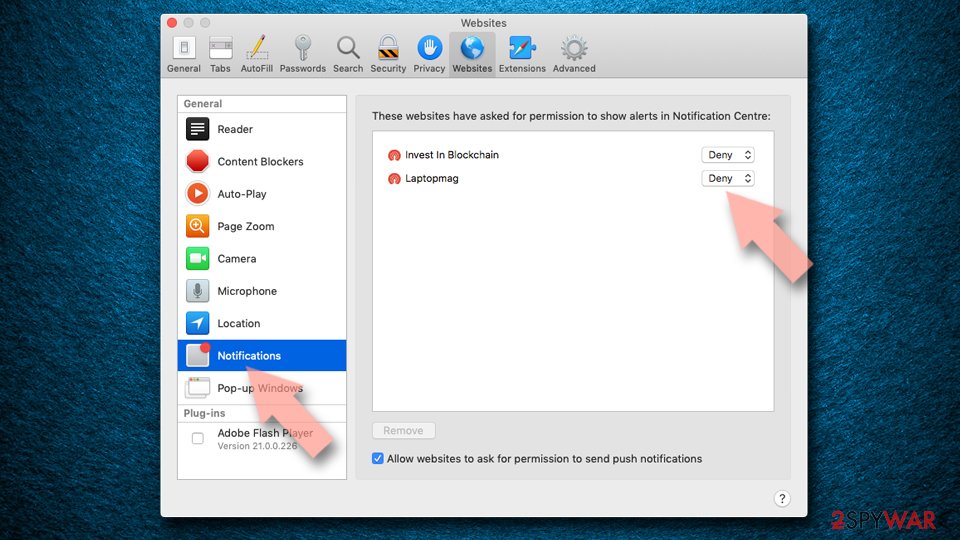
Safari
- Click on Safari > Preferences…
- Go to the Websites tab and, under General, select Notifications.
- Select the web address in question, click the drop-down menu and select Deny.

Internet Explorer
- Open Internet Explorer, and click on the Gear icon at the top-right of the window.
- Select Internet options and go to the Privacy tab.
- In the Pop-up Blocker section, click on Settings.
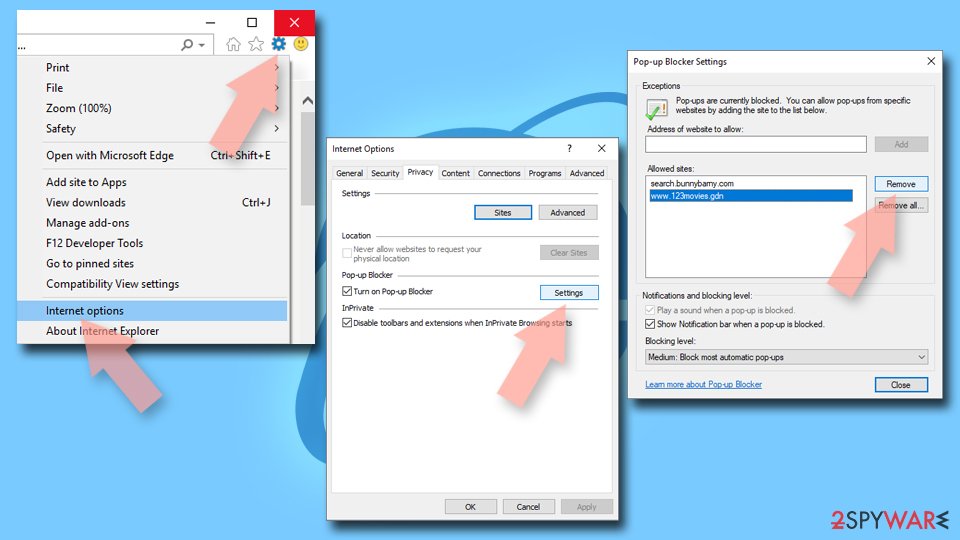
- Locate the web address in question under Allowed sites and pick Remove.

Did this guide help?
Be the first to comment