

Dopotics.com asks users to confirm they aren't robots only to deliver intrusive ads later

If you’ve noticed Dopotics.com ads popping up on your screen unexpectedly, there’s no need to panic – they can be removed with a few simple steps. These ads typically appear in popular browsers like Google Chrome, Mozilla Firefox, and Microsoft Edge, whether you’re using Windows, macOS, or even mobile devices on Android or iOS. All it takes is adjusting some browser settings to get rid of them for good.
Many people mistakenly believe that Dopotics.com ads are the result of a virus infecting their computer. While adware can indeed be a factor(causing browser redirects and an increase in ad activity) the real culprit here is that the website has been allowed to show push notifications. Removing these intrusive notifications is a manual process, but it’s straightforward to do. We’ll guide you through it step by step so you can put an end to them and regain control over your browsing experience.
| Name | Dopotics.com |
| Type | Push notifications, pop-ups, ads, scam |
| Distribution | Push notifications are triggered after the “Allow” button in the notification prompt is clicked when visiting the website |
| Symptoms | Unexpected push notifications appear on the desktop at random times, delivering fake notices and scam messages. Some links might redirect to sites that spread malware |
| Risks | Push notifications often feature fake notices and scams. Clicking on links can result in exposure to malicious sites and potential infections |
| Removal | To stop these push notifications, go into your browser settings and block Andlook.buzz. Afterward, check your computer for any adware or malware by running a full system scan with SpyHunterCombo Cleaner |
| Other tips | Delete web caches and other data from your browsers to protect your privacy and prevent information leaks – FortectIntego can quicken this process |
How Scammers trick people
Most people would never knowingly choose to subscribe to push notifications from shady websites. Scammers are well aware of this and create schemes to trick users into giving their consent. Udesmart.com, for example, uses misleading tactics that make it seem like clicking the “Allow” button is absolutely necessary.
The site relies on social engineering tricks to gain users' trust. Commonly, it will ask you to confirm you’re not a robot, verify your age, or claim that a video can’t play without enabling notifications. Sometimes, it will promise to start a download or offer a prize. These typical prompts might look like this:
- Click Allow to confirm that you are not a robot
- If you are 18+, click Allow
- Press “Allow” to watch the video
- Click “Allow” to win the prize and get it in our shop!
- Click Allow to start downloading
These tactics are designed to appear as normal, everyday online actions – ones you’ve probably seen and trusted before. Unfortunately, clicking “Allow” in this context has very different consequences.
If you choose to “Block” instead, the site may just refresh or redirect you to a different page with the same trick. But if you fall for it and click “Allow,” your browser will start showing an onslaught of unwanted notifications. Beyond just being a nuisance, these pop-ups can redirect you to phishing sites or even prompt malware downloads. That’s why it’s essential to avoid engaging with suspicious pop-ups and to keep a close eye on what you allow in your browser settings.

Watch out: adware may be the culprit for redirects
Unexplained redirects to phishing sites can happen for reasons unknown, and one of the least considered reasons is adware. This kind of potentially unwanted program (PUP) is notorious for bombarding machines with intrusive ads and taking users to dangerous URLs. Introduced via free software downloads, adware may lurk in the background and stealthily cause harm.
If you’re experiencing random pop-ups or sudden redirects, it’s essential to check your system for adware. A thorough scan with reliable anti-malware software like MalwarebytesMalwarebytes or SpyHunterCombo Cleaner will help detect and remove these threats. Ensure your security tool is fully updated to tackle the latest versions of adware effectively.
Once you've removed the adware, it's a good time to remove any leftover browser muck as well and fix any harm the infection has caused. With FortectIntego, you can remove cookies, clear out trackers, and fix potential damage, making your computer more secure and safer.
How to remove unwanted push notifications
Push notifications can catch many people off guard, especially those unfamiliar with how they work. When unexpected messages from sites like Hawarbarin.co.in suddenly start appearing on your screen, it’s only natural to assume that your device has been infected by a virus. These abrupt and often intrusive pop-ups certainly feel like the work of malware.
However, the reassuring truth is that these alerts usually aren’t caused by a virus at all. Push notifications are a standard feature built into modern browsers, and they only show up if you’ve unknowingly given a particular site permission to send them. Because of this, traditional antivirus software won’t solve the issue.
If you want to stop seeing these notifications, head over to your browser’s settings. There, you can find the list of sites that are allowed to show push notifications and remove Hawarbarin.co.in from that list. This quick step will halt the annoying pop-ups and reduce the clutter on your screen, without needing to dig deeper into system cleaning.
Google Chrome
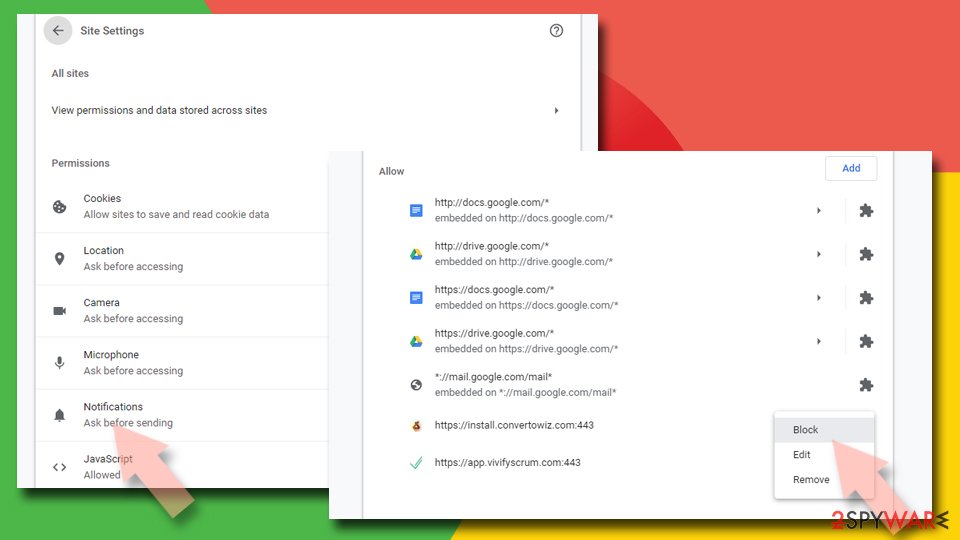
- Open the Google Chrome browser and go to Menu > Settings.
- Scroll down and click on Advanced.
- Locate the Privacy and security section and pick Site Settings > Notifications.
- Look at the Allow section and look for a suspicious URL.
- Click the three vertical dots next to it and pick Block. This should remove unwanted notifications from Google Chrome.

Google Chrome (Android)
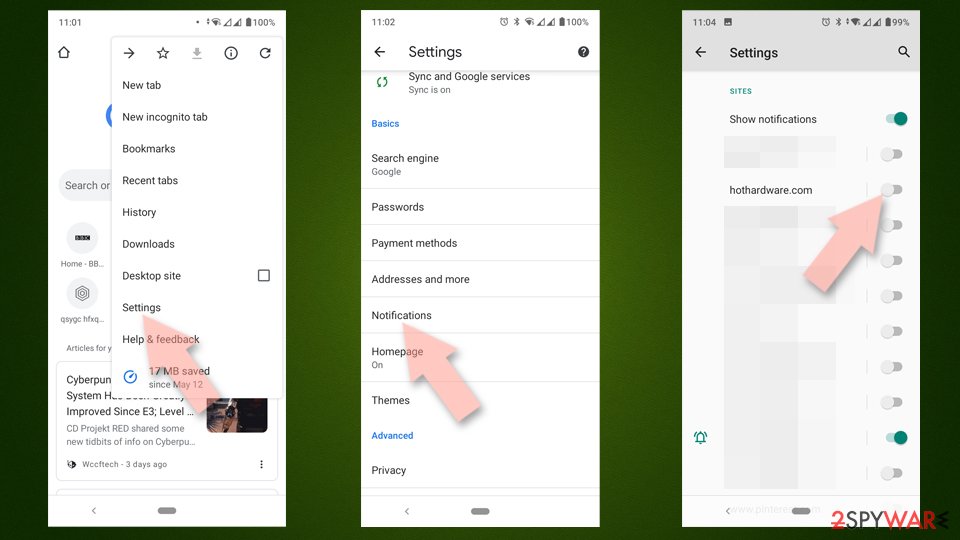
- Open Google Chrome and tap on Settings (three vertical dots).
- Select Notifications.
- Scroll down to the Sites section.
- Locate the unwanted URL and toggle the button to the left (Off position).

Mozilla Firefox
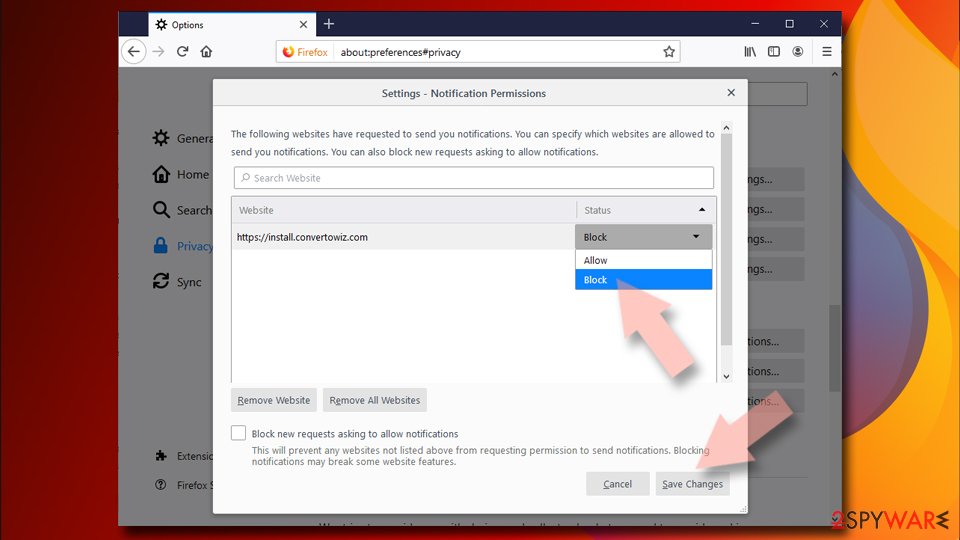
- Open Mozilla Firefox and go to Menu > Options.
- Click on Privacy & Security section.
- Under Permissions, you should be able to see Notifications. Click the Settings button next to it.
- In the Settings – Notification Permissions window, click on the drop-down menu by the URL in question.
- Select Block and then click on Save Changes. This should remove unwanted notifications from Mozilla Firefox.

Safari
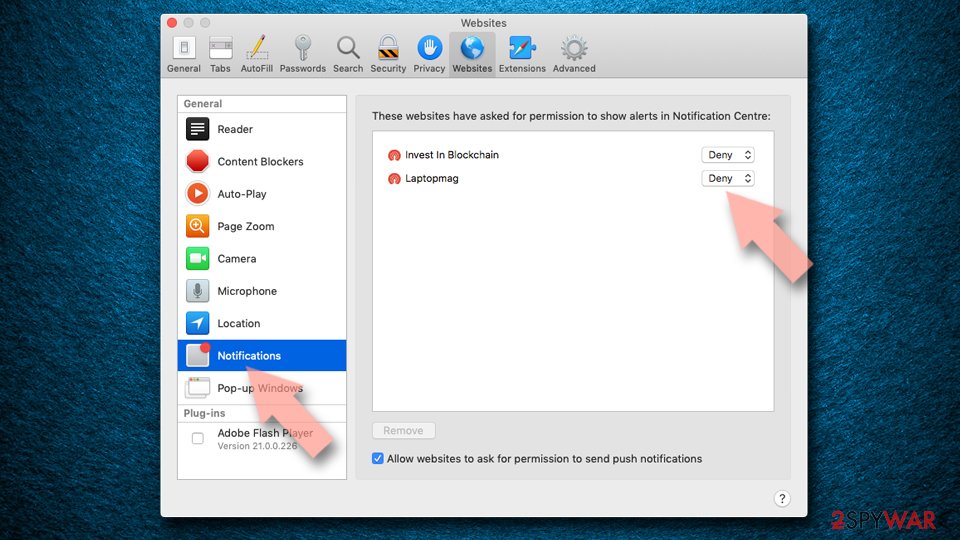
- Click on Safari > Preferences…
- Go to the Websites tab and, under General, select Notifications.
- Select the web address in question, click the drop-down menu and select Deny.

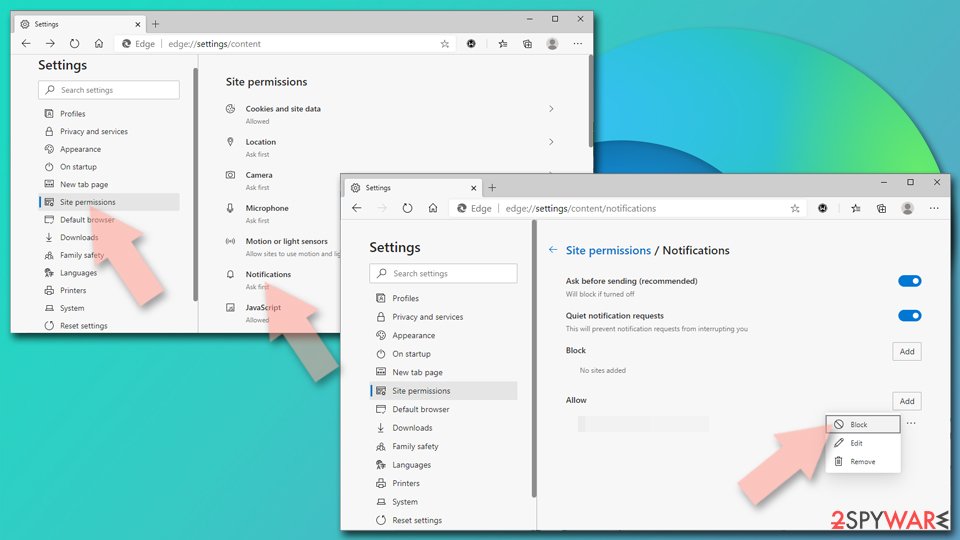
MS Edge (Chromium)
- Open Microsoft Edge, and go to Settings.
- Select Site permissions.
- Go to Notifications on the right.
- Under Allow, you will find the unwanted entry.
- Click on More actions and select Block.

Internet Explorer
- Open Internet Explorer, and click on the Gear icon at the top-right of the window.
- Select Internet options and go to the Privacy tab.
- In the Pop-up Blocker section, click on Settings.
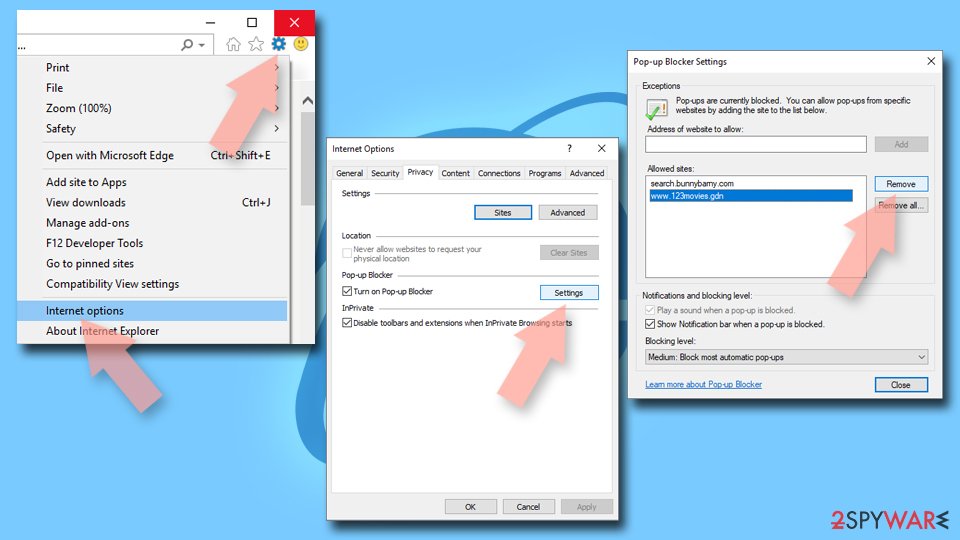
- Locate the web address in question under Allowed sites and pick Remove.

Was this guide helpful?
Be the first to comment