

Searchou – a browser hijacker that can come in a bundle with Privitze VPN
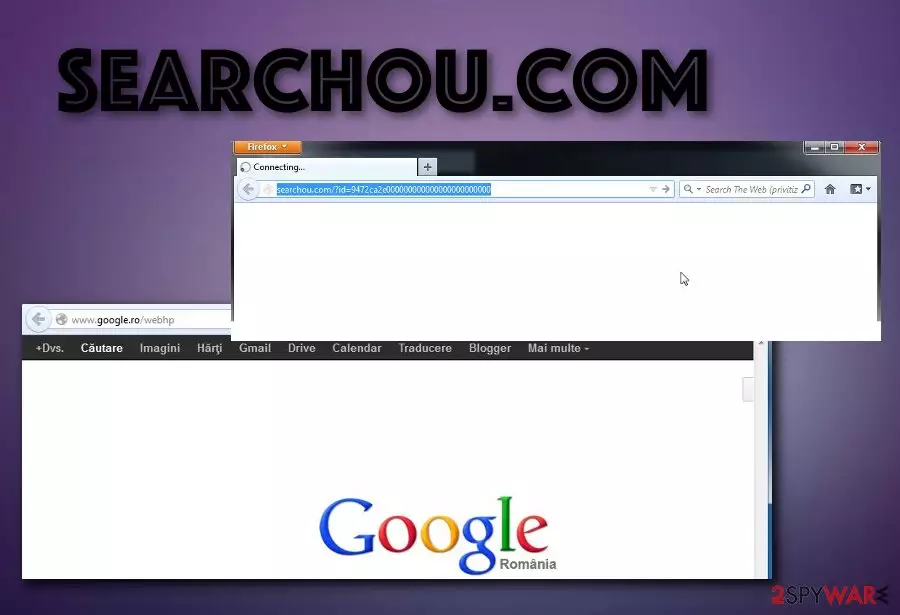
Searchou is described as a browser-hijacking application that enters systems with additional content such as Privitze VPN. Once you end up with this browser hijacker, unpleasant alterings will be spotted by the default search engine, address bar, and homepage modified to google.com/webhp. After Searchou virus places itself on your machine, you can expect several suspicious activities that are going to be carried out in the meantime. Mostly, these PUPs are closely related to redirecting to affiliate websites, placement of advertising content, browser history enhancing, injection of odd extensions, and similar.
| Name | Searchou |
|---|---|
| Type | Browser hijacker |
| Additional software | Privitze VPN which travels with MagniPic |
| Engine | google.com/webhp |
| Found in | thepiratebay.se and other unsecured networks |
| Activities | Alterings of browser settings (engine, homepage, new tab URL) |
| Manual removal | Look for instructions at the end of this page |
| Automatical elimination | Download FortectIntego and try removing the potentially unwanted program with this tool |
Reports about Searchou triggering users have flooded the Internet in the past. You can find Malwarebytes forums wild with reports about this browser-hijacking app. One user has claimed that the modified search settings appear each time while entering web browsers such as Chrome, IE, and the computer has been put in the mode of sluggishness. Besides, the user commented that even reliable anti-malware tools can hardly remove every single component of the hijack.[1]
Another person revealed that Searchou.com appeared after downloading a component from the well-known piracy network – thepiratebay.se. After the unsuccessful download, he received the browser hijacker together with the beforementioned Privitze VPN component. It is considered to be a Virtual Private Network[2] that arrives not only with Searchou but also together with MagniPic (an adware program).
As you can see, Searchou can be easily bundled through third-party networks and come with additional software. However, this might be potentially dangerous as different malware strains (Trojan viruses, ransomware, cryptocurrency miners, worms, etc.) are also put up on piracy sites such as The Pirate Bay. Note that browser hijackers are one of the main ways of how malware reaches computer systems.

Another unpleasant feature of Searchou is redirecting that can be caused to take the user to affiliate websites. This is one of the main ways how third-party developers promote their products, for example, rogue security software. However, in some cases, redirecting actions might relate to landings on malicious websites. This is another way how dangerous infections reach the targetted machine/device.
Continuously, Searchou might be capable of collecting results that relate to your browsing activities. Potentially unwanted programs like this can gather information such as your IP address, type of web browser used, commonly search pages, offers requested, online accounts visited, clicks made on specific ads or hyperlinks, saved bookmarks, and even your geographic location and email address.
Later on, the browser hijacker might pass on all collected details to other parties for income-gaining purposes. Avoid this type of unfair activities by performing Searchou removal. You can try eliminating the threat with tools such as FortectIntego, SpyHunterCombo Cleaner, or MalwarebytesMalwarebytes. Also, you can find manual instructing steps at the end of the article. These guidelines will help you to clean all web browsers on yourself.
However, to remove Searchou fully, you need to get rid of all additional content that the potentially unwanted program has brought together with it. This includes all beforementioned components such as Privitze VPN or even MagniPic if it appeared also. Furthermore, you should definitely check the browser settings for questionable extensions, plug-ins, or add-ons injected.

Browser-hijacking apps are delivered via third-party networks
There are plenty of unsecured sources lurking out in the cyberspace and many users enter such networks every day. They are known as piracy, adult-themed, gambling, or online-gaming websites. According to experts from LosVirus.es,[3] the lack of security in these sources allows various hackers to plant PUPs and even malware in them. Another popular browser hijacker distribution technique is by using software bundles.
If you are looking for ways to avoid potentially unwanted programs such as browser hijacker or adware, you should:
- Keep a proper distance from third-party websites.
- Stop using services that are not provided by their original developers.
- Avoid downloading programs by using “Quick” modes. Choose “Advanced” instead.
- Install a reputable security tool and keep it regularly updated.
Searchou virus removal tips
You need to remove Searchou from your computer system if this potentially unwanted program appeared on your browser unexpectedly and started altering your browser settings. Remember, the longer you keep this threat on your machine, the worse its activities might get and start intruding you even more.
Searchou removal can be carried out in two ways. You can download a reputable anti-malware tool or you can use the below-provided guidelines to clean web browsers such as Google Chrome, Mozilla Firefox, Internet Explorer, Microsoft Edge, and Safari from questionable extensions and add-ons.
Uninstall from Windows
Uninstall from Windows 10/8:
- Type Control Panel into the Windows search box and open the result.
- Under Programs, select Uninstall a program.


Uninstall from Windows 7/XP:
- Click on Windows Start > Control Panel (Windows XP users should click on Add/Remove Programs).
- In Control Panel, select Programs > Uninstall a program.


Remove the unwanted program:
- In the Programs and Features window, look for any recently installed suspicious entries, select them, and click Uninstall.
- If User Account Control appears, click Yes to confirm, then complete the removal.


Delete from macOS
Remove the unwanted application:
- From the menu bar, select Go > Applications.
- In the Applications folder, look for any suspicious entries, then drag them to Trash (or right-click and pick Move to Trash).


Delete leftover files and folders:
- Select Go > Go to Folder.
- Enter /Library/Application Support and remove any suspicious folders related to the unwanted program.
- Repeat the same check in the /Library/LaunchAgents and /Library/LaunchDaemons folders, deleting any suspicious entries.

- Finally, empty the Trash to permanently remove the leftovers.

Reset Internet Explorer
Remove dangerous add-ons:
- Open Internet Explorer, click on the Gear icon (IE menu) on the top-right corner of the browser
- Pick Manage Add-ons.
- You will see a Manage Add-ons window. Here, look for suspicious plugins. Click on these entries and select Disable.


Change your homepage if it was altered:
- Open IE and click on the Gear icon.
- Select Internet Options.
- In the General tab, delete the Home page address and replace it by your preferred one (for example, Google.com).
- Click Apply and then select OK.


Delete temporary files:
- Press on the Gear icon and select Internet Options.
- Under Browsing history, click Delete...
- Select relevant fields and press Delete.


Reset Internet Explorer:
- Click on Gear icon > Internet options and select Advanced tab.
- Select Reset.
- In the new window, check Delete personal settings and select Reset.


Remove from Microsoft Edge
Delete unwanted extensions from MS Edge:
- Select Menu (three horizontal dots at the top-right of the browser window) and pick Extensions.
- From the list, pick the extension and click on the Gear icon.
- Click Remove.


Clear cookies and other browser data:
- Click on the Menu (three horizontal dots at the top-right of the browser window) and select Settings > Privacy, search, and services..
- Under Clear browsing data, pick Choose what to clear.
- Select Cookies and other site data and Cached images and files. (apart from passwords, although you might want to include Media licenses as well, if applicable) and click on Clear.


Restore new tab and homepage settings:
- Click the menu icon and choose Settings.
- Then find On startup section.
- Click Remove next to any suspicious startup page.
Reset MS Edge if the above steps did not work:
- Press on Ctrl + Shift + Esc to open Task Manager.
- Click on More details arrow at the bottom of the window.
- Select Details tab.
- Now scroll down and locate every entry with Microsoft Edge name in it. Right-click on each of them and select End Task to stop MS Edge from running.


Instructions for Chromium-based Edge
Delete extensions from MS Edge (Chromium):
- Open Edge and click select Settings > Extensions.
- Delete unwanted extensions by clicking Remove.


Clear cache and site data:
- Click on Menu and go to Settings.
- Select Privacy, search and services.
- Under Clear browsing data, pick Choose what to clear.
- Under Time range, pick All time.
- Select Clear now.


Reset Chromium-based MS Edge:
- Click on Menu and select Settings.
- On the left side, pick Reset settings.
- Select Restore settings to their default values.
- Confirm with Reset.
- This will disable extensions and reset startup pages but will not delete bookmarks, saved passwords, or browsing history.


Remove from Mozilla Firefox (FF)
Remove dangerous extensions:
- Open Mozilla Firefox browser and click on the Menu (three horizontal lines at the top-right of the window).
- Select Add-ons.
- In here, select the unwanted extension and click Remove.


Reset the homepage:
- Click three horizontal lines at the top right corner to open the menu.
- Choose Settings.
- Under Home, set your preferred homepage and new tab settings.
Clear cookies and site data:
- Click Menu and pick Settings.
- Go to Privacy & Security section.
- Scroll down to locate Cookies and Site Data.
- Click on Clear Data...
- Select Cookies and Site Data and Temporary cached files and pages, then click Clear.


Reset Mozilla Firefox
If clearing the browser as explained above did not help, reset Mozilla Firefox:
- Open Mozilla Firefox browser and click the Menu.
- Go to Help and then choose Troubleshooting Information.

- Under Give Firefox a tune up section, click on Refresh Firefox...
- Once the pop-up shows up, confirm the action by pressing on Refresh Firefox.



Remove from Google Chrome
Delete malicious extensions from Google Chrome:
- Open Google Chrome, click on the Menu (three vertical dots at the top-right corner) and select More tools > Extensions.
- In the newly opened window, you will see all the installed extensions. Uninstall all suspicious extensions related to the unwanted program by clicking Remove.


Clear cache and web data from Chrome:
- Click on Menu and pick Settings.
- Under Privacy and security, select Clear browsing data.
- Select Browsing history, Cookies and other site data, as well as Cached images and files.
- Click Clear data.


Change your homepage:
- Click menu and choose Settings.
- Look for a suspicious site in the On startup section.
- Click on Open a specific or set of pages and click on three dots to find the Remove option.
Reset Google Chrome:
If the previous methods did not help you, reset Google Chrome to eliminate all the unwanted components:
- Click on Menu and select Settings.
- In the Settings, scroll down and click Advanced.
- Scroll down and locate Reset and clean up section.
- Now click Restore settings to their original defaults.
- Confirm with Reset settings.


Delete from Safari
Remove dangerous extensions:
- Open Safari, click Safari in the menu at the top-left of the screen, and select Preferences.
- Go to the Extensions tab, look for any suspicious entries, and click Uninstall to remove them.


Clear history and website data:
- Click Safari in the menu and pick Clear History.
- Set Clear to all history and confirm with Clear History.


Reset Safari:
- Click Safari in the menu and select Preferences > Advanced.
- Enable Show Develop menu in menu bar.
- From the menu bar, click Develop and select Empty Caches.


Did this guide help?
2 comments
Bill
Spyhunter is just extra spyware.
Ahseya
THANKYOU, SO MUCH!!!!