

Is findamo.com virus a dangerous one?
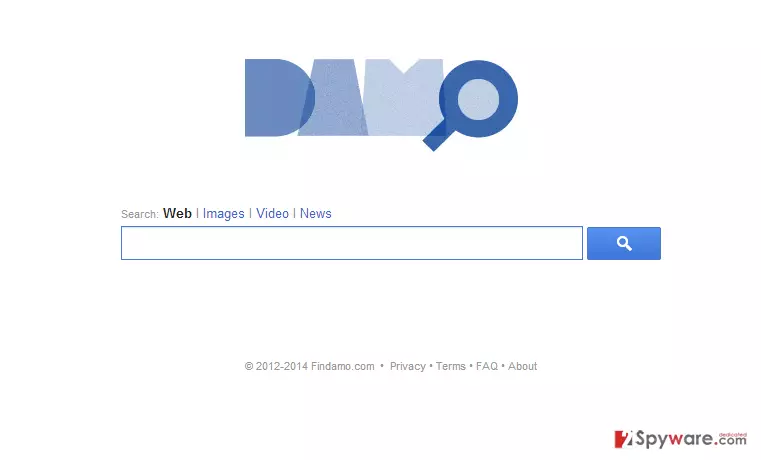
While choosing a new search engine, findamo.com virus (also known as Damo Web Search) might cross your path. It is comprehended as a search engine. Nonetheless, do not think that it is a legitimate one because experts classify it as a browser hijacker. Thus, its most distinctive feature comes as redirects to affiliated but potentially malevolent domains. What is more, it tends to collect NPII (non-personal information) and displays ads. The hijacker usually enters users’ computers unnoticed. Once it does that, it may initiate changes to the homepage and other browser settings. This PUP was made to infect a wide range of browsers, varying from Google Chrome to Safari. In short, make a rush to remove Findamo.com.
Many users believe that this browsing tool is a virus because it has the ability to infiltrate a PC silently. Actually, it does not possess strict malware characteristics and rarely it may cause severe system malfunctions. Nonetheless, it does not mean that you can ignore the presence of this PUP on your device. Though it uses Google as the main search result provider, it does not deny the fact that Findamo is a browser hijacker.
Some anti-virus applications offer their security plug-ins which inform a user of the reliability of each website. Thus, according to them, this hijacker has a poor rating. Its most negative property comes as findamo.com redirect. Since it is supported by third-parties, it is likely that you might occasionally be redirected to their respective websites. On their behalf, they employ various tracking technologies. By spying on your daily visited web pages and search entries, they might identify particular user needs. After that, they create customized advertisements which stream your browser. In addition, the redirect domains might be infected with more or less dangerous malware. We encourage you to proceed to findamo.com removal.
When did this PUP hijack my computer?
This questionable search engine spreads by attaching itself to various programs that belong to Performersoft LLC company. You may download the hijacker with a driver updater or media player. This distribution method is extremely popular and profitable because users rarely give a second look before installing new applications. Keep in mind that if you download and install unfamiliar freeware, you may get several unwanted programs together with it. Thus, you should always pay attention when installing freeware. It is advisable to read End-users license agreement (EULA). Moreover, choose “Advanced” or “Custom” installation option and opt out of offers to change your homepage and search engine. On a final note, we always recommend users to install a reputable anti-spyware, such as FortectIntego, which helps avoid similar intruders.
Remove Findamo.com from the PC
If you are experiencing continuous redirects caused by this PUP, you should not hesitate and remove Findamo.com from your computer. You can do it with the assistance of previously mentioned security utility or manually. Nonetheless, taking into account that this search engine uses additional files which help fortify the hijacker on the device, locating them might seem like a tiresome activity. Thus, you should rely on the software which is apt in detecting various sorts of potentially malignant files. The program will also protect you from more destructive threats, such ransomware. Lastly, before you about to install new programs or decide to refresh your browsing by opting for a new search engine, remain vigilant. Check all installation settings and take a look at the privacy policies or “Terms of Use.”
Uninstall from Windows
Uninstall from Windows 10/8:
- Type Control Panel into the Windows search box and open the result.
- Under Programs, select Uninstall a program.


Uninstall from Windows 7/XP:
- Click on Windows Start > Control Panel (Windows XP users should click on Add/Remove Programs).
- In Control Panel, select Programs > Uninstall a program.


Remove the unwanted program:
- In the Programs and Features window, look for any recently installed suspicious entries, select them, and click Uninstall.
- If User Account Control appears, click Yes to confirm, then complete the removal.


Delete from macOS
Remove the unwanted application:
- From the menu bar, select Go > Applications.
- In the Applications folder, look for any suspicious entries, then drag them to Trash (or right-click and pick Move to Trash).


Delete leftover files and folders:
- Select Go > Go to Folder.
- Enter /Library/Application Support and remove any suspicious folders related to the unwanted program.
- Repeat the same check in the /Library/LaunchAgents and /Library/LaunchDaemons folders, deleting any suspicious entries.

- Finally, empty the Trash to permanently remove the leftovers.

Remove from Microsoft Edge
Delete unwanted extensions from MS Edge:
- Select Menu (three horizontal dots at the top-right of the browser window) and pick Extensions.
- From the list, pick the extension and click on the Gear icon.
- Click Remove.


Clear cookies and other browser data:
- Click on the Menu (three horizontal dots at the top-right of the browser window) and select Settings > Privacy, search, and services..
- Under Clear browsing data, pick Choose what to clear.
- Select Cookies and other site data and Cached images and files. (apart from passwords, although you might want to include Media licenses as well, if applicable) and click on Clear.


Restore new tab and homepage settings:
- Click the menu icon and choose Settings.
- Then find On startup section.
- Click Remove next to any suspicious startup page.
Reset MS Edge if the above steps did not work:
- Press on Ctrl + Shift + Esc to open Task Manager.
- Click on More details arrow at the bottom of the window.
- Select Details tab.
- Now scroll down and locate every entry with Microsoft Edge name in it. Right-click on each of them and select End Task to stop MS Edge from running.


Instructions for Chromium-based Edge
Delete extensions from MS Edge (Chromium):
- Open Edge and click select Settings > Extensions.
- Delete unwanted extensions by clicking Remove.


Clear cache and site data:
- Click on Menu and go to Settings.
- Select Privacy, search and services.
- Under Clear browsing data, pick Choose what to clear.
- Under Time range, pick All time.
- Select Clear now.


Reset Chromium-based MS Edge:
- Click on Menu and select Settings.
- On the left side, pick Reset settings.
- Select Restore settings to their default values.
- Confirm with Reset.
- This will disable extensions and reset startup pages but will not delete bookmarks, saved passwords, or browsing history.


Remove from Mozilla Firefox (FF)
Remove dangerous extensions:
- Open Mozilla Firefox browser and click on the Menu (three horizontal lines at the top-right of the window).
- Select Add-ons.
- In here, select the unwanted extension and click Remove.


Reset the homepage:
- Click three horizontal lines at the top right corner to open the menu.
- Choose Settings.
- Under Home, set your preferred homepage and new tab settings.
Clear cookies and site data:
- Click Menu and pick Settings.
- Go to Privacy & Security section.
- Scroll down to locate Cookies and Site Data.
- Click on Clear Data...
- Select Cookies and Site Data and Temporary cached files and pages, then click Clear.


Reset Mozilla Firefox
If clearing the browser as explained above did not help, reset Mozilla Firefox:
- Open Mozilla Firefox browser and click the Menu.
- Go to Help and then choose Troubleshooting Information.

- Under Give Firefox a tune up section, click on Refresh Firefox...
- Once the pop-up shows up, confirm the action by pressing on Refresh Firefox.



Remove from Google Chrome
Delete malicious extensions from Google Chrome:
- Open Google Chrome, click on the Menu (three vertical dots at the top-right corner) and select More tools > Extensions.
- In the newly opened window, you will see all the installed extensions. Uninstall all suspicious extensions related to the unwanted program by clicking Remove.


Clear cache and web data from Chrome:
- Click on Menu and pick Settings.
- Under Privacy and security, select Clear browsing data.
- Select Browsing history, Cookies and other site data, as well as Cached images and files.
- Click Clear data.


Change your homepage:
- Click menu and choose Settings.
- Look for a suspicious site in the On startup section.
- Click on Open a specific or set of pages and click on three dots to find the Remove option.
Reset Google Chrome:
If the previous methods did not help you, reset Google Chrome to eliminate all the unwanted components:
- Click on Menu and select Settings.
- In the Settings, scroll down and click Advanced.
- Scroll down and locate Reset and clean up section.
- Now click Restore settings to their original defaults.
- Confirm with Reset settings.


Delete from Safari
Remove dangerous extensions:
- Open Safari, click Safari in the menu at the top-left of the screen, and select Preferences.
- Go to the Extensions tab, look for any suspicious entries, and click Uninstall to remove them.


Clear history and website data:
- Click Safari in the menu and pick Clear History.
- Set Clear to all history and confirm with Clear History.


Reset Safari:
- Click Safari in the menu and select Preferences > Advanced.
- Enable Show Develop menu in menu bar.
- From the menu bar, click Develop and select Empty Caches.


Did this guide help?
2 comments
Trevor
When I use this search engine the screen blinks.
Peter
It goes with some strange toolbar.