

Why should you delete Your Search Web from your computer?
“Your Search Web virus” may not be the most accurate description of this application, but the variety of negative feedback it receives online lead us to think that there must be something wrong with this program. Unfortunately, these suspicions turned out to be true after a thorough analysis of this program was conducted. It was found that Your Search Web is a browser hijacker which takes control over the browser once it infiltrates the computer. This means that the virus can then change your default search engine and homepage to some predetermined sites, spy on your browsing activity, access to your bookmarks list and add new entries, also inject ads on random pages you visit. Of course, you will not be warned about any of this activity, so if you do not rush to remove Your Search Web from your computer, it will definitely make your browsing experience miserable. In order to avoid this, you should clean your computer from infectious links using some reputable antivirus software, for instance, FortectIntego.
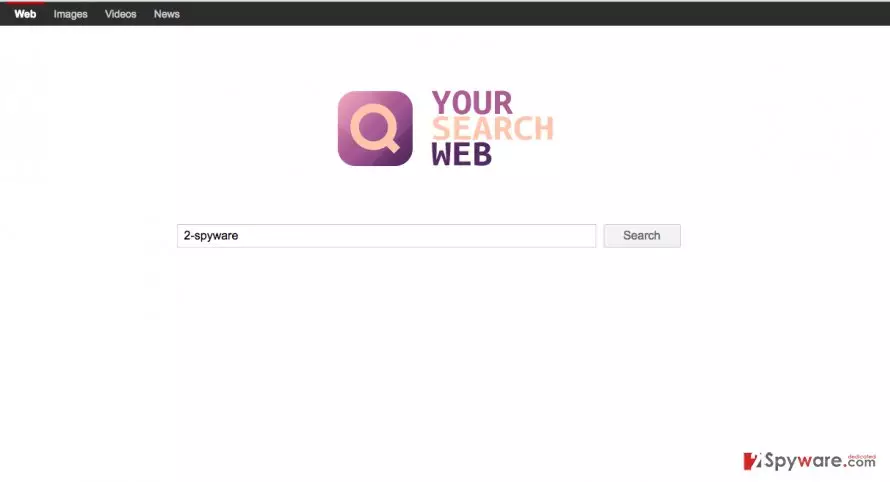
Apart from the mentioned unauthorized actions Your Search Web may take while installed on your browser, it is also important to emphasize that the main purpose of this program is to generate advertising revenue. To gather profit, the program uses pay-per-click marketing technique which involves promoting affiliate websites through ads. Unfortunately, not all of the websites or companies the hijacker may collaborate with are worth trusting. It is unlikely that the users would be interested in visiting unreputable sites. Therefore, most of the time the Your Search Web redirect the users there against their will. If you do not wish to end up on such sites, avoid using your browser until the browser hijacker is completely removed from the system. If you are already decided upon the Your Search Web removal, skip to the page 2 of this article to find out the best ways to do it.
How do browser hijackers infect computers?
Most of the time, the developers of browser hijackers take advantage of the users’ tendency to rush through the software installation process and install their malicious creations along with other legitimate software. This way, potentially unwanted programs are able to sneak into the users computers undetected and start running their processes stealthily in the background of the system. The hijacker tries to remain unseen as long as possible because it gives the virus some time to settle on the system and install so-called “helper objects” which would help it quickly reappear even after the initial program is deleted. Luckily, you can stop such annoying programs from entering your computer, by simply taking more time with software installation. It will only take an extra few minutes to install your downloaded programs via the Advanced/Custom installation mode, but it will save you a lot of time from having to deal with the virus removal.
Dealing with Your Search Web removal:
If you are looking for a best Your Search Web removal solution, you can search no more because we have two tested methods which you can use to remove the virus from your computer safely. First, you may try to remove the virus manually, by following the instructions provided below. However, if you do not trust your computer skills enough to take up manual virus elimination, you can always use professional antivirus scanners to remove Your Search Web or other potentially unwanted programs from your computer automatically. Before you run the scan, though, you should make sure your antivirus is up-to-date.
Uninstall from Windows
Uninstall from Windows 10/8:
- Type Control Panel into the Windows search box and open the result.
- Under Programs, select Uninstall a program.


Uninstall from Windows 7/XP:
- Click on Windows Start > Control Panel (Windows XP users should click on Add/Remove Programs).
- In Control Panel, select Programs > Uninstall a program.


Remove the unwanted program:
- In the Programs and Features window, look for any recently installed suspicious entries, select them, and click Uninstall.
- If User Account Control appears, click Yes to confirm, then complete the removal.


Delete from macOS
Remove the unwanted application:
- From the menu bar, select Go > Applications.
- In the Applications folder, look for any suspicious entries, then drag them to Trash (or right-click and pick Move to Trash).


Delete leftover files and folders:
- Select Go > Go to Folder.
- Enter /Library/Application Support and remove any suspicious folders related to the unwanted program.
- Repeat the same check in the /Library/LaunchAgents and /Library/LaunchDaemons folders, deleting any suspicious entries.

- Finally, empty the Trash to permanently remove the leftovers.

Remove from Microsoft Edge
Delete unwanted extensions from MS Edge:
- Select Menu (three horizontal dots at the top-right of the browser window) and pick Extensions.
- From the list, pick the extension and click on the Gear icon.
- Click Remove.


Clear cookies and other browser data:
- Click on the Menu (three horizontal dots at the top-right of the browser window) and select Settings > Privacy, search, and services..
- Under Clear browsing data, pick Choose what to clear.
- Select Cookies and other site data and Cached images and files. (apart from passwords, although you might want to include Media licenses as well, if applicable) and click on Clear.


Restore new tab and homepage settings:
- Click the menu icon and choose Settings.
- Then find On startup section.
- Click Remove next to any suspicious startup page.
Reset MS Edge if the above steps did not work:
- Press on Ctrl + Shift + Esc to open Task Manager.
- Click on More details arrow at the bottom of the window.
- Select Details tab.
- Now scroll down and locate every entry with Microsoft Edge name in it. Right-click on each of them and select End Task to stop MS Edge from running.


Instructions for Chromium-based Edge
Delete extensions from MS Edge (Chromium):
- Open Edge and click select Settings > Extensions.
- Delete unwanted extensions by clicking Remove.


Clear cache and site data:
- Click on Menu and go to Settings.
- Select Privacy, search and services.
- Under Clear browsing data, pick Choose what to clear.
- Under Time range, pick All time.
- Select Clear now.


Reset Chromium-based MS Edge:
- Click on Menu and select Settings.
- On the left side, pick Reset settings.
- Select Restore settings to their default values.
- Confirm with Reset.
- This will disable extensions and reset startup pages but will not delete bookmarks, saved passwords, or browsing history.


Remove from Mozilla Firefox (FF)
Remove dangerous extensions:
- Open Mozilla Firefox browser and click on the Menu (three horizontal lines at the top-right of the window).
- Select Add-ons.
- In here, select the unwanted extension and click Remove.


Reset the homepage:
- Click three horizontal lines at the top right corner to open the menu.
- Choose Settings.
- Under Home, set your preferred homepage and new tab settings.
Clear cookies and site data:
- Click Menu and pick Settings.
- Go to Privacy & Security section.
- Scroll down to locate Cookies and Site Data.
- Click on Clear Data...
- Select Cookies and Site Data and Temporary cached files and pages, then click Clear.


Reset Mozilla Firefox
If clearing the browser as explained above did not help, reset Mozilla Firefox:
- Open Mozilla Firefox browser and click the Menu.
- Go to Help and then choose Troubleshooting Information.

- Under Give Firefox a tune up section, click on Refresh Firefox...
- Once the pop-up shows up, confirm the action by pressing on Refresh Firefox.



Remove from Google Chrome
Delete malicious extensions from Google Chrome:
- Open Google Chrome, click on the Menu (three vertical dots at the top-right corner) and select More tools > Extensions.
- In the newly opened window, you will see all the installed extensions. Uninstall all suspicious extensions related to the unwanted program by clicking Remove.


Clear cache and web data from Chrome:
- Click on Menu and pick Settings.
- Under Privacy and security, select Clear browsing data.
- Select Browsing history, Cookies and other site data, as well as Cached images and files.
- Click Clear data.


Change your homepage:
- Click menu and choose Settings.
- Look for a suspicious site in the On startup section.
- Click on Open a specific or set of pages and click on three dots to find the Remove option.
Reset Google Chrome:
If the previous methods did not help you, reset Google Chrome to eliminate all the unwanted components:
- Click on Menu and select Settings.
- In the Settings, scroll down and click Advanced.
- Scroll down and locate Reset and clean up section.
- Now click Restore settings to their original defaults.
- Confirm with Reset settings.


Delete from Safari
Remove dangerous extensions:
- Open Safari, click Safari in the menu at the top-left of the screen, and select Preferences.
- Go to the Extensions tab, look for any suspicious entries, and click Uninstall to remove them.


Clear history and website data:
- Click Safari in the menu and pick Clear History.
- Set Clear to all history and confirm with Clear History.


Reset Safari:
- Click Safari in the menu and select Preferences > Advanced.
- Enable Show Develop menu in menu bar.
- From the menu bar, click Develop and select Empty Caches.


Did this guide help?
3 comments
Welia
I cannot tell the difference. The search sites all look the same to me..
lukas491
Haha, you wont trick me with your fake search engines!
Beatrice Mallard
Nice tutorial! Thanks!