

About the 12kotov.ru virus and its dangers:
12kotov.ru virus is a browser hijacker website which is designed to infect computers located in the Russian-speaking countries but can as well infect browsers on the other parts of the world. If your browser suddenly starts redirecting you to http://12kotov.ru instead of your regular search engine or homepage, you are most likely infected. As soon as this stealthy hijack occurs, browsing online becomes much more risky, because viruses like these are often involved in the shady advertising business. They may promote unreliable or even infectious websites or products without taking any responsibility for the potential damage that might be inflicted. So if you keep on using this website and later find your computer contaminated with additional malware, you can only blame yourself for not taking care of the 12kotov.ru removal in time. In case you notice some unusual activity on your computer, it is essential to take an immediate action. Scan the system using reputable antivirus software, such as FortectIntego and stop viruses from taking control.
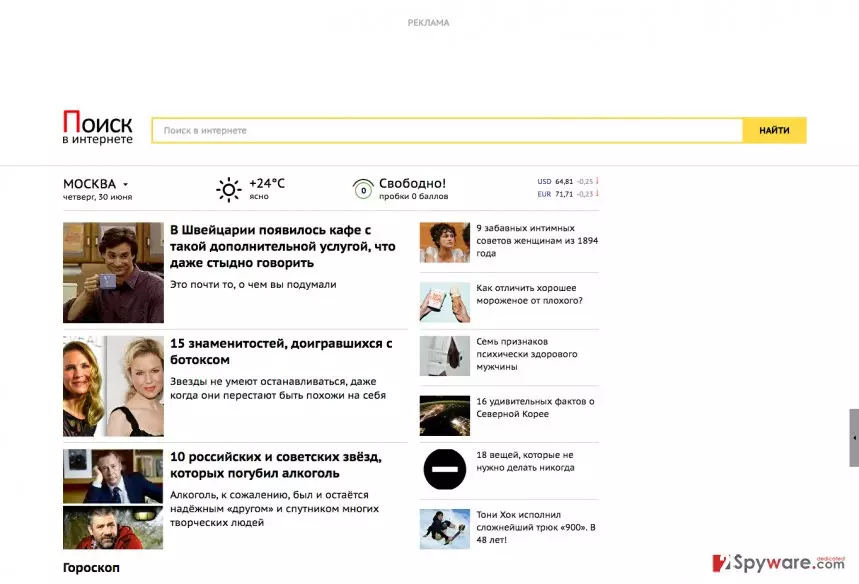
The main purpose of the 12kotov.ru hijack is to generate revenue by generating ads and using them to redirect the user to specific websites. This way the traffic on these websites increases and the creators of the hijacker receive their share for advertising. It is no wonder that this virus can be especially annoying with the numerous ads it injects into your browsing results. Besides the 12kotov.ru redirect issue and intrusive advertising, we should also point out that this infection may even spy on you, track your search queries, visited websites or viewed pages and store this information for later use. Most of the time, the virus will use the collected data to generate user-targeted ads, but it may as well sell this information to some untrusted third-parties. Your security and privacy are the least of this virus concerns. Thus, you should not hesitate any longer and remove 12kotov.ru from your computer at once.
What techniques are used for this virus distribution?
There is one, especially common technique the potentially unwanted programs’ creators use to distribute their products. This method is called “bundling” and as its title already suggests, it involves spreading several software programs in a single software package. This can be a very convenient way of distributing useful products. Unfortunately, it is very often used for infiltrating potentially unwanted programs on the users’ computers. These undesirable programs usually infect computer of the users, who install newly downloaded software in a rush, not examining the full list of the software package contents. If you wish to be a step ahead, you should always opt for the Advanced or Custom setup modes which allow you to manage what software you wish to install and which components should be canceled.
How can you remove 12kotov.ru from your browser?
What the users usually do not know when they take up the 12kotov.ru removal is that browser hijackers rarely travel alone. They often install additional software, the so-called helper objects, which help it stay on the infected browser even after the main program files are uninstalled. Therefore, to eliminate the hijacker entirely, you will have to locate this additional software and delete it. It might be difficult to do if you have never removed viruses before and do not know where to look. In such a case, we recommend obtaining a reliable anti-malware scanner and remove 12kotov.ru from your computer automatically.
Uninstall from Windows
Uninstall from Windows 10/8:
- Type Control Panel into the Windows search box and open the result.
- Under Programs, select Uninstall a program.


Uninstall from Windows 7/XP:
- Click on Windows Start > Control Panel (Windows XP users should click on Add/Remove Programs).
- In Control Panel, select Programs > Uninstall a program.


Remove the unwanted program:
- In the Programs and Features window, look for any recently installed suspicious entries, select them, and click Uninstall.
- If User Account Control appears, click Yes to confirm, then complete the removal.


Delete from macOS
Remove the unwanted application:
- From the menu bar, select Go > Applications.
- In the Applications folder, look for any suspicious entries, then drag them to Trash (or right-click and pick Move to Trash).


Delete leftover files and folders:
- Select Go > Go to Folder.
- Enter /Library/Application Support and remove any suspicious folders related to the unwanted program.
- Repeat the same check in the /Library/LaunchAgents and /Library/LaunchDaemons folders, deleting any suspicious entries.

- Finally, empty the Trash to permanently remove the leftovers.

Remove from Microsoft Edge
Delete unwanted extensions from MS Edge:
- Select Menu (three horizontal dots at the top-right of the browser window) and pick Extensions.
- From the list, pick the extension and click on the Gear icon.
- Click Remove.


Clear cookies and other browser data:
- Click on the Menu (three horizontal dots at the top-right of the browser window) and select Settings > Privacy, search, and services..
- Under Clear browsing data, pick Choose what to clear.
- Select Cookies and other site data and Cached images and files. (apart from passwords, although you might want to include Media licenses as well, if applicable) and click on Clear.


Restore new tab and homepage settings:
- Click the menu icon and choose Settings.
- Then find On startup section.
- Click Remove next to any suspicious startup page.
Reset MS Edge if the above steps did not work:
- Press on Ctrl + Shift + Esc to open Task Manager.
- Click on More details arrow at the bottom of the window.
- Select Details tab.
- Now scroll down and locate every entry with Microsoft Edge name in it. Right-click on each of them and select End Task to stop MS Edge from running.


Instructions for Chromium-based Edge
Delete extensions from MS Edge (Chromium):
- Open Edge and click select Settings > Extensions.
- Delete unwanted extensions by clicking Remove.


Clear cache and site data:
- Click on Menu and go to Settings.
- Select Privacy, search and services.
- Under Clear browsing data, pick Choose what to clear.
- Under Time range, pick All time.
- Select Clear now.


Reset Chromium-based MS Edge:
- Click on Menu and select Settings.
- On the left side, pick Reset settings.
- Select Restore settings to their default values.
- Confirm with Reset.
- This will disable extensions and reset startup pages but will not delete bookmarks, saved passwords, or browsing history.


Remove from Mozilla Firefox (FF)
Remove dangerous extensions:
- Open Mozilla Firefox browser and click on the Menu (three horizontal lines at the top-right of the window).
- Select Add-ons.
- In here, select the unwanted extension and click Remove.


Reset the homepage:
- Click three horizontal lines at the top right corner to open the menu.
- Choose Settings.
- Under Home, set your preferred homepage and new tab settings.
Clear cookies and site data:
- Click Menu and pick Settings.
- Go to Privacy & Security section.
- Scroll down to locate Cookies and Site Data.
- Click on Clear Data...
- Select Cookies and Site Data and Temporary cached files and pages, then click Clear.


Reset Mozilla Firefox
If clearing the browser as explained above did not help, reset Mozilla Firefox:
- Open Mozilla Firefox browser and click the Menu.
- Go to Help and then choose Troubleshooting Information.

- Under Give Firefox a tune up section, click on Refresh Firefox...
- Once the pop-up shows up, confirm the action by pressing on Refresh Firefox.



Remove from Google Chrome
Delete malicious extensions from Google Chrome:
- Open Google Chrome, click on the Menu (three vertical dots at the top-right corner) and select More tools > Extensions.
- In the newly opened window, you will see all the installed extensions. Uninstall all suspicious extensions related to the unwanted program by clicking Remove.


Clear cache and web data from Chrome:
- Click on Menu and pick Settings.
- Under Privacy and security, select Clear browsing data.
- Select Browsing history, Cookies and other site data, as well as Cached images and files.
- Click Clear data.


Change your homepage:
- Click menu and choose Settings.
- Look for a suspicious site in the On startup section.
- Click on Open a specific or set of pages and click on three dots to find the Remove option.
Reset Google Chrome:
If the previous methods did not help you, reset Google Chrome to eliminate all the unwanted components:
- Click on Menu and select Settings.
- In the Settings, scroll down and click Advanced.
- Scroll down and locate Reset and clean up section.
- Now click Restore settings to their original defaults.
- Confirm with Reset settings.


Delete from Safari
Remove dangerous extensions:
- Open Safari, click Safari in the menu at the top-left of the screen, and select Preferences.
- Go to the Extensions tab, look for any suspicious entries, and click Uninstall to remove them.


Clear history and website data:
- Click Safari in the menu and pick Clear History.
- Set Clear to all history and confirm with Clear History.


Reset Safari:
- Click Safari in the menu and select Preferences > Advanced.
- Enable Show Develop menu in menu bar.
- From the menu bar, click Develop and select Empty Caches.


Did this guide help?
1 comment
Dave
Cheap browser hijacker...