

Ludashi virus is a Chinese program based on delivering unwanted advertisements and promoting suspicious software
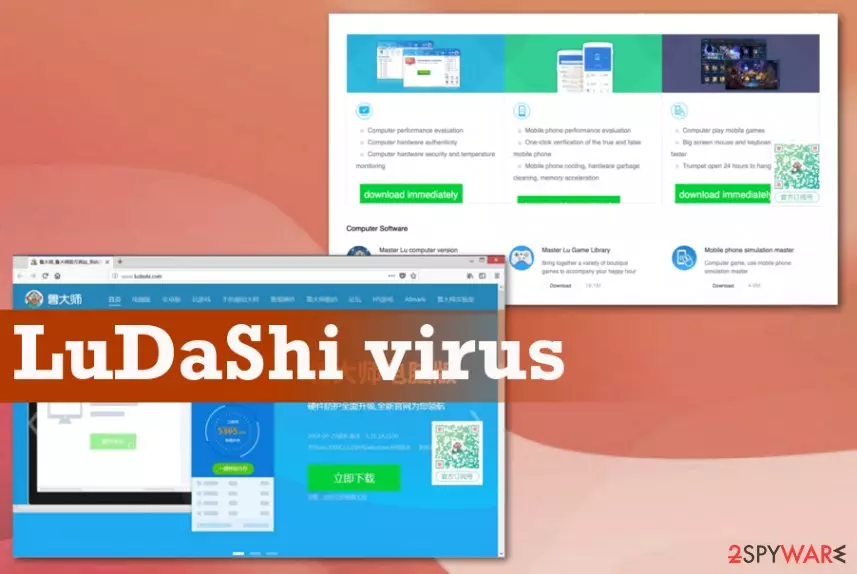
Ludashi virus has an official site that states about the optimization features and other useful functions software distributed there has. However, people that have encountered the redirect to this site or a program installed out of nowhere reports that annoying pop-ups cause frustration, direct installs of PUPs, and it is especially difficult to delete the program once that happens. In most cases, the program occurs after freeware installations from non-reliable sources because such browser-based intruders mainly come as free extra applications hidden behind Recommended or Quick options.
| Name | Ludashi virus |
|---|---|
| Type | Adware |
| Developer | Chinese software provider Chengdu Qilu Technology Co. Ltd |
| Tactics | Social engineering techniques used to trick people into visiting suspicious content and leading to installation and launch of the third-party applications, Ludashi browser-based tools |
| Claims | The developer states that mobile applications, PC tools offer power-saving features, fixes charging issues, protects machines from malware, keeps the device secure and issue-free. The website promotes and distributes mobile apps, compute performance tools and online gaming services, streaming programs |
| Distribution | Visiting the official site, other deceptive pages, performing freeware installations from unreliable sources, other potentially unwanted programs can all lead to infiltration of the adware |
| Main danger | It exposes the user to suspicious content and possibly malicious pages where data about browsing preferences and location can be tracked and collected by various advertisers and sponsors |
| Elimination | The best tool for Ludashi virus removal is the anti-malware program that can find all the related programs and files to eliminate them |
The most important fact about Ludashi is the purpose of the program – to make money for the creator and publishers. This adware can add toolbars, extensions on the browser, and change default settings to access more information about you and use that to generate more personalized advertisements.[1]
Ludashi can also come pre-installed on some devices, and the unknown source or purpose raises questions for users[2] that is completely understandable. It is especially frustrating when pop-ups and redirects flood the screen out of the blue or tools appear running on the machine. This is a Chinese-based application, so all those additional installations of tools also deliver pop-ups and alerts in Chinese, keeping people questioning the secureness of their device.
Constantly reemerging advertisements might signal that the Ludashi.com virus has itself settled on your computer besides those tools. You should not panic since this PUP is not a major threat. It mainly works as adware that displays a vivid variety of ads, daily offers, coupons, or other advertising messages.
Within time, these occurrences become frustrating phenomena. The main damage these pop-ups can inflict is that they diminish the overall performance of your browser. As a consequence, the launching of a new website takes longer than usual. This quality might be a sufficient reason to remove Ludashi from the device. 
For a while, you may not even suspect that this PUP has taken a liking of your computer. The adware successfully operates in the underground of the system. It may disguise itself under a different title, so vigilant users, who regularly check the app list of their computers, may overlook this Ludashi.com virus.
This peculiarity lets the adware work unstoppable. The primary mission of all adware-type programs is to display the advertising content of their sponsors. These malvertising campaigns also include ad-tracking activities and can lead to issues with your privacy when each Ludashi virus delivered pop-up collects different data regarding the browsing online.
It is often the case that they employ insecure and poor servers. As a result, Ludashi virus may lead you to the sites, pop-ups or services with unsafe content. In short, you may find yourself on the page which disguises damaging malware downloads. This adware application may also contribute to pop-up redirect tendencies. It emerges when you click on one of the ads or websites directly.
There are no guarantees that the commercial offers will guide you to the website which is protected and secure. In addition, the Ludashi.com redirects may lead you to the domain which promotes questionable virus removal services or anti-malware programs. Note that these similar scanners might be just a nice veneer. Such software might fall short of their promises to protect the computer against more serious threats, for example, trojans or ransomware. 
Deceptive sites deliver more than pop-up ads
The PUP creators are known for exploiting the opportunity to sneak their products into the device. This is achieved by pre-packing freeware with adware and hijackers when you install a new application. Do you recall installing a media player or file converter? Most likely, the PUP infiltrated your computer during that process.
If you are interested in how you can prevent such hijacks and PUPs or stop other unwanted programs, keep in mind these recommendations:
- Before installing any program, opt for the Custom or Advanced installation settings. They will disclose all optional applications.
- After unmarking the unnecessary ones, run the installation of the downloaded program without any concern.
Eliminate Ludashi virus with all the additional installations and programs
There are two main options that you can choose to remove Ludashi. The first option is manual removal. You can use the instructions indicated below to perform the elimination, clean the web browsers from additional intrusive content. This process takes time and may not give the best results with the first try.
If you find the manual solution unfitting, then opt for automatic Ludashi removal that is the more recommended by experts[3] also. The anti-malware software will run the scan and delete the PUP effectively, so these tools are perfect for malware termination.
Such a security application serves as a trustful protector of the operating system. You can also contribute to the security of the PC and lower the risk of Ludashi virus by following this advice. Check the official publisher of the program you are about to install. If it shows “Unknown,” it is likely that you may install a questionable and insecure version of the application. Download programs only from the official web pages. On the final note, vigilantly go through the installation steps.
Uninstall from Windows
Uninstall from Windows 10/8:
- Type Control Panel into the Windows search box and open the result.
- Under Programs, select Uninstall a program.


Uninstall from Windows 7/XP:
- Click on Windows Start > Control Panel (Windows XP users should click on Add/Remove Programs).
- In Control Panel, select Programs > Uninstall a program.


Remove the unwanted program:
- In the Programs and Features window, look for any recently installed suspicious entries, select them, and click Uninstall.
- If User Account Control appears, click Yes to confirm, then complete the removal.


Delete from macOS
Remove the unwanted application:
- From the menu bar, select Go > Applications.
- In the Applications folder, look for any suspicious entries, then drag them to Trash (or right-click and pick Move to Trash).


Delete leftover files and folders:
- Select Go > Go to Folder.
- Enter /Library/Application Support and remove any suspicious folders related to the unwanted program.
- Repeat the same check in the /Library/LaunchAgents and /Library/LaunchDaemons folders, deleting any suspicious entries.

- Finally, empty the Trash to permanently remove the leftovers.

Reset Internet Explorer
Remove dangerous add-ons:
- Open Internet Explorer, click on the Gear icon (IE menu) on the top-right corner of the browser
- Pick Manage Add-ons.
- You will see a Manage Add-ons window. Here, look for suspicious plugins. Click on these entries and select Disable.


Change your homepage if it was altered:
- Open IE and click on the Gear icon.
- Select Internet Options.
- In the General tab, delete the Home page address and replace it by your preferred one (for example, Google.com).
- Click Apply and then select OK.


Delete temporary files:
- Press on the Gear icon and select Internet Options.
- Under Browsing history, click Delete...
- Select relevant fields and press Delete.


Reset Internet Explorer:
- Click on Gear icon > Internet options and select Advanced tab.
- Select Reset.
- In the new window, check Delete personal settings and select Reset.


Remove from Microsoft Edge
Delete unwanted extensions from MS Edge:
- Select Menu (three horizontal dots at the top-right of the browser window) and pick Extensions.
- From the list, pick the extension and click on the Gear icon.
- Click Remove.


Clear cookies and other browser data:
- Click on the Menu (three horizontal dots at the top-right of the browser window) and select Settings > Privacy, search, and services..
- Under Clear browsing data, pick Choose what to clear.
- Select Cookies and other site data and Cached images and files. (apart from passwords, although you might want to include Media licenses as well, if applicable) and click on Clear.


Restore new tab and homepage settings:
- Click the menu icon and choose Settings.
- Then find On startup section.
- Click Remove next to any suspicious startup page.
Reset MS Edge if the above steps did not work:
- Press on Ctrl + Shift + Esc to open Task Manager.
- Click on More details arrow at the bottom of the window.
- Select Details tab.
- Now scroll down and locate every entry with Microsoft Edge name in it. Right-click on each of them and select End Task to stop MS Edge from running.


Instructions for Chromium-based Edge
Delete extensions from MS Edge (Chromium):
- Open Edge and click select Settings > Extensions.
- Delete unwanted extensions by clicking Remove.


Clear cache and site data:
- Click on Menu and go to Settings.
- Select Privacy, search and services.
- Under Clear browsing data, pick Choose what to clear.
- Under Time range, pick All time.
- Select Clear now.


Reset Chromium-based MS Edge:
- Click on Menu and select Settings.
- On the left side, pick Reset settings.
- Select Restore settings to their default values.
- Confirm with Reset.
- This will disable extensions and reset startup pages but will not delete bookmarks, saved passwords, or browsing history.


Remove from Mozilla Firefox (FF)
Remove dangerous extensions:
- Open Mozilla Firefox browser and click on the Menu (three horizontal lines at the top-right of the window).
- Select Add-ons.
- In here, select the unwanted extension and click Remove.


Reset the homepage:
- Click three horizontal lines at the top right corner to open the menu.
- Choose Settings.
- Under Home, set your preferred homepage and new tab settings.
Clear cookies and site data:
- Click Menu and pick Settings.
- Go to Privacy & Security section.
- Scroll down to locate Cookies and Site Data.
- Click on Clear Data...
- Select Cookies and Site Data and Temporary cached files and pages, then click Clear.


Reset Mozilla Firefox
If clearing the browser as explained above did not help, reset Mozilla Firefox:
- Open Mozilla Firefox browser and click the Menu.
- Go to Help and then choose Troubleshooting Information.

- Under Give Firefox a tune up section, click on Refresh Firefox...
- Once the pop-up shows up, confirm the action by pressing on Refresh Firefox.



Remove from Google Chrome
Delete malicious extensions from Google Chrome:
- Open Google Chrome, click on the Menu (three vertical dots at the top-right corner) and select More tools > Extensions.
- In the newly opened window, you will see all the installed extensions. Uninstall all suspicious extensions related to the unwanted program by clicking Remove.


Clear cache and web data from Chrome:
- Click on Menu and pick Settings.
- Under Privacy and security, select Clear browsing data.
- Select Browsing history, Cookies and other site data, as well as Cached images and files.
- Click Clear data.


Change your homepage:
- Click menu and choose Settings.
- Look for a suspicious site in the On startup section.
- Click on Open a specific or set of pages and click on three dots to find the Remove option.
Reset Google Chrome:
If the previous methods did not help you, reset Google Chrome to eliminate all the unwanted components:
- Click on Menu and select Settings.
- In the Settings, scroll down and click Advanced.
- Scroll down and locate Reset and clean up section.
- Now click Restore settings to their original defaults.
- Confirm with Reset settings.


Delete from Safari
Remove dangerous extensions:
- Open Safari, click Safari in the menu at the top-left of the screen, and select Preferences.
- Go to the Extensions tab, look for any suspicious entries, and click Uninstall to remove them.


Clear history and website data:
- Click Safari in the menu and pick Clear History.
- Set Clear to all history and confirm with Clear History.


Reset Safari:
- Click Safari in the menu and select Preferences > Advanced.
- Enable Show Develop menu in menu bar.
- From the menu bar, click Develop and select Empty Caches.


Did this guide help?
2 comments
Terry
And I thought my PC was hijacked by some serious virus...
MandieLear
Installed the tool. Worked like a charm.