

What is there to know about CDN Reader?
CDN Reader virus might persuade users into thinking that it is a legitimate application helping to manage pdf files. Unfortunately, you should not foster big expectations for this program since it is categorized as adware. This PUP might annoy you more rather than bring practical benefit. Thus, we suggest you to start CDN Reader removal right away. Even it serves as a pdf file editor and viewer, it tends to generate distracting advertisements. They also affect the processing speed of your browser performance. Moreover, the ads might mislead you to irrelevant and insecure web pages. If you care for your safety of your computer, make sure you remove CDN Reader completely. For that purpose, FortectIntego ensures the complete elimination.
Since this application is distributed as adware, you might not find its official website. Instead, it is promoted in secondary software distributing websites or via free applications. Thus, once it gets into your computer, it creates other sorts of advertisements on your browser’s screen. Thus, it gets crammed with vivid CDN Reader ads. As we have mentioned before, the products and applications promoted by such ads are of questionable legitimacy and reliability. Thus, do not get tempted to install them. There is also a risk that you might install a program containing malevolent elements. They might cause some system programs to malfunction.
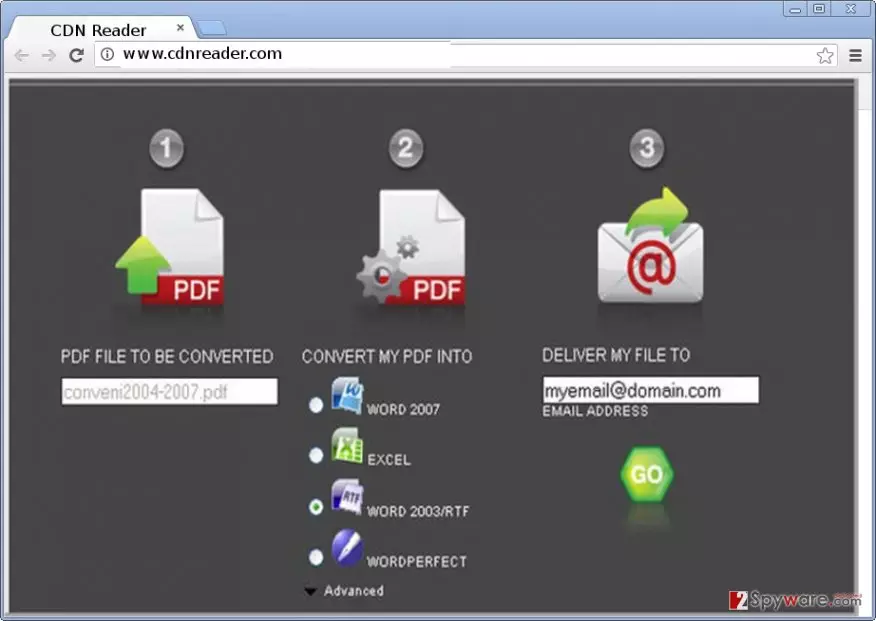
Additionally, you might soon get bothered by CDN Reader redirect issue. Because of this recurrence, you encounter obstacles reaching your wanted websites from the first attempt. Likewise, you might find yourself in an unknown web page. Keep in mind that such redirect web page might also contain hidden malware. Thus, for the safety of your computer and the efficiency of the computer, exit such website. The adware spies on your activities. It implements cookies, pixel tags and other tracking tools to collect information about your visited domains and the frequency rate of surfing the web. This data is of high value for advertising companies, so this adware might share the collected data with its partners. The result of such exchange results in the multiple ads popping on your browser.
How does the adware spread?
This PUP might be spotted traveling along freeware and shareware. Due to users’ inattentiveness, the add-on escapes the detection. As a result, CDN Reader hijacks occurs without any obstacles. If you are interested in the PUP prevention means, follow this advice. After installing a new application, select “Custom” settings. They will disclose optional add-ons. Unmark them and proceed with the installation. Note that even such legitimate applications as Skype and Adobe Reader might contain potentially unwanted programs. That is why be vigilant and attentive to detect such attachments on time before they get installed.
CDN Reader removal suggestions
You can eliminate CDN Reader virus automatically or manually. The instructions to carry out the latter method are provided below on this page. Carefully implement each stage not to miss any essential detail. Therefore, we recommend you to remove CDN Reader automatically. Install an anti-spyware application and run the scan. You can be sure that it will complete full CDN Reader removal in a few minutes. Lastly, taking a look at privacy policy and terms of use might also help you escape potentially unwanted programs.
Uninstall from Windows
Uninstall from Windows 10/8:
- Type Control Panel into the Windows search box and open the result.
- Under Programs, select Uninstall a program.


Uninstall from Windows 7/XP:
- Click on Windows Start > Control Panel (Windows XP users should click on Add/Remove Programs).
- In Control Panel, select Programs > Uninstall a program.


Remove the unwanted program:
- In the Programs and Features window, look for any recently installed suspicious entries, select them, and click Uninstall.
- If User Account Control appears, click Yes to confirm, then complete the removal.


Delete from macOS
Remove the unwanted application:
- From the menu bar, select Go > Applications.
- In the Applications folder, look for any suspicious entries, then drag them to Trash (or right-click and pick Move to Trash).


Delete leftover files and folders:
- Select Go > Go to Folder.
- Enter /Library/Application Support and remove any suspicious folders related to the unwanted program.
- Repeat the same check in the /Library/LaunchAgents and /Library/LaunchDaemons folders, deleting any suspicious entries.

- Finally, empty the Trash to permanently remove the leftovers.

Remove from Microsoft Edge
Delete unwanted extensions from MS Edge:
- Select Menu (three horizontal dots at the top-right of the browser window) and pick Extensions.
- From the list, pick the extension and click on the Gear icon.
- Click Remove.


Clear cookies and other browser data:
- Click on the Menu (three horizontal dots at the top-right of the browser window) and select Settings > Privacy, search, and services..
- Under Clear browsing data, pick Choose what to clear.
- Select Cookies and other site data and Cached images and files. (apart from passwords, although you might want to include Media licenses as well, if applicable) and click on Clear.


Restore new tab and homepage settings:
- Click the menu icon and choose Settings.
- Then find On startup section.
- Click Remove next to any suspicious startup page.
Reset MS Edge if the above steps did not work:
- Press on Ctrl + Shift + Esc to open Task Manager.
- Click on More details arrow at the bottom of the window.
- Select Details tab.
- Now scroll down and locate every entry with Microsoft Edge name in it. Right-click on each of them and select End Task to stop MS Edge from running.


Instructions for Chromium-based Edge
Delete extensions from MS Edge (Chromium):
- Open Edge and click select Settings > Extensions.
- Delete unwanted extensions by clicking Remove.


Clear cache and site data:
- Click on Menu and go to Settings.
- Select Privacy, search and services.
- Under Clear browsing data, pick Choose what to clear.
- Under Time range, pick All time.
- Select Clear now.


Reset Chromium-based MS Edge:
- Click on Menu and select Settings.
- On the left side, pick Reset settings.
- Select Restore settings to their default values.
- Confirm with Reset.
- This will disable extensions and reset startup pages but will not delete bookmarks, saved passwords, or browsing history.


Remove from Mozilla Firefox (FF)
Remove dangerous extensions:
- Open Mozilla Firefox browser and click on the Menu (three horizontal lines at the top-right of the window).
- Select Add-ons.
- In here, select the unwanted extension and click Remove.


Reset the homepage:
- Click three horizontal lines at the top right corner to open the menu.
- Choose Settings.
- Under Home, set your preferred homepage and new tab settings.
Clear cookies and site data:
- Click Menu and pick Settings.
- Go to Privacy & Security section.
- Scroll down to locate Cookies and Site Data.
- Click on Clear Data...
- Select Cookies and Site Data and Temporary cached files and pages, then click Clear.


Reset Mozilla Firefox
If clearing the browser as explained above did not help, reset Mozilla Firefox:
- Open Mozilla Firefox browser and click the Menu.
- Go to Help and then choose Troubleshooting Information.

- Under Give Firefox a tune up section, click on Refresh Firefox...
- Once the pop-up shows up, confirm the action by pressing on Refresh Firefox.



Remove from Google Chrome
Delete malicious extensions from Google Chrome:
- Open Google Chrome, click on the Menu (three vertical dots at the top-right corner) and select More tools > Extensions.
- In the newly opened window, you will see all the installed extensions. Uninstall all suspicious extensions related to the unwanted program by clicking Remove.


Clear cache and web data from Chrome:
- Click on Menu and pick Settings.
- Under Privacy and security, select Clear browsing data.
- Select Browsing history, Cookies and other site data, as well as Cached images and files.
- Click Clear data.


Change your homepage:
- Click menu and choose Settings.
- Look for a suspicious site in the On startup section.
- Click on Open a specific or set of pages and click on three dots to find the Remove option.
Reset Google Chrome:
If the previous methods did not help you, reset Google Chrome to eliminate all the unwanted components:
- Click on Menu and select Settings.
- In the Settings, scroll down and click Advanced.
- Scroll down and locate Reset and clean up section.
- Now click Restore settings to their original defaults.
- Confirm with Reset settings.


Delete from Safari
Remove dangerous extensions:
- Open Safari, click Safari in the menu at the top-left of the screen, and select Preferences.
- Go to the Extensions tab, look for any suspicious entries, and click Uninstall to remove them.


Clear history and website data:
- Click Safari in the menu and pick Clear History.
- Set Clear to all history and confirm with Clear History.


Reset Safari:
- Click Safari in the menu and select Preferences > Advanced.
- Enable Show Develop menu in menu bar.
- From the menu bar, click Develop and select Empty Caches.


Did this guide help?
2 comments
Jenny
Sometimes you really get mixed up in that diversity of applications. File viewers, converters, editors, they all look the same.
Micky99
And it seems you try to be so careful and still some pesky adware sneaks into the computer.