

Things to known about recently discovered One ransomware virus
One ransomware has been recently spotted attacking computer users. Cyber criminals usually spread malicious payload via misleading emails. When people opens an infected email attachment, the virus is installed and executed on the computer. This cyber infection is designed to camouflage itself as legitimate system processes, such as svchost.exe[1] or Chrome.exe.[2] For this reason, it can stay on the system undetected for a while and perform its nasty tasks. There’s no doubt that the primary function of the One virus is to encrypt files. As soon as it gets inside, it starts scanning the system. There’s no doubt that it is looking for the data for the encryption. Just like many other similar cyber threats, this one also aims at the most popular files such as MS Office documents, various multimedia files, databases, archives, and much more widely used data. To all corrupted files it adds .one file extension. Sadly, there’s not much what you can do with documents, pictures and other records encrypted by One malware. Although if you have data backups, meeting this crypto-malware does not cause you much damage.[3] Otherwise, you are in an unpleasant situation.
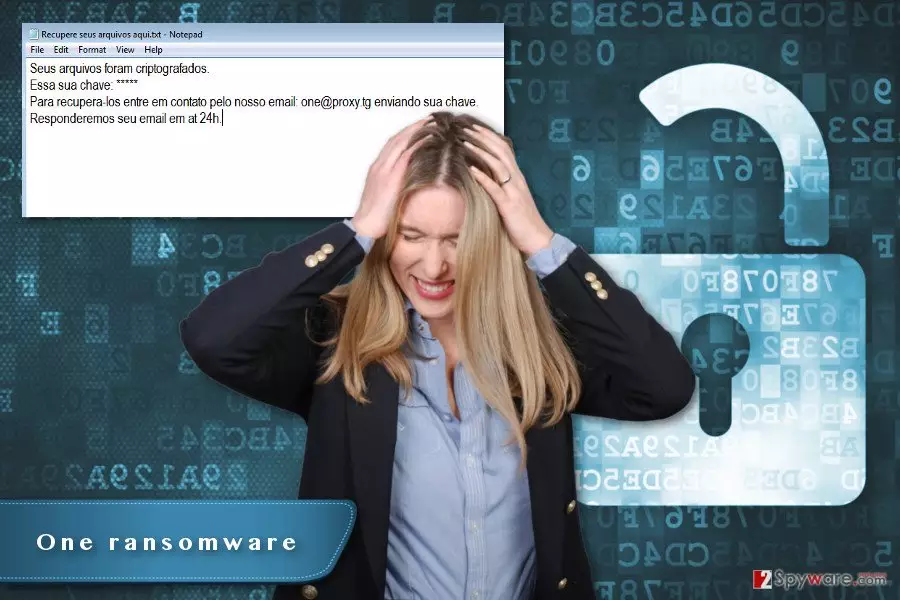
The creators of the One virus gives victims short instructions what they need to do with encrypted files in the ransom note called Recupere seus arquivos aqui.txt. This text file is dropped on the system as soon as data encryption is other. The ransom demanding message is written in the Portuguese language. Thus, Portuguese-speaking computer users are in the target eye of the ransomware. In the ransom note, victims find their unique ID and are asked to send it to the provided email address. Within 24 hours, they are supposed to receive and email with the necessary decryption key. However, you should not contact cyber criminals because they won’t provide decryption software for free. First of all, hackers will tell you how much Bitcoins their decryption software costs.[4] Then, they might use blackmailing or psychologic terror tactics to persuade you to pay the ransom. Lastly, you may not receive the promised software. Thus, instead of having a discussion with criminals, you should focus on One removal. Ransomware elimination is performed using malware removal tools such as FortectIntego or SpyHunterCombo Cleaner. However, the virus might be designed to block access to the security programs. In this case, take a look at the instructions below. They will help you to deal with obstacles and remove One from the system.
What techniques are used for ransomware distribution?
Just like the majority of other crypto-malware lurking on the web, One ransomware also is distributed with a help of malicious email attachments. Thus, the dangerous payload might be delivered straight to your inbox as an obfuscated file. The email might inform about a necessity to verify some details in the attached invoice or another important document. Crooks can pretend to be from various organizations and find numerous reasons to motivate you to open the attachment. What is more, One hijack might also occur if you click on an infected link sent in the email or social media. Thus, before clicking on unknown attachments and strange links, make sure that it’s actually safe to open. Developers of the ransomware also successfully use malvertising as another distribution method. Malware-laden ads might be placed even on legitimate and well-known websites. Thus, clicking on online ads has never been as dangerous as it is now.[5]
One ransomware removal instructions
If you think about manual One removal, you should get rid of this idea immediately! You are dealing with a serious cyber infection that might be hiding malicious files and running dangerous processes deeply in the system. What is more, the virus might use legitimate system names; so, you can unintentionally delete the wrong file. Deleting crucial system files might lead to the huge damage. In order to protect your computer and remove One virus safely, you need to use professional malware removal tools, such as FortectIntego or SpyHunterCombo Cleaner. Run a full system scan with one of these programs. However, if you cannot access security tools, please follow our instructions below.
Did this guide help?
3 comments
Rivka
Why Portuguese?? Who hackers hate us so much? its the second virus this week that attacks us...
Thomas
It seems we need to be more careful!
Kaia
I always delete spam emails. I always think they are infected. I just dont want to get infected with a virus such as One ransomware.