

Musix.eanswers.com helps monetize eAnswers.com
“Musix.eanswers.com virus” is a term by which users refer to a browser hijacker [1] infection that takes over the place of their browser’s default search engine and homepage. This suspicious search provider seems to be a side project of another US-based web content provider eAnswers.com [2]. It is most likely that Musix search is just another way to advertise and monetize [3] the eAnswers services. Unlike its parent website which offers answer-question model to find out the desired information, Musix.eanswers.com is more of a typical search engine and employs search.yahoo.com engine to display the search results. While the site’s modern design and functionality seem to be following top standards, users who had experience using this service have some very unfavorable opinions about it. Most of them claim that they have not even intended on using Musix in the first place and that it showed up on their computers out of the blue. Others add that they have also noticed suspicious activities on their devices, following the infiltration. In particular, users point out redirects to random websites and an increased amount of online advertising while browsing the web. Having in mind the program’s origins as a browser hijacker, it is also possible that it collects data about the victim’s web surfing habits and uses it to generate individually targeted ads [4]. If that’s not quite the search service you are going for, you should remove Musix.eanswers.com from your computer and look for other options instead. FortectIntego is a software we recommend you to try out if you are looking for a quick virus removal solution.
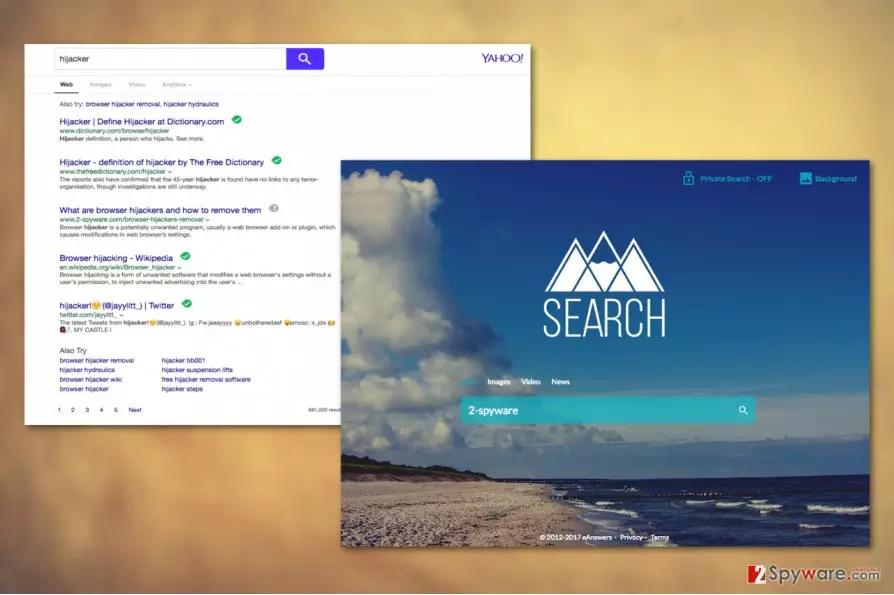
Technically speaking, Musix.eanswers.com is not a malicious virus and not even a malware at all. It is a potentially unwanted program [5] that might possess some traits of the dishonest software but is relatively harmless to the computer itself. Nevertheless, there are some factors that put it on the “unwanted” shelf. These include the previously mentioned data tracking, extensive advertising and poor choices of distribution. Thus, even if the software will not violate your computer itself, it might cause problems by redirecting you to potentially infectious websites or displaying tons of unverified ads. This only proves that even the least harmless parasite should not be left unattended and that you should perform Musix.eanswers.com removal as soon as you notice it on your computer.

Browser hijacker arrives in freeware packages
Musix.eanswers.com is a virus that mainly relies on other software to get into the computers. In particular, malware developers tend to hide the permission to make Musix as the default homepage and search engine inside the “Advanced” or “Custom” software installation settings. They take advantage of the sad statistics which show that quite considerable part of home users hesitate to choose these particular modes when setting up software on their computer, often because such installation is time-consuming. Nevertheless, you should know that it is not particularly smart to save time on account of your system’s security. It is better that you spare these few minutes of your time to install software properly and prevent Musix.eanswers.com or other undesirable programs from entering your computer.
Experts suggest carrying out Musix.eanswers.com removal automatically
If you are wondering what is the best method you can choose for the Musix.eanswers.com removal, look no further and opt for the automatic system scan. Obtain some specialized software, say anti-spyware, anti-malware or antivirus utility and use it to run an in-depth scan of your system. After the scan, reset your browsers and restore their default settings. For the users who, for one reason or another wish to remove Musix.eanswers.com virus from their computers manually can use the tutorial prepared by our experts below the article.
Uninstall from Windows
Uninstall from Windows 10/8:
- Type Control Panel into the Windows search box and open the result.
- Under Programs, select Uninstall a program.


Uninstall from Windows 7/XP:
- Click on Windows Start > Control Panel (Windows XP users should click on Add/Remove Programs).
- In Control Panel, select Programs > Uninstall a program.


Remove the unwanted program:
- In the Programs and Features window, look for any recently installed suspicious entries, select them, and click Uninstall.
- If User Account Control appears, click Yes to confirm, then complete the removal.


Delete from macOS
Remove the unwanted application:
- From the menu bar, select Go > Applications.
- In the Applications folder, look for any suspicious entries, then drag them to Trash (or right-click and pick Move to Trash).


Delete leftover files and folders:
- Select Go > Go to Folder.
- Enter /Library/Application Support and remove any suspicious folders related to the unwanted program.
- Repeat the same check in the /Library/LaunchAgents and /Library/LaunchDaemons folders, deleting any suspicious entries.

- Finally, empty the Trash to permanently remove the leftovers.

Reset Internet Explorer
Remove dangerous add-ons:
- Open Internet Explorer, click on the Gear icon (IE menu) on the top-right corner of the browser
- Pick Manage Add-ons.
- You will see a Manage Add-ons window. Here, look for suspicious plugins. Click on these entries and select Disable.


Change your homepage if it was altered:
- Open IE and click on the Gear icon.
- Select Internet Options.
- In the General tab, delete the Home page address and replace it by your preferred one (for example, Google.com).
- Click Apply and then select OK.


Delete temporary files:
- Press on the Gear icon and select Internet Options.
- Under Browsing history, click Delete...
- Select relevant fields and press Delete.


Reset Internet Explorer:
- Click on Gear icon > Internet options and select Advanced tab.
- Select Reset.
- In the new window, check Delete personal settings and select Reset.


Remove from Microsoft Edge
Delete unwanted extensions from MS Edge:
- Select Menu (three horizontal dots at the top-right of the browser window) and pick Extensions.
- From the list, pick the extension and click on the Gear icon.
- Click Remove.


Clear cookies and other browser data:
- Click on the Menu (three horizontal dots at the top-right of the browser window) and select Settings > Privacy, search, and services..
- Under Clear browsing data, pick Choose what to clear.
- Select Cookies and other site data and Cached images and files. (apart from passwords, although you might want to include Media licenses as well, if applicable) and click on Clear.


Restore new tab and homepage settings:
- Click the menu icon and choose Settings.
- Then find On startup section.
- Click Remove next to any suspicious startup page.
Reset MS Edge if the above steps did not work:
- Press on Ctrl + Shift + Esc to open Task Manager.
- Click on More details arrow at the bottom of the window.
- Select Details tab.
- Now scroll down and locate every entry with Microsoft Edge name in it. Right-click on each of them and select End Task to stop MS Edge from running.


Instructions for Chromium-based Edge
Delete extensions from MS Edge (Chromium):
- Open Edge and click select Settings > Extensions.
- Delete unwanted extensions by clicking Remove.


Clear cache and site data:
- Click on Menu and go to Settings.
- Select Privacy, search and services.
- Under Clear browsing data, pick Choose what to clear.
- Under Time range, pick All time.
- Select Clear now.


Reset Chromium-based MS Edge:
- Click on Menu and select Settings.
- On the left side, pick Reset settings.
- Select Restore settings to their default values.
- Confirm with Reset.
- This will disable extensions and reset startup pages but will not delete bookmarks, saved passwords, or browsing history.


Remove from Mozilla Firefox (FF)
Remove dangerous extensions:
- Open Mozilla Firefox browser and click on the Menu (three horizontal lines at the top-right of the window).
- Select Add-ons.
- In here, select the unwanted extension and click Remove.


Reset the homepage:
- Click three horizontal lines at the top right corner to open the menu.
- Choose Settings.
- Under Home, set your preferred homepage and new tab settings.
Clear cookies and site data:
- Click Menu and pick Settings.
- Go to Privacy & Security section.
- Scroll down to locate Cookies and Site Data.
- Click on Clear Data...
- Select Cookies and Site Data and Temporary cached files and pages, then click Clear.


Reset Mozilla Firefox
If clearing the browser as explained above did not help, reset Mozilla Firefox:
- Open Mozilla Firefox browser and click the Menu.
- Go to Help and then choose Troubleshooting Information.

- Under Give Firefox a tune up section, click on Refresh Firefox...
- Once the pop-up shows up, confirm the action by pressing on Refresh Firefox.



Remove from Google Chrome
Delete malicious extensions from Google Chrome:
- Open Google Chrome, click on the Menu (three vertical dots at the top-right corner) and select More tools > Extensions.
- In the newly opened window, you will see all the installed extensions. Uninstall all suspicious extensions related to the unwanted program by clicking Remove.


Clear cache and web data from Chrome:
- Click on Menu and pick Settings.
- Under Privacy and security, select Clear browsing data.
- Select Browsing history, Cookies and other site data, as well as Cached images and files.
- Click Clear data.


Change your homepage:
- Click menu and choose Settings.
- Look for a suspicious site in the On startup section.
- Click on Open a specific or set of pages and click on three dots to find the Remove option.
Reset Google Chrome:
If the previous methods did not help you, reset Google Chrome to eliminate all the unwanted components:
- Click on Menu and select Settings.
- In the Settings, scroll down and click Advanced.
- Scroll down and locate Reset and clean up section.
- Now click Restore settings to their original defaults.
- Confirm with Reset settings.


Delete from Safari
Remove dangerous extensions:
- Open Safari, click Safari in the menu at the top-left of the screen, and select Preferences.
- Go to the Extensions tab, look for any suspicious entries, and click Uninstall to remove them.


Clear history and website data:
- Click Safari in the menu and pick Clear History.
- Set Clear to all history and confirm with Clear History.


Reset Safari:
- Click Safari in the menu and select Preferences > Advanced.
- Enable Show Develop menu in menu bar.
- From the menu bar, click Develop and select Empty Caches.


Did this guide help?
Be the first to comment