

AssistEngine – adware that can display bogus deals, scams, and fake updates on Mac computers

AssistEngine is known to be an ad-supported program[1] that can load bogus offers and scams on the affected Mac machine. Once installed, this particular adware can be found in the Applications section but it might also shatter suspicious products all other the system (entries, files). AssistEngine virus might provide any type of advertising or scamming content that can bring great income to the developers. Be aware of the adverts that come from this threat as they might also be used for redirecting to other promoted sources some of which can appear to be highly infected with malware.
| Name | AssistEngine |
|---|---|
| Type | Adware |
| Sub-type | Mac virus |
| OS affected | Mac OS X |
| Aim | To collect income from ads provided |
| Activities | Advertising, redirecting, browser data tracking |
| Removal | Use FortectIntego to lengthen the elimination process. Manual instructions can be found at the end of this article |
AssistEngine Mac is a suspicious application that resides on your computer system and web browsers until you uninstall it permanently. Keep in mind that the PUP might add changes to your browser apps (homepage, new tab zone) which are necessary for the program's proper operation.
Besides, AssistEngine supposedly places bogus extensions into the browser settings which are responsible for all the unwanted activities that you are going to face during the active period of this adware. Note that advertising is not the only problem that you are going to experience.
AssistEngine adware might also be responsible for carrying you to affiliate sources. If these places appear to be malware-laden, you might get your computer system highly infected and damaged. Additionally, the PUP might try to lure you into scams that aim to swindle money or personal information.
If you have been receiving pop-ups and pop-unders from AssistEngine domain only on rare occasions only, there might be a possibility that your computer is not infected after all. You can figure out that by preventing ad appearance with Adblock Plus[2] or disabling incoming notifications on your browser manually:
- Launch your web browser and click on the three dots on your upper right.
- The menu will appear and continue with Settings.
- Go to the Advanced section and find Notifications.
- Locate AssistEngine and remove it from the list.
Tracking browsing history is another feature that is included in the AssistEngine operation process. The program might use browser cookies or beacons for spying on your Internet activity. Later on, such information is used for releasing targeted advertisements or sharing with third-parties for more income.

Remove AssistEngine from your Mac OS X and web browser applications. You can choose to scan the entire system with FortectIntego or a similar program to locate all infection strings. However, if automatical computer software is not the thing you are likely to use in this situation, you can find some manual guidelines at the end of this page.
Our experts' team has provided detailed instructions for AssistEngine removal from the Mac operating system and web browser applications such as Google Chrome, Mozilla Firefox, Internet Explorer, and Safari. Now, continue with the following paragraph and learn about adware prevention measures.
Prevention tips for adware programs
Specialists from Virusai.lt[3] urge all users to be aware of third-party downloading sources, peer-to-peer networks, and unsafe downloading/installing modes that might relate to secret adware and other PUP installations. For proper prevention, you should take these manual steps:
- Choose the Custom/Advanced downloading option. Make sure that when performing downloads and installations the correct mode is selected and avoid any settings such as Quick or Recommended.
- Download software only from reputable sources. Once you are searching for a product to install, e.g. antivirus software, always search for users' reviews on the program and make sure to download it only from the official web page.
- Avoid content with bogus content. Be careful while surfing in questionable networks and prevent yourself from accessing suspicious advertisements, hyperlinks, and similar components.
Last but not least, automatical computer protection is also a very important matter to think about. Download and install a reliable anti-malware program that will secure your browsing sessions and alert if something threatening is happening.
Elimination purposes for AssistEngine Mac
AssistEngine virus is an adware program that targets Mac operating systems. Regarding this fact, we have provided detailed guidelines on how to clean your Mac OS X computer. These manual instructions are placed at the very end of this article.
However, manual AssistEngine removal is suggested only for those users who have some skills in the virus removal field. If you feel that you lack experience, you should choose antivirus software for this process. Rely on these tools but make sure to select a trustworthy one.
If you still decide to remove AssistEngine by using your own skills, make sure to take a look at the guiding steps that we have provided you with. Here you will also be shown how to eliminate the adware from web browsers such as Google Chrome, Mozilla Firefox, Safari, etc.
Delete from macOS
Remove the unwanted application:
- From the menu bar, select Go > Applications.
- In the Applications folder, look for any suspicious entries, then drag them to Trash (or right-click and pick Move to Trash).


Delete leftover files and folders:
- Select Go > Go to Folder.
- Enter /Library/Application Support and remove any suspicious folders related to the unwanted program.
- Repeat the same check in the /Library/LaunchAgents and /Library/LaunchDaemons folders, deleting any suspicious entries.

- Finally, empty the Trash to permanently remove the leftovers.

Reset Internet Explorer
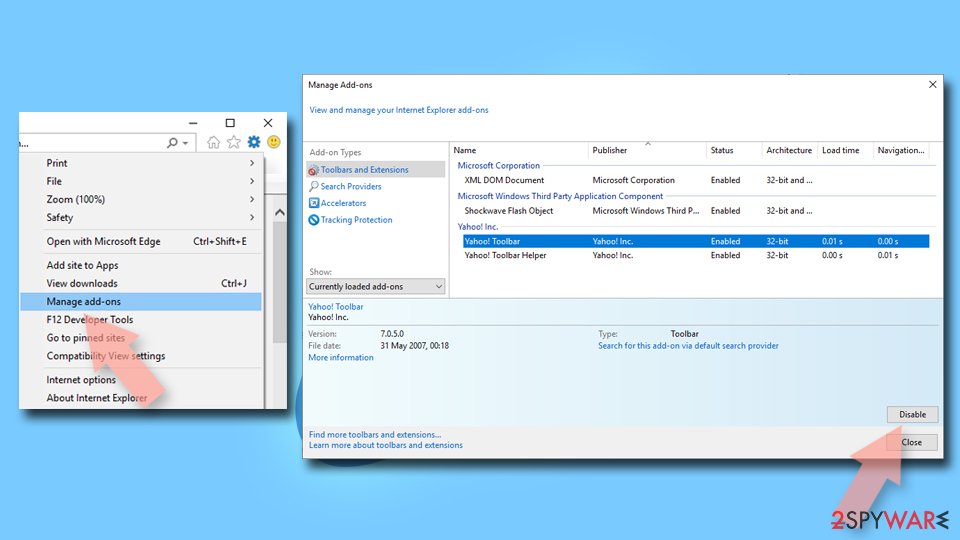
Remove dangerous add-ons:
- Open Internet Explorer, click on the Gear icon (IE menu) on the top-right corner of the browser
- Pick Manage Add-ons.
- You will see a Manage Add-ons window. Here, look for suspicious plugins. Click on these entries and select Disable.

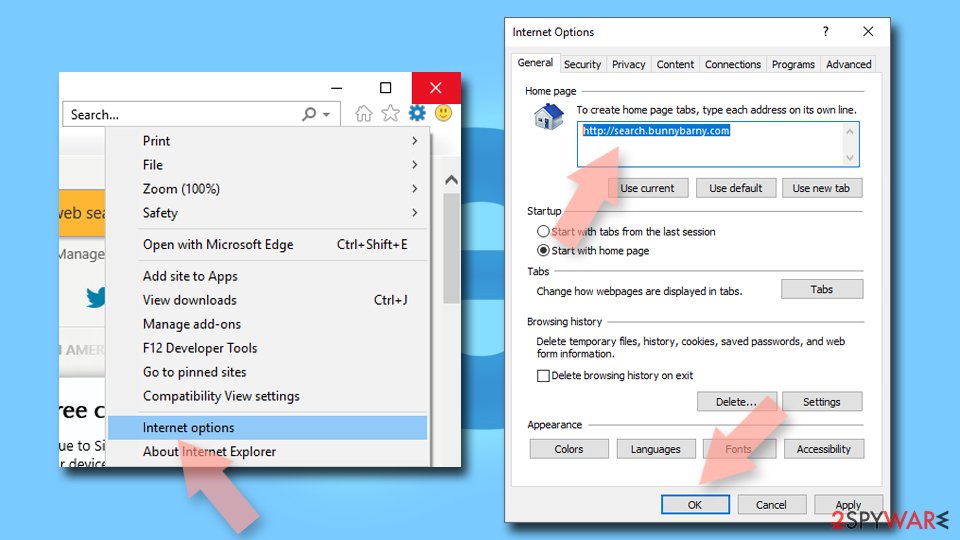
Change your homepage if it was altered:
- Open IE and click on the Gear icon.
- Select Internet Options.
- In the General tab, delete the Home page address and replace it by your preferred one (for example, Google.com).
- Click Apply and then select OK.

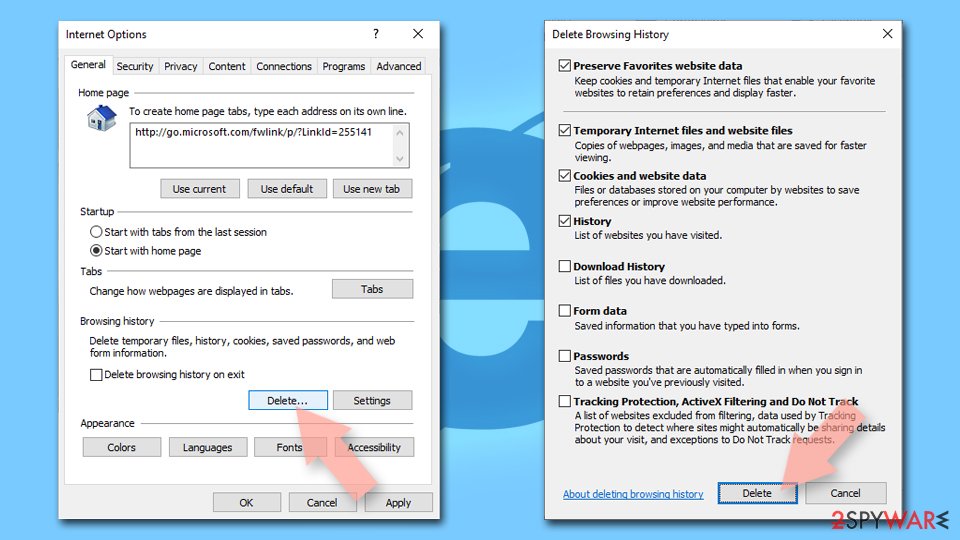
Delete temporary files:
- Press on the Gear icon and select Internet Options.
- Under Browsing history, click Delete...
- Select relevant fields and press Delete.

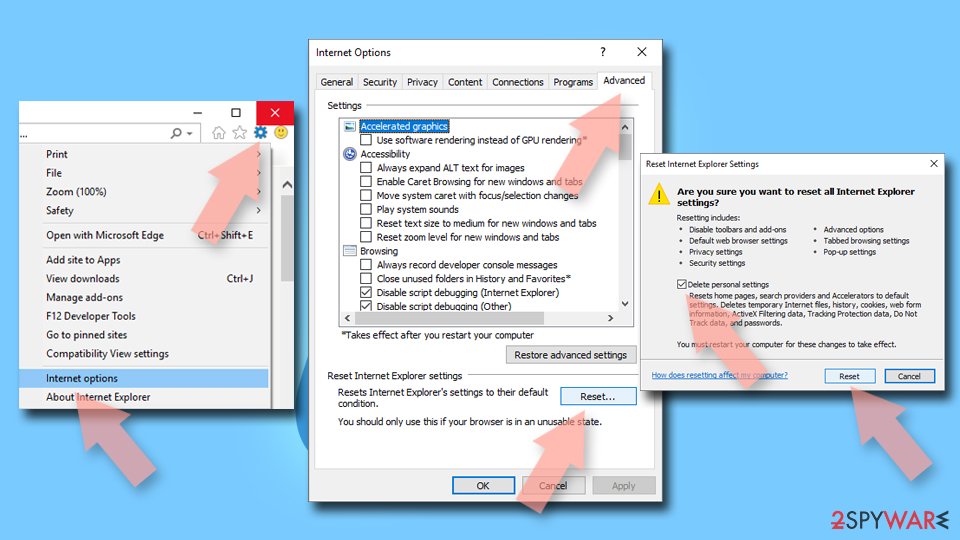
Reset Internet Explorer:
- Click on Gear icon > Internet options and select Advanced tab.
- Select Reset.
- In the new window, check Delete personal settings and select Reset.

Remove from Mozilla Firefox (FF)
Remove dangerous extensions:
- Open Mozilla Firefox browser and click on the Menu (three horizontal lines at the top-right of the window).
- Select Add-ons.
- In here, select the unwanted extension and click Remove.


Reset the homepage:
- Click three horizontal lines at the top right corner to open the menu.
- Choose Settings.
- Under Home, set your preferred homepage and new tab settings.
Clear cookies and site data:
- Click Menu and pick Settings.
- Go to Privacy & Security section.
- Scroll down to locate Cookies and Site Data.
- Click on Clear Data...
- Select Cookies and Site Data and Temporary cached files and pages, then click Clear.


Reset Mozilla Firefox
If clearing the browser as explained above did not help, reset Mozilla Firefox:
- Open Mozilla Firefox browser and click the Menu.
- Go to Help and then choose Troubleshooting Information.

- Under Give Firefox a tune up section, click on Refresh Firefox...
- Once the pop-up shows up, confirm the action by pressing on Refresh Firefox.



Remove from Google Chrome
Delete malicious extensions from Google Chrome:
- Open Google Chrome, click on the Menu (three vertical dots at the top-right corner) and select More tools > Extensions.
- In the newly opened window, you will see all the installed extensions. Uninstall all suspicious extensions related to the unwanted program by clicking Remove.


Clear cache and web data from Chrome:
- Click on Menu and pick Settings.
- Under Privacy and security, select Clear browsing data.
- Select Browsing history, Cookies and other site data, as well as Cached images and files.
- Click Clear data.


Change your homepage:
- Click menu and choose Settings.
- Look for a suspicious site in the On startup section.
- Click on Open a specific or set of pages and click on three dots to find the Remove option.
Reset Google Chrome:
If the previous methods did not help you, reset Google Chrome to eliminate all the unwanted components:
- Click on Menu and select Settings.
- In the Settings, scroll down and click Advanced.
- Scroll down and locate Reset and clean up section.
- Now click Restore settings to their original defaults.
- Confirm with Reset settings.


Delete from Safari
Remove dangerous extensions:
- Open Safari, click Safari in the menu at the top-left of the screen, and select Preferences.
- Go to the Extensions tab, look for any suspicious entries, and click Uninstall to remove them.


Clear history and website data:
- Click Safari in the menu and pick Clear History.
- Set Clear to all history and confirm with Clear History.


Reset Safari:
- Click Safari in the menu and select Preferences > Advanced.
- Enable Show Develop menu in menu bar.
- From the menu bar, click Develop and select Empty Caches.


Did this guide help?
Be the first to comment