

Streaming plus – a browser hacker that changes browser settings to redirect all search inquiries and control online traffic
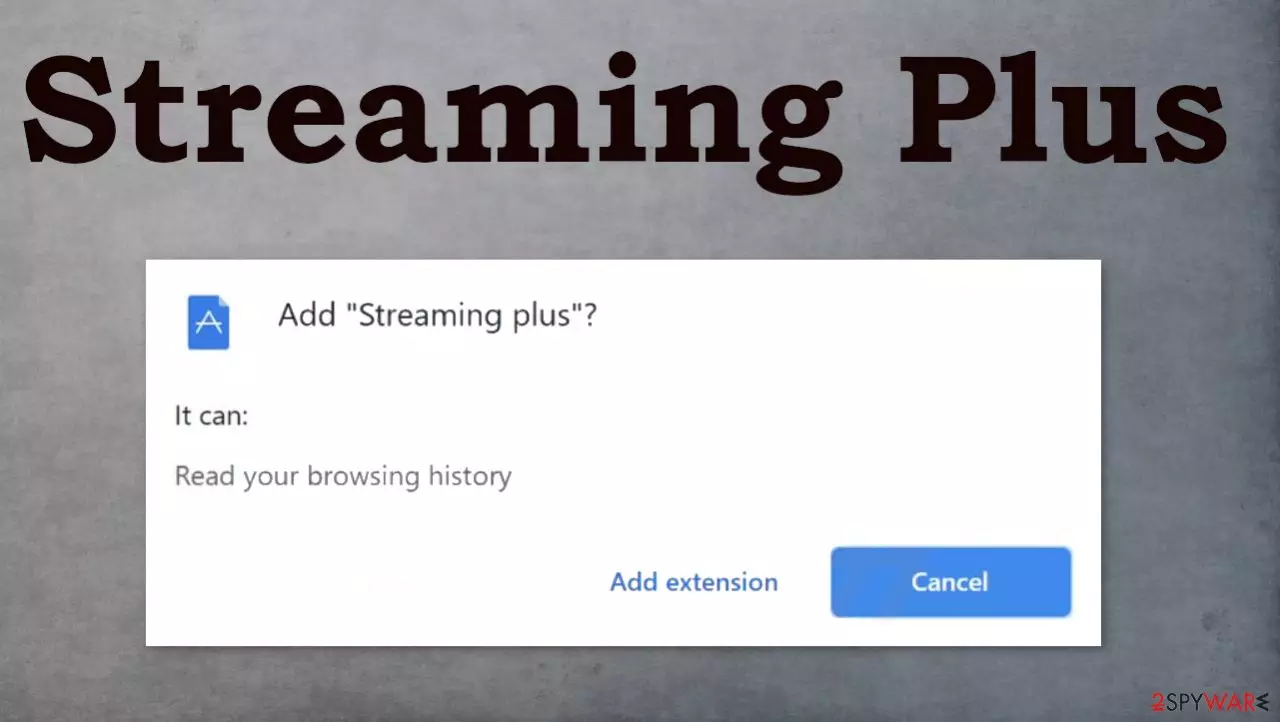
Streaming plus is a PUP that might be installed on your device either as a browser extension or as software. Either way, it alters browser settings like the new tab, the home page, default search engine and aims to promote a fake search site quicknewtab.com. Whether typed in the URL bar or anywhere else, when you attempt to search for anything online, all search inquiries would first go through the mentioned site until results from either Google or Bing (depending on geolocation) are displayed.
By first redirecting users to the chosen portal, Streaming plus browser hijacker is able to collect various browsing-related information. It is also the feature of third-party advertisers that deliver you all the pop-ups and redirects once you click anything displayed before you.
People rarely install applications like Streaming plus virus willingly. Most commonly, it ends up on their devices unknowingly by using stealthy installation techniques. This is why people often call it a virus, even though it is nothing but an intrusive application categorized as a potentially unwanted program,[1] or PUP for short.
If you see any of the symptoms when browsing the internet, then this browser intruder is installed on your device. To avoid additional damage, you should rely on professional tools and check the removal guides and directions for system repair below.
| name | Streaming plus |
|---|---|
| type | Browser hijacker/ PUP |
| Redirection | All search inquiries go through quicknewtab.com before displaying results either from Google or Bing searches |
| IP address | 172.67.150.185 |
| Symptoms | Altered browser settings: home page, new tab, search engine. Slower overall computer performance. All search is redirected to hijackers website of choice until results from a legitimate search engine are shown |
| Risks | Browsing data collection, installation of additional PUPs |
| Removal | This issue can be solved either by removing it manually or automatically by using anti-malware software |
| Repair | The FortectIntego or other powerful system repair tools should be used to restore any changes inflicted by the browser hijacker |
Browser hijackers have been doing their dirty deeds for quite some time now. They are often advertised as tools that will improve browsing security, privacy, and overall browsing experience. When, in fact, they usually do the exact opposite by:
- slowing down the device;
- slowing down the internet connection;
- collecting browsing-related information such as geolocations, search inquiries, visited websites, IP addresses, etc. and monetizing that by selling the gathered info to the highest bidder;
- displaying various deceptive pop-up ads or ads as recommended search results. Any of the shown ads might lead to other PUP installations.
Most PUPs like Streaming plus cause the same problem, pushing to install other crapware[2] (aka junkware, scamware, scareware, spyware, etc.) through deceptive ads and fake updaters. That way, the user is entangled in a never-ending PUP circle, which could lead to various losses.

Due to the fact that it poses some threats instead of improvements, Streaming plus removal should be a task on your to-do list. The sooner you accomplish it, the better. There are two ways to do it: either entrusting it to a dependable anti-malware tool such as SpyHunterCombo Cleaner or MalwarebytesMalwarebytes or doing it manually.
Our free manual guide on how to remove this browser hijacker is displayed at the bottom of this article. If you use it, please don't forget to scan your computer system with an anti-malware tool afterward, as suspicious files might have found their way onto your device while you were using the browser intruder.
Once you uninstall Streaming plus, the device's overall health should be taken care of. Cybersecurity specialists at Virusi.hr[3] advise using the FortectIntego tool to perform a full system scan and repair any system irregularities that the powerful system tune-up tool suggests.
Avoid third-party software from software bundles
People are always in a rush. But when it comes to installing new software on a device, they should take a deep breath and relax for a while, concentrating all their thoughts on this matter because most potentially unwanted programs find their way onto a device through software bundles.

Software manufacturers, and vendors, are using this technique to spread their programs witch users wouldn't necessarily install willingly. That's why a trick is used – all software in a bundle is preselected for installation. And if a user chooses Standard/Quick/Recommended or similar installation mode, then all offered apps will be installed.
There are two ways to evade PUPs from bundles:
- Get your software from official vendors and creators who don't use software bundling.
- When installing an app from a bundle, choose the Advanced/Custom installation mode to remove the ticks from pre-selected boxes, and only install the software you want.
A detailed tutorial for Streaming plus virus removal
We've glad you picked us as your cybersecurity helpers, and we do our best not to disappoint you. Below this article, you'll find a step-by-step guide on how to remove Streaming plus browser extensions from all types of browsers and devices. Nonetheless, anti-malware tools have to be used to scan for any scraps that the unwelcomed intruder might have left behind.
The particles can also be removed with system repair tools. So after removal, be sure to use either (or better yet, both) of these options. If left neglected, the leftovers could slow down the device, cause crashing, various system registry problems, and so on.
Uninstall from Windows
Uninstall from Windows 10/8:
- Type Control Panel into the Windows search box and open the result.
- Under Programs, select Uninstall a program.


Uninstall from Windows 7/XP:
- Click on Windows Start > Control Panel (Windows XP users should click on Add/Remove Programs).
- In Control Panel, select Programs > Uninstall a program.


Remove the unwanted program:
- In the Programs and Features window, look for any recently installed suspicious entries, select them, and click Uninstall.
- If User Account Control appears, click Yes to confirm, then complete the removal.


Delete from macOS
Remove the unwanted application:
- From the menu bar, select Go > Applications.
- In the Applications folder, look for any suspicious entries, then drag them to Trash (or right-click and pick Move to Trash).


Delete leftover files and folders:
- Select Go > Go to Folder.
- Enter /Library/Application Support and remove any suspicious folders related to the unwanted program.
- Repeat the same check in the /Library/LaunchAgents and /Library/LaunchDaemons folders, deleting any suspicious entries.

- Finally, empty the Trash to permanently remove the leftovers.

Remove from Microsoft Edge
Delete unwanted extensions from MS Edge:
- Select Menu (three horizontal dots at the top-right of the browser window) and pick Extensions.
- From the list, pick the extension and click on the Gear icon.
- Click Remove.


Clear cookies and other browser data:
- Click on the Menu (three horizontal dots at the top-right of the browser window) and select Settings > Privacy, search, and services..
- Under Clear browsing data, pick Choose what to clear.
- Select Cookies and other site data and Cached images and files. (apart from passwords, although you might want to include Media licenses as well, if applicable) and click on Clear.


Restore new tab and homepage settings:
- Click the menu icon and choose Settings.
- Then find On startup section.
- Click Remove next to any suspicious startup page.
Reset MS Edge if the above steps did not work:
- Press on Ctrl + Shift + Esc to open Task Manager.
- Click on More details arrow at the bottom of the window.
- Select Details tab.
- Now scroll down and locate every entry with Microsoft Edge name in it. Right-click on each of them and select End Task to stop MS Edge from running.


Instructions for Chromium-based Edge
Delete extensions from MS Edge (Chromium):
- Open Edge and click select Settings > Extensions.
- Delete unwanted extensions by clicking Remove.


Clear cache and site data:
- Click on Menu and go to Settings.
- Select Privacy, search and services.
- Under Clear browsing data, pick Choose what to clear.
- Under Time range, pick All time.
- Select Clear now.


Reset Chromium-based MS Edge:
- Click on Menu and select Settings.
- On the left side, pick Reset settings.
- Select Restore settings to their default values.
- Confirm with Reset.
- This will disable extensions and reset startup pages but will not delete bookmarks, saved passwords, or browsing history.


Remove from Mozilla Firefox (FF)
Remove dangerous extensions:
- Open Mozilla Firefox browser and click on the Menu (three horizontal lines at the top-right of the window).
- Select Add-ons.
- In here, select the unwanted extension and click Remove.


Reset the homepage:
- Click three horizontal lines at the top right corner to open the menu.
- Choose Settings.
- Under Home, set your preferred homepage and new tab settings.
Clear cookies and site data:
- Click Menu and pick Settings.
- Go to Privacy & Security section.
- Scroll down to locate Cookies and Site Data.
- Click on Clear Data...
- Select Cookies and Site Data and Temporary cached files and pages, then click Clear.


Reset Mozilla Firefox
If clearing the browser as explained above did not help, reset Mozilla Firefox:
- Open Mozilla Firefox browser and click the Menu.
- Go to Help and then choose Troubleshooting Information.

- Under Give Firefox a tune up section, click on Refresh Firefox...
- Once the pop-up shows up, confirm the action by pressing on Refresh Firefox.



Remove from Google Chrome
Delete malicious extensions from Google Chrome:
- Open Google Chrome, click on the Menu (three vertical dots at the top-right corner) and select More tools > Extensions.
- In the newly opened window, you will see all the installed extensions. Uninstall all suspicious extensions related to the unwanted program by clicking Remove.


Clear cache and web data from Chrome:
- Click on Menu and pick Settings.
- Under Privacy and security, select Clear browsing data.
- Select Browsing history, Cookies and other site data, as well as Cached images and files.
- Click Clear data.


Change your homepage:
- Click menu and choose Settings.
- Look for a suspicious site in the On startup section.
- Click on Open a specific or set of pages and click on three dots to find the Remove option.
Reset Google Chrome:
If the previous methods did not help you, reset Google Chrome to eliminate all the unwanted components:
- Click on Menu and select Settings.
- In the Settings, scroll down and click Advanced.
- Scroll down and locate Reset and clean up section.
- Now click Restore settings to their original defaults.
- Confirm with Reset settings.


Delete from Safari
Remove dangerous extensions:
- Open Safari, click Safari in the menu at the top-left of the screen, and select Preferences.
- Go to the Extensions tab, look for any suspicious entries, and click Uninstall to remove them.


Clear history and website data:
- Click Safari in the menu and pick Clear History.
- Set Clear to all history and confirm with Clear History.


Reset Safari:
- Click Safari in the menu and select Preferences > Advanced.
- Enable Show Develop menu in menu bar.
- From the menu bar, click Develop and select Empty Caches.


Did this guide help?
Be the first to comment