

Search.Easylifeapp.com – a browser hijacker that diminishes the quality of your web browsing
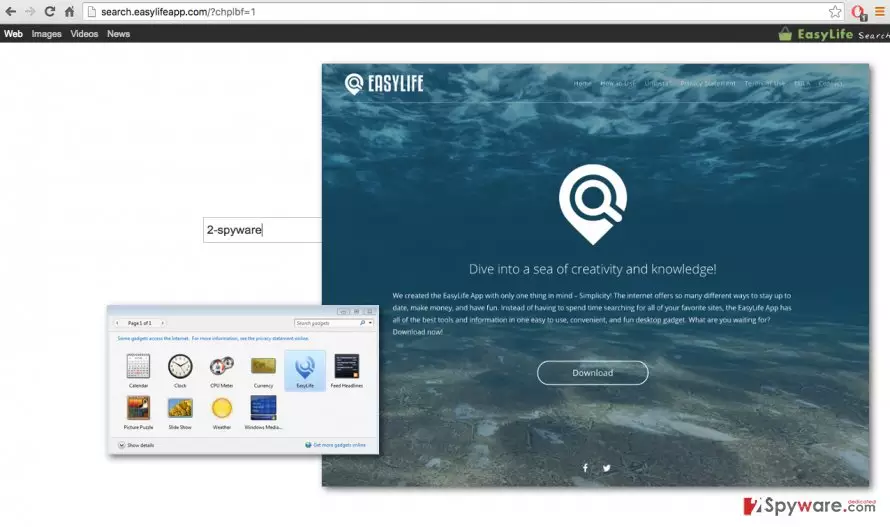
Search.Easylifeapp.com by Web-Pick is a potentially unwanted program which you should delete from your computer immediately if you see it running any processes on it. In most cases, users do not install such applications intentionally but rather during the installation of freeware bundles downloaded from third-party websites.
Besides, the app engages in various unwanted activities on the computer, e.g., changes homepage and new tab functionality without permission. It changes the search engine for Google Chrome, Mozilla Firefox, MS Edge, or another browser. In the background, the hijacker might also record certain information about user's browsing habits and use it for marketing purposes.
| Name | Search.Easylifeapp.com |
| Type | Browser hijacker |
| Distribution | Software bundles, freeware websites, deceptive ads |
| Symptoms | Changed homepage/new tab functionality of the web browser, altered search engine, unknown extension present on the browser |
| Elimination | Follow the instruction at the bottom of this article |
| Further steps | Do not forget to clean your web browsers either manually or by using PC diagnostics and maintenance utility FortectIntego |
The program decryption is rather obscure:
Instead of having to spend time searching for all of your favorite sites, the EasyLife App has all of the best tools and information in one easy to use, convenient, and fun desktop gadget.
It is not clear what this program is really for and what tools does it actually provides. Nevertheless, the user is encouraged to download it and enhance the Internet browsing experience.
After a closer investigation of the Search.Easylifeapp.com website, our experts have noticed several concerning details in the Privacy Statement of this program. For instance, Web-Pick claims to collect both Personally Identifiable Information (PII) and NPII Non-Personally Identifiable Information.
As many legitimate websites collect NPII to provide the users with better service, collecting PII is not common and may even result in privacy violations. Citing the website site itself, PII may include “among others, Your name, title, address, email.”
It can be presumed that this application does not limit itself to the collection of the mentioned details and can target other sensitive data as well. What is more, the software creators do not take any responsibility for the security of this information, so using this program may easily result in data or financial loss or even identity theft.
Therefore, it is recommended to remove Search.Easylifeapp.com from the computer as soon as possible. We suggest eliminating it with some reputable antivirus tools, such as SpyHunterCombo Cleaner. You can also use FortectIntego to clean your web browsers properly.
Unfortunately, the data gathering is not the only consequence of the browser hijack. Browsing the web may also become unbearable if you decide to continue using this search engine willingly.
Among the most commonly encountered problems is the redirect issues that are initiated by this app. While it may seem that you have entered a site accidentally, in reality, you have been redirected to it by the EasyLifeApp malware. In fact, such search websites are usually promoted using this particular technique.
However, the main reason why you should avoid searching on Search.Easylifeapp.com or a similar domain is the fact that its owners tend to display forged search results for them. So, you must be aware that such redirects are serious problems, which must never be ignored. Once you start suffering from them, obtain a reputable anti-malware that will scan your computer and take care of the PUP removal automatically.
Users do not install browser hijackers intentionally
Most frequently, such viruses come along with fake software updates, various freeware, spam emails, and other potentially malicious downloads. Once the unwanted settles in, it starts changing search results in all the search engines. So, no matter which search engine you use, Google, Bing, or Yahoo, the virus will continuously redirect you.
To avoid such infiltration, you should be careful while browsing online. Do not click on suspicious ads or download buttons, as they might lead you straight to the virus download. Also, it is important to obtain a reliable antivirus system that will eliminate the threats on your computer and provide you will need protection while browsing online in real-time.
Search.Easylifeapp.com removal recommendations
If you suffer from unwanted redirects and ads, you should not wait and scan your system with some reputable anti-malware program. It will remove Search.Easylifeapp.com automatically, so you will not have to worry about any of the junk files that may be left on your computer while deleting the virus manually.
Also, the automatic system scan will make sure that other malware and viruses that are possibly roaming your computer will be detected and eliminated as well. We understand that you may want to carry out the removal manually, especially if you already have some experience in dealing with viruses. For this purpose, we have prepared step-by-step instructions, which you can use as guidelines for virus removal. You will find these instructions below.
Uninstall from Windows
Uninstall from Windows 10/8:
- Type Control Panel into the Windows search box and open the result.
- Under Programs, select Uninstall a program.


Uninstall from Windows 7/XP:
- Click on Windows Start > Control Panel (Windows XP users should click on Add/Remove Programs).
- In Control Panel, select Programs > Uninstall a program.


Remove the unwanted program:
- In the Programs and Features window, look for any recently installed suspicious entries, select them, and click Uninstall.
- If User Account Control appears, click Yes to confirm, then complete the removal.


Delete from macOS
Remove the unwanted application:
- From the menu bar, select Go > Applications.
- In the Applications folder, look for any suspicious entries, then drag them to Trash (or right-click and pick Move to Trash).


Delete leftover files and folders:
- Select Go > Go to Folder.
- Enter /Library/Application Support and remove any suspicious folders related to the unwanted program.
- Repeat the same check in the /Library/LaunchAgents and /Library/LaunchDaemons folders, deleting any suspicious entries.

- Finally, empty the Trash to permanently remove the leftovers.

Remove from Microsoft Edge
Delete unwanted extensions from MS Edge:
- Select Menu (three horizontal dots at the top-right of the browser window) and pick Extensions.
- From the list, pick the extension and click on the Gear icon.
- Click Remove.


Clear cookies and other browser data:
- Click on the Menu (three horizontal dots at the top-right of the browser window) and select Settings > Privacy, search, and services..
- Under Clear browsing data, pick Choose what to clear.
- Select Cookies and other site data and Cached images and files. (apart from passwords, although you might want to include Media licenses as well, if applicable) and click on Clear.


Restore new tab and homepage settings:
- Click the menu icon and choose Settings.
- Then find On startup section.
- Click Remove next to any suspicious startup page.
Reset MS Edge if the above steps did not work:
- Press on Ctrl + Shift + Esc to open Task Manager.
- Click on More details arrow at the bottom of the window.
- Select Details tab.
- Now scroll down and locate every entry with Microsoft Edge name in it. Right-click on each of them and select End Task to stop MS Edge from running.


Instructions for Chromium-based Edge
Delete extensions from MS Edge (Chromium):
- Open Edge and click select Settings > Extensions.
- Delete unwanted extensions by clicking Remove.


Clear cache and site data:
- Click on Menu and go to Settings.
- Select Privacy, search and services.
- Under Clear browsing data, pick Choose what to clear.
- Under Time range, pick All time.
- Select Clear now.


Reset Chromium-based MS Edge:
- Click on Menu and select Settings.
- On the left side, pick Reset settings.
- Select Restore settings to their default values.
- Confirm with Reset.
- This will disable extensions and reset startup pages but will not delete bookmarks, saved passwords, or browsing history.


Remove from Mozilla Firefox (FF)
Remove dangerous extensions:
- Open Mozilla Firefox browser and click on the Menu (three horizontal lines at the top-right of the window).
- Select Add-ons.
- In here, select the unwanted extension and click Remove.


Reset the homepage:
- Click three horizontal lines at the top right corner to open the menu.
- Choose Settings.
- Under Home, set your preferred homepage and new tab settings.
Clear cookies and site data:
- Click Menu and pick Settings.
- Go to Privacy & Security section.
- Scroll down to locate Cookies and Site Data.
- Click on Clear Data...
- Select Cookies and Site Data and Temporary cached files and pages, then click Clear.


Reset Mozilla Firefox
If clearing the browser as explained above did not help, reset Mozilla Firefox:
- Open Mozilla Firefox browser and click the Menu.
- Go to Help and then choose Troubleshooting Information.

- Under Give Firefox a tune up section, click on Refresh Firefox...
- Once the pop-up shows up, confirm the action by pressing on Refresh Firefox.



Remove from Google Chrome
Delete malicious extensions from Google Chrome:
- Open Google Chrome, click on the Menu (three vertical dots at the top-right corner) and select More tools > Extensions.
- In the newly opened window, you will see all the installed extensions. Uninstall all suspicious extensions related to the unwanted program by clicking Remove.


Clear cache and web data from Chrome:
- Click on Menu and pick Settings.
- Under Privacy and security, select Clear browsing data.
- Select Browsing history, Cookies and other site data, as well as Cached images and files.
- Click Clear data.


Change your homepage:
- Click menu and choose Settings.
- Look for a suspicious site in the On startup section.
- Click on Open a specific or set of pages and click on three dots to find the Remove option.
Reset Google Chrome:
If the previous methods did not help you, reset Google Chrome to eliminate all the unwanted components:
- Click on Menu and select Settings.
- In the Settings, scroll down and click Advanced.
- Scroll down and locate Reset and clean up section.
- Now click Restore settings to their original defaults.
- Confirm with Reset settings.


Delete from Safari
Remove dangerous extensions:
- Open Safari, click Safari in the menu at the top-left of the screen, and select Preferences.
- Go to the Extensions tab, look for any suspicious entries, and click Uninstall to remove them.


Clear history and website data:
- Click Safari in the menu and pick Clear History.
- Set Clear to all history and confirm with Clear History.


Reset Safari:
- Click Safari in the menu and select Preferences > Advanced.
- Enable Show Develop menu in menu bar.
- From the menu bar, click Develop and select Empty Caches.


Did this guide help?
Be the first to comment