

EveRed ransomware can be the virus that is responsible for more than the file encryption

EveRed ransomware virus is the cryptocurrency-extortion infection that is created by criminals who focus on getting money from victims all over the world. The infiltration happens silently, so people might not notice that the issue is occurring. However, the encryption shows its results a bit too late. Once those files that you commonly use get the appendix .evered, the computer is already damaged, and your files might never be restored from there. There are some instances where the decryption process is possible due to the existing tool or flaws in coding and ransomware functions. Since the threat is newly developed and not yet linked to any known family, there might be some options for you out there.
Even though the official decryption tool for the version of the threat does not exist, there are some options besides following the ransom note instructions. The message from virus creators appears as the readme.txt and gets placed in various folders on the desktop. Text in this file states that data got encrypted and that the only way to resolve this issue is to pay 1 mBTC or 0.001 Bitcoin. It is never recommended to trust criminals who create such programs in order to make money.
It is unknown if the EveRed.RSW ransomware virus is related to any known ransomware gangs, but there are no similarities. This might only be a good feature since the code vulnerabilities can be discovered and used to victims' advantage. Unfortunately, researchers take a lot of time until those decryption tools get developed. If you still want to rely on such software but want to use the machine too, you need to take some measures.
| Name | EveRed ransomware |
|---|---|
| Type | Cryptovirus, ransomware, file-locker |
| The name in a ransom note | EveRed.RSW |
| File marker | .evered |
| Distribution | File attachments in malicious emails, files distributed via pirating platforms, torrent services. Other threats like trojans and worms can also spread this way and then act as the vector for cryptovirus distribution |
| Ransom note | readme.txt |
| Ransom demand | 1 mBTC – 0,001 Bitcoin |
| Removal | The best way to deal with such infections – anti-malware tools. You can rely on a security program and clear the intruder with all the associated files |
| Repair | Restoring encoded files can be difficult, but some damaged system pieces can be restored using FortectIntego or a similar PC app |
EveRed ransomware is informing people via ransom note. The message listed in the texted file informs that people cannot decrypt their files without help from these criminals. That is true because full decryption is possible with particular keys and tools that these developers might have.
Paying is never the best option
There are various claims that might not be true. In various cases, ransomware developers do not have the tool for file recovery, so these claims are false, and by paying ransom, users only provide criminals with money. Experts[1] always note that paying is not recommended since it cannot fully recover files.
It is possible that once you transfer the sum demanded from you, the virus creators leave, and your files remain locked. You can even receive additional malware as revenge if you do not pay soon enough. Make sure to remove the threat instead of paying these hackers. Even in some serious incidents involving companies and businesses, officials stay away from paying.
EveRed ransomware, as other threats of the same type, sometimes can offer the test decryption option that creates a false trust between users and criminals. Do not believe those claims and clean the machine instead. Anti-malware tools are not the same as the decryption program, but the detection rate[2] shows that this is the way to remove the virus thoroughly.
The full system scan with a tool like SpyHunterCombo Cleaner or MalwarebytesMalwarebytes can ensure that the EveRed virus and any ransomware files get terminated and deleted from your computer. Then you can be more sure that the virus is not active and move on to the data recovery option of your choice.

Clearing the machine after the EveRed ransomware virus infection
Once a computer is infected with malware, its system is changed to operate differently. For example, an infection can alter the Windows registry database, damage vital bootup, and other sections, delete or corrupt DLL files, etc. Once a system file is damaged by malware, antivirus software is not capable of doing anything about it, leaving it just the way it is. Consequently, users might experience performance, stability, and usability issues, to the point where a full Windows reinstallation is required.
Therefore, we highly recommend using a one-of-a-kind, patented technology of FortectIntego repair. Not only can it fix EveRed.RSW virus damage after the infection, but it is also capable of removing malware that has already broken into the system thanks to several engines used by the program.
Besides, the application is also capable of fixing various Windows-related issues that are not caused by malware infections, for example, Blue Screen errors, freezes, registry errors, damaged DLLs, etc.
- Download the application by clicking on the link above
- Click on the ReimageRepair.exe

- If User Account Control (UAC) shows up, select Yes
- Press Install and wait till the program finishes the installation process
- The analysis of your machine will begin immediately
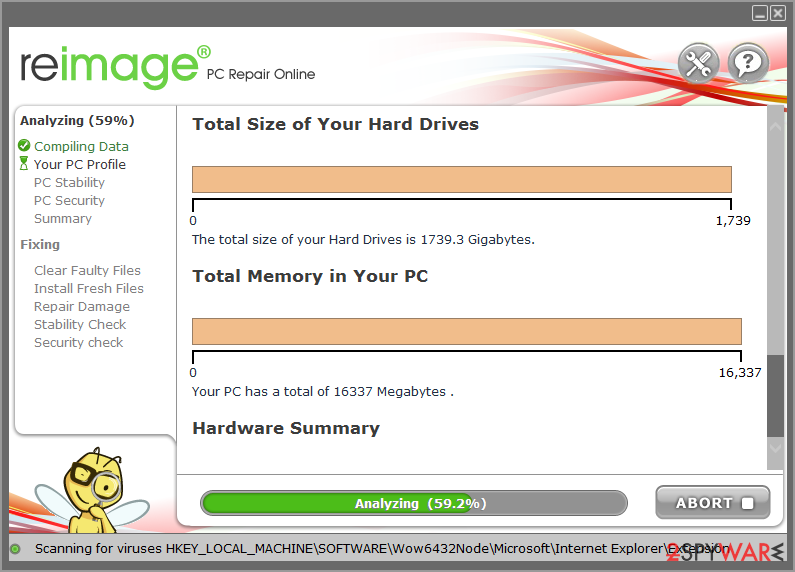
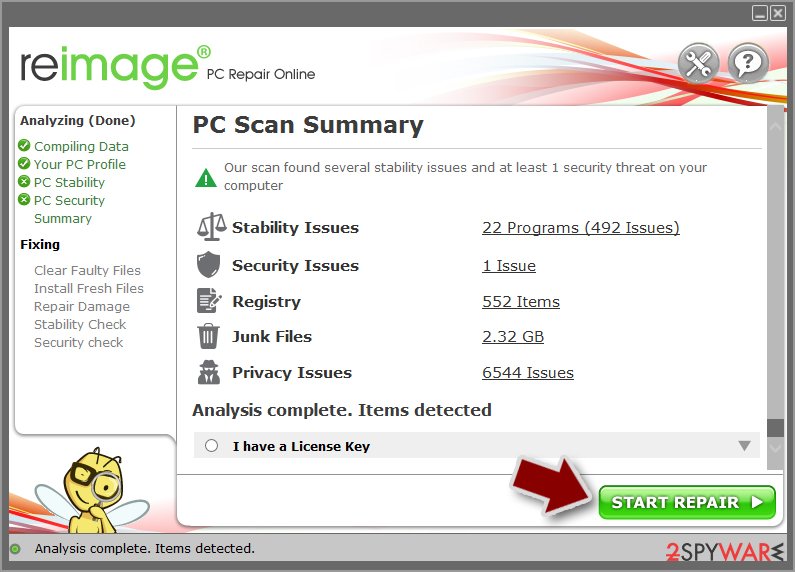
- Once complete, check the results – they will be listed in the Summary
- You can now click on each of the issues and fix them manually
- If you see many problems that you find difficult to fix, we recommend you purchase the license and fix them automatically.


Infection possibilities are endless nowadays
The most disturbing issue besides the file-locking is that the EveRed virus, as any other ransomware, can spread silently, and once your files get locked, it is too late to take care of the infection since the damage is done. You cannot control the infection since these vectors sued by ransomware distributors come in various forms.
Malicious attachments from email messages and cracked software, game cheats, or different files delivered via pirating platforms are more common. However, there are some particular campaigns where ransomware gets spread around.[3] Most of such attacks involve some kind of deception and misleading content, so the person that triggers the payload drop is suspecting nothing.
You can sometimes indicate dangerous emails from subject lines, senders. Most common details that you should be suspicious of – random companies, unfamiliar senders, order- information-related details. DHL, FedEx, eBay, other similar services get used due to popularity. Always pay attention and look through the message if you are not related to the service. If you open the email, allow the attachments to get downloaded, you can release the payload of the EveRed ransomware.

From there, the payload is launched, and background processes start to look for commonly used files that can be encrypted. This can happen in a matter of minutes, and you will be presented with the ransom note right away. You should react as soon as possible, so the threat is removed sooner than later.
EveRed file encryption is a process that is similar to applying a password to a particular file or folder. However, from a technical point of view, encryption is fundamentally different due to its complexity. By using encryption, threat actors use a unique set of alphanumeric characters as a password that can not easily be deciphered if the process is performed correctly.
There are several algorithms that can be used to lock data (whether for good or bad reasons); for example, AES uses the symmetric method of encryption, meaning that the key used to lock and unlock files is the same. Unfortunately, it is only accessible to the attackers who hold it on a remote server – they ask for a payment in exchange for it. This simple principle is what allows ransomware authors to prosper in this illegal business.
In some cases, ransomware does not even encrypt files due to bugs, although victims might believe the opposite due to the ransom note that shows up right after the infection and data encryption is completed. Therefore, regardless of which crypto-malware affects your files, you should try to find the relevant decryptor if such exists. Security researchers are in a constant battle against cybercriminals. In some cases, they managed to create a working decryption tool that would allow even EveRed virus victims to recover files for free.
Once you have identified which ransomware you are affected by, you should check the following links for a decryptor:
- No More Ransom Project
- Free Ransomware Decryptors by Kaspersky
- Free Ransomware Decryption Tools from Emsisoft
- Avast decryptors

If you can't find a decryptor that works for you, you should try the alternative methods we list below. Additionally, it is worth mentioning that it sometimes takes years for a working decryption tool to be developed, so there are always hopes for the future.
Do not forget that the EveRed ransomware virus is one of the more dangerous because of the blackmail functionality and money involvement. You should be worried about your files, but decryption options are very limited these days when virus creators make advanced versions of these threats. It is not worth trusting people behind the malware, so do not contact them and do not pay. It is not worth it.
To fight the malware, you need to employ anti-malware tools. But remember that such applications like SpyHunterCombo Cleaner or MalwarebytesMalwarebytes can act as security software and easily protect you from such threats as the EveRed virus. The occasional full system scan can provide a lot of security because all malicious pieces get located and terminated for you.
To keep the machine working properly and smoothly, so no security flaw or vulnerability can be exploited, employ – FortectIntego. This piece of PC program is designed to keep the machine clear of virus damage and affected files. Some changes in system files and folders can lead to serious performance and security issues. Additional data recovery options and the Safe Mode helpful for virus removal can be found below.
Did this guide help?
Be the first to comment