

News-jivuka.cc ads after enabled by users after they fall victims to a scam scheme

News-jivuka.cc ads might start showing up on your screen regardless of what you are doing on your computer, and the activity can be very disruptive – it shows on top of every other app. Pop-ups might occur whenever you stream a video or visit random websites. If you have been struggling with this problem, you must have unintentionally allowed a malicious website to send push notifications.
The News-jivuka.cc pop-ups can serve all sorts of commercial content, although, since the owners of the site are scammers, they employ insecure advertising networks to earn ad revenue. As a result, users might be exposed to all sorts of phishing[1] content online: get-rich-quick scams,[2] fake virus infection notices, or fake free gift card giveaways.
How users get scammed
The first and very important step in the News-jivuka.cc scam's success is the element of surprise that most users experience after encountering the website accidentally. This usually happens whenever people are visiting insecure websites, such as torrents or other illegal software distribution places.
Since users get redirected to a page abruptly, they don't see what they expected, which makes them be caught off guard. What they see is usually a request that makes sense at the time and can be easily confused with legitimate elements they have already encountered before. Here are a few examples:
- Your file is ready to download – press Allow to continue
- Click Allow to watch the video
- Press “Allow” to verify, that you are not a robot
- If you are 18+, click Allow, etc.
- Click “Allow” to win a prize and get it in our shop!
Crooks are trying to mislead users into thinking that the function of the push notification prompt is completely different than it actually is – it is allegedly allowing users to proceed with a video, download a file, or simply verify that they aren't robots.
Regardless of what the background message claims, the push notification prompt always has only one function, and, once the “Allow” is pressed, that particular website is granted permission to deliver any type of content via the push notification feature shown on the system level whenever the web browser is operational.

| Name | News-jivuka.cc |
| Type | Push notifications, ads, scam, pop-ups |
| Distribution | The website gains access to deliver information as soon as the “Allow” button is pressed within the push notification prompt |
| Symptoms | Push notifications show on the desktop at random time intervals. These pop-ups show fake notices and push scams. Links can also lead to malware-laden sites |
| Risks | Push notifications sent by the site might result in you visiting dangerous websites; consequently, you might suffer from malware infections, financial losses, or personal data disclosure to malicious parties |
| Removal | Access browser settings to stop intrusive push notifications. After that, make sure that your system is not infected with adware or malware – scan it with SpyHunterCombo Cleaner |
| Other tips | Use FortectIntego to remediate the system after adware infection. The tool can also be used to clean web browsers automatically |
Make an adware check
Before you proceed with News-jivuka.cc removal, we would like to encourage you to check your device for infections. It is true that push notifications have nothing to do with malware (at least, not directly), but the reason you have encountered scams could be because potentially unwanted or malicious software is installed on your device.
You can quickly and easily determine whether or not your system is infected by scanning your system with SpyHunterCombo Cleaner, MalwarebytesMalwarebytes, or another powerful security application. This would ensure that all the potentially unwanted programs[3] are deleted at once. Besides, malware could be virtually invisible to regular users, so it is necessary to run a scan just in case.
After you are sure that your system is infection-free, you should then take care of your privacy and remove trackers from your browsers. For example, tracking cookies placed by third parties can remain on your device for years if not deleted. They would continue delivering data about you to third parties, including which websites you browse, which links you click, which internet service provider you use, etc.
You can get rid of cookies and other caches with the help of the FortectIntego maintenance utility or clean browsers manually. For that, you should go to the settings menu > privacy and security and delete the caches from there.
Remove News-jivuka.cc ads
If you have already scanned your system with reputable anti-malware software, you should be relatively secure. Nonetheless, security software would not get rid of the push notifications; to remove them, you would have to access browser settings and then block the access to the website you don't want to receive pop-ups from. Here's how:
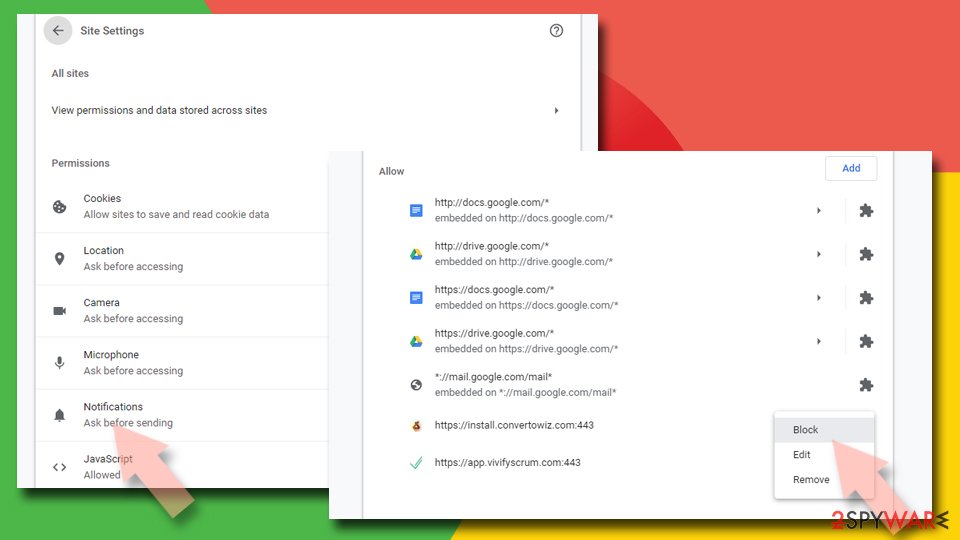
Google Chrome
- Open the Google Chrome browser and go to Menu > Settings.
- Scroll down and click on Advanced.
- Locate the Privacy and security section and pick Site Settings > Notifications.
- Look at the Allow section and look for a suspicious URL.
- Click the three vertical dots next to it and pick Block. This should remove unwanted notifications from Google Chrome.

Mozilla Firefox
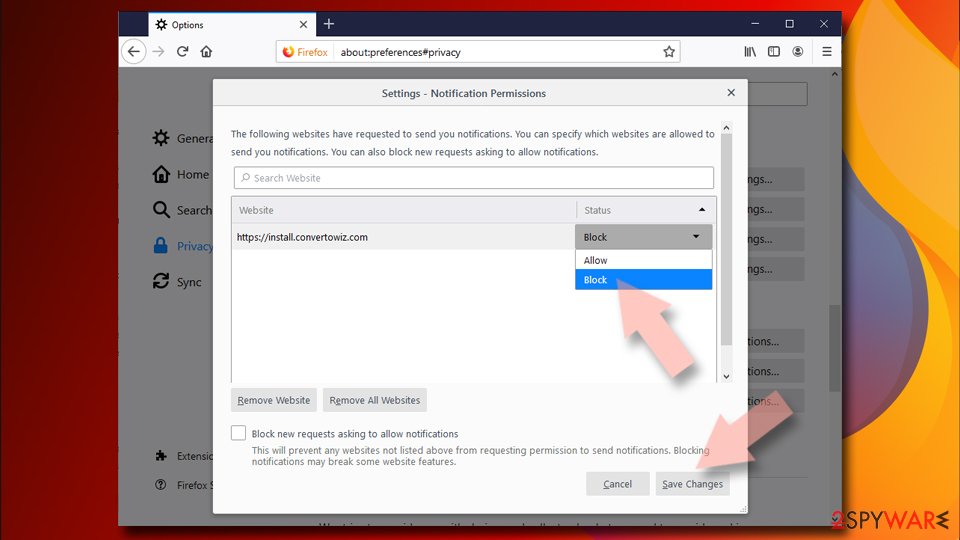
- Open Mozilla Firefox and go to Menu > Options.
- Click on Privacy & Security section.
- Under Permissions, you should be able to see Notifications. Click the Settings button next to it.
- In the Settings – Notification Permissions window, click on the drop-down menu by the URL in question.
- Select Block and then click on Save Changes. This should remove unwanted notifications from Mozilla Firefox.

Safari
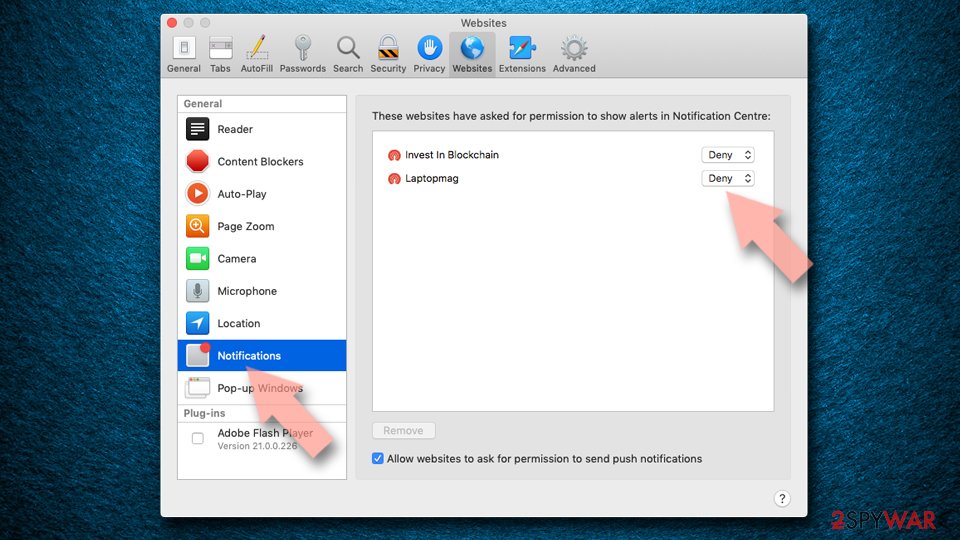
- Click on Safari > Preferences…
- Go to the Websites tab and, under General, select Notifications.
- Select the web address in question, click the drop-down menu and select Deny.

MS Edge
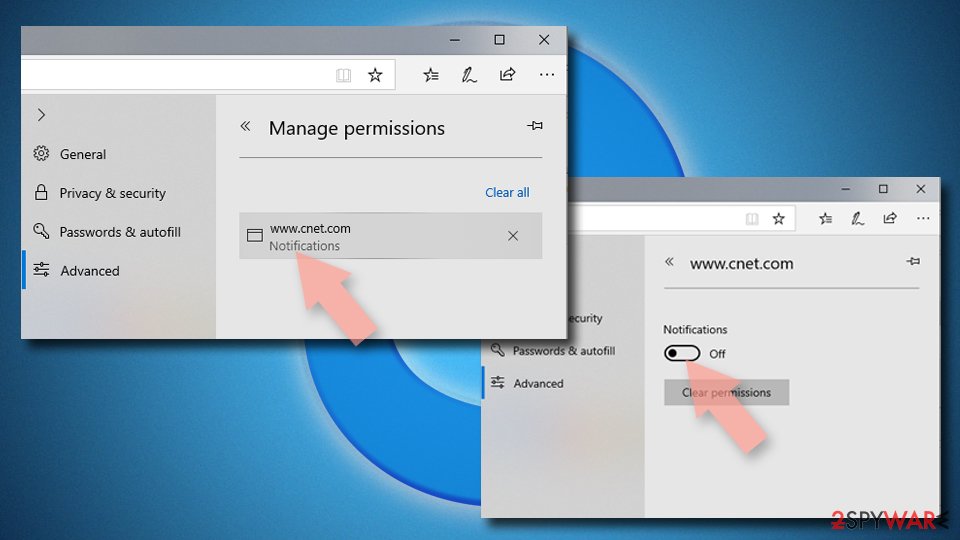
- Open Microsoft Edge, and click the Settings and more button (three horizontal dots) at the top-right of the window.
- Select Settings and then go to Advanced.
- Under Website permissions, pick Manage permissions and select the URL in question.
- Toggle the switch to the left to turn notifications off on Microsoft Edge.

MS Edge (Chromium)
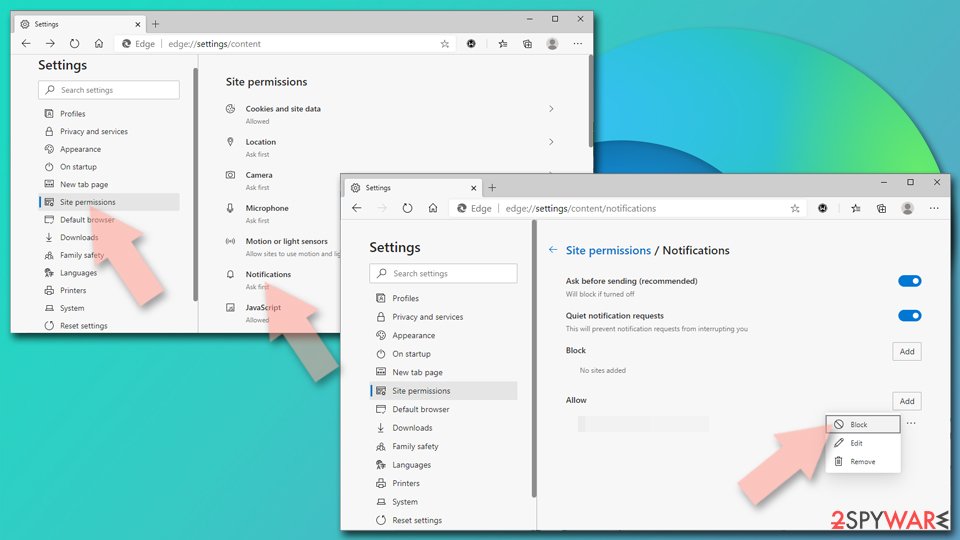
- Open Microsoft Edge, and go to Settings.
- Select Site permissions.
- Go to Notifications on the right.
- Under Allow, you will find the unwanted entry.
- Click on More actions and select Block.

Internet Explorer
- Open Internet Explorer, and click on the Gear icon at the top-right of the window.
- Select Internet options and go to the Privacy tab.
- In the Pop-up Blocker section, click on Settings.
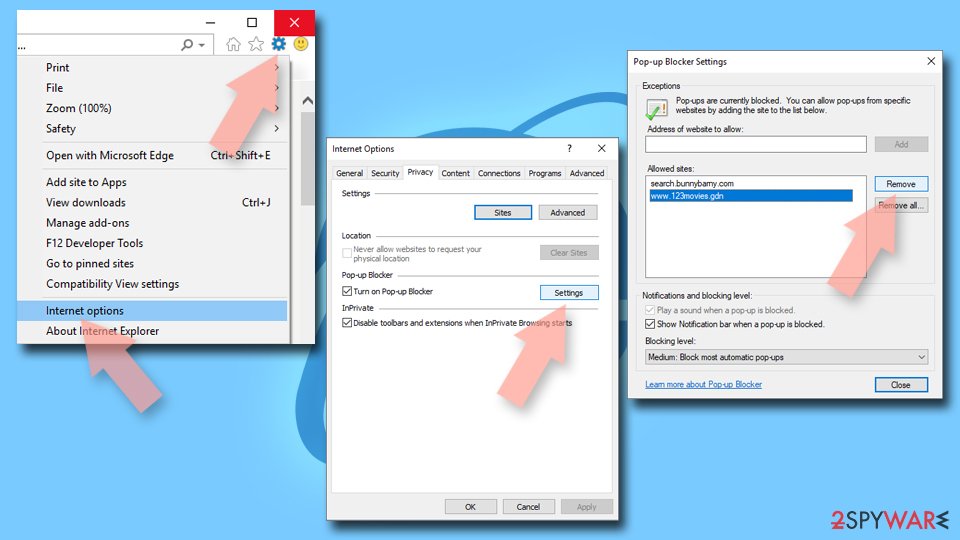
- Locate the web address in question under Allowed sites and pick Remove.

Did this guide help?
Be the first to comment