

Prelandappslab.com can fill up the screen with ads after you click the “Allow” button

Prelandappslab.com is a fake website disguised as a CAPTCHA verification page. It uses social engineering to trick users into subscribing to push notifications. It asks users to press the “Allow” button to supposedly verify if they are not robots. In reality, it starts spamming people with annoying pop-up ads that can appear even when the browser is closed.
Crooks may also use rogue advertising networks that place ads leading to dangerous pages. As a result, people can end up on other scam pages that try to lure out personal information, and fool them into downloading PUPs (potentially unwanted programs),[1] or malware.
| NAME | Prelandappslab.com |
| TYPE | Push notification spam; adware |
| SYMPTOMS | Pop-up ads start appearing in the corner of the screen at random time intervals |
| DISTRIBUTION | Shady websites; deceptive ads; bundled software |
| DANGERS | Crooks may use rogue advertising networks that place ads leading to dangerous websites |
| ELIMINATION | Disable the pop-ups in your browser settings |
| FURTHER STEPS | Use FortectIntego to optimize your machine and get rid of any remaining damage |
Deceptive tactics
Many people do not know about the social engineering methods that crooks use. A legitimate CAPTCHA verification process should never ask you to choose between “Block” and “Allow” on a browser prompt. Normally, human verification steps ask users to identify certain objects in pictures, like crosswalks, and traffic lights, or to simply check a box. If you see any of these messages be sure to think twice before taking action:
Type Allow to verify that you are not a robot
Click Allow to watch the video
Download is ready. Click Allow to download your file
Press Allow to verify that you are not a robot
Nowadays, crooks do not need to have any hacking skills. All they have to do is come up with a convincing message and image. Always be critical while browsing the web, take it slow, and read everything fully. Do not rush and click the “Allow” buttons without fully understanding the consequences.

Distribution methods
Users rarely find push notification spam pages such as Prelandappslab.com in the search results. Usually, they hide in other shady sites. Be careful of websites that engage in illegal activities as they are unregulated. Illegal streaming platforms[2] are full of deceptive ads, sneaky redirects,[3] fake “Download” and “Play” buttons.
Once you click on them, they can open new tabs with harmful websites inside. That is why you should only visit pages that you know and trust. Do not click on random links and buttons. Use legitimate streaming services, like Netflix or Hulu, instead of shady movie platforms.
Another possibility is that the deceptive site appeared without any user input. This can happen if there is adware hiding in your machine. It can cause an increased amount of commercial content, like pop-ups, banners, and redirects without the users' knowledge.
How to remove browser pop-ups?
To get rid of intrusive pop-up ads, you have to go to your browser settings and block the permission manually. The process is quite simple, as we show below:
Google Chrome (desktop):
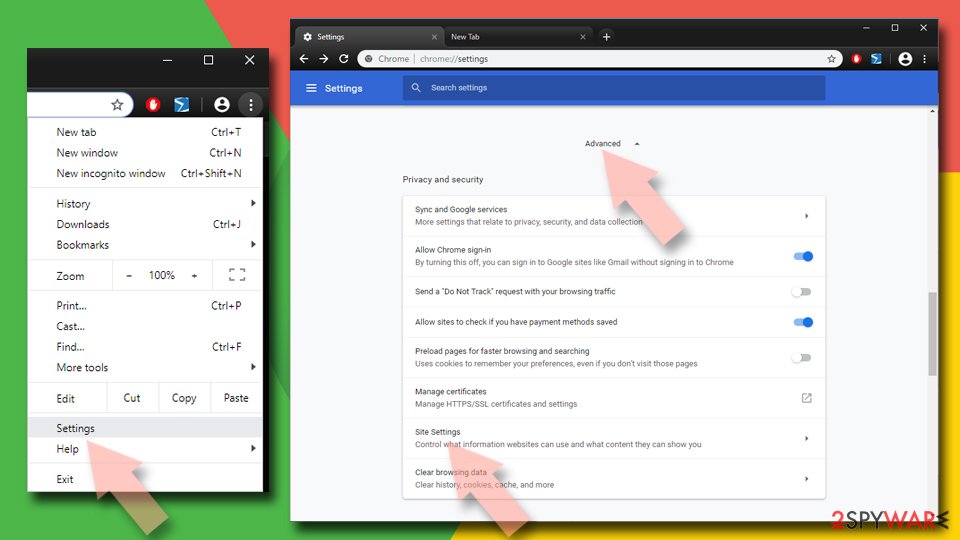
- Open Google Chrome browser and go to Menu > Settings.
- Scroll down and click on Advanced.
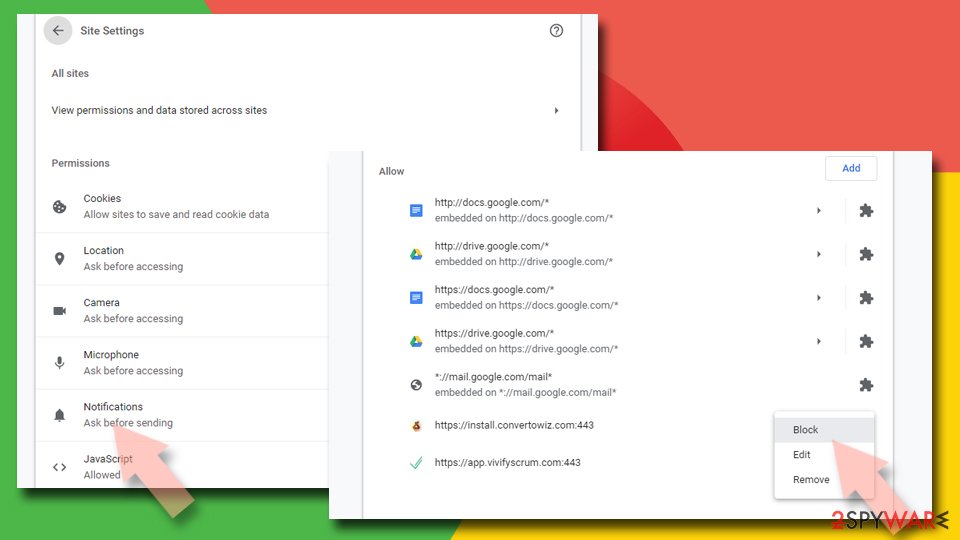
- Locate the Privacy and security section and pick Site Settings > Notifications.
- Look at the Allow section and look for a suspicious URL.
- Click the three vertical dots next to it and pick Block. This should remove unwanted notifications from Google Chrome.


Google Chrome (Android):
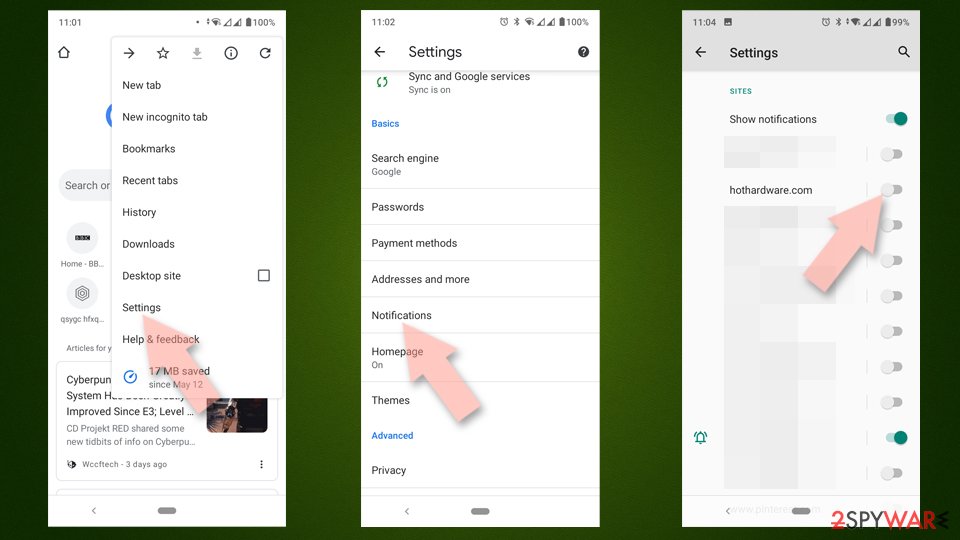
- Open Google Chrome and tap on Settings (three vertical dots).
- Select Notifications.
- Scroll down to Sites section.
- Locate the unwanted URL and toggle the button to the left (Off setting).

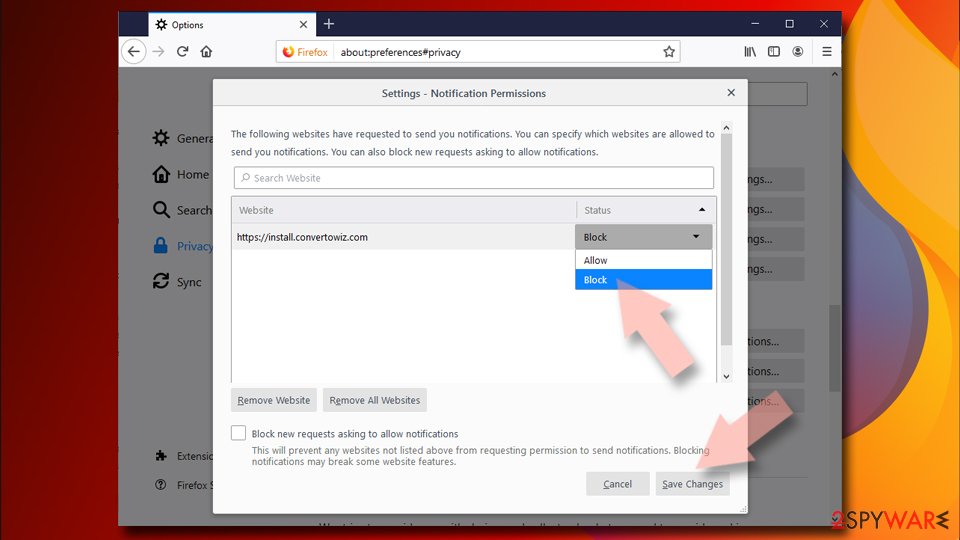
Mozilla Firefox:
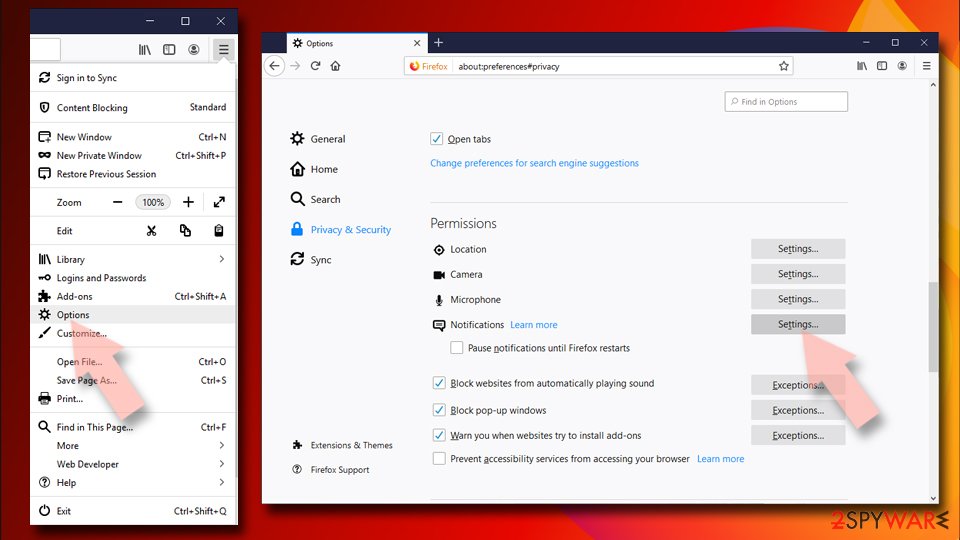
- Open Mozilla Firefox and go to Menu > Options.
- Click on Privacy & Security section.
- Under Permissions, you should be able to see Notifications. Click Settings button next to it.
- In the Settings – Notification Permissions window, click on the drop-down menu by the URL in question.
- Select Block and then click on Save Changes. This should remove unwanted notifications from Mozilla Firefox.


Safari:
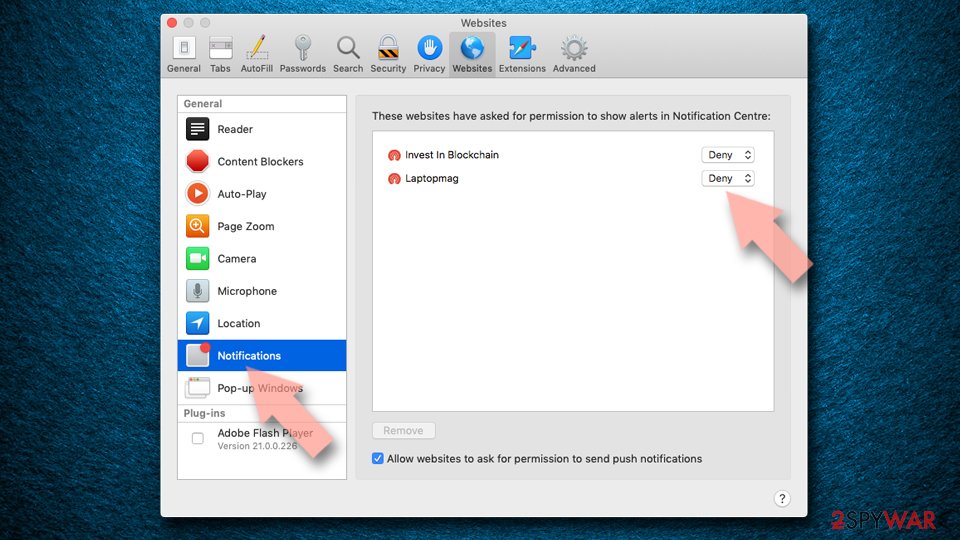
- Click on Safari > Preferences…
- Go to Websites tab and, under General, select Notifications.
- Select the web address in question, click the drop-down menu and select Deny.

MS Edge:
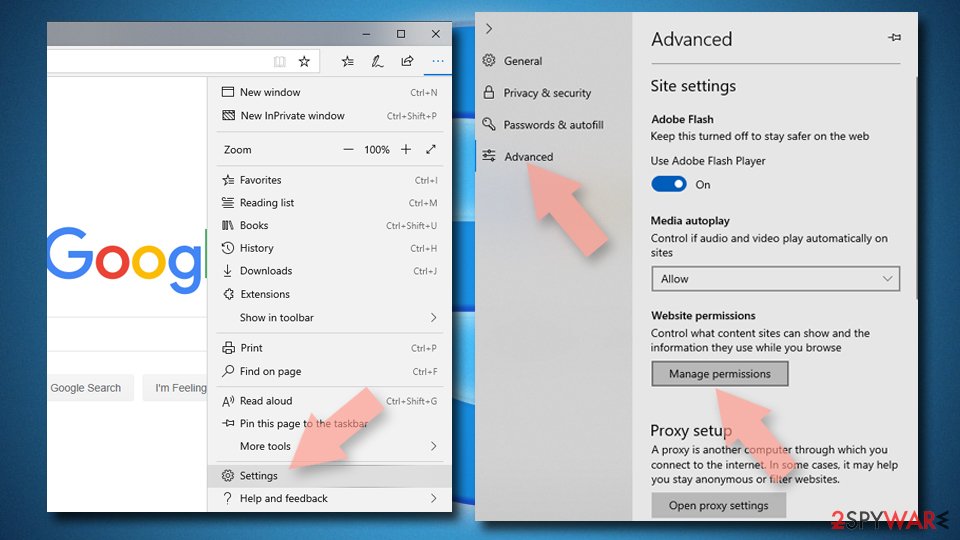
- Open Microsoft Edge, and click the Settings and more button (three horizontal dots) at the top-right of the window.
- Select Settings and then go to Advanced.
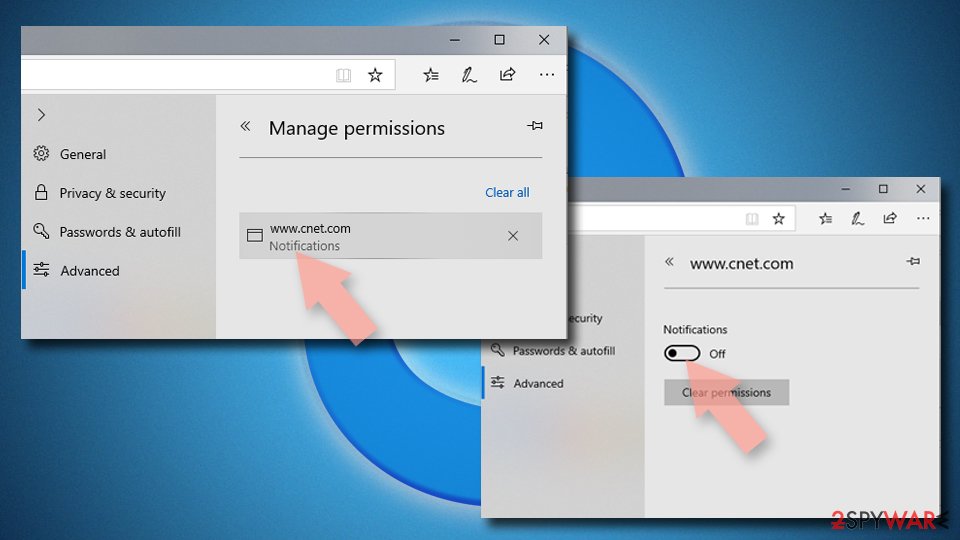
- Under Website permissions, pick Manage permissions and select the URL in question.
- Toggle the switch to the left to turn notifications off on Microsoft Edge.


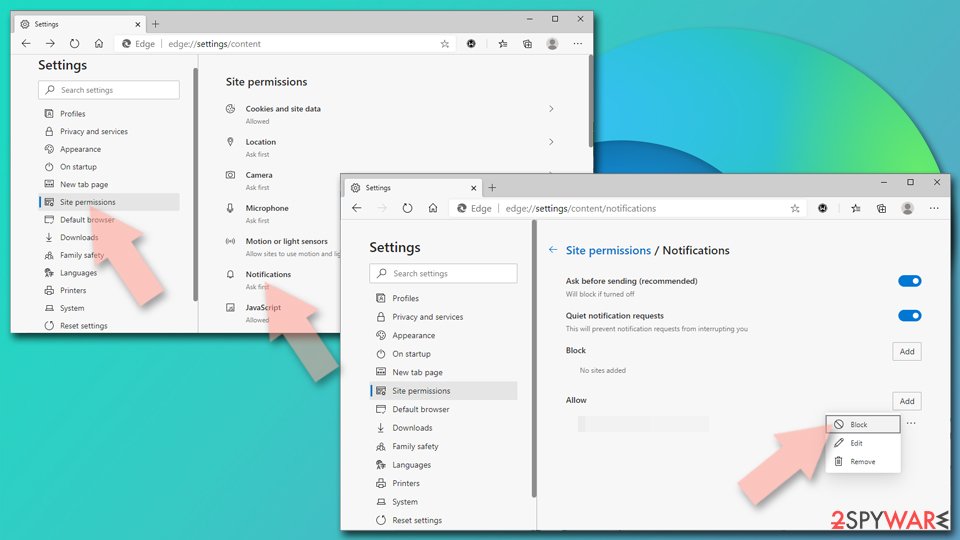
MS Edge (Chromium):
- Open Microsoft Edge, and go to Settings.
- Select Site permissions.
- Go to Notifications on the right.
- Under Allow, you will find the unwanted entry.
- Click on More actions and select Block.

Get rid of cookies and cache
It would be best to avoid shady pages that engage in illegal activities. They can use cookies to track your IP address and geolocation. Websites also have the ability to collect data about your browsing behavior like the websites you visit, searches you make, what you purchase online, etc.
Cookies and cache are small data files stored in your system so they can slow down your device. After you stop the ads from coming, we recommend taking care of your browsers by clearing them. You can do it automatically with FortectIntego. This will delete the information websites have collected about you and will improve system performance.
Scan your system with anti-malware tools
If the previous removal method did not work, you may have adware hiding in your machine. Usually, they sneak into the system from freeware distribution platforms as bundled software. You will have to eliminate the app that is causing the erratic behavior. The problem is that fraudsters often disguise them as “handy” tools to make them more difficult to identify.
Using SpyHunterCombo Cleaner or MalwarebytesMalwarebytes professional security tools would make the process much easier as they can scan the machine and automatically remove the intruders. They can also warn about potential threats before they can make any changes to your computer. However, if you still want to do this yourself, you can follow the instructions below:
Windows 10/8:
- Enter Control Panel into Windows search box and hit Enter or click on the search result.
- Under Programs, select Uninstall a program.

- From the list, find the entry of the suspicious program.
- Right-click on the application and select Uninstall.
- If User Account Control shows up, click Yes.
- Wait till uninstallation process is complete and click OK.



Windows 7/XP:
- Click on Windows Start > Control Panel located on the right pane (if you are Windows XP user, click on Add/Remove Programs).
- In Control Panel, select Programs > Uninstall a program.

- Pick the unwanted application by clicking on it once.
- At the top, click Uninstall/Change.
- In the confirmation prompt, pick Yes.
- Click OK once the removal process is finished.

macOS:
- From the menu bar, select Go > Applications.
- In the Applications folder, look for all related entries.
- Click on the app and drag it to Trash (or right-click and pick Move to Trash)


To fully remove an unwanted app, you need to access Application Support, LaunchAgents, and LaunchDaemons folders and delete relevant files:
- Select Go > Go to Folder.
- Enter /Library/Application Support and click Go or press Enter.
- In the Application Support folder, look for any dubious entries and then delete them.
- Now enter /Library/LaunchAgents and /Library/LaunchDaemons folders the same way and terminate all the related .plist files.


Did this guide help?
Be the first to comment