

Winbestprize.life shows misleading messages to make people subscribe to push notifications

You may come across Winbestprize.life website without expecting it – it usually happens after users are redirected from somewhere else. Alternatively, adware is also one of the main causes for redirects to suspicious websites, so this aspect should also be investigated. Nonetheless, the main problem remains the suspicious pop-ups that start showing up at some point later; they are delivered regardless of which website is being visited at the time or even if the browser is not actively being used. What you are dealing here with is a push notification feature misused by crooks for their own benefit.
With the help of an API (Application Programming Interface)[1] within the browser, any website can start sending notifications. If they are coming from a malicious website such as Winbestprize.life, their contents might be insecure and misleading. You shouldn't interact with any of the ads shown and instead use the information below to familiarize yourself with the issue, remove the annoying pop-ups, and then check your system for infections promptly.
| Name | Winbestprize.life |
| Type | Push notifications, ads, pop-ups, scam |
| Distribution | The website gains access to deliver any information as soon as the “Allow” button is pressed within the push notification prompt |
| Symptoms | Notifications show up at the bottom-right corner of the screen – these include fraudulent content and links to potentially dangerous websites |
| Risks | Various security problems due to exposure to scams, monetary losses, system infections, etc. |
| Removal | Access browser settings to stop intrusive push notifications. After that, make sure that your system is not infected with adware or malware – scan it with SpyHunterCombo Cleaner |
| Other tips | After the removal of PUPs and malware, we recommend scanning the system with FortectIntego to clean browser caches and fix virus damage automatically |
More about the scam techniques and how to spot them
The main goal of misleading and fake websites is to make money through advertisements. Unfortunately, unfair individuals often resort to corrupt advertising networks, resulting in ad quality being extremely low. This is one of the causes why people who subscribe to push notifications from Winbestprize.life start receiving misleading or malicious links.
These rogue ad networks pay well to scammers, hence they are more inclined to use them, so all parties benefit, apart from users themselves. Evidently, not many people would agree to receive malicious ads directly to their screen, so scammers come up with tactics to make it happen. To be more precise, they are using a few misleading messages that should convince people to subscribe. These are a few examples:
- Click “Allow” to win the prize and get it in our shop!
- Press “Allow” to watch the video
- Click Allow to confirm that you are not a robot
- Click Allow to start downloading
- If you are 18+, click Allow

All of these are designed to make people think that they are doing something completely unrelated to what the “Allow” button actually does – permit the website to show notifications at any given time, as long as the browser is running.
Dangers of enabling push notifications from malicious websites
The contents of the push notifications entirely depend on the website sending them, which means that if you have accepted notifications from a news website, you are likely to receive notices whenever a new article is posted. Also, reputable websites tend not to abuse this feature and spam people with unending, annoying pop-ups.
However, if the feature is used by a website that does not respect users, the consequences can be rather drastic. After being tricked into accepting the request from Winbestprize.life or another malicious website, people would later see that their screens are being spammed with unending push notifications, and their contents are equally as alarming.
While some of the ads might be fully secure, it is not uncommon for users to be shown various malicious content, which includes:
- Get-rich-quick[2] schemes
- Fake virus infection warnings
- Fake giveaways and survey scams
- Potentially unwanted program promotion ads, etc.
This is why it is vital not to interact with these push notifications – you may be a victim of other scams and end up losing money, disclosing your personal information, or infecting your device with malware. Instead, follow the steps below to make sure that the push notifications from malicious sites finally stop.
Remove Winbestprize.life ads easily
Before you stop the annoying push notifications from malicious websites, you should first check your system for adware or other infections. Adware is one of the causes why people end up on phishing[3] websites in the first place. It also is spread using deceptive methods, which is why so many people aren't even aware they have it running on their devices.
One of the simplest ways of deleting all threats from your system is by scanning it with SpyHunterCombo Cleaner or MalwarebytesMalwarebytes security software so that all malware can be eliminated at once. Also, FortectIntego can help you clean your browsers and junk files and fix any issues there might be found on your system (caused by malware infection or otherwise).
Finally, you should proceed with the instructions below to stop the annoying pop-ups coming from Winbestprize.life:
Google Chrome
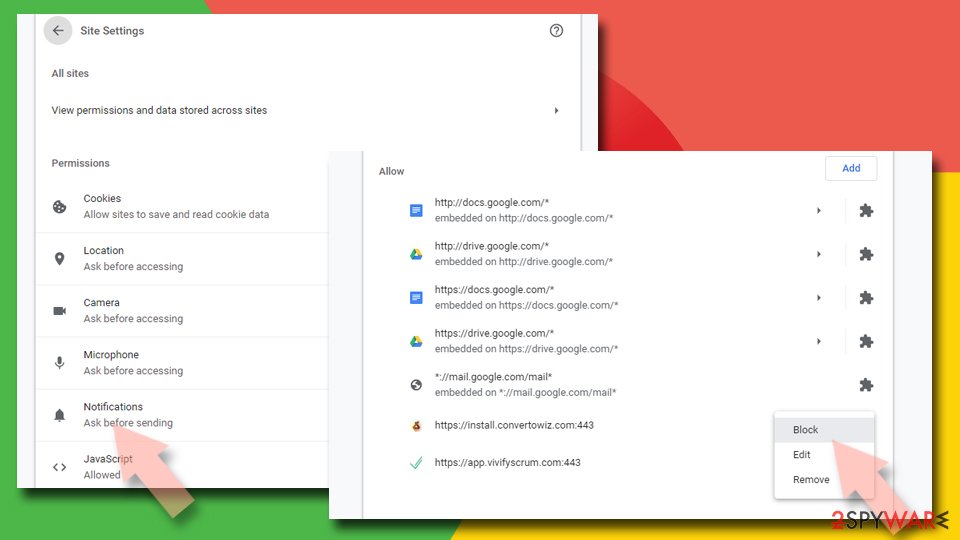
- Open the Google Chrome browser and go to Menu > Settings.
- Scroll down and click on Advanced.
- Locate the Privacy and security section and pick Site Settings > Notifications.
- Look at the Allow section and look for a suspicious URL.
- Click the three vertical dots next to it and pick Block. This should remove unwanted notifications from Google Chrome.

Google Chrome (Android)
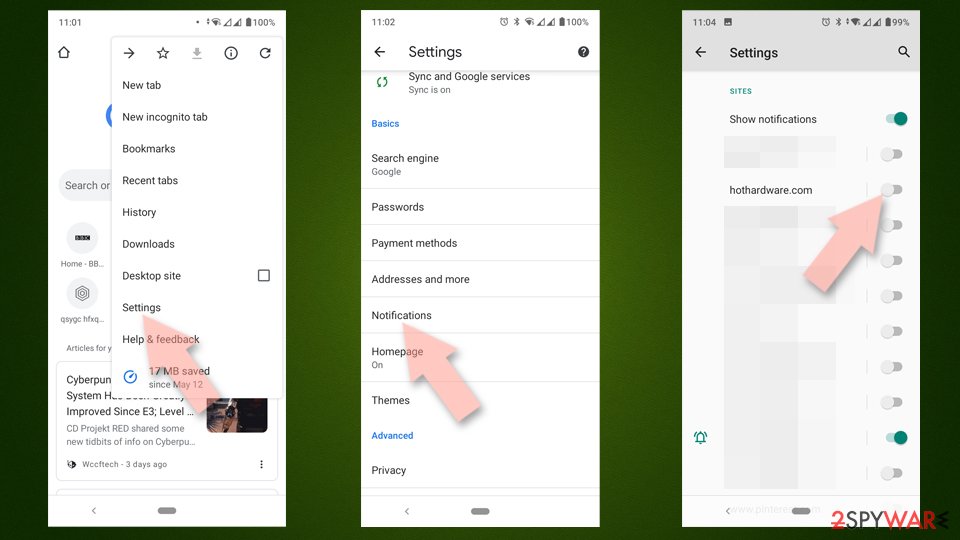
- Open Google Chrome and tap on Settings (three vertical dots).
- Select Notifications.
- Scroll down to the Sites section.
- Locate the unwanted URL and toggle the button to the left (Off position).

Mozilla Firefox
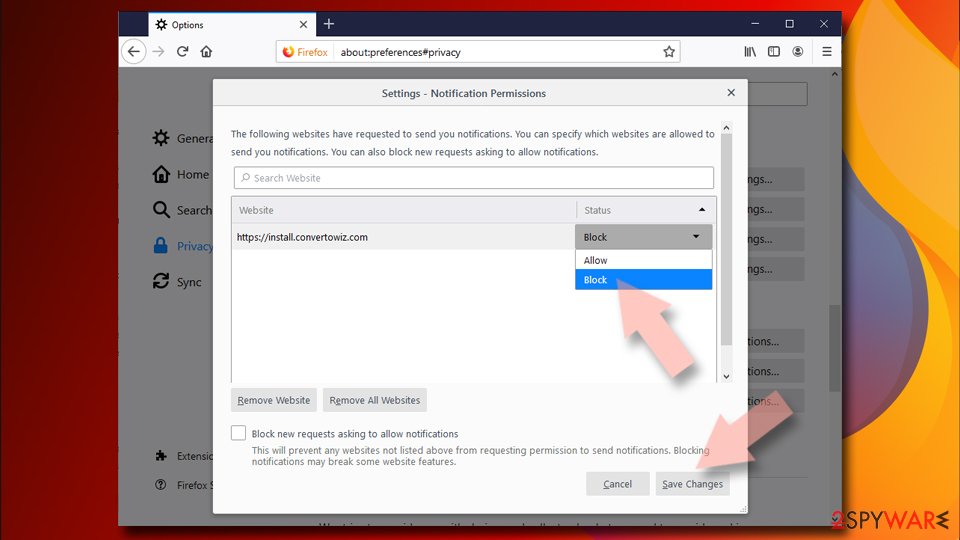
- Open Mozilla Firefox and go to Menu > Options.
- Click on Privacy & Security section.
- Under Permissions, you should be able to see Notifications. Click the Settings button next to it.
- In the Settings – Notification Permissions window, click on the drop-down menu by the URL in question.
- Select Block and then click on Save Changes. This should remove unwanted notifications from Mozilla Firefox.

Safari
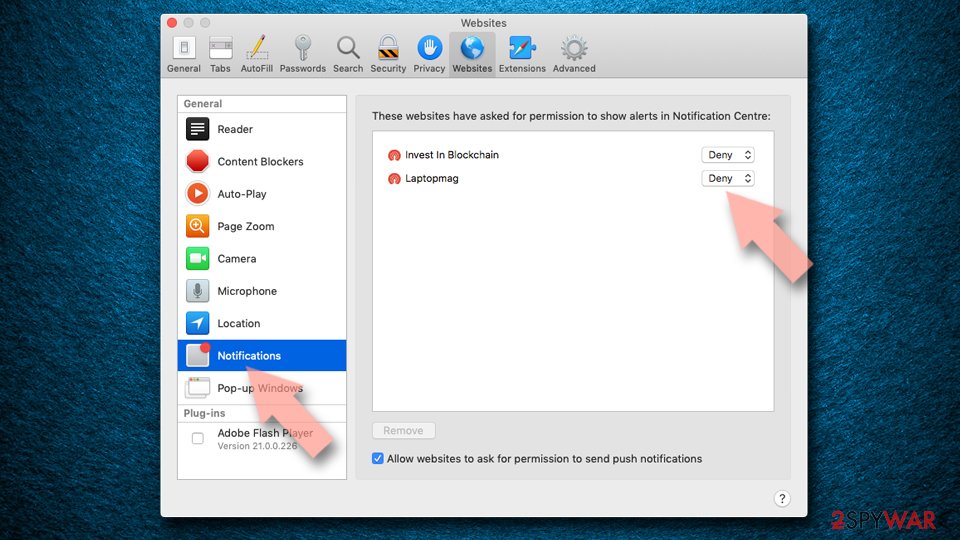
- Click on Safari > Preferences…
- Go to the Websites tab and, under General, select Notifications.
- Select the web address in question, click the drop-down menu and select Deny.

MS Edge
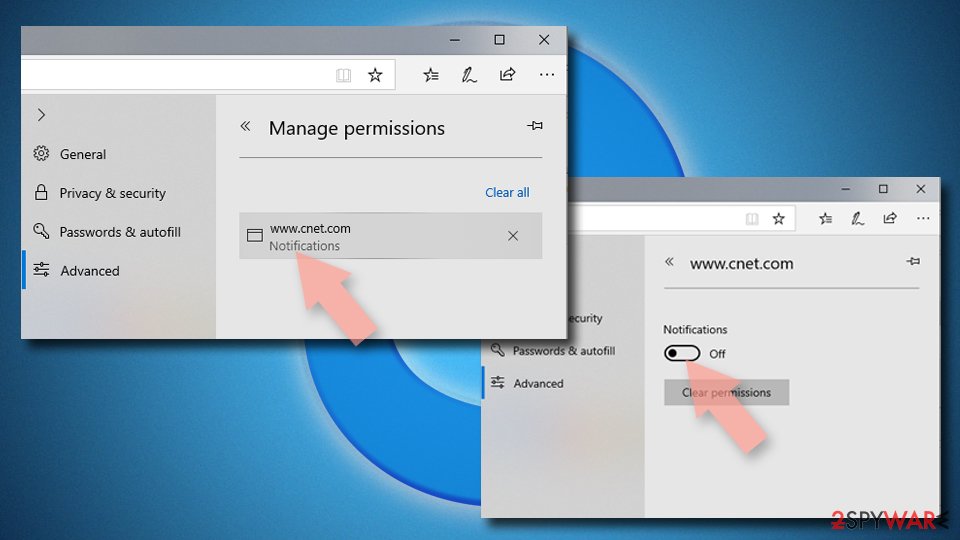
- Open Microsoft Edge, and click the Settings and more button (three horizontal dots) at the top-right of the window.
- Select Settings and then go to Advanced.
- Under Website permissions, pick Manage permissions and select the URL in question.
- Toggle the switch to the left to turn notifications off on Microsoft Edge.

MS Edge (Chromium)
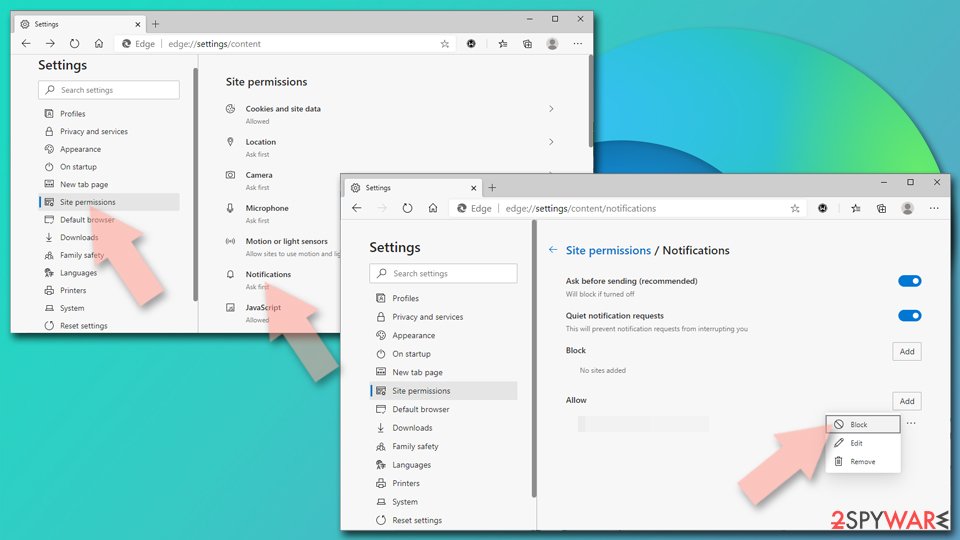
- Open Microsoft Edge, and go to Settings.
- Select Site permissions.
- Go to Notifications on the right.
- Under Allow, you will find the unwanted entry.
- Click on More actions and select Block.

Internet Explorer
- Open Internet Explorer, and click on the Gear icon at the top-right of the window.
- Select Internet options and go to the Privacy tab.
- In the Pop-up Blocker section, click on Settings.
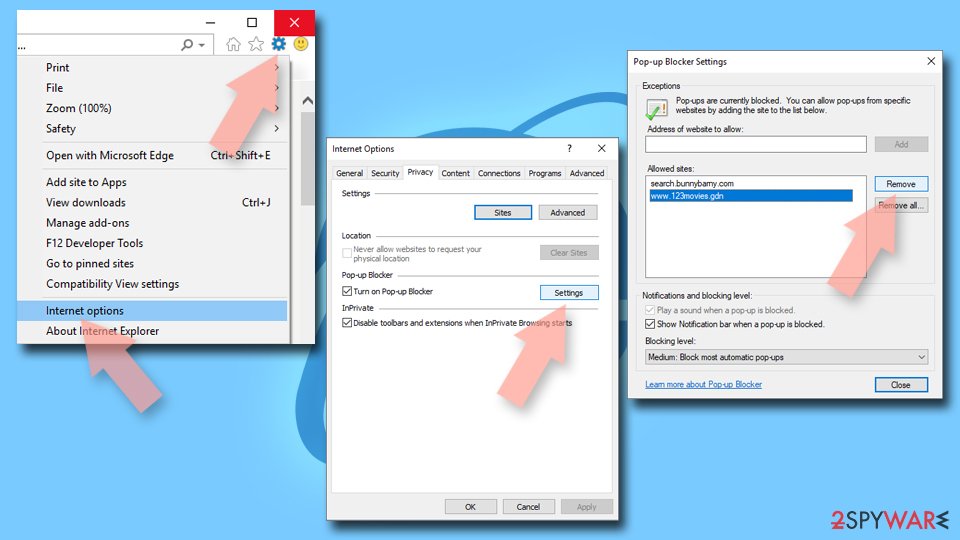
- Locate the web address in question under Allowed sites and pick Remove.

Did this guide help?
Be the first to comment