

News-xoputo.cc – a misleading website using scam messages to make people subscribe to push notifications

News-xoputo.cc might show up while you're visiting other sites that may not be completely trustworthy, such as peer-to-peer networks, adult websites, or software crack distribution sites. In some cases, people end up on this site because they have adware[1] running in the background of their devices without them knowing it. This type of software is known for rerouting online traffic to unsafe places and exposing users to phishing material.
News-xoputo.cc employs misleading messages in order to deceive visitors into thinking they need to confirm they are not robots. The scammer's primary objective is to make individuals believe that the “Allow” button within the notification prompt has a different function than what it is actually for, which permits the site to deliver notifications at any time.
Those who do what they are told wouldn't immediately notice anything different. Only sometime later would they see suspicious pop-ups showing up on their desktops, which would include phishing content and malicious links. By clicking on any of these links, you could install malware onto your system without knowing, give away personal information, or waste money needlessly.
| Name | News-xoputo.cc |
| Type | Push notifications, ads, pop-ups, scam |
| Distribution | The website can begin to show ads at any point after the “Allow” button within the notification prompt is clicked |
| Symptoms | Push notifications show on the desktop at random time intervals. These pop-ups show fake notices and push scams. Links can also lead to malware-laden sites |
| Dangers | If you click on links provided by the website, you might end up infecting your system with malware/PUPs, disclosing your personal information to cybercriminals, or losing money for useless services |
| Removal | You can disable the push notifications from any website via browser settings. Scanning the system with SpyHunterCombo Cleaner can also ensure that it's clean and secure |
| Other tips | After the removal of PUPs and malware, we recommend scanning the system with FortectIntego to clean browser caches and fix virus damage automatically |
How does the scam work, and what red flags to look out for
It is crucial to understand that people would never go out of their way to visit websites that might endanger them or serve no purpose. This is something scammers are well-aware of, which means they have found ways to get people onto their fraudulent sites – usually by taking advantage of rogue advertising networks and luring users from malicious websites.
There are many ways users may get redirected to News-xoputo.cc, but one of the most common is by clicking links on high-risk websites. Likewise, there could be scripts that automatically initiate a redirect without user input.[2] In some other cases, adware might also be the culprit for this unexpected browser behavior
People often make more errors when they are presented with a fraud message since they did not expect it. These are some of the typical short phrases one might find on a fraudulent website:
- Click Allow to confirm that you are not a robot.
- If you are 18+, click Allow.
- Your file is ready to download. Press Allow to continue.
- Just one more step! “Allow” to continue.
- Click “Allow” to win a prize and it in our shop!

The first two messages attempt to imitate legitimate verification processes that users have previously encountered on legitimate websites. For example, captcha verifications that have been frowned upon by users for many years are pretty ingrained in their minds, so it is not difficult to see how one would see this request as a routine one. In other cases, people are promised some kind of reward, like an alleged prize or that they would be able to watch a video.
Both of these cases are inaccurate and not true. Social engineering[3] tricks are commonly used on websites like News-xoputo.cc, Salletsilvully.com, Emyresumef.hair, Fynservice.com, and many others, and you should be wary of them not to get fooled by them. If you have been, there is nothing to worry about, as long as you don't click promoted links.
Deal with adware first
It's not uncommon for users to be directed to phishing sites after being redirected from other locations. Adware, which is a type of potentially unwanted program, can also be the reason why people see numerous advertisements and are frequently sent to suspicious websites. To make matters worse, PUPs are being distributed in freeware bundles or through similar deceptive methods – they prevent some people from knowing they have it installed on their computers at all.
In order to protect your device, we recommend using effective anti-malware software, such as MalwarebytesMalwarebytes or SpyHunterCombo Cleaner. Before scanning for malware, please make sure that the app is running with its most recent definitions; this can be accomplished by ensuring it updates regularly. Once all malware is cleared from your system, we advise also utilizing FortectIntego to clean browsers of cookies and other trackers; this will additionally fix any damage that could have occurred due to the infection.
Stop the intrusive News-xoputo.cc push notifications
As mentioned, you shouldn't be too worried if you have allowed push notifications from a rather questionable website, as this is easily reversible. All you have to do is access your browser settings, find the correct URL, and block it via the site settings menu. Pick the correct browser instructions and follow them.
Google Chrome
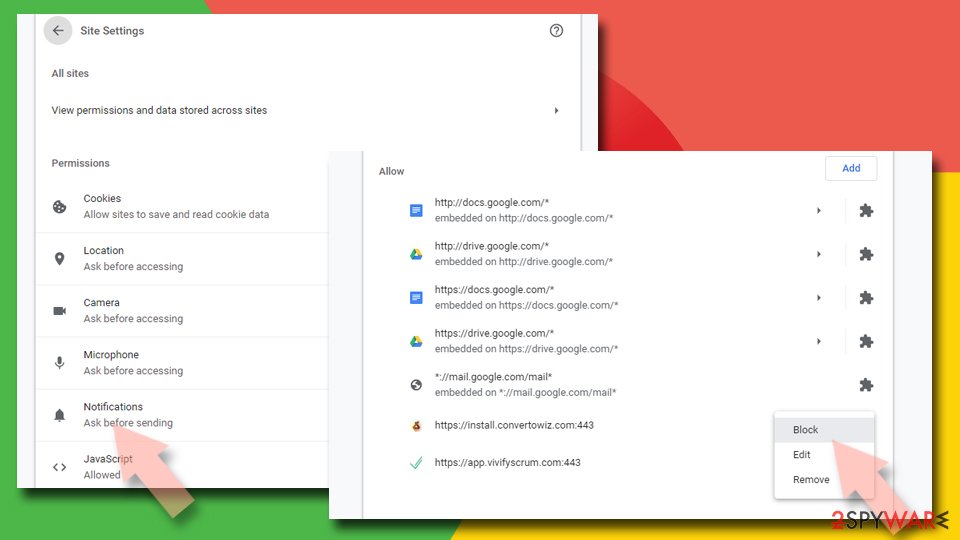
- Open the Google Chrome browser and go to Menu > Settings.
- Scroll down and click on Advanced.
- Locate the Privacy and security section and pick Site Settings > Notifications.
- Look at the Allow section and look for a suspicious URL.
- Click the three vertical dots next to it and pick Block. This should remove unwanted notifications from Google Chrome.

Google Chrome (Android)
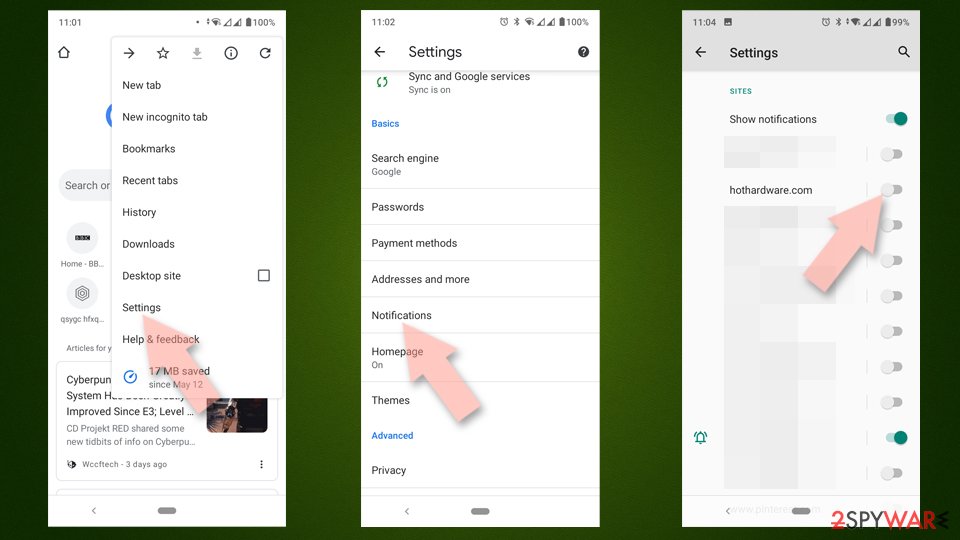
- Open Google Chrome and tap on Settings (three vertical dots).
- Select Notifications.
- Scroll down to the Sites section.
- Locate the unwanted URL and toggle the button to the left (Off position).

Mozilla Firefox
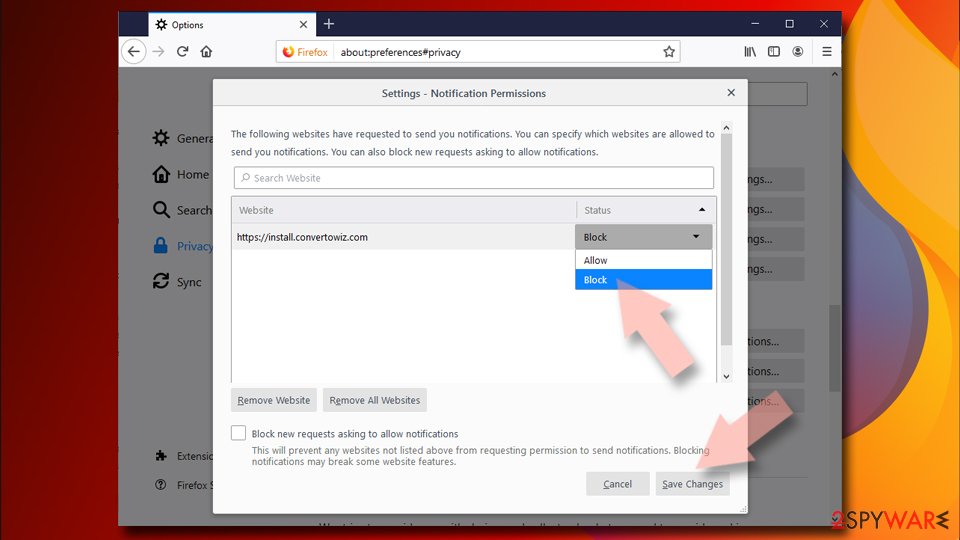
- Open Mozilla Firefox and go to Menu > Options.
- Click on Privacy & Security section.
- Under Permissions, you should be able to see Notifications. Click the Settings button next to it.
- In the Settings – Notification Permissions window, click on the drop-down menu by the URL in question.
- Select Block and then click on Save Changes. This should remove unwanted notifications from Mozilla Firefox.

Safari
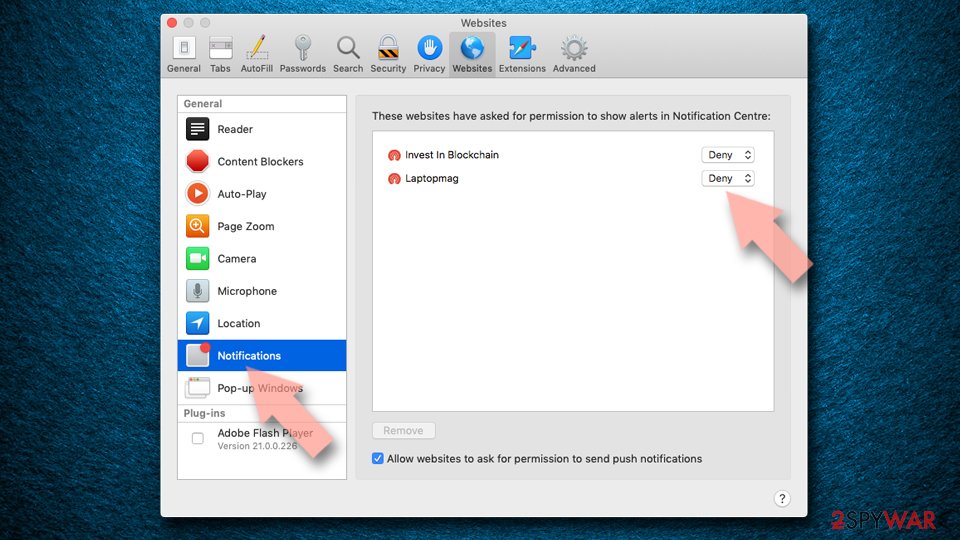
- Click on Safari > Preferences…
- Go to the Websites tab and, under General, select Notifications.
- Select the web address in question, click the drop-down menu and select Deny.

MS Edge
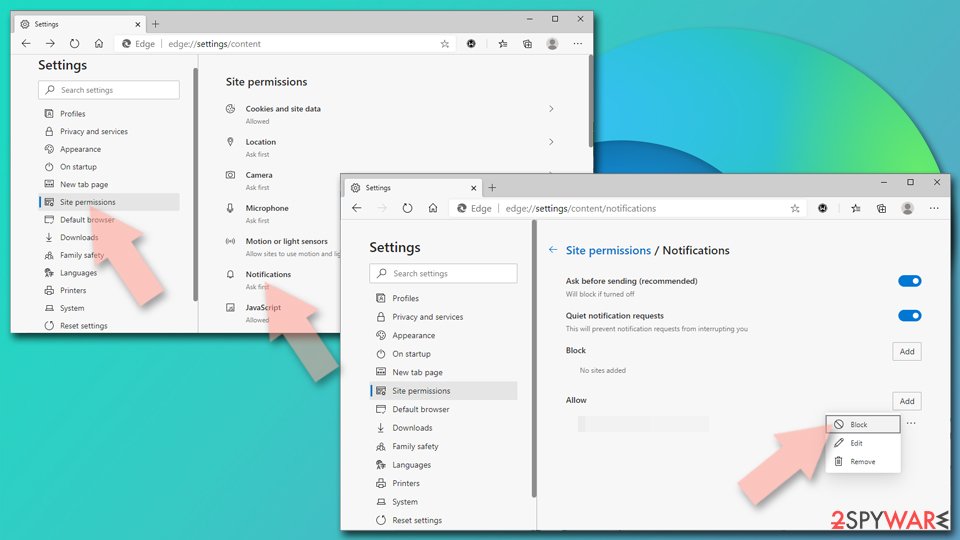
- Open Microsoft Edge, and go to Settings.
- Select Site permissions.
- Go to Notifications on the right.
- Under Allow, you will find the unwanted entry.
- Click on More actions and select Block.

Internet Explorer
- Open Internet Explorer, and click on the Gear icon at the top-right of the window.
- Select Internet options and go to the Privacy tab.
- In the Pop-up Blocker section, click on Settings.
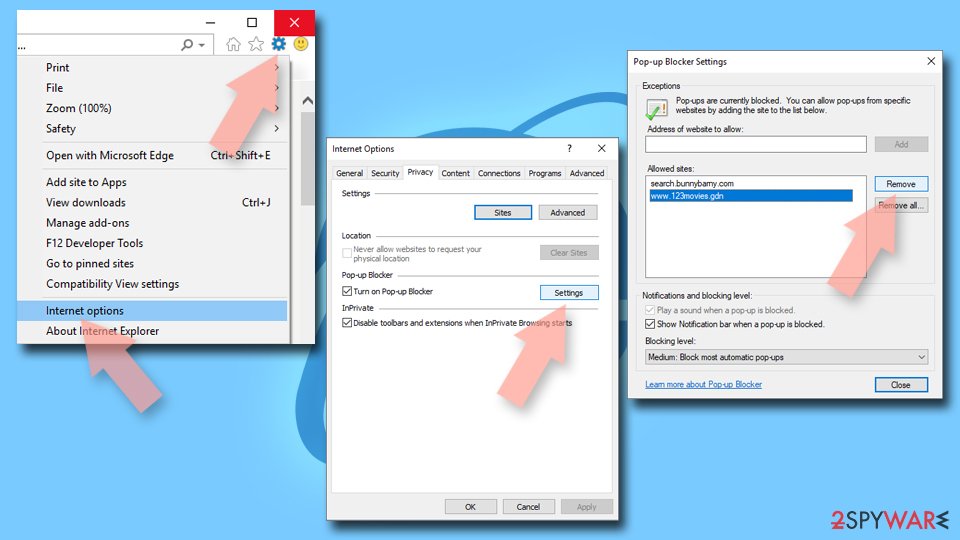
- Locate the web address in question under Allowed sites and pick Remove.

Did this guide help?
Be the first to comment