

News-veliyi.cc is the unwanted application that triggers issues with the speed and internet browsing experience

News-veliyi.cc is a type of malware that can be very dangerous for your Windows PC. Even though it is not considered a typical computer virus, it can still cause serious cyber crimes on a compromised PC. It attacks and hijacks all known web browsers running on a compromised PC, such as Mozilla, Chrome, Edge, Internet Explorer, Safari, and so on. This vicious malware is responsible for the unusual and irritating behaviors of your web browsers and diminished experience on the internet.
This malware is usually spread through malicious websites or freeware platforms.[1] Once it infects your PC, it will start to hijack your web browser and redirect you to other malicious websites. It can also display various pop-up ads and notifications that are designed to trick you into clicking on them.
If you do click on these ads or notifications, you may download more malware onto your PC or even give away personal information such as your credit card number. The site encourages people to allow notifications and content from other sites and advertising platforms.
News-veliyi.cc is a serious threat to your computer and should be removed as soon as possible. If you have this malware on your PC, you should use a reputable anti-malware program to remove it and protect your computer from future infections. This is the best way to stop unwanted behavior.
Details on the adware
| Name | News-veliyi.cc |
|---|---|
| Type | Adware, push notifications virus |
| Category | Potentially unwanted program |
| Serving IP | 149.7.16.209 |
| Issues | The program causes intrusive ads and redirects showing potentially dangerous information and leading to malware pages |
| Distribution | Freeware application installations, deceptive pages, other apps |
| Removal | Removing the threat can improve the performance, so use AV tools for that |
| Repair | Run FortectIntego and repair corrupted files on the system |
News-veliyi.cc is a site that uses false promises to get you to subscribe to its push notifications. Once you've subscribed, they spam your desktop or phone with notifications. If you're not careful, you might accidentally click on the “Allow” button when prompted by the page, thinking that you're simply allowing the site to show normal notifications.
However, what you're actually doing is giving News-veliyi.cc permission to spam your device with unwanted notifications. Even if you later try to block the site's notifications, they may continue to appear unless you also unsubscribe from them. This is a site that displays fake messages in order to trick you into subscribing to its spam push notifications too.
If you do subscribe, you will start seeing spam pop-ups on your desktop or phone, even if the browser is closed. These ads can be for adult sites, online web games, fake software updates, and unwanted programs. Any system errors or security alerts delivered randomly should be ignored. Note, that software providers do not send these out on the browser.

Stopping the PUP behavior
If you see a message from News-veliyi.cc, do not click on it or subscribe to the notifications. This will only result in more spam ads appearing on your device. Instead, simply ignore the message and move on. If you are already subscribed, you can unsubscribe by following the instructions below to block these notifications and ads.
Ads are appearing in unexpected places. Your web browser's homepage has changed without your permission. Web pages that you typically visit are not displaying properly. Links to websites are redirecting to different sites than what you expected. Browser pop-ups are appearing which recommend fake updates or other software. Other unwanted programs might get installed without your knowledge. These are all symptoms of PUP.
So be careful when visiting News-veliyi.cc, and make sure not to accidentally subscribe to its notification spam! Experts[2] note that you need to double-check to be sure the PUP is terminated. If you already interacted with those sites, try to block those advertisements properly:
Remove unwanted notifications from Google Chrome (desktop):
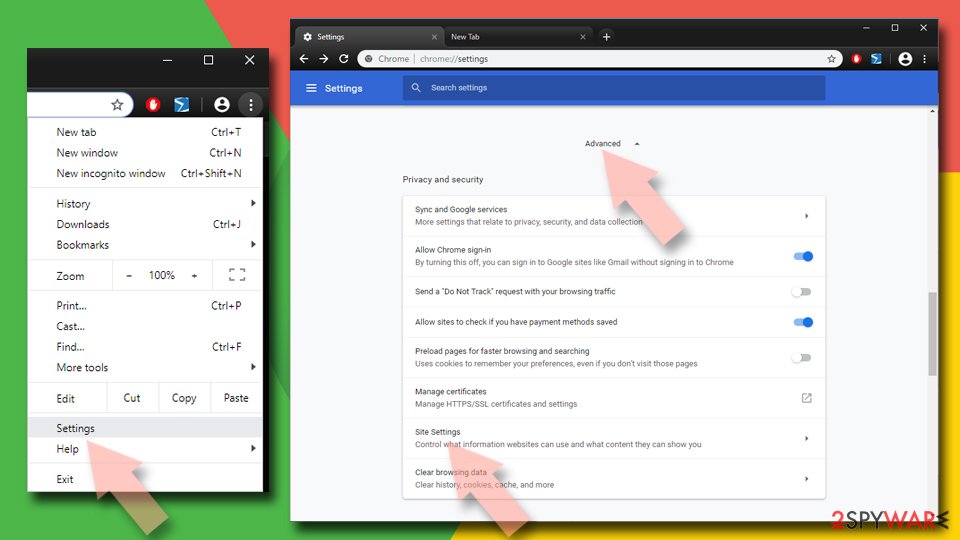
- Open Google Chrome browser and go to Menu > Settings.
- Scroll down and click on Advanced.
- Locate Privacy and security section and pick Site Settings > Notifications.
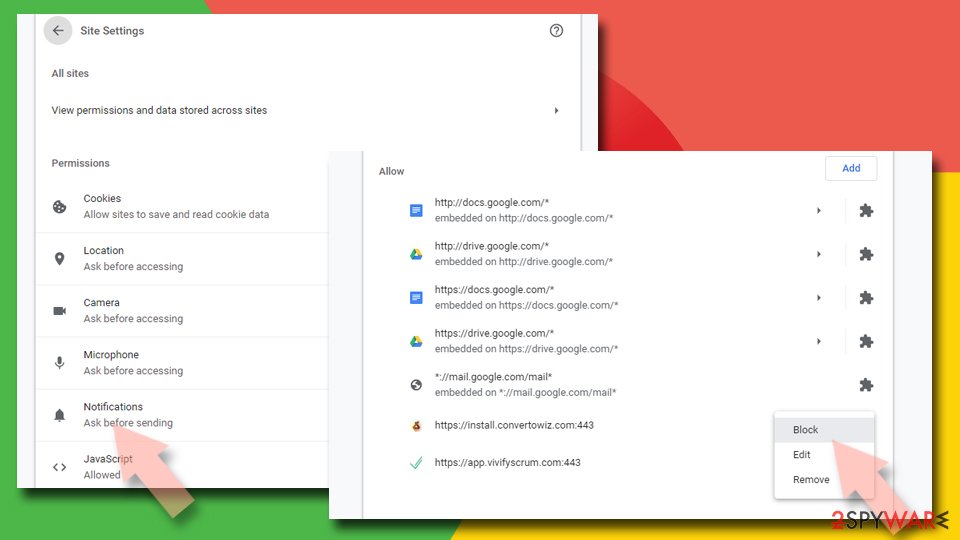
- Look at the Allow section and look for a suspicious URL.
- Click the three vertical dots next to it and pick Block. This should remove unwanted notifications from Google Chrome.


Remove unwanted notifications from Google Chrome (Android):
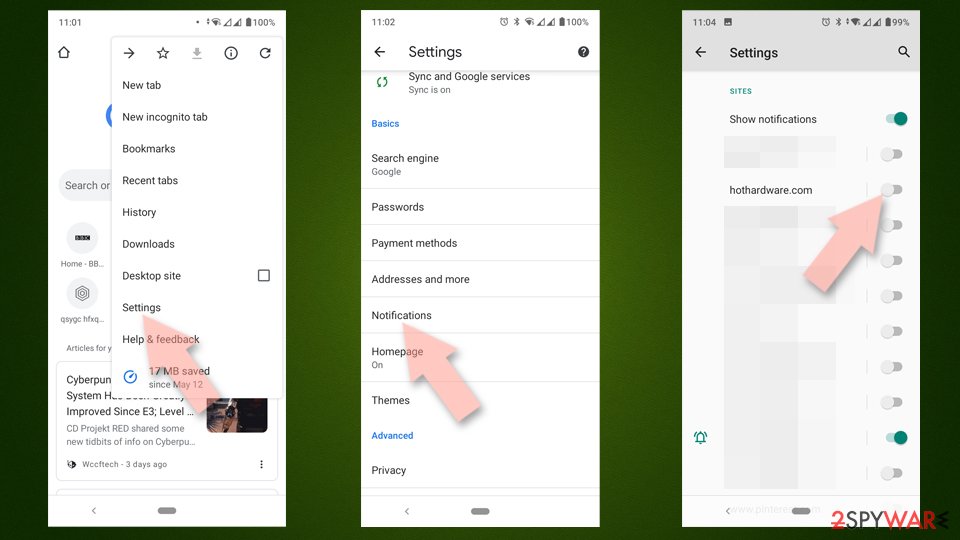
- Open Google Chrome and tap on Settings (three vertical dots).
- Select Notifications.
- Scroll down to the Sites section.
- Locate the unwanted URL and toggle the button to the left (Off setting).

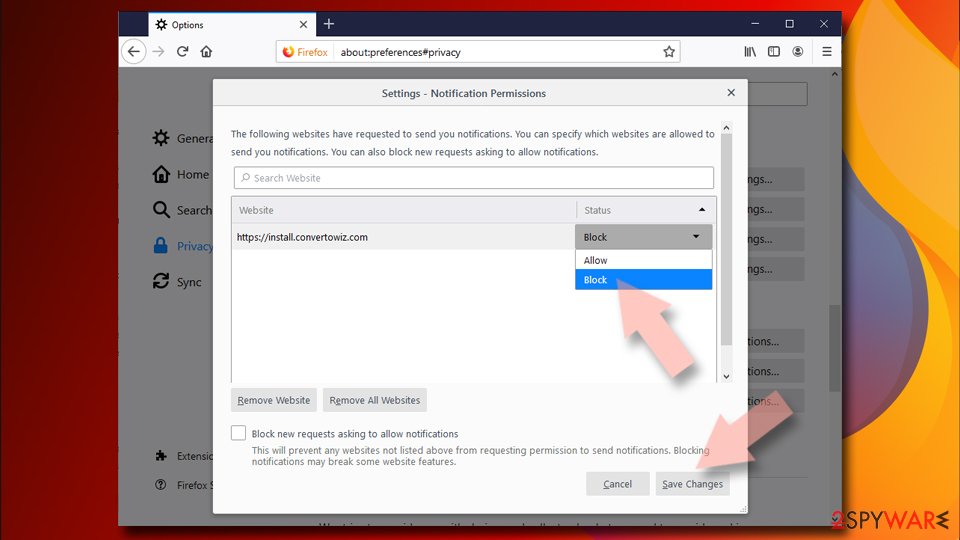
Remove unwanted notifications from Mozilla Firefox:
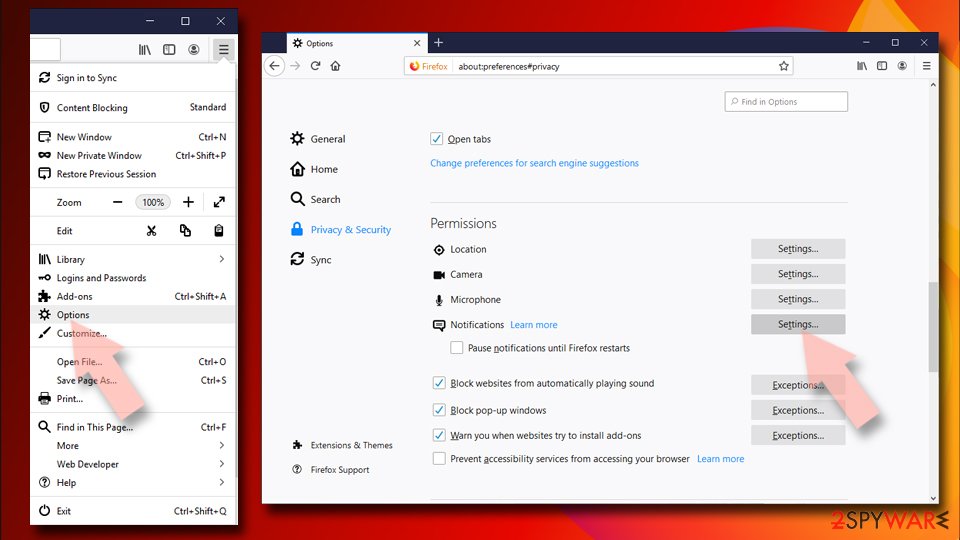
- Open Mozilla Firefox and go to Menu > Options.
- Click on Privacy & Security section.
- Under Permissions, you should be able to see Notifications. Click the Settings button next to it.
- In the Settings – Notification Permissions window, click on the drop-down menu by the URL in question.
- Select Block and then click on Save Changes. This should remove unwanted notifications from Mozilla Firefox.


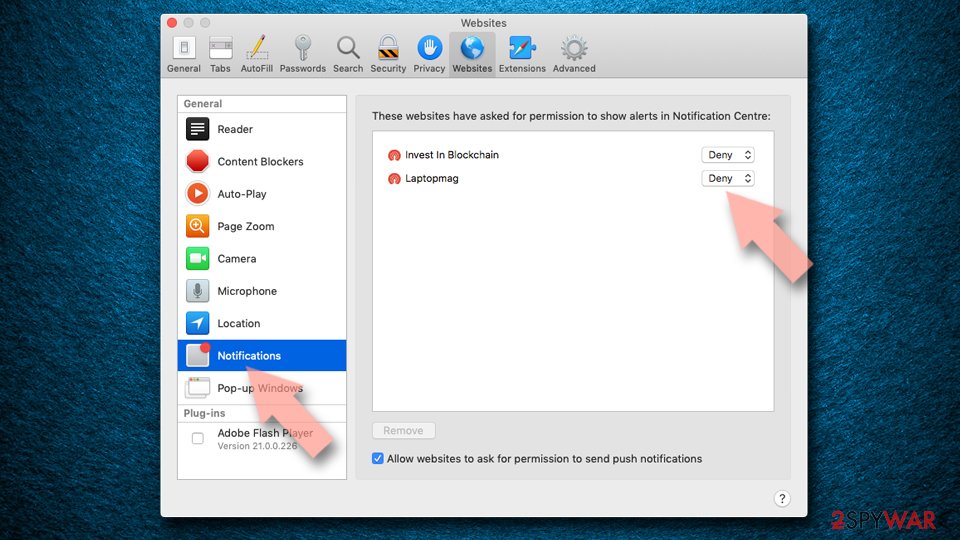
Remove unwanted notifications from Safari:
- Click on Safari > Preferences…
- Go to the Websites tab and, under General, select Notifications.
- Select the web address in question, click the drop-down menu and select Deny.

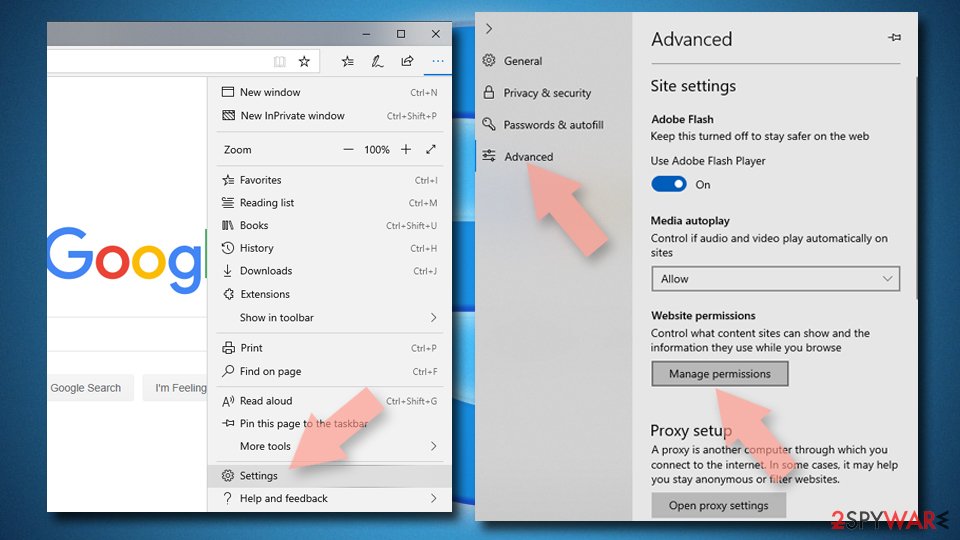
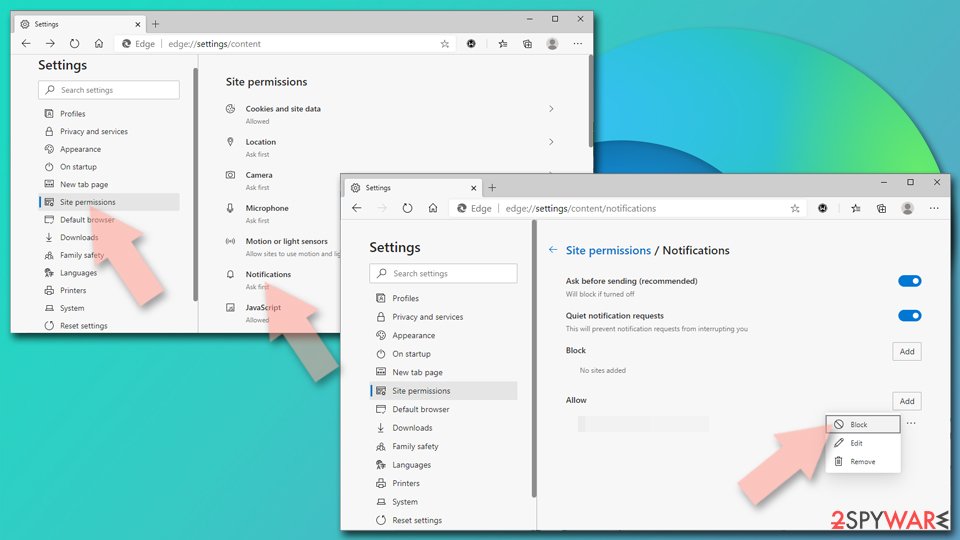
Remove unwanted notifications from MS Edge:
- Open Microsoft Edge, and click the Settings and more button (three horizontal dots) at the top-right of the window.
- Select Settings and then go to Advanced.
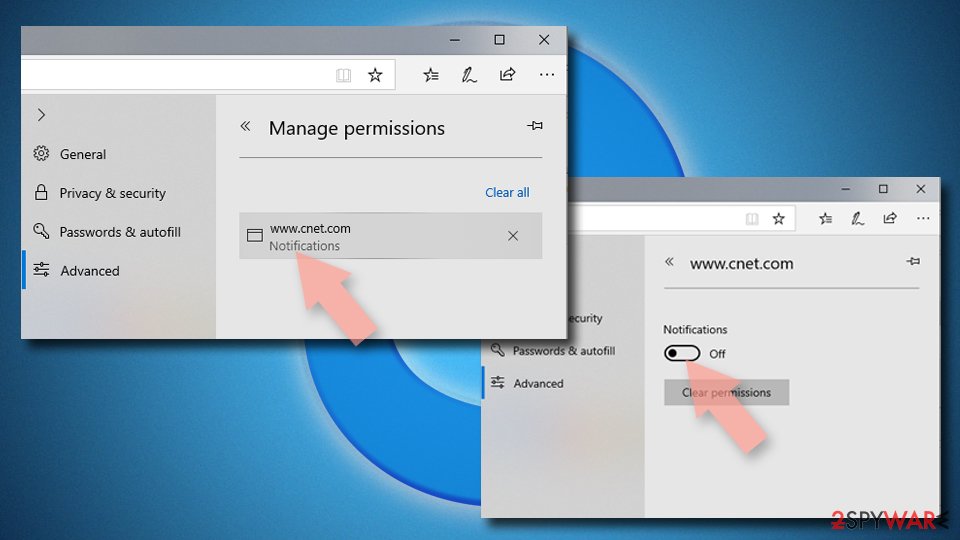
- Under Website permissions, pick Manage permissions and select the URL in question.
- Toggle the switch to the left to turn notifications off on Microsoft Edge.


Remove unwanted notifications from MS Edge (Chromium):
- Open Microsoft Edge, and go to Settings.
- Select Site permissions.
- Go to Notifications on the right.
- Under Allow, you will find the unwanted entry.
- Click on More actions and select Block.

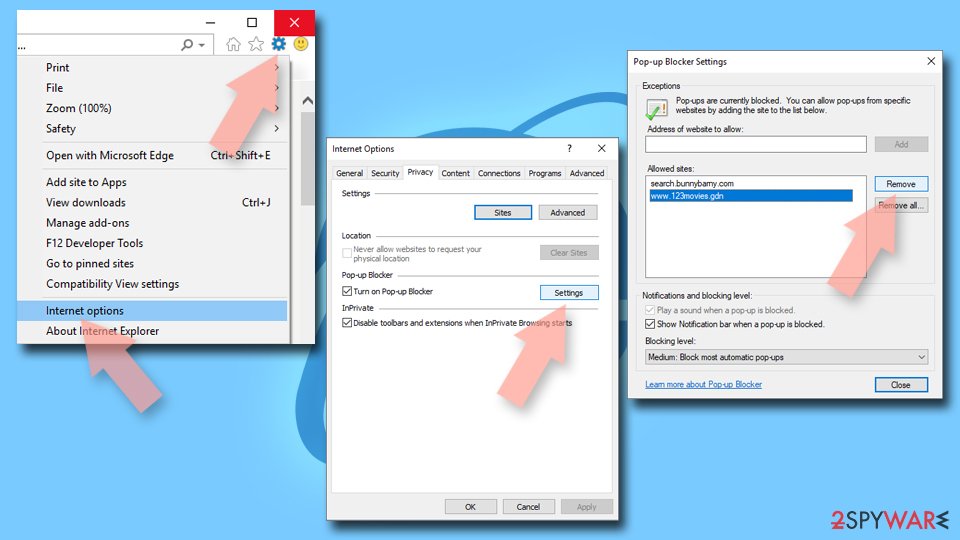
Remove unwanted notifications from Internet Explorer:
- Open Internet Explorer, and click on the Gear icon at the top-right of the window.
- Select Internet options and go to the Privacy tab.
- In the Pop-up Blocker section, click on Settings.
- Locate web address in question under Allowed sites and pick Remove.

The issue with commonly spread threats
Most PUAs can track information about their clients, including browsing activity, IP addresses, pages visited, searches, and other data.[3] This raises serious security concerns, as well as the potential for financial losses and fraud. Therefore, it is important to remove all potentially unwanted programs from your device as soon as possible.
These spreading ways used to distribute browser-based applications and other threats can be used by various apps and malware. Even though this app is not considered a virus does not mean that the content delivered via intrusive News-veliyi.cc ads and push notifications cannot be malicious or potentially dangerous.
An infection like this can lead to problems with the security of the machine and exposure to malicious material online. Potentially unwanted programs can inject other programs and files into the system. The longer you allow the browser-bed threat to run, the more issues get caused by those notifications and News-veliyi.cc ads, so make sure to remove the adware properly from the system.
Uninstall from Windows
Uninstall from Windows 10/8:
- Type Control Panel into the Windows search box and open the result.
- Under Programs, select Uninstall a program.


Uninstall from Windows 7/XP:
- Click on Windows Start > Control Panel (Windows XP users should click on Add/Remove Programs).
- In Control Panel, select Programs > Uninstall a program.


Remove the unwanted program:
- In the Programs and Features window, look for any recently installed suspicious entries, select them, and click Uninstall.
- If User Account Control appears, click Yes to confirm, then complete the removal.


Delete from macOS
Remove the unwanted application:
- From the menu bar, select Go > Applications.
- In the Applications folder, look for any suspicious entries, then drag them to Trash (or right-click and pick Move to Trash).


Delete leftover files and folders:
- Select Go > Go to Folder.
- Enter /Library/Application Support and remove any suspicious folders related to the unwanted program.
- Repeat the same check in the /Library/LaunchAgents and /Library/LaunchDaemons folders, deleting any suspicious entries.

- Finally, empty the Trash to permanently remove the leftovers.

Remove from Microsoft Edge
Delete unwanted extensions from MS Edge:
- Select Menu (three horizontal dots at the top-right of the browser window) and pick Extensions.
- From the list, pick the extension and click on the Gear icon.
- Click Remove.


Clear cookies and other browser data:
- Click on the Menu (three horizontal dots at the top-right of the browser window) and select Settings > Privacy, search, and services..
- Under Clear browsing data, pick Choose what to clear.
- Select Cookies and other site data and Cached images and files. (apart from passwords, although you might want to include Media licenses as well, if applicable) and click on Clear.


Restore new tab and homepage settings:
- Click the menu icon and choose Settings.
- Then find On startup section.
- Click Remove next to any suspicious startup page.
Reset MS Edge if the above steps did not work:
- Press on Ctrl + Shift + Esc to open Task Manager.
- Click on More details arrow at the bottom of the window.
- Select Details tab.
- Now scroll down and locate every entry with Microsoft Edge name in it. Right-click on each of them and select End Task to stop MS Edge from running.


Instructions for Chromium-based Edge
Delete extensions from MS Edge (Chromium):
- Open Edge and click select Settings > Extensions.
- Delete unwanted extensions by clicking Remove.


Clear cache and site data:
- Click on Menu and go to Settings.
- Select Privacy, search and services.
- Under Clear browsing data, pick Choose what to clear.
- Under Time range, pick All time.
- Select Clear now.


Reset Chromium-based MS Edge:
- Click on Menu and select Settings.
- On the left side, pick Reset settings.
- Select Restore settings to their default values.
- Confirm with Reset.
- This will disable extensions and reset startup pages but will not delete bookmarks, saved passwords, or browsing history.


Remove from Mozilla Firefox (FF)
Remove dangerous extensions:
- Open Mozilla Firefox browser and click on the Menu (three horizontal lines at the top-right of the window).
- Select Add-ons.
- In here, select the unwanted extension and click Remove.


Reset the homepage:
- Click three horizontal lines at the top right corner to open the menu.
- Choose Settings.
- Under Home, set your preferred homepage and new tab settings.
Clear cookies and site data:
- Click Menu and pick Settings.
- Go to Privacy & Security section.
- Scroll down to locate Cookies and Site Data.
- Click on Clear Data...
- Select Cookies and Site Data and Temporary cached files and pages, then click Clear.


Reset Mozilla Firefox
If clearing the browser as explained above did not help, reset Mozilla Firefox:
- Open Mozilla Firefox browser and click the Menu.
- Go to Help and then choose Troubleshooting Information.

- Under Give Firefox a tune up section, click on Refresh Firefox...
- Once the pop-up shows up, confirm the action by pressing on Refresh Firefox.



Remove from Google Chrome
Delete malicious extensions from Google Chrome:
- Open Google Chrome, click on the Menu (three vertical dots at the top-right corner) and select More tools > Extensions.
- In the newly opened window, you will see all the installed extensions. Uninstall all suspicious extensions related to the unwanted program by clicking Remove.


Clear cache and web data from Chrome:
- Click on Menu and pick Settings.
- Under Privacy and security, select Clear browsing data.
- Select Browsing history, Cookies and other site data, as well as Cached images and files.
- Click Clear data.


Change your homepage:
- Click menu and choose Settings.
- Look for a suspicious site in the On startup section.
- Click on Open a specific or set of pages and click on three dots to find the Remove option.
Reset Google Chrome:
If the previous methods did not help you, reset Google Chrome to eliminate all the unwanted components:
- Click on Menu and select Settings.
- In the Settings, scroll down and click Advanced.
- Scroll down and locate Reset and clean up section.
- Now click Restore settings to their original defaults.
- Confirm with Reset settings.


Delete from Safari
Remove dangerous extensions:
- Open Safari, click Safari in the menu at the top-left of the screen, and select Preferences.
- Go to the Extensions tab, look for any suspicious entries, and click Uninstall to remove them.


Clear history and website data:
- Click Safari in the menu and pick Clear History.
- Set Clear to all history and confirm with Clear History.


Reset Safari:
- Click Safari in the menu and select Preferences > Advanced.
- Enable Show Develop menu in menu bar.
- From the menu bar, click Develop and select Empty Caches.


Did this guide help?
Be the first to comment