

ManagerUpdater mac virus is the advertising-supported application that triggers unwanted ads
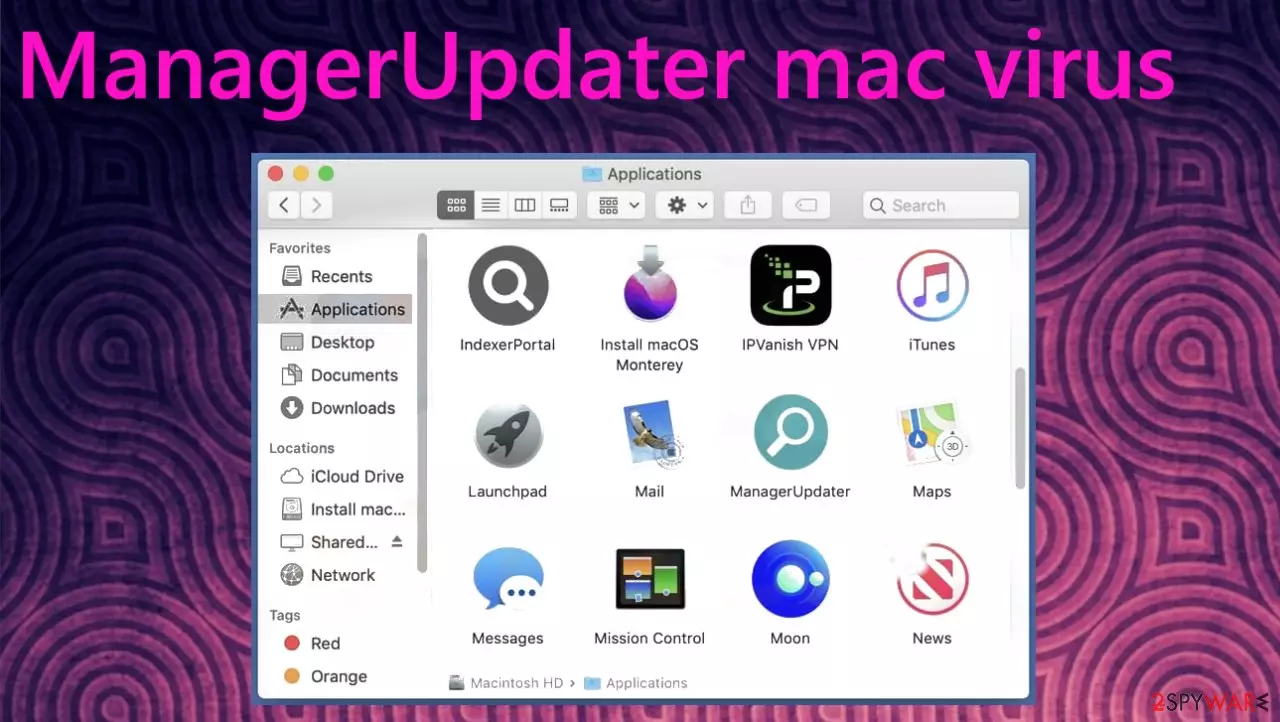
ManagerUpdater mac adware is a program focused on generating advertisements and redirects. The infection is the program that affects macOs devices and pushes downloads and installs of other programs and adware-type infections on the machine behind users' backs.
ManagerUpdater mac virus is the program that shows annoying pop-ups and banners, coupons, surveys, and clickbait commercial content. These programs are focused on opening pages with promotions and pushing downloads and installations of useless applications.
The infection that is designed to lure visitors into agreeing to receive notifications can trigger exposure to other rogue sites and even scam pages.[1] ManagerUpdater mac virus existence can indicate that threats affecting macOS devices are real, regardless of myths circulating among users.
Experts[2] always recommend avoiding rogue sites and suspicious platforms that promote installations of programs, can promote various useless tools, and cause unwanted downloads or injections of PUPs. The threat can be installed after visiting these free download platforms or installing unsafe programs from the web, so remove useless ManagerUpdater mac virus as soon as possible.
Adware summary
| Name | ManagerUpdater |
|---|---|
| Type | Mac virus, redirect, adware |
| Category | Potentially unwanted program |
| Issues | The threat shows various advertisements and makes the machine run slow, affecting security with insecure redirects to dubious pages |
| Distribution | Freeware applications, other threats, deceptive content, fake Flash Player updates |
| Family | Adload |
| Removal | Threats can be removed with AV tools |
| Repair | An infection like this can affect the performance and security of the OS, so run FortectIntego to remove all leftovers |
ManagerUpdater mac virus is a typical adware program even though it is spreading on particular macOS devices. The threat is designed to fill up the screen with ads generated by third-party commercial content creators. The threat causes various redirects and injections of browser-based apps, so the behavior of the machine gets affected.
Removal of the infection
ManagerUpdater mac virus is the one that runs in the background and can trigger other processes to cause redirects, additional notification spam, browser slowness, and advertising campaigns that interfere with the performance and security of the machine. You need to stop the PUP itself to stop the behavior.
Terminating a threat like this can involve major changes within the system. However, altering settings might e difficult, so you can remove the ManagerUpdater mac virus automatically by running the anti-malware tools with proper detection[3] functionalities.

Tools like SpyHunterCombo Cleaner or MalwarebytesMalwarebytes can be launched, and the threat properly removed if indicated as a dangerous program or a possibly malicious piece affecting the security of the computer. the infection might run additional processes to keep the persistence up, so these automatic tools are helpful for the ManagerUpdater mac virus termination.
These ad-supported sites can show advertisements and then read sensitive information like passwords, search queries, online habits, credit card details, phone numbers, location details, and other data while users get exposed to commercial content via these redirects. Make sure to stop the unwanted behavior by terminating the intrusive ManagerUpdater mac virus.
Remove items from Applications folder:
- From the menu bar, select Go > Applications.
- In the Applications folder, look for all related entries.
- Click on the app and drag it to Trash (or right-click and pick Move to Trash)


To fully remove an unwanted app, you need to access Application Support, LaunchAgents, and LaunchDaemons folders and delete relevant files:
- Select Go > Go to Folder.
- Enter /Library/Application Support and click Go or press Enter.
- In the Application Support folder, look for any dubious entries and then delete them.
- Now enter /Library/LaunchAgents and /Library/LaunchDaemons folders the same way and terminate all the related .plist files.


Major problems with harmless-looking PUPs
ManagerUpdater mac virus and third-party advertisers all can show untrustworthy advertisements and generate certain scripts that cause unwanted downloads. The program is used to obtain various data about users online, and those details later get used by advertisers for malicious purposes.
The program might not be as malicious as other malware and not as dangerous, but the existence of the PUA creates more risks of getting proper malware injected into the system. Even the potentially unwanted ManagerUpdater mac adware can expose people to malicious online content.
Your identity, privacy, and even banking information can be exposed, so fake, fraudulent purchases and transactions can be made in your name. Trust only reliable sites and make sure to avoid adware pages, other developers, and programs that are related to third-party advertisers and malvertising.
ManagerUpdater mac virus is designed to change settings on web browsers, too, so you should check those preferences and even reset applications to keep the machine running smoothly. There is nothing worse than hijacker browsers and injections that show redirects and other commercial content on the screen all the time.
As for the avoidance of this infection, you should always rely on trustworthy pages and platforms that are focused on official sources and never install freeware from torrent sites. Mac OS is not immune to threats, the existence of these viruses shows that. Avoid malware removal and ManagerUpdater mac virus infiltration by paying attention to important details online.
Uninstall from Windows
Uninstall from Windows 10/8:
- Type Control Panel into the Windows search box and open the result.
- Under Programs, select Uninstall a program.


Uninstall from Windows 7/XP:
- Click on Windows Start > Control Panel (Windows XP users should click on Add/Remove Programs).
- In Control Panel, select Programs > Uninstall a program.


Remove the unwanted program:
- In the Programs and Features window, look for any recently installed suspicious entries, select them, and click Uninstall.
- If User Account Control appears, click Yes to confirm, then complete the removal.


Delete from macOS
Remove the unwanted application:
- From the menu bar, select Go > Applications.
- In the Applications folder, look for any suspicious entries, then drag them to Trash (or right-click and pick Move to Trash).
Delete leftover files and folders:
- Select Go > Go to Folder.
- Enter /Library/Application Support and remove any suspicious folders related to the unwanted program.
- Repeat the same check in the /Library/LaunchAgents and /Library/LaunchDaemons folders, deleting any suspicious entries.
- Finally, empty the Trash to permanently remove the leftovers.
Remove from Microsoft Edge
Delete unwanted extensions from MS Edge:
- Select Menu (three horizontal dots at the top-right of the browser window) and pick Extensions.
- From the list, pick the extension and click on the Gear icon.
- Click Remove.


Clear cookies and other browser data:
- Click on the Menu (three horizontal dots at the top-right of the browser window) and select Settings > Privacy, search, and services..
- Under Clear browsing data, pick Choose what to clear.
- Select Cookies and other site data and Cached images and files. (apart from passwords, although you might want to include Media licenses as well, if applicable) and click on Clear.


Restore new tab and homepage settings:
- Click the menu icon and choose Settings.
- Then find On startup section.
- Click Remove next to any suspicious startup page.
Reset MS Edge if the above steps did not work:
- Press on Ctrl + Shift + Esc to open Task Manager.
- Click on More details arrow at the bottom of the window.
- Select Details tab.
- Now scroll down and locate every entry with Microsoft Edge name in it. Right-click on each of them and select End Task to stop MS Edge from running.


Instructions for Chromium-based Edge
Delete extensions from MS Edge (Chromium):
- Open Edge and click select Settings > Extensions.
- Delete unwanted extensions by clicking Remove.


Clear cache and site data:
- Click on Menu and go to Settings.
- Select Privacy, search and services.
- Under Clear browsing data, pick Choose what to clear.
- Under Time range, pick All time.
- Select Clear now.


Reset Chromium-based MS Edge:
- Click on Menu and select Settings.
- On the left side, pick Reset settings.
- Select Restore settings to their default values.
- Confirm with Reset.
- This will disable extensions and reset startup pages but will not delete bookmarks, saved passwords, or browsing history.


Remove from Mozilla Firefox (FF)
Remove dangerous extensions:
- Open Mozilla Firefox browser and click on the Menu (three horizontal lines at the top-right of the window).
- Select Add-ons.
- In here, select the unwanted extension and click Remove.


Reset the homepage:
- Click three horizontal lines at the top right corner to open the menu.
- Choose Settings.
- Under Home, set your preferred homepage and new tab settings.
Clear cookies and site data:
- Click Menu and pick Settings.
- Go to Privacy & Security section.
- Scroll down to locate Cookies and Site Data.
- Click on Clear Data...
- Select Cookies and Site Data and Temporary cached files and pages, then click Clear.


Reset Mozilla Firefox
If clearing the browser as explained above did not help, reset Mozilla Firefox:
- Open Mozilla Firefox browser and click the Menu.
- Go to Help and then choose Troubleshooting Information.

- Under Give Firefox a tune up section, click on Refresh Firefox...
- Once the pop-up shows up, confirm the action by pressing on Refresh Firefox.



Remove from Google Chrome
Delete malicious extensions from Google Chrome:
- Open Google Chrome, click on the Menu (three vertical dots at the top-right corner) and select More tools > Extensions.
- In the newly opened window, you will see all the installed extensions. Uninstall all suspicious extensions related to the unwanted program by clicking Remove.


Clear cache and web data from Chrome:
- Click on Menu and pick Settings.
- Under Privacy and security, select Clear browsing data.
- Select Browsing history, Cookies and other site data, as well as Cached images and files.
- Click Clear data.


Change your homepage:
- Click menu and choose Settings.
- Look for a suspicious site in the On startup section.
- Click on Open a specific or set of pages and click on three dots to find the Remove option.
Reset Google Chrome:
If the previous methods did not help you, reset Google Chrome to eliminate all the unwanted components:
- Click on Menu and select Settings.
- In the Settings, scroll down and click Advanced.
- Scroll down and locate Reset and clean up section.
- Now click Restore settings to their original defaults.
- Confirm with Reset settings.


Delete from Safari
Remove dangerous extensions:
- Open Safari, click Safari in the menu at the top-left of the screen, and select Preferences.
- Go to the Extensions tab, look for any suspicious entries, and click Uninstall to remove them.


Clear history and website data:
- Click Safari in the menu and pick Clear History.
- Set Clear to all history and confirm with Clear History.


Reset Safari:
- Click Safari in the menu and select Preferences > Advanced.
- Enable Show Develop menu in menu bar.
- From the menu bar, click Develop and select Empty Caches.


Did this guide help?
Be the first to comment