

Regadspro.com is a bogus website created by scammers to profit from affiliate link clicks

Regadspro.com is a website that tricks users into clicking the “Allow” button within the notification prompt so that it can deliver intrusive push notifications later. While the feature itself is not malicious and is actually a part of the browser, it can be easily abused by cybercriminals who utilize it for ad delivery, which automatically translates to financial gains via ad revenue.
Unfortunately, ads generated this way are often of poor quality and can include various phishing[1] links and misleading messages, which, once clicked, may lead to malicious websites. As a result, users might be tricked into spending money on useless services, downloading and installing malware on their systems, or disclosing personal data to unknown parties that could easily abuse it for further phishing attempts.
Finally, those affected by the Regadspro.com ads might also be a victim of a computer infection – most likely that of adware. This potentially unwanted application is known for its delivery of ads and redirects to less-than-secure websites. Thus, we'll explain how to deal with annoying push notifications and also adware quickly and easily.
| Name | Regadspro.com |
| Type | Push notifications, pop-ups, ads, scam |
| Distribution | Intrusive pop-ups can start showing up at some point after the “Allow” button is pressed within the notification prompt |
| Symptoms | Notifications are shown at the top of all other ads and often carry potentially dangerous content |
| Risks | Links from the site might cause you to go to harmful websites, which may result in malware infections, financial losses, or personal data exposure |
| Removal | Access browser settings to stop intrusive push notifications. After that, make sure that your system is not infected with adware or malware – scan it with SpyHunterCombo Cleaner |
| Other tips | After you've removed adware, clear your browser's cache and other online data to avoid data tracking with the FortectIntego repair and maintenance tool. It may also be used to restore malfunctioning system components |
Push notifications and their function
A push notification API[2] was created for legitimate uses, just like any other feature. For instance, a news website may ask visitors if they would like to receive notifications so they can stay up to date on the newest events; this gets their attention much more quickly. Because of the rise in popularity and engagement, this is also good for the website.
According to Mozilla's research,[3] 99% of push notification requests go unanswered, which makes sense given that the majority of users don't particularly like them. Being able to deliver a pop-up at any moment can be viewed as somewhat intrusive by many.
Therefore, even if push notifications are offered by many websites, most people tend not to accept them. As a result, users have little to no experience with them – something that crooks always try to abuse. By implementing fake messages and phishing techniques, they trick users into subscribing and then send out advertisements. With little to no knowledge about the activity, many users struggle with Regadspro.com ads removal. Luckily, it is not a difficult task to accomplish – please follow the instructions below.
How to get rid of unwanted push notifications
It is necessary to keep in mind that you must deactivate push notifications manually and cannot do it using security or other tools. Most consumers are unaware of what they are dealing with since they are misled into subscribing to push notifications from fraudulent websites. The URL of the website must merely be blocked in the site settings as follows:
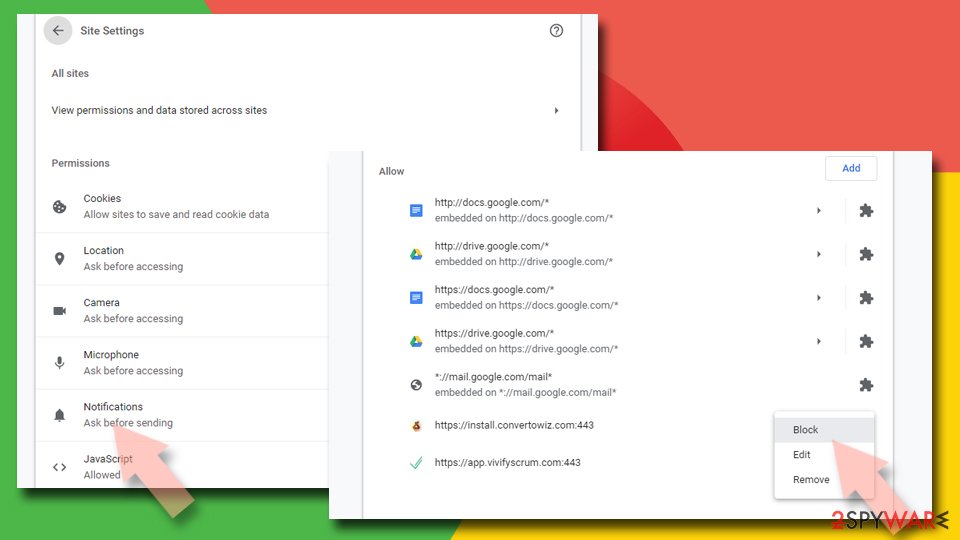
Google Chrome
- Open the Google Chrome browser and go to Menu > Settings.
- Scroll down and click on Advanced.
- Locate the Privacy and security section and pick Site Settings > Notifications.
- Look at the Allow section and look for a suspicious URL.
- Click the three vertical dots next to it and pick Block. This should remove unwanted notifications from Google Chrome.

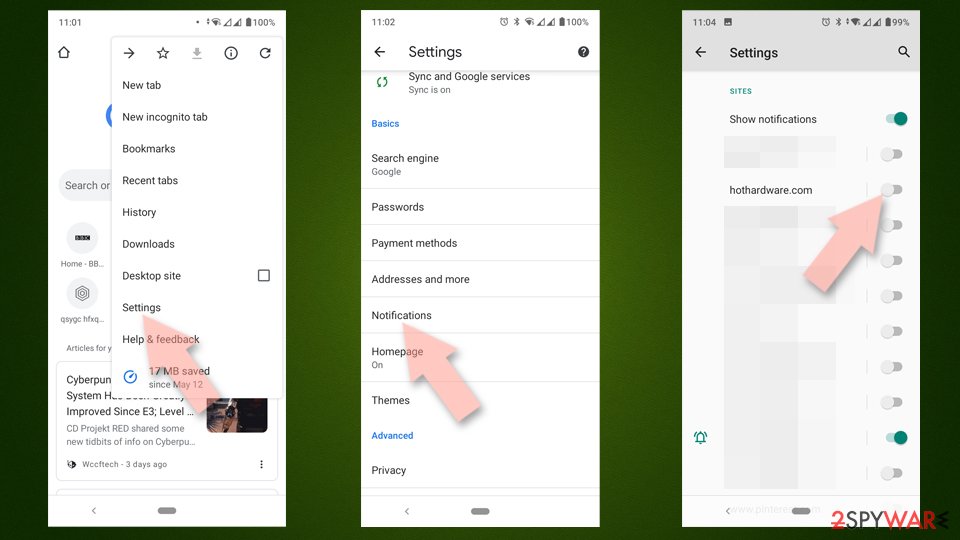
Google Chrome (Android)
- Open Google Chrome and tap on Settings (three vertical dots).
- Select Notifications.
- Scroll down to the Sites section.
- Locate the unwanted URL and toggle the button to the left (Off position).

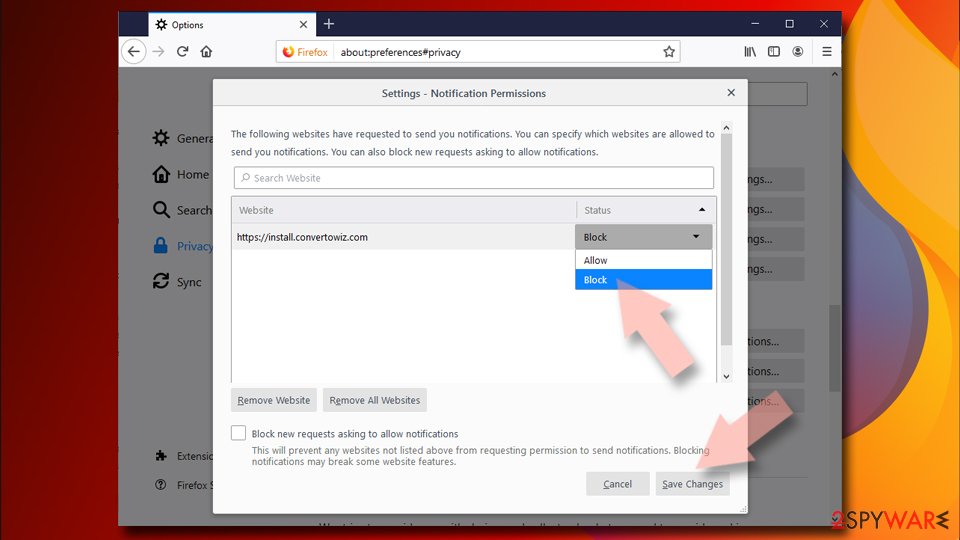
Mozilla Firefox
- Open Mozilla Firefox and go to Menu > Options.
- Click on Privacy & Security section.
- Under Permissions, you should be able to see Notifications. Click the Settings button next to it.
- In the Settings – Notification Permissions window, click on the drop-down menu by the URL in question.
- Select Block and then click on Save Changes. This should remove unwanted notifications from Mozilla Firefox.

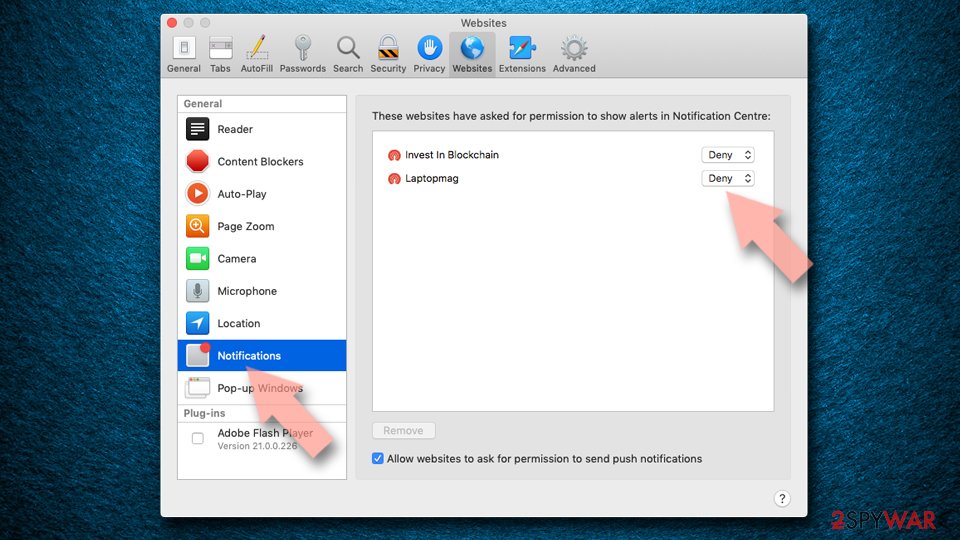
Safari
- Click on Safari > Preferences…
- Go to the Websites tab and, under General, select Notifications.
- Select the web address in question, click the drop-down menu and select Deny.

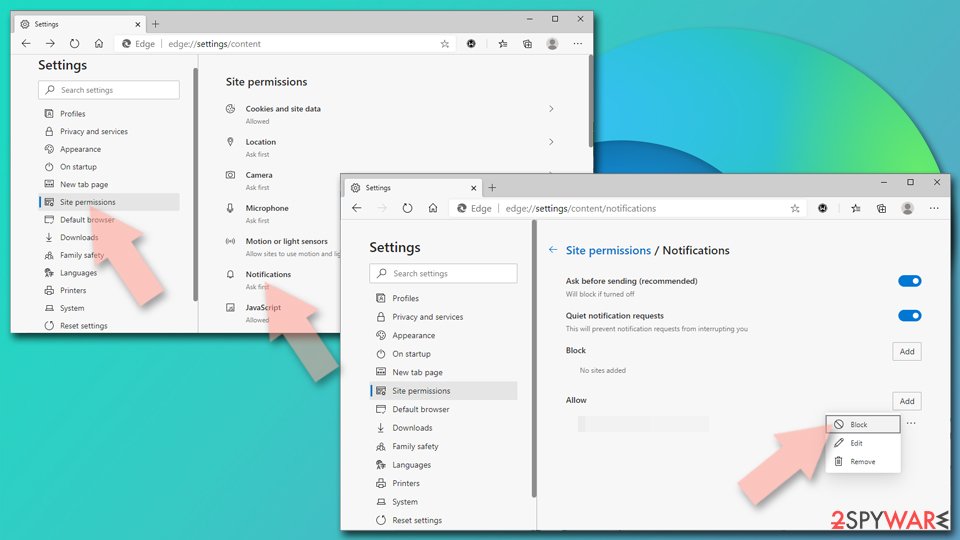
MS Edge
- Open Microsoft Edge, and go to Settings.
- Select Site permissions.
- Go to Notifications on the right.
- Under Allow, you will find the unwanted entry.
- Click on More actions and select Block.

Internet Explorer
- Open Internet Explorer, and click on the Gear icon at the top-right of the window.
- Select Internet options and go to the Privacy tab.
- In the Pop-up Blocker section, click on Settings.
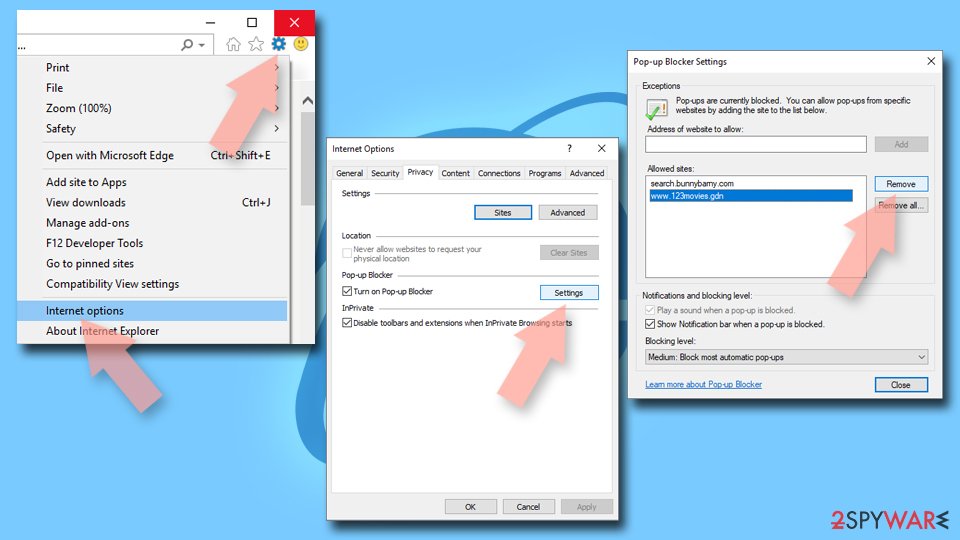
- Locate the web address in question under Allowed sites and pick Remove.

You should always make an effort when it comes to avoid being tricked into subscribing to notifications from malicious websites. While you may be aware that the ads are malicious and never click them intentionally, accidental clicks may also occur since pop-ups can show up at any time while the browser is running.
Just like any other scam site of this kind, Regadspro.com uses scamming techniques that are meant to show people something familiar but under different circumstances. For example, this message can show up after entering the site:
Click Allow if you are not a robot
Most people previously had to deal with captchas and similar verification methods, making it very familiar. However, clicking “Allow” would only enable crooks to send intrusive ads to users' devices without warning.

Deal with adware and data tracking
By following the steps outlined above, you may have been able to stop receiving the irritating Regadspro.com push notifications, but if you want to secure your device fully, your work is not yet done. Security software performs a good job of locating and eliminating adware and other potentially harmful software that can be hiding on your computer, even though it cannot delete push notifications.
Adware is a category of potentially unwanted software that may be active in the background without your knowledge. This is due to the way it spreads, which involves using fake updates or misleading freeware package installers. Checking the system is crucial if you've discovered that you're being forced to view more phishing content and obnoxious ads as you browse the web.
In order to accomplish this, we advise you first to perform a scan using SpyHunterCombo Cleaner, MalwarebytesMalwarebytes, or another potent anti-malware program and then use FortectIntego to clear browser caches for improved privacy. Otherwise, trackers like cookies could stay on the browser for years and continue to track users. Use the procedures listed below to remove adware if you choose manually.
Uninstall from Windows
Uninstall from Windows 10/8:
- Type Control Panel into the Windows search box and open the result.
- Under Programs, select Uninstall a program.


Uninstall from Windows 7/XP:
- Click on Windows Start > Control Panel (Windows XP users should click on Add/Remove Programs).
- In Control Panel, select Programs > Uninstall a program.


Remove the unwanted program:
- In the Programs and Features window, look for any recently installed suspicious entries, select them, and click Uninstall.
- If User Account Control appears, click Yes to confirm, then complete the removal.


Delete from macOS
Remove the unwanted application:
- From the menu bar, select Go > Applications.
- In the Applications folder, look for any suspicious entries, then drag them to Trash (or right-click and pick Move to Trash).


Delete leftover files and folders:
- Select Go > Go to Folder.
- Enter /Library/Application Support and remove any suspicious folders related to the unwanted program.
- Repeat the same check in the /Library/LaunchAgents and /Library/LaunchDaemons folders, deleting any suspicious entries.

- Finally, empty the Trash to permanently remove the leftovers.

Remove from Microsoft Edge
Delete unwanted extensions from MS Edge:
- Select Menu (three horizontal dots at the top-right of the browser window) and pick Extensions.
- From the list, pick the extension and click on the Gear icon.
- Click Remove.


Clear cookies and other browser data:
- Click on the Menu (three horizontal dots at the top-right of the browser window) and select Settings > Privacy, search, and services..
- Under Clear browsing data, pick Choose what to clear.
- Select Cookies and other site data and Cached images and files. (apart from passwords, although you might want to include Media licenses as well, if applicable) and click on Clear.


Restore new tab and homepage settings:
- Click the menu icon and choose Settings.
- Then find On startup section.
- Click Remove next to any suspicious startup page.
Reset MS Edge if the above steps did not work:
- Press on Ctrl + Shift + Esc to open Task Manager.
- Click on More details arrow at the bottom of the window.
- Select Details tab.
- Now scroll down and locate every entry with Microsoft Edge name in it. Right-click on each of them and select End Task to stop MS Edge from running.


Instructions for Chromium-based Edge
Delete extensions from MS Edge (Chromium):
- Open Edge and click select Settings > Extensions.
- Delete unwanted extensions by clicking Remove.


Clear cache and site data:
- Click on Menu and go to Settings.
- Select Privacy, search and services.
- Under Clear browsing data, pick Choose what to clear.
- Under Time range, pick All time.
- Select Clear now.


Reset Chromium-based MS Edge:
- Click on Menu and select Settings.
- On the left side, pick Reset settings.
- Select Restore settings to their default values.
- Confirm with Reset.
- This will disable extensions and reset startup pages but will not delete bookmarks, saved passwords, or browsing history.


Remove from Mozilla Firefox (FF)
Remove dangerous extensions:
- Open Mozilla Firefox browser and click on the Menu (three horizontal lines at the top-right of the window).
- Select Add-ons.
- In here, select the unwanted extension and click Remove.


Reset the homepage:
- Click three horizontal lines at the top right corner to open the menu.
- Choose Settings.
- Under Home, set your preferred homepage and new tab settings.
Clear cookies and site data:
- Click Menu and pick Settings.
- Go to Privacy & Security section.
- Scroll down to locate Cookies and Site Data.
- Click on Clear Data...
- Select Cookies and Site Data and Temporary cached files and pages, then click Clear.


Reset Mozilla Firefox
If clearing the browser as explained above did not help, reset Mozilla Firefox:
- Open Mozilla Firefox browser and click the Menu.
- Go to Help and then choose Troubleshooting Information.

- Under Give Firefox a tune up section, click on Refresh Firefox...
- Once the pop-up shows up, confirm the action by pressing on Refresh Firefox.



Remove from Google Chrome
Delete malicious extensions from Google Chrome:
- Open Google Chrome, click on the Menu (three vertical dots at the top-right corner) and select More tools > Extensions.
- In the newly opened window, you will see all the installed extensions. Uninstall all suspicious extensions related to the unwanted program by clicking Remove.


Clear cache and web data from Chrome:
- Click on Menu and pick Settings.
- Under Privacy and security, select Clear browsing data.
- Select Browsing history, Cookies and other site data, as well as Cached images and files.
- Click Clear data.


Change your homepage:
- Click menu and choose Settings.
- Look for a suspicious site in the On startup section.
- Click on Open a specific or set of pages and click on three dots to find the Remove option.
Reset Google Chrome:
If the previous methods did not help you, reset Google Chrome to eliminate all the unwanted components:
- Click on Menu and select Settings.
- In the Settings, scroll down and click Advanced.
- Scroll down and locate Reset and clean up section.
- Now click Restore settings to their original defaults.
- Confirm with Reset settings.


Delete from Safari
Remove dangerous extensions:
- Open Safari, click Safari in the menu at the top-left of the screen, and select Preferences.
- Go to the Extensions tab, look for any suspicious entries, and click Uninstall to remove them.


Clear history and website data:
- Click Safari in the menu and pick Clear History.
- Set Clear to all history and confirm with Clear History.


Reset Safari:
- Click Safari in the menu and select Preferences > Advanced.
- Enable Show Develop menu in menu bar.
- From the menu bar, click Develop and select Empty Caches.


Did this guide help?
Be the first to comment