
Ads by Supreme Savings: what it is and how to remove it
Ads by Supreme Savings is the program that displays its own ads on Amazon and eBay, or different online shopping sites and social media platforms to redirect people to their sites and get views that can be monetized. These advertisements, coupons, and deals are, in most cases, underlined with links that trigger other pop-ups with promotional content.
Facts checked October 6, 2026. Removal steps tested on Windows 11 (26H2) and checked against Microsoft's and the browser makers' current documentation. Sections marked as our earlier report are the original text: they describe the threat as it was then and have not been reviewed since. The 2026 status, the removal steps and the questions are current.
Automatic
Get a free scan and check if your PC is infected.
Fortect finds malware, unwanted programs and the Windows damage they leave behind, and repairs it in one pass.
If Ads by Supreme Savings keeps coming back after uninstalling, a scan can find what reinstalls it.
Do it yourself · free Remove Ads by Supreme Savings yourself 5 steps, about 15 minutes, no software needed.
Start the steps
Ads by Supreme Savings: summary
| Distribution | Free download sites, freeware installations, other potentially unwanted programs and deceptive sites that promote such services |
|---|---|
| Name | Ads by Supreme Savings |
| Type | Adware/ redirect virus |
| Redirects to | Expedia, Kmart, OfficeDepot, Zales, other online shopping sites |
| Developer | 215 Apps or Excellent Apps – PUP developer and advertiser |
| Symptoms | The program causes redirects, pop-ups, and shows other types of commercial content to monetize incoming web traffic on their sites and redirect people to associated pages |
| Removal | Scan the PC with security software to find and remove the malware and anything installed with it. Fortect scans Windows for malware and repairs the system files and settings it damaged. Remove it nowTo use the full-featured product, you have to purchase a license for Fortect. The scan is free. |
Show 7 more facts
| Related files | SupremeSavings.dll is the library file that gets loaded on the machine to keep the persistence up and can sometimes cause errors or issues with your device in general |
|---|---|
| Detection names | No Microsoft detection name is known |
| Damage | Not recorded in the old report |
| Evidence | 4 write-ups by security sites; details still limited |
| Program | Ads by Supreme Savings |
| First seen | 25 October 2019 |
| Facts checked | 6 October 2026 |
Is Ads by Supreme Savings dangerous?
From our report of Oct 2019 · not reviewed since
Supreme Savings is the adware that installs browser extensions and redirects online traffic to online shopping sites with suspicious content
Ads by Supreme Savings is the program that displays its own ads on Amazon and eBay, or different online shopping sites and social media platforms to redirect people to their sites and get views that can be monetized. These advertisements, coupons, and deals are, in most cases, underlined with links that trigger other pop-ups with promotional content. However, there are more intrusive symptoms regarding this shady program.
For example, Supreme Savings can install add-ons on your Internet Explorer, Google Chrome, Mozilla Firefox, or any other browsers to affect the traffic even more. This activity also significantly diminishes the performance and general speed of the device, web browsing tools.
Some users reported that this adware comes with other pre-packed programs and intruders like 1ClickDownload, Yontoo, and FBPhotoZoom. Continuous redirects indicate that adware is loaded on your system directly, so your machine gets affected from the inside besides the intrusive behavior that is experienced first hand.
Supreme Savings shows various sponsored content and leads to similar websites where you encounter suggestions to install programs, tools or optimization utilities. If you don't pay enough attention to the content you get exposed to it is possible to install rogue tools or even malware without noticing.
These ads can contain the underlying trigger that launches the direct download of additional programs and in-browser content or even system files. This is why you need to run an automatic Supreme Savings removal tool to find and delete all associated files and applications.
Many users often consider such advertising sites or programs that focus on showing commercial content to be malware due to the fact that it hijacks web browsers silently and initiates various suspicious activities.
Fortunately, it does not even remind a virus because it does not have traits that would allow affecting the operating system. But you still need to remove Ads by Supreme Savings from the machine since it has no value.
Keeping the Supreme Savings virus on your computer may cause infiltration of malicious programs on your device and later result in serious computer-related issues.
If each of your web browsers displays various coupons marked as 'Ads by Supreme Savings', it is likely that an adware-type program has already hijacked your PC's system and causes it to work in an unusual manner.
Due to the fact that it infiltrates computers using misleading bundling method, it has also been labeled as a potentially unwanted program (PUP) by many experts. As soon as it gets inside, it starts initiating several activities that you may not be aware of.
First of all, it drops its extension on each of your web browsers, including Google Chrome, Mozilla Firefox, Internet Explorer and may start tracking your browsing activities. Even though it does not collect sensitive data, be aware that it may easily collect your search terms, investigate websites that you visit, browser's type, time zone, gather email address, geographical location and so on.
The problem is that you can never be sure what specific information is collected and what third parties may reach it. Thus, having in mind that such activity is implemented without your permission asked, it may be associated with privacy violation.
Furthermore, be aware that even though Supreme Savings offers to deliver you various relevant coupons and deals, it seems that in reality it has been designed for improving affiliate marketing.
As soon as it gets inside a computer, it starts displaying a considerable amount of advertisements that are usually marked as 'Ads by Supreme Savings' and appear as boxes containing various coupons and discounts. It's very risky to click on them because, as we have already mentioned, this program may try to increase affiliate marketing by redirecting you to sponsored third party websites and increasing their page rank or sales.
In the worst-case scenario, Supreme Savings redirects may force you to visit unsafe websites without even inspecting that. Thus, if you want to avoid such issues, check your computer with or another reputable anti-spyware.


From our report of Oct 2019 · not reviewed since
PUP infiltration techniques
Potentially unwanted programs cannot be called malicious even though the spreading technique involves stealthily methods and activities that run behind your back.
Initial cyber threat infection cannot be noticed that easily, so you are not aware of when and how it happened.
In order to prevent its infiltration, first of all, you have to know how it spreads. Broadly saying, it relies on a method called bundling - a distribution vector that enables it to spread around alongside various freeware, system tools and programs. Therefore, you have to be very careful when installing various download managers or media players, programs promoted on free websites.
Always select the Advanced or Custom installation option and monitor the whole process carefully. Make sure that you don't skip any details and unmark all checkboxes claiming that you accept to install additional programs, such as browser add-ons, plug-ins, toolbars or extensions.
From our report of Oct 2019 · not reviewed since
More from our earlier report on Ads by Supreme Savings
- Get the anti-malware tool that can check the system fully and remove Supreme Savings.
- You might get additional help from since it fixes system errors and virus damage
How to remove Ads by Supreme Savings
Uninstall first, then remove what stays behind, so the ads do not come back after a restart.
Step 1: Uninstall Ads by Supreme Savings
Open Settings > Apps > Installed apps in Windows 11, or Settings > Apps > Apps & features in Windows 10.
Sort the list by install date and find Ads by Supreme Savings, then choose Uninstall from the three-dot menu next to it (in Windows 10, click the entry and then Uninstall).
Remove anything else installed on the same day that you do not recognise, because such programs usually arrive together in one installer. If the uninstaller opens a browser page with an offer or a survey, close it: the program is removed either way.
Full procedure with screenshots: Uninstall a program or app in Windows On uGetFix
Step 2: Remove it from startup
Whatever Ads by Supreme Savings installed usually starts with Windows.
Open Task Manager with Ctrl + Shift + Esc, go to Startup apps in Windows 11 or the Startup tab in Windows 10, and disable what you do not know, starting with entries that have an empty Publisher column.
Open file location on the right-click menu shows the file, which helps you decide and tells you what to delete later. Disabling is safe: if something you need stops working, switch it back on.
Full procedure with screenshots: Stop apps from opening at startup On uGetFix
Step 3: Delete the folders left behind
What the uninstaller leaves behind is usually in the user folders. Open File Explorer, switch on View > Show > Hidden items (in Windows 10 View > Hidden items), and go through
%LocalAppData%,%AppData%, %ProgramData% and the two Program Files folders.Sort by Date modified and delete folders that appeared together with the problem and belong to no program you use. Folders with random names that hold
.exe,.dll, .js or .ps1 files are the strongest sign.Full procedure with screenshots: Remove what malware leaves behind in Windows
Step 4: Reset the browser
Finish the browser part with a reset, which puts the search engine, start page, new tab page and site permissions back to their defaults and switches extensions off. Chrome: Settings > Reset settings > Restore settings to their original defaults.
Edge: Settings > Reset settings. Firefox: Help > More troubleshooting information > Refresh Firefox, which also removes its extensions. Your bookmarks and saved passwords are kept, and the menus are the same on Windows 11 and Windows 10.
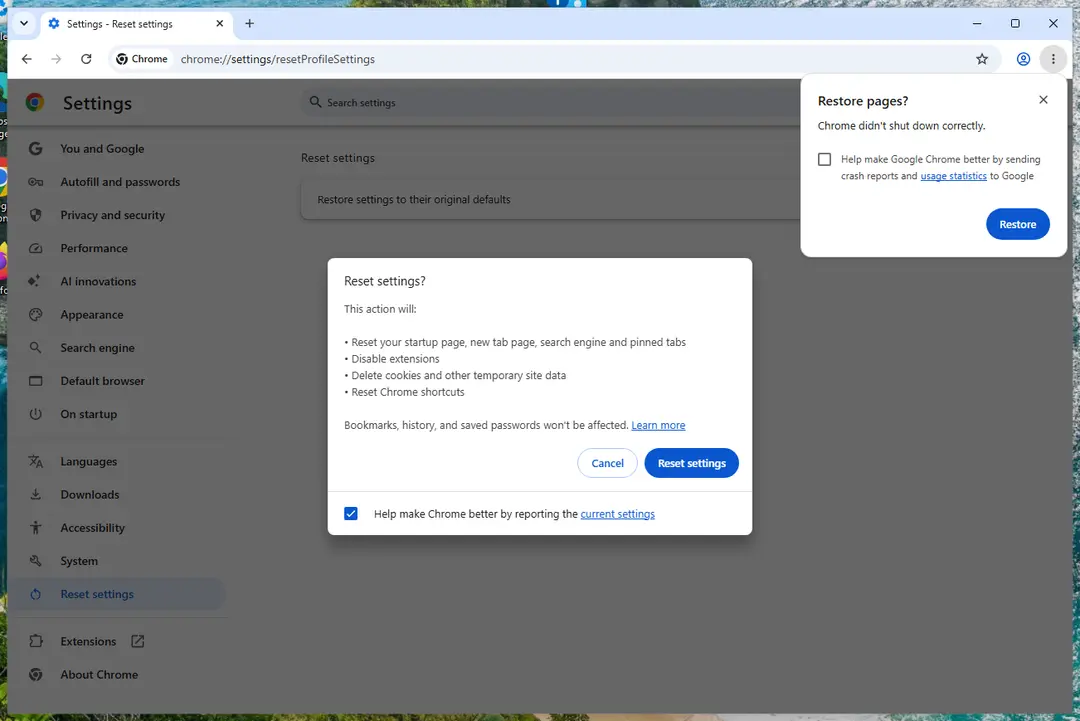
Chrome on Windows 11: Settings > Reset settings. Full procedure with screenshots: Reset a browser and fix a hijacked search engine
Step 5: Scan the PC, then run the offline scan
Open Windows Security > Virus & threat protection > Scan options, run a Full scan and remove everything it finds. Then select Microsoft Defender Antivirus (offline scan) and click Scan now: the PC restarts and scans before Windows loads, which finds files that hide while Windows runs.
Save your work first, because the offline scan takes about 15 minutes. Both scans are built into Windows 11 and Windows 10, and a second scanner from another vendor is a useful extra opinion.
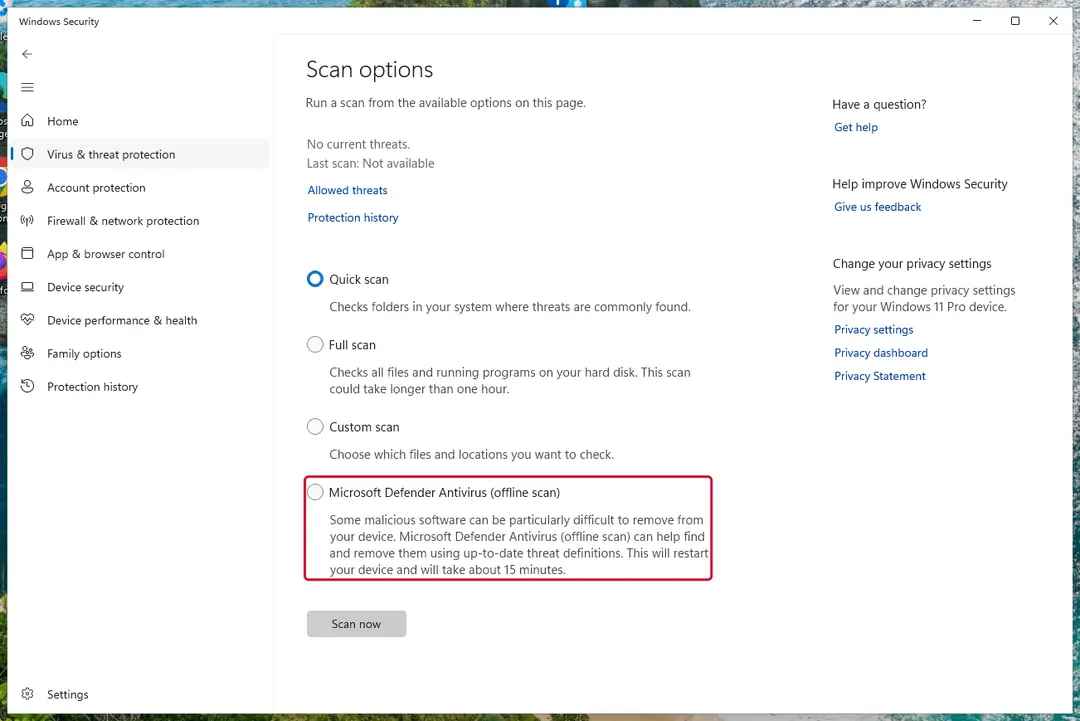
Windows 11: Windows Security > Virus & threat protection > Scan options. Full procedure with screenshots: Run a Microsoft Defender Offline scan
Instructions for each browser and system
The detailed steps for every browser and system this guide covers. Open the one you use.
Uninstall from Windows
Get rid of Supreme Savings from the machine by following:
Uninstall from Windows 10/8:
- Type Control Panel into the Windows search box and open the result.
- Under Programs, select Uninstall a program.
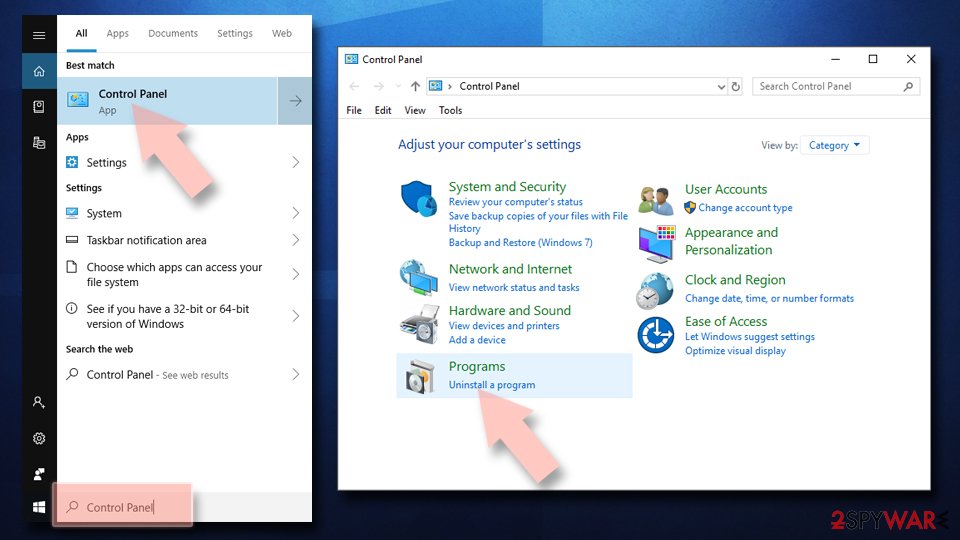
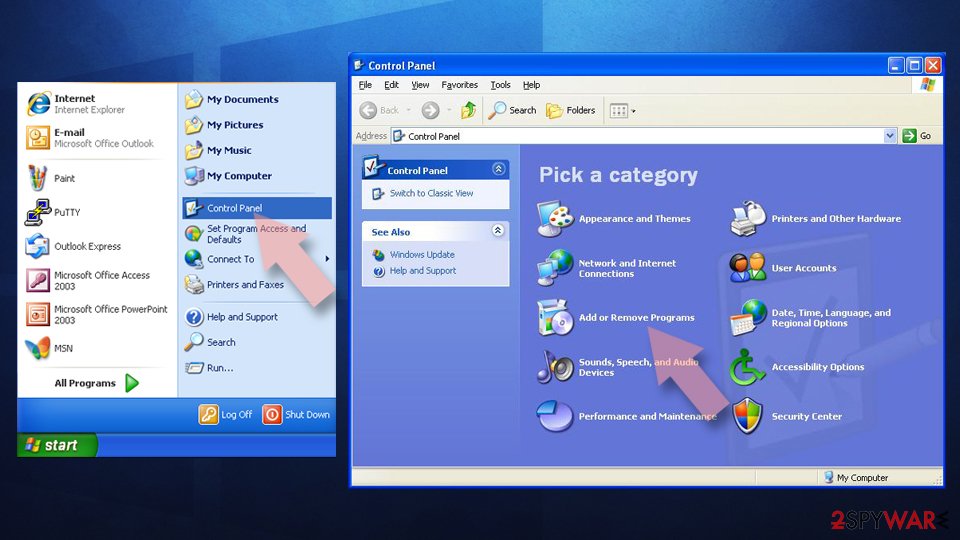
Uninstall from Windows 7/XP:
- Click on Windows Start > Control Panel (Windows XP users should click on Add/Remove Programs).
- In Control Panel, select Programs > Uninstall a program.
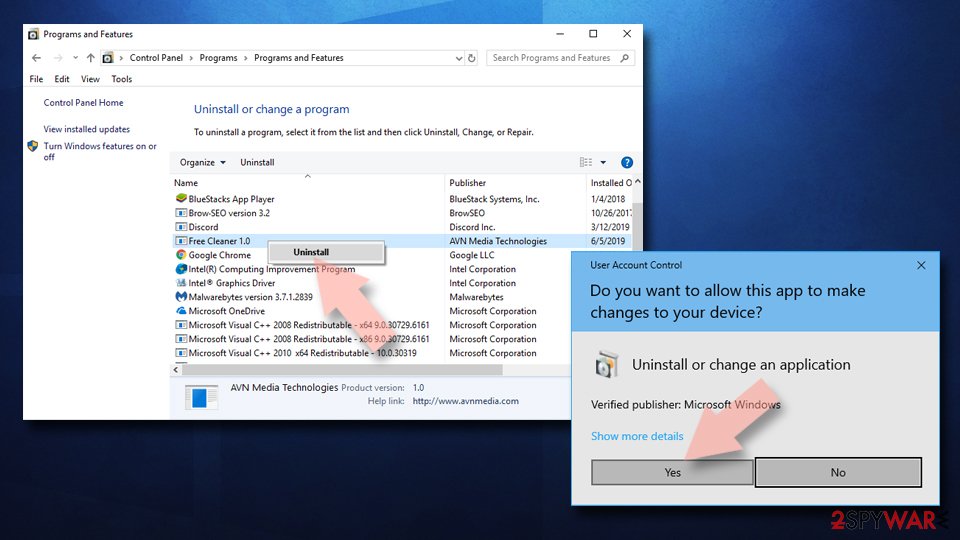
Remove the unwanted program:
- In the Programs and Features window, look for any recently installed suspicious entries, select them, and click Uninstall.
- If User Account Control appears, click Yes to confirm, then complete the removal.
Remove from Google Chrome
You should check the web browser for any suspicious content and delete additional installs that happened behind your back
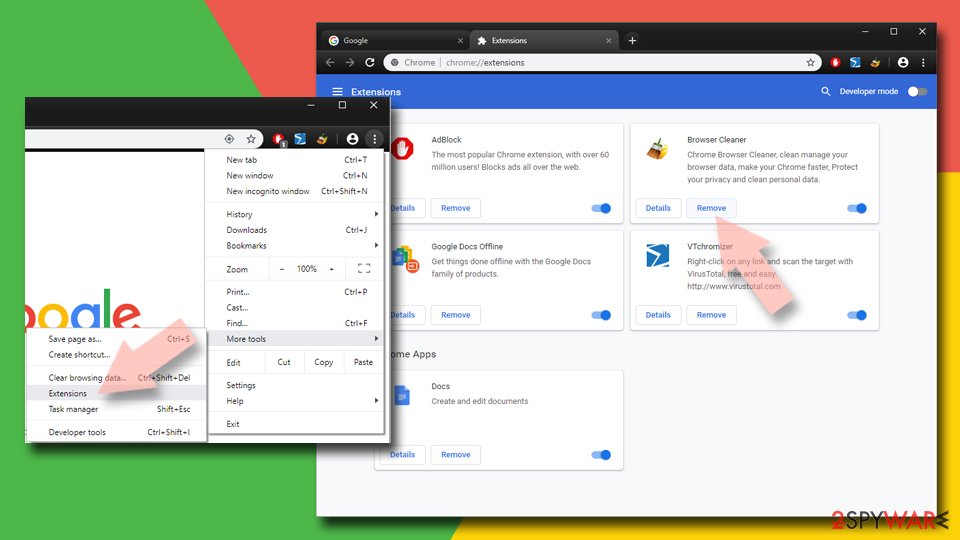
Delete malicious extensions from Google Chrome:
- Open Google Chrome, click on the Menu (three vertical dots at the top-right corner) and select More tools > Extensions.
- In the newly opened window, you will see all the installed extensions. Uninstall all suspicious extensions related to the unwanted program by clicking Remove.
Clear cache and web data from Chrome:
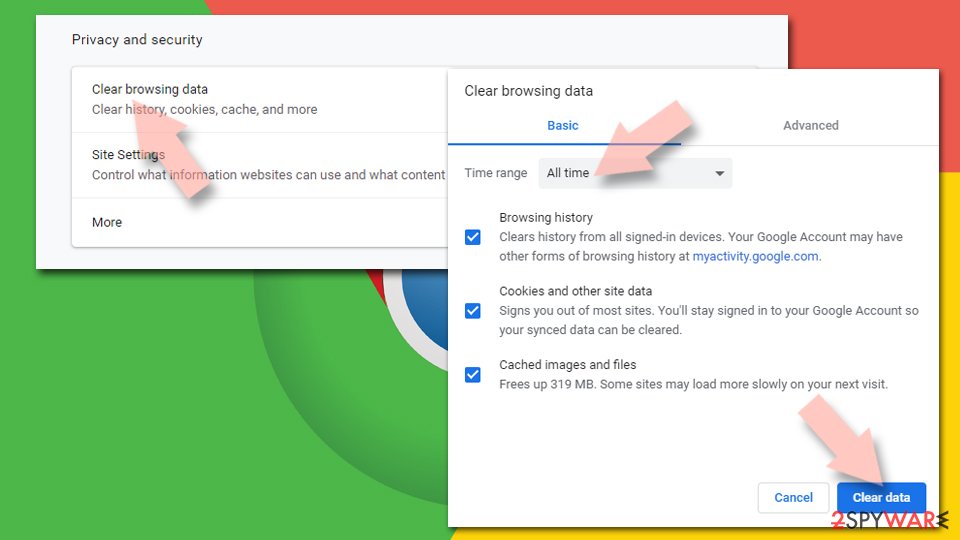
- Click on Menu and pick Settings.
- Under Privacy and security, select Clear browsing data.
- Select Browsing history, Cookies and other site data, as well as Cached images and files.
- Click Clear data.
Change your homepage:
- Click menu and choose Settings.
- Look for a suspicious site in the On startup section.
- Click on Open a specific or set of pages and click on three dots to find the Remove option.
Reset Google Chrome:
If the previous methods did not help you, reset Google Chrome to eliminate all the unwanted components:
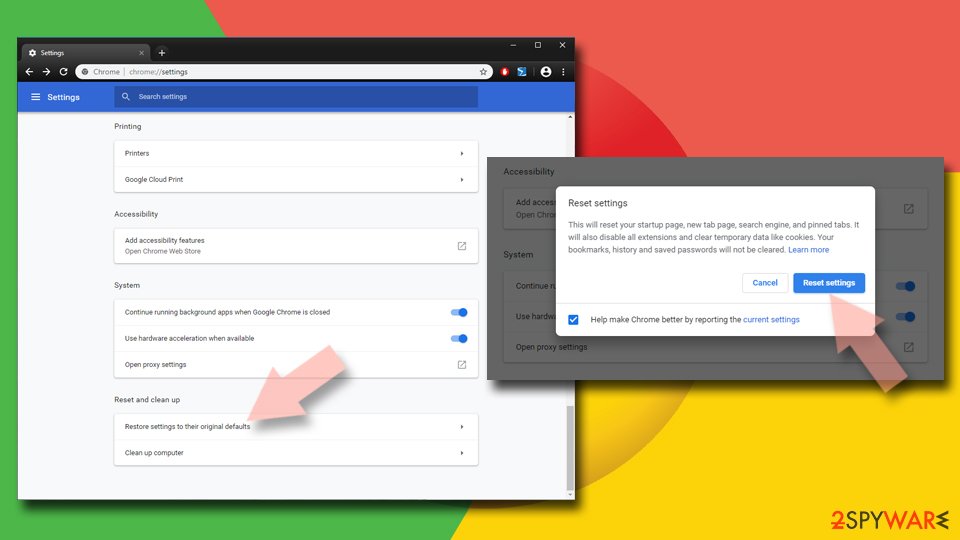
- Click on Menu and select Settings.
- In the Settings, scroll down and click Advanced.
- Scroll down and locate Reset and clean up section.
- Now click Restore settings to their original defaults.
- Confirm with Reset settings.
Remove from Microsoft Edge
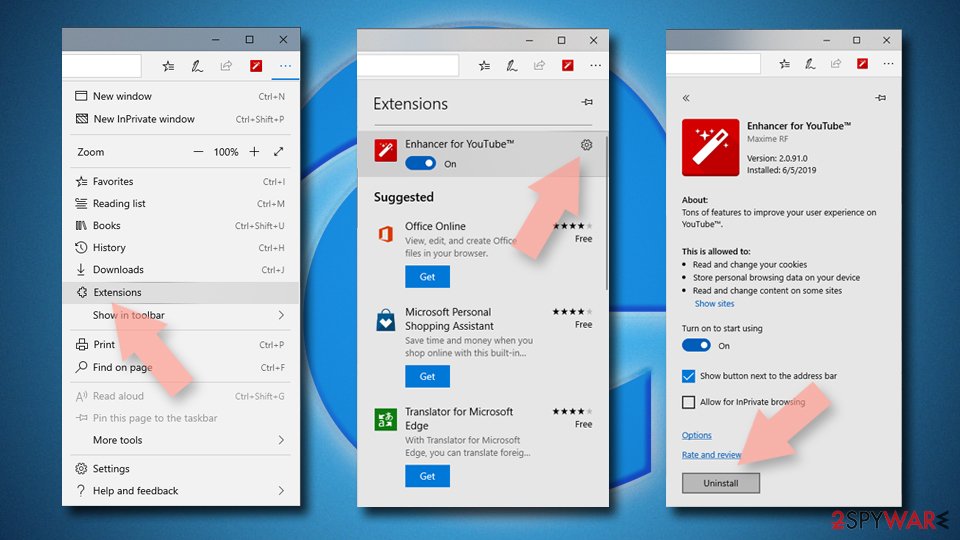
Delete unwanted extensions from MS Edge:
- Select Menu (three horizontal dots at the top-right of the browser window) and pick Extensions.
- From the list, pick the extension and click on the Gear icon.
- Click Remove.
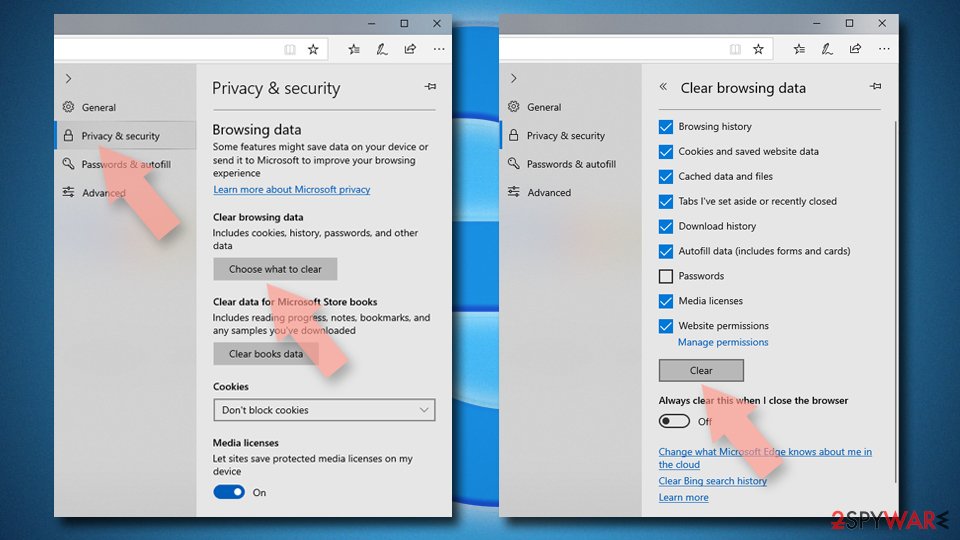
Clear cookies and other browser data:
- Click on the Menu (three horizontal dots at the top-right of the browser window) and select Settings > Privacy, search, and services..
- Under Clear browsing data, pick Choose what to clear.
- Select Cookies and other site data and Cached images and files. (apart from passwords, although you might want to include Media licenses as well, if applicable) and click on Clear.
Restore new tab and homepage settings:
- Click the menu icon and choose Settings.
- Then find On startup section.
- Click Remove next to any suspicious startup page.
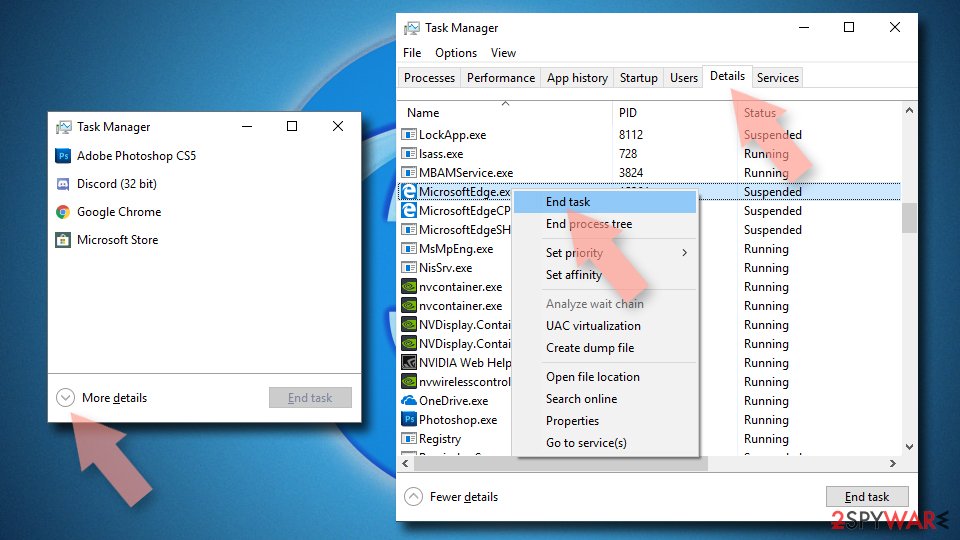
Reset MS Edge if the above steps did not work:
- Press on Ctrl + Shift + Esc to open Task Manager.
- Click on More details arrow at the bottom of the window.
- Select Details tab.
- Now scroll down and locate every entry with Microsoft Edge name in it. Right-click on each of them and select End Task to stop MS Edge from running.
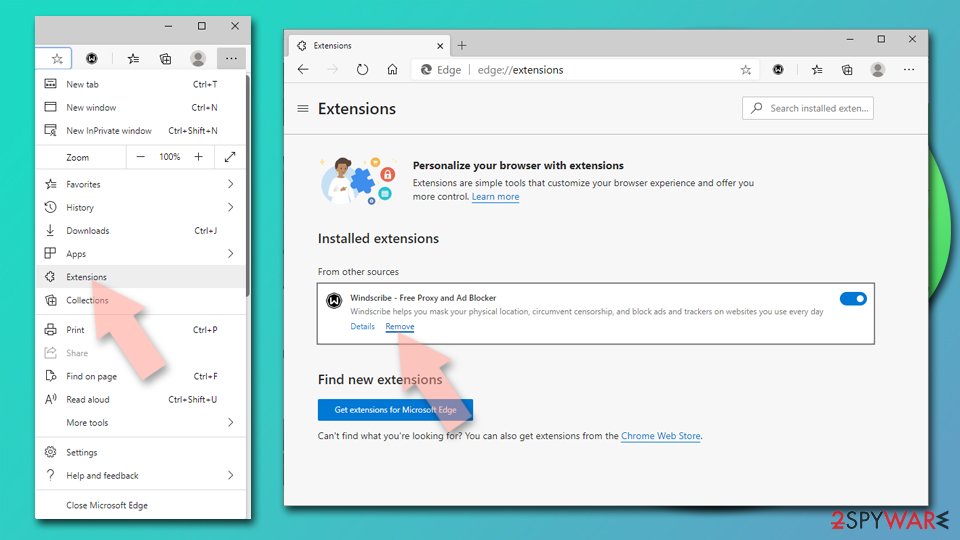
Delete extensions from MS Edge (Chromium):
- Open Edge and click select Settings > Extensions.
- Delete unwanted extensions by clicking Remove.
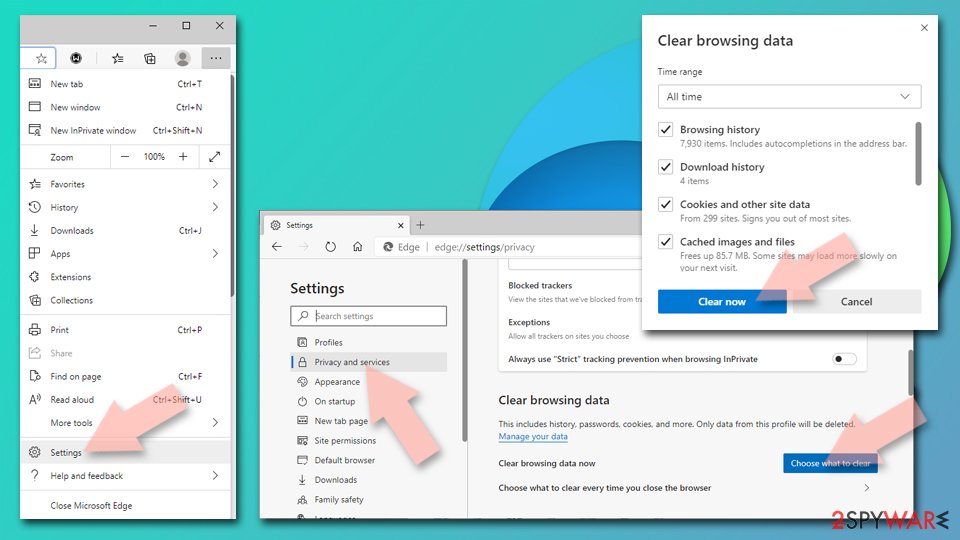
Clear cache and site data:
- Click on Menu and go to Settings.
- Select Privacy, search and services.
- Under Clear browsing data, pick Choose what to clear.
- Under Time range, pick All time.
- Select Clear now.
Reset Chromium-based MS Edge:
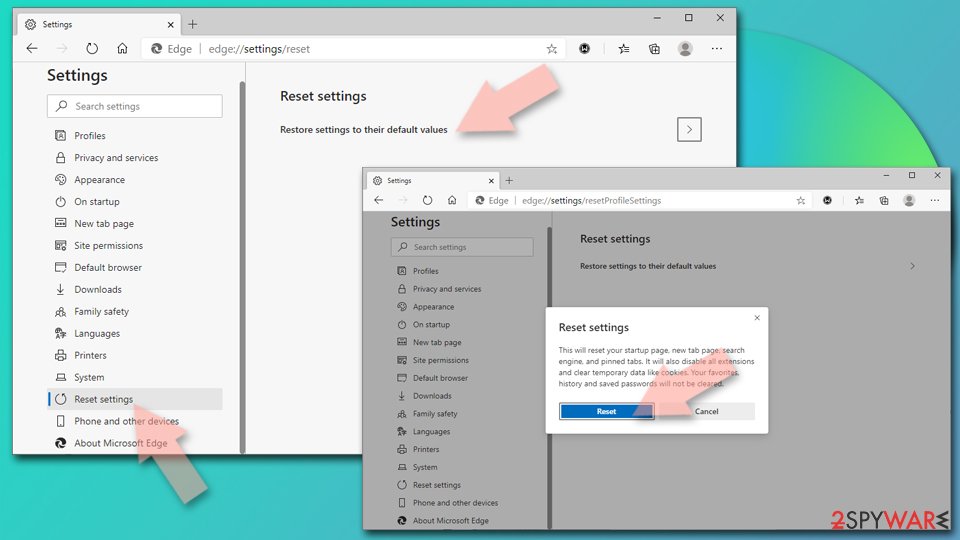
- Click on Menu and select Settings.
- On the left side, pick Reset settings.
- Select Restore settings to their default values.
- Confirm with Reset.
- This will disable extensions and reset startup pages but will not delete bookmarks, saved passwords, or browsing history.
Remove from Mozilla Firefox (FF)
Firefox browser may get other Supreme Savings-related applications installed
Remove dangerous extensions:
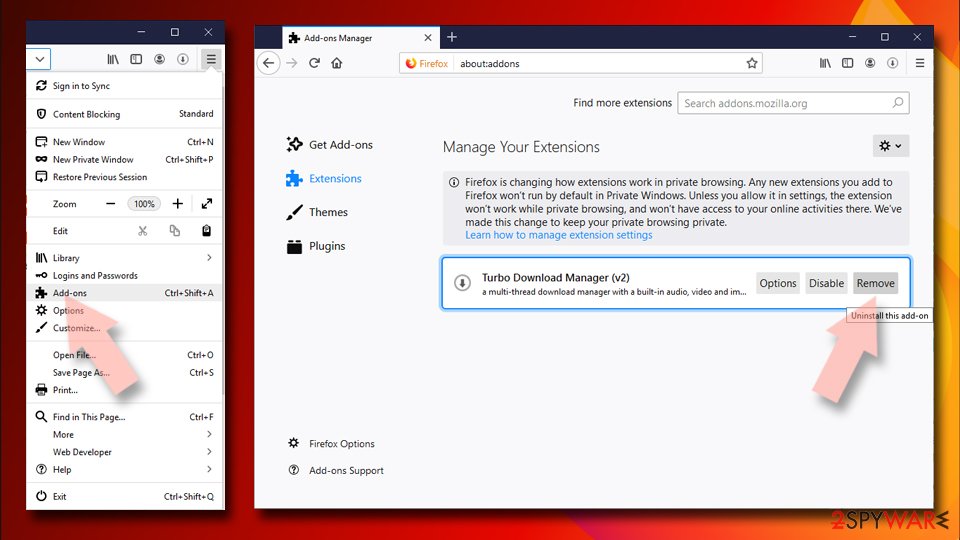
- Open Mozilla Firefox browser and click on the Menu (three horizontal lines at the top-right of the window).
- Select Add-ons.
- In here, select the unwanted extension and click Remove.
Reset the homepage:
- Click three horizontal lines at the top right corner to open the menu.
- Choose Settings.
- Under Home, set your preferred homepage and new tab settings.
Clear cookies and site data:
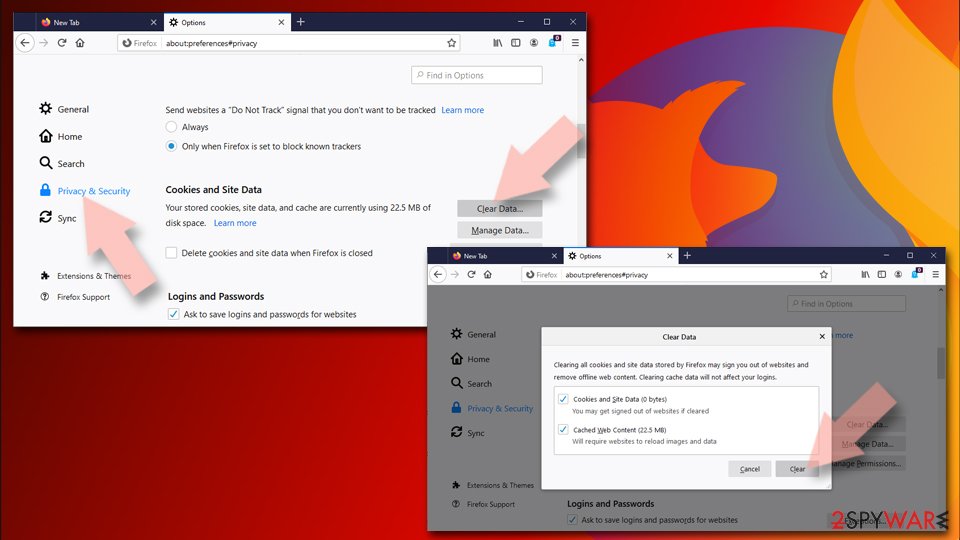
- Click Menu and pick Settings.
- Go to Privacy & Security section.
- Scroll down to locate Cookies and Site Data.
- Click on Clear Data...
- Select Cookies and Site Data and Temporary cached files and pages, then click Clear.
Reset Mozilla Firefox
If clearing the browser as explained above did not help, reset Mozilla Firefox:
- Open Mozilla Firefox browser and click the Menu.
- Go to Help and then choose Troubleshooting Information.
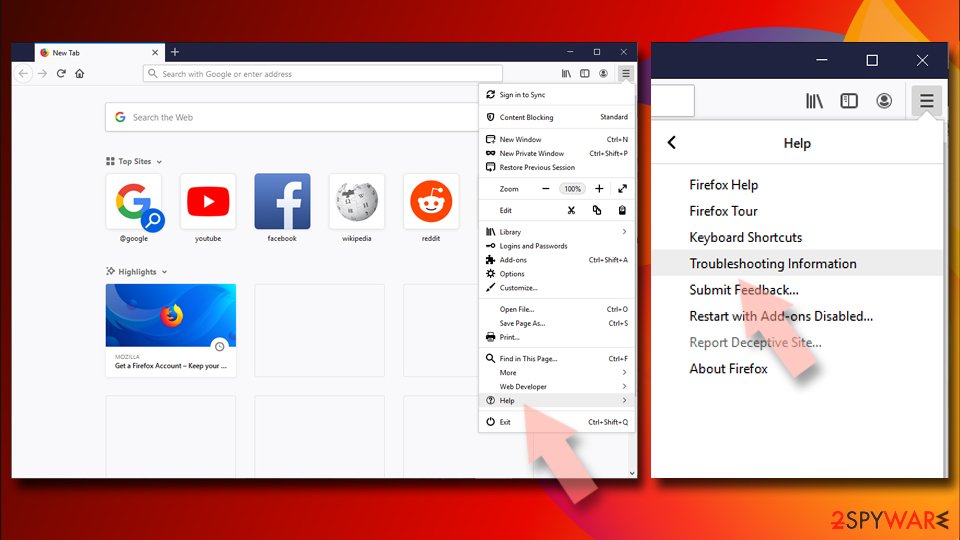
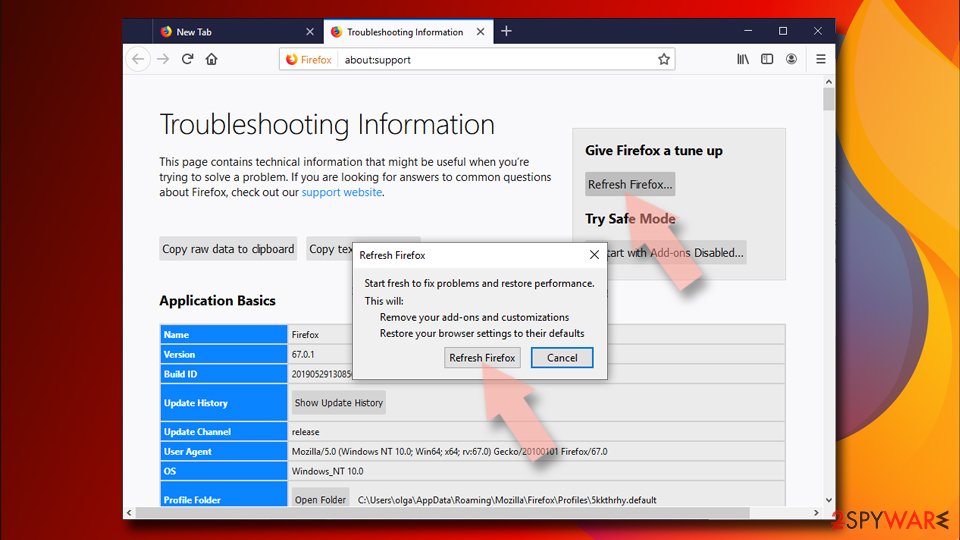
- Under Give Firefox a tune up section, click on Refresh Firefox...
- Once the pop-up shows up, confirm the action by pressing on Refresh Firefox.
Delete from Safari
Remove dangerous extensions:
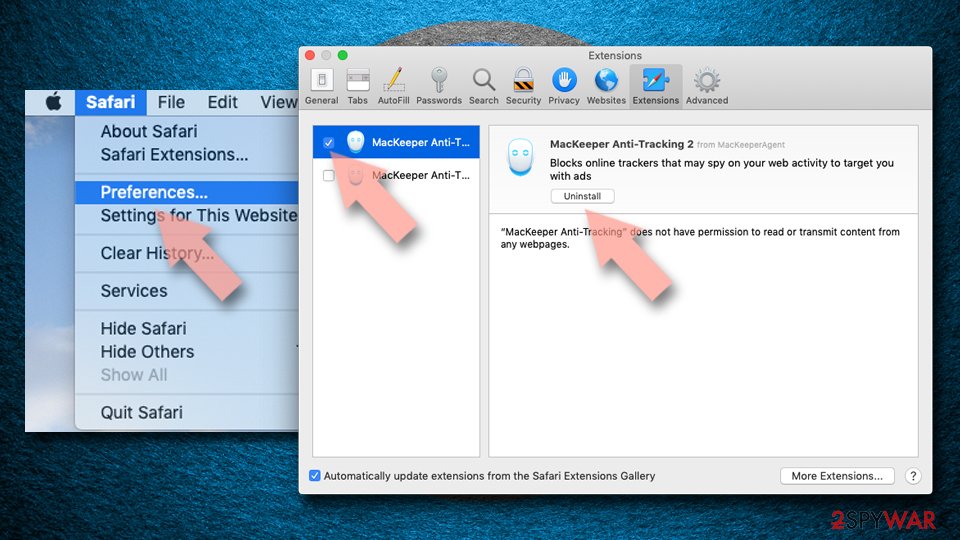
- Open Safari, click Safari in the menu at the top-left of the screen, and select Preferences.
- Go to the Extensions tab, look for any suspicious entries, and click Uninstall to remove them.
Clear history and website data:
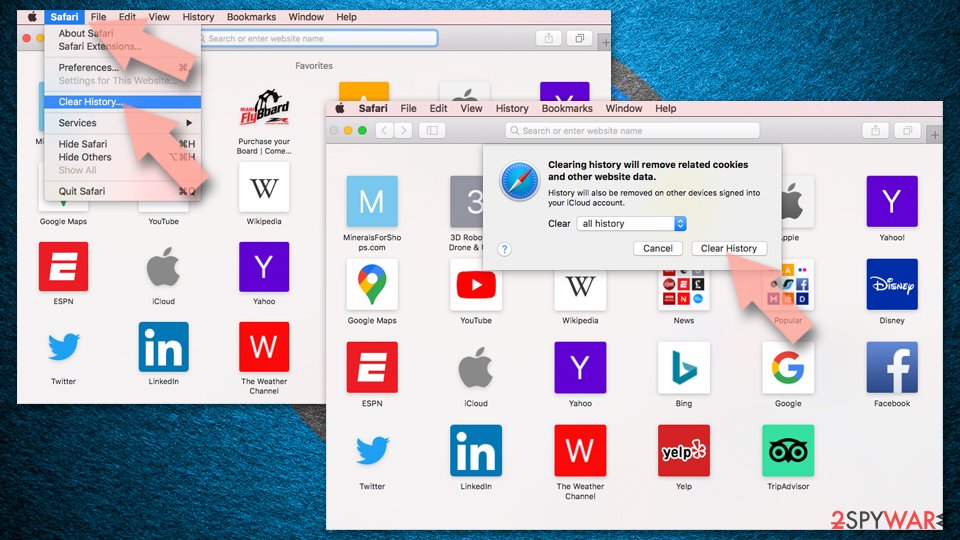
- Click Safari in the menu and pick Clear History.
- Set Clear to all history and confirm with Clear History.
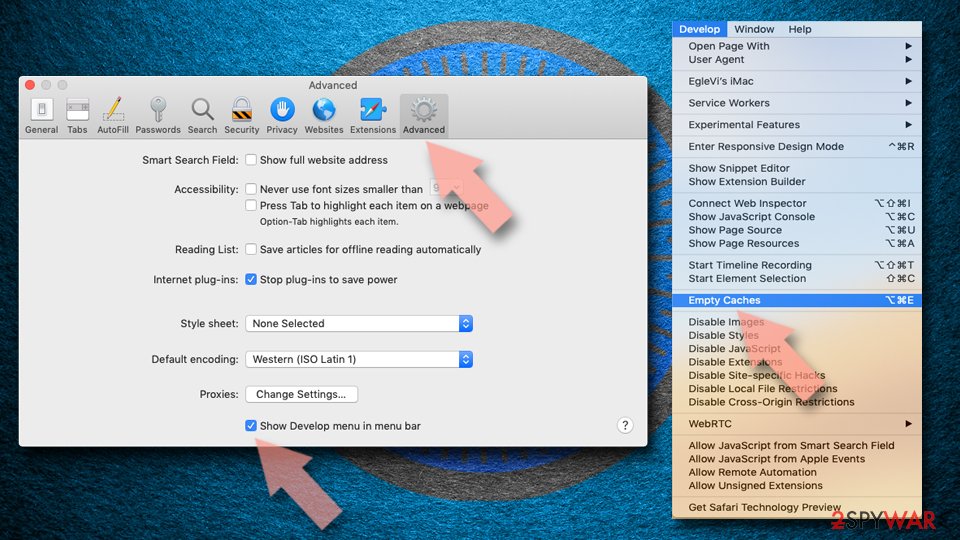
Reset Safari:
- Click Safari in the menu and select Preferences > Advanced.
- Enable Show Develop menu in menu bar.
- From the menu bar, click Develop and select Empty Caches.
Delete from macOS
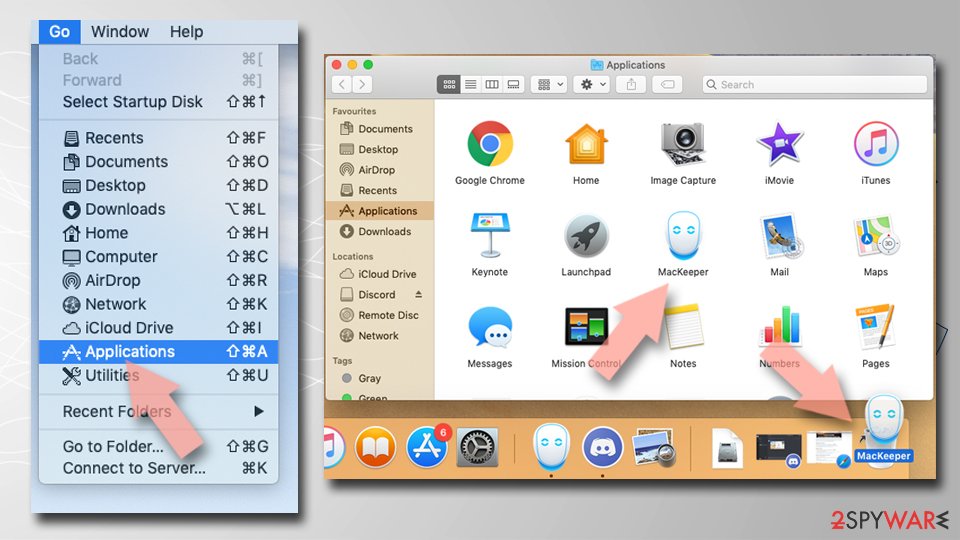
Remove the unwanted application:
- From the menu bar, select Go > Applications.
- In the Applications folder, look for any suspicious entries, then drag them to Trash (or right-click and pick Move to Trash).
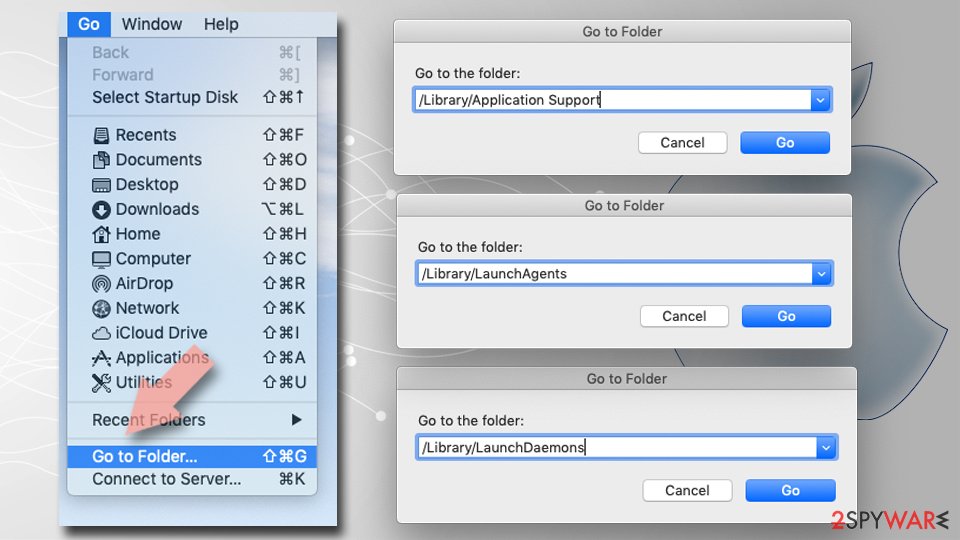
Delete leftover files and folders:
- Select Go > Go to Folder.
- Enter /Library/Application Support and remove any suspicious folders related to the unwanted program.
- Repeat the same check in the /Library/LaunchAgents and /Library/LaunchDaemons folders, deleting any suspicious entries.
- Finally, empty the Trash to permanently remove the leftovers.
Reset Internet Explorer
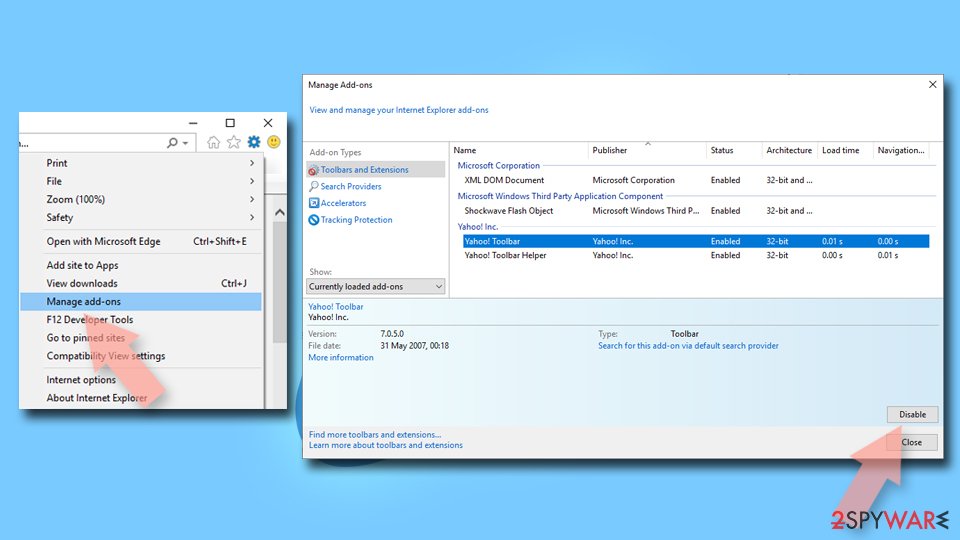
Remove dangerous add-ons:
- Open Internet Explorer, click on the Gear icon (IE menu) on the top-right corner of the browser
- Pick Manage Add-ons.
- You will see a Manage Add-ons window. Here, look for suspicious plugins. Click on these entries and select Disable.
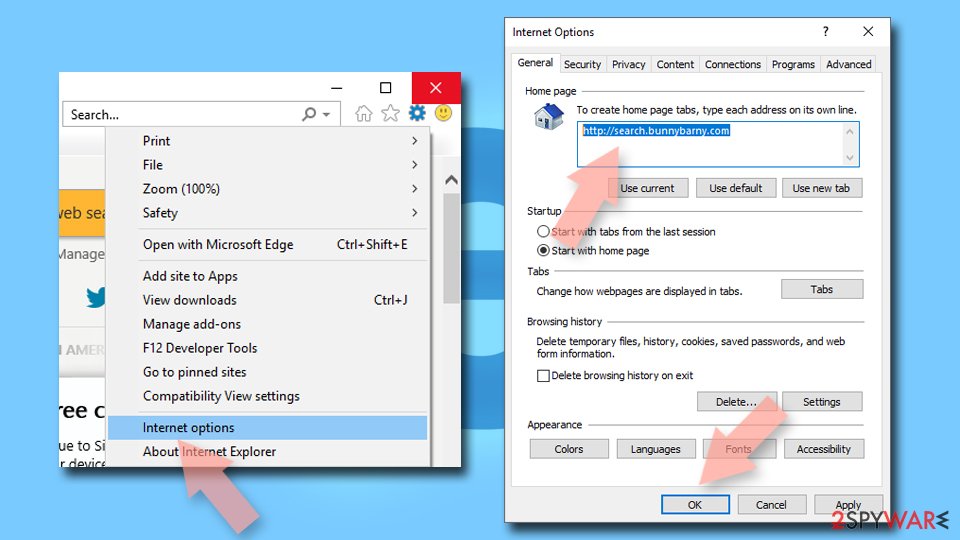
Change your homepage if it was altered:
- Open IE and click on the Gear icon.
- Select Internet Options.
- In the General tab, delete the Home page address and replace it by your preferred one (for example, Google.com).
- Click Apply and then select OK.
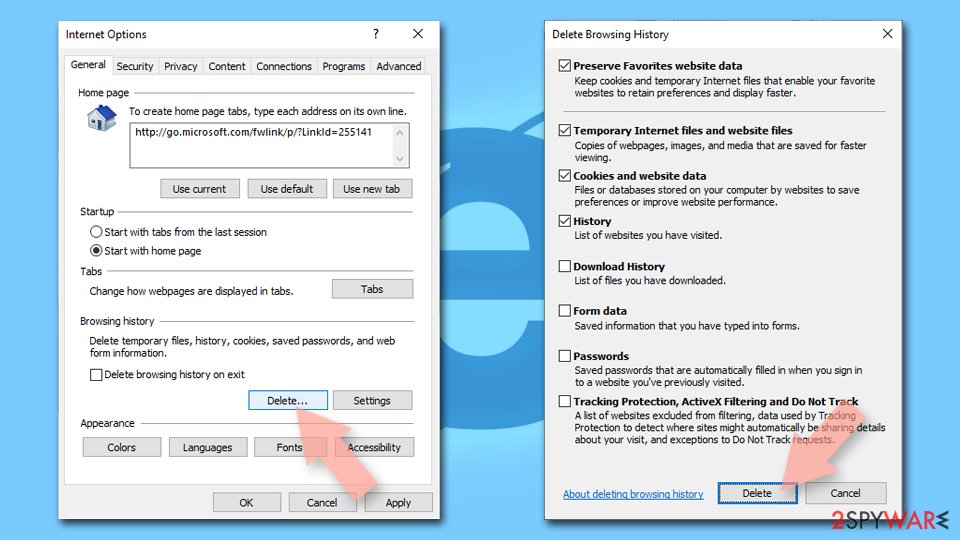
Delete temporary files:
- Press on the Gear icon and select Internet Options.
- Under Browsing history, click Delete...
- Select relevant fields and press Delete.
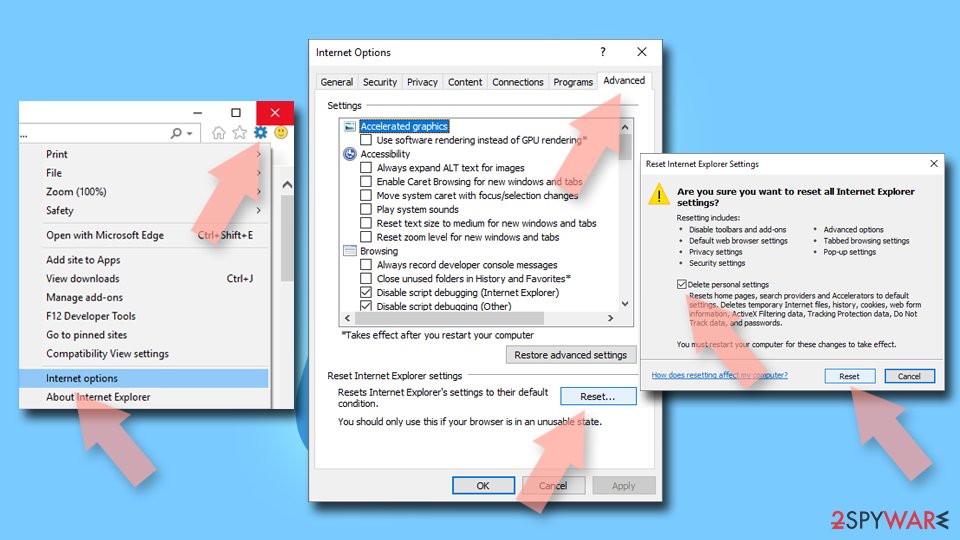
Reset Internet Explorer:
- Click on Gear icon > Internet options and select Advanced tab.
- Select Reset.
- In the new window, check Delete personal settings and select Reset.
Choose a proper web browser and improve your safety with a VPN tool
Online spying has got momentum in recent years and people are getting more and more interested in how to protect their privacy online.
One of the basic means to add a layer of security - choose the most private and secure web browser. Although web browsers can't grant full privacy protection and security, some of them are much better at sandboxing, HTTPS upgrading, active content blocking, tracking blocking, phishing protection, and similar privacy-oriented features.
However, if you want true anonymity, we suggest you employ a powerful VPN - it can encrypt all the traffic that comes and goes out of your computer, preventing tracking completely.
Lost your files? Use data recovery software
While some files located on any computer are replaceable or useless, others can be extremely valuable.
Family photos, work documents, school projects - these are types of files that we don't want to lose. Unfortunately, there are many ways how unexpected data loss can occur:
- power cuts
- Blue Screen of Death errors
- hardware failures
- crypto-malware attack
- even accidental deletion
To ensure that all the files remain intact, you should prepare regular data backups. You can choose cloud-based or physical copies you could restore from later in case of a disaster. If your backups were lost as well or you never bothered to prepare any, can be your only hope to retrieve your invaluable files.
From our report of Oct 2019 · not reviewed since
Tips needed to completely remove Ads by Supreme Savings virus
If the Supreme Savings virus redirects to unknown websites that have already annoyed you to death, do not wait any longer and get rid of it now.
As we mentioned, it is possible that this PUP was running in the background for a while without you even noticing the symptoms.
You should note that it is not that easy to remove Supreme Savings from the machine, especially if you rely on manual methods and try to find all the related files yourself. However, this is crucial for any PUP because any core files left behind like SupremeSavings.dll can affect the persistence of the adware.
Focus on Ads by Supreme Savings removal and rely on anti-malware tools to achieve the best results because such software is designed to fight PUPs, more serious malware infections and solve other issues regarding the performance of your device.
Questions about Ads by Supreme Savings
What is Ads by Supreme Savings and why is it on my PC?
Ads by Supreme Savings is a program that was installed on the PC, most likely together with something else you downloaded. Free software sites and many installers add extra programs on setup pages with pre-ticked boxes, so the extra install looks like your choice even though nobody read the page.
Check the install date in Settings, Apps, Installed apps: the program you installed that day is the probable carrier. If you do not need Ads by Supreme Savings, uninstall it. If it belongs to your hardware or to a program you use, search its exact name and publisher first, because drivers and their tools can have unfamiliar names.
Ads by Supreme Savings will not uninstall. What can I do?
First restart the PC and try again, because the program may have been running and locked its own files. If the uninstaller is missing or fails, start Windows in Safe Mode, where most third-party programs do not start, and remove Ads by Supreme Savings from Installed apps there.
If it still refuses, delete its startup entry and its scheduled task, restart, and try once more. A program that actively prevents removal is behaving like malware, so finish with a Microsoft Defender offline scan. Avoid third-party uninstallers offered on search ads; several of them are unwanted programs themselves.
Is uninstalling Ads by Supreme Savings enough?
Often, but not always. Uninstalling Ads by Supreme Savings through Settings > Apps > Installed apps removes the main part. Ad-supported programs, however, frequently arrive together with others from the same installer, and some leave a scheduled task or a browser extension behind.
After uninstalling, sort the list of installed apps by date and look at what else appeared that day, check Task Manager > Startup apps, and open the extension page in every browser. A Microsoft Defender full scan at the end catches leftover files.
I let a "support technician" from an ad connect to my PC. What should I do?
Act quickly but calmly. Disconnect the PC from the internet first, so the connection ends. Uninstall the remote access tool they asked you to install and check Installed apps for anything else added during the call.
Run a Microsoft Defender full scan and offline scan. From another device, change your e-mail and banking passwords and sign out of all sessions.
If you paid by card, bank transfer or gift card, contact your bank or the card issuer immediately, and report the scam to the police. Do not answer if they call back.
Can an adware pop-up infect my PC just by appearing?
No. A pop-up, a notification or a new tab is only a web page or a message. It cannot run programs on Windows by itself, provided the browser and Windows are up to date. Infection needs a step from you:
- running a downloaded file
- installing an extension
- giving a stranger remote access
That is why scam pages work so hard to make you click. Close such pages with the tab's X or by closing the browser, not with buttons inside the page, which may start a download.
Why is my browser so slow since the ads started?
Each page now does extra work. An adware extension reads the page, decides where to put ads, loads them from ad servers and reports your visit, and that happens on every tab. Ad-supported programs add their own background activity.
Removing the extension or program usually makes the browser fast again at once. If it stays slow, open the browser's own task manager with Shift+Esc in Chrome or Edge and look for extensions using a lot of memory or processor time.
My scan found nothing, but the ads continue. Why?
Because the source may not be a file a scanner looks for. Browser notifications are a permission stored in the browser, and many adware extensions are not flagged because they come from an official store.
Some ad-supported programs are only reported if you enable detection of potentially unwanted apps. So a clean scan does not mean the job is done. Check each browser's notification permissions and extension list by hand, and turn on Potentially unwanted app blocking in Windows Security before scanning again.
Did Ads by Supreme Savings collect my data?
Adware typically collects what it needs to choose ads:
- the sites you visit
- search terms
- approximate location
- browser and system details
Extensions with permission to read and change data on all websites can technically see everything on those pages, including forms. That is a privacy problem rather than proof of theft.
If you typed card details or passwords while it was active, changing the most important passwords is a reasonable precaution. Clearing cookies after removal ends the tracking sessions it may have started.
Will Fortect remove Ads by Supreme Savings?
Fortect scans Windows for malware and unwanted programs and repairs the system files and settings they change, and its free scan shows what it finds on your PC before you decide anything.
For Ads by Supreme Savings, follow the plan above as well: the browser steps take back permissions and settings that no scanner treats as a threat, and uninstalling the program that brought it removes the source.
Run Microsoft Defender's full scan and, if anything was found, its offline scan as a second opinion. If the symptoms are gone after the plan and both scans are clean, there is nothing more to do.
Sources
- Martechseries: Understanding the Link Between Auto-redirects and Ad Fraud (read October 6, 2026)
- Wikipedia: Bundling (read October 6, 2026)
- Google Chrome Help: Use notifications to get alerts (no longer online) (read October 6, 2026)
- FTC: How to recognize, remove and avoid malware (read October 6, 2026)
- Microsoft Learn: Microsoft Defender Offline (read October 6, 2026)