

Befimtiboagop.com is a misleading website

Befimtiboagop.com is a deceptive scheme crafted by cybercriminals to trick users into enabling push notifications. The site typically presents a notification prompt that persuades visitors to click the “Allow” button under the guise of completing a CAPTCHA check or resuming video playback that has allegedly been blocked. However, once users permit notifications, they begin to receive intrusive pop-up ads at various times, which do not stop automatically.
These notifications from Befimtiboagop.com often include phishing material, directing users to harmful websites. For instance, individuals may encounter fake virus alerts, fraudulent prize offers, deceptive investment opportunities, and other misleading information.
It is strongly advised not to engage with any notifications or advertisements generated by Befimtiboagop.com, as they can lead to risky online destinations. This could result in malware infiltrating your device, the exposure of private data, or unwarranted spending on fraudulent services or products.
Additionally, phishing-related content from such sites is commonly linked with potentially unwanted programs (PUPs) or adware being installed on a user’s system. For this reason, instructions on how to remove suspicious programs and eliminate persistent notifications will be provided.
| Name | Befimtiboagop.com |
| Type | Push notifications, ads, pop-ups, scam |
| Distribution | Intrusive pop-ups can start showing up at some point after the “Allow” button is pressed within the notification prompt |
| Symptoms | Once enabled, notifications from malicious websites would bring misleading or other suspicious content to your screen. These links could lead to malware-laden, scam, phishing, or similar malicious sites |
| Dangers | You could suffer monetary losses, get malware or potentially unwanted programs installed on your computer, or reveal sensitive information to hackers |
| Removal | You can stop unwanted notifications by accessing web browser settings. If you suspect adware infection, you should use SpyHunterCombo Cleaner security software to get rid of it |
| Recovery | It is vital to clean web browser caches to prevent further data tracking and other issues related to web data corruption – use FortectIntego to do this quicker |
The fake messages you might encounter
Visitors rarely access Befimtiboagop.com intentionally due to its fraudulent design. However, an unexpected redirect from another unreliable source, like a torrent or sketchy site, can easily lead users to this domain or other similar dubious locations.
This sudden redirection is a tactic used by scammers to catch users off guard, making them less likely to scrutinize the content they encounter. The main aim is to confuse visitors and trick them into thinking the push notification request is legitimate. Here are some common misleading prompts used to achieve this:
- Click Allow to confirm you are not a robot
- If you are 18+, click Allow
- Click Allow to start downloading
- Press “Allow” to watch the video
- Click “Allow” to claim your prize and receive it in our store!

Some individuals might click the “Allow” button on such prompts without much thought. Even if you end up enabling notifications from a fraudulent site, as long as you avoid interacting with the displayed content, the risk remains relatively low. Fortunately, removing these notifications is a straightforward process.
It's important to highlight that these deceptive messages are commonly used by numerous other scam sites, so if you come across such prompts, do not approve notifications regardless of the text or background images shown.
Check your device for adware
Users often end up on phishing websites unintentionally after clicking on links from untrustworthy sources. This is especially common on platforms like torrent sites that distribute pirated software, where misleading “Download” buttons or similar deceptive links are prevalent. Sometimes, automatic redirection to these scam sites happens due to malicious scripts, leading the browser to open multiple URLs without the user’s knowledge.
Adware or potentially unwanted programs (PUPs) can also cause similar redirection behavior, operating quietly in the background without immediate detection.
This issue is frequently seen in users who download freeware or other software from unreliable sources, unknowingly adding adware as part of the installation. Additionally, malware may find its way into a system through indirect means like drive-by downloads, which can affect even those who browse carefully.
If you notice repeated redirections to sites like Befimtiboagop.com or experience an unusual increase in advertisements, it’s a sign that your system might be compromised. Running a scan with reputable security software like SpyHunterCombo Cleaner or MalwarebytesMalwarebytes is crucial for identifying and removing any hidden threats. It’s important to remember that malware can often remain hidden without obvious signs, making regular system scans vital for maintaining security.
After removing potential threats, employing a specialized tool such as FortectIntego to delete cookies and trackers from your browsers is advisable. This tool can also repair any damage to system files caused by malware, ensuring your device remains secure and performs optimally following recovery.
Removal of Befimtiboagop.com ads
Many users mistakenly assume that notifications from websites like Befimtiboagop.com are caused by a virus infecting their device. In reality, these notifications are produced by the web browser itself, using an API that permits sites to send alerts once users grant them permission.
While such notifications can be bothersome, they do not indicate the presence of a virus. Instead, they are linked to websites that users have inadvertently allowed to send notifications. However, malicious sites like Befimtiboagop.com can take advantage of this feature, resulting in the delivery of unwanted or misleading content without the user fully realizing what they have enabled.
To stop these intrusive notifications, users need to revoke the permission granted to Befimtiboagop.com or any similar sites through their browser settings. Detailed steps for disabling these notifications will be outlined in the following sections, helping users regain control and block these messages from reappearing.
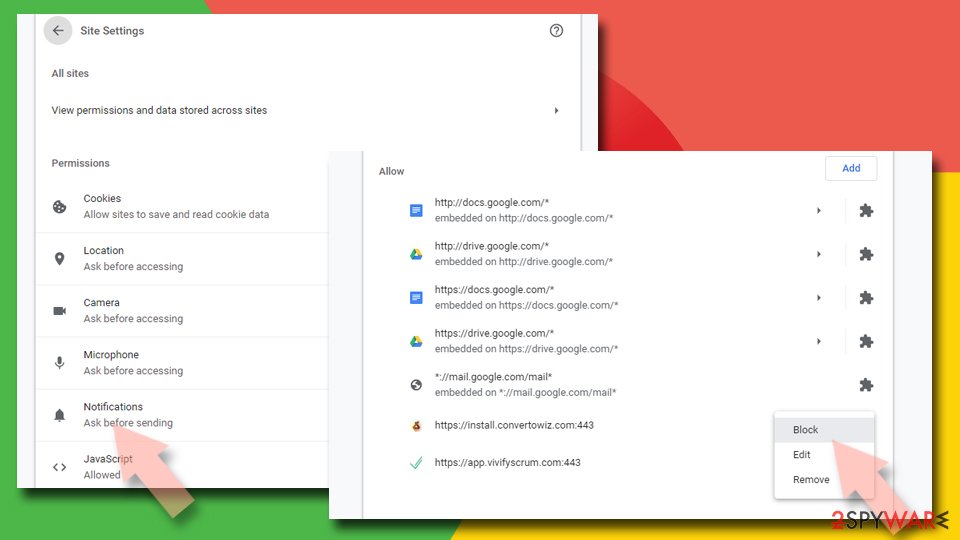
Google Chrome (desktop)
- Open the Google Chrome browser and go to Menu > Settings.
- Scroll down and click on Advanced.
- Locate the Privacy and security section and pick Site Settings > Notifications.
- Look at the Allow section and look for a suspicious URL.
- Click the three vertical dots next to it and pick Block. This should remove unwanted notifications from Google Chrome.

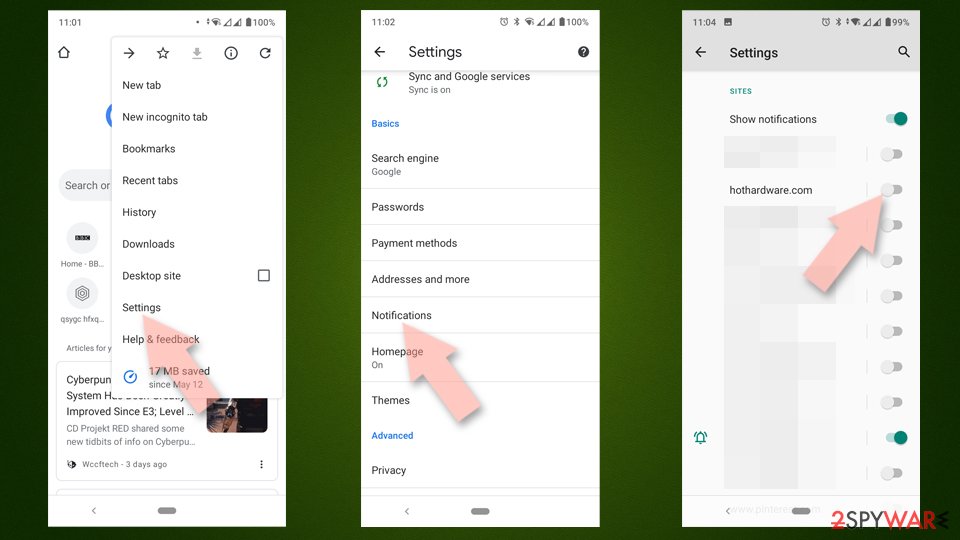
Google Chrome (Android)
- Open Google Chrome and tap on Settings (three vertical dots).
- Select Notifications.
- Scroll down to the Sites section.
- Locate the unwanted URL and toggle the button to the left (Off setting).

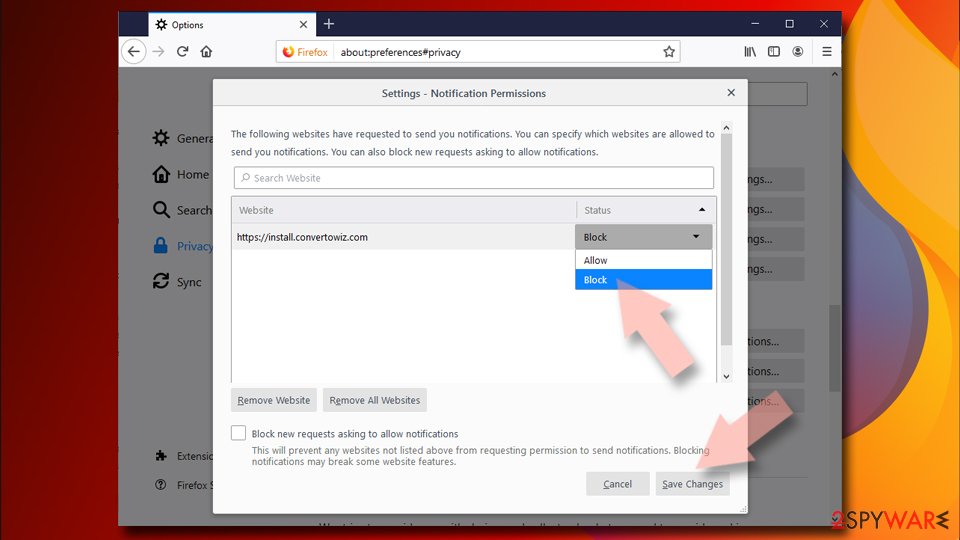
Mozilla Firefox
- Open Mozilla Firefox and go to Menu > Options.
- Click on Privacy & Security section.
- Under Permissions, you should be able to see Notifications. Click the Settings button next to it.
- In the Settings – Notification Permissions window, click on the drop-down menu by the URL in question.
- Select Block and then click on Save Changes. This should remove unwanted notifications from Mozilla Firefox.

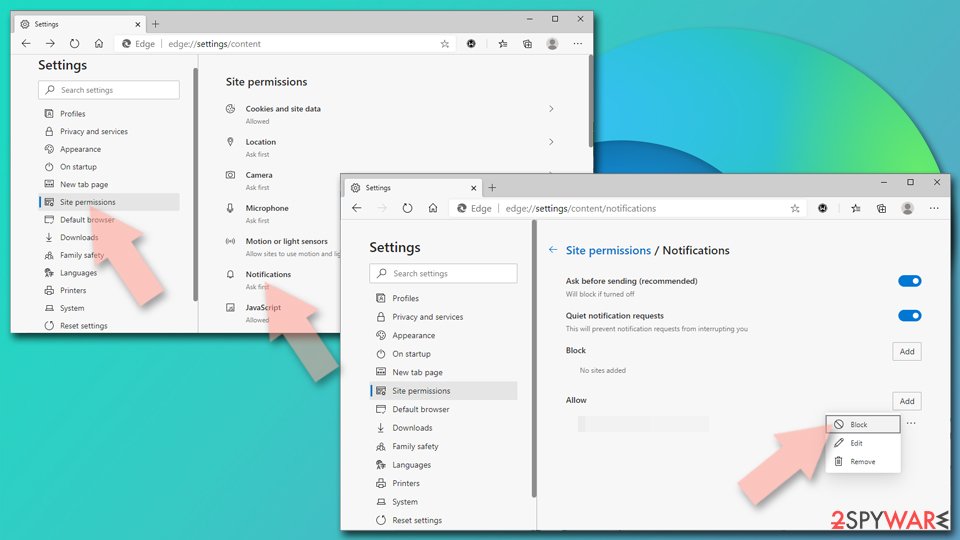
MS Edge (Chromium)
- Open Microsoft Edge, and go to Settings.
- Select Site permissions.
- Go to Notifications on the right.
- Under Allow, you will find the unwanted entry.
- Click on More actions and select Block.

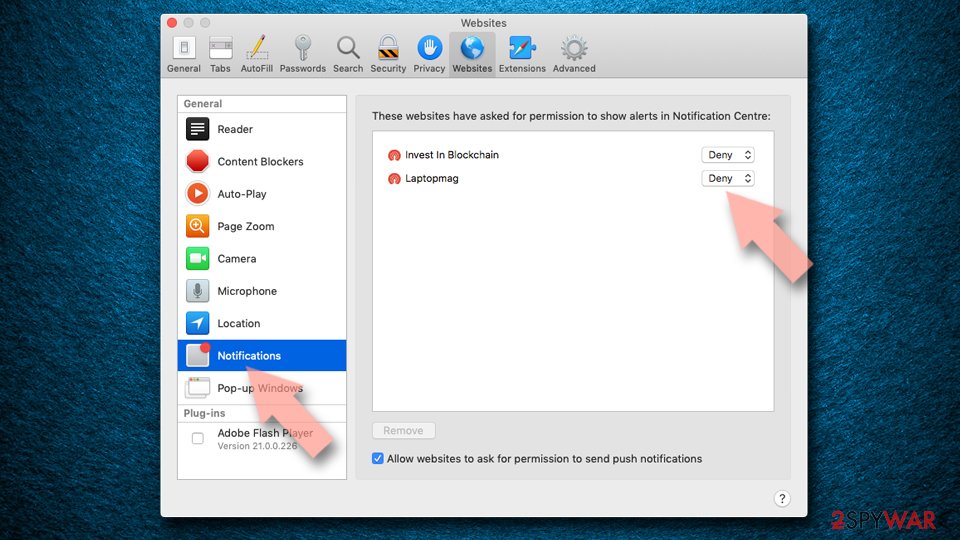
Safari
- Click on Safari > Preferences…
- Go to the Websites tab and, under General, select Notifications.
- Select the web address in question, click the drop-down menu and select Deny.

Internet Explorer
- Open Internet Explorer, and click on the Gear icon at the top-right of the window.
- Select Internet options and go to the Privacy tab.
- In the Pop-up Blocker section, click on Settings.
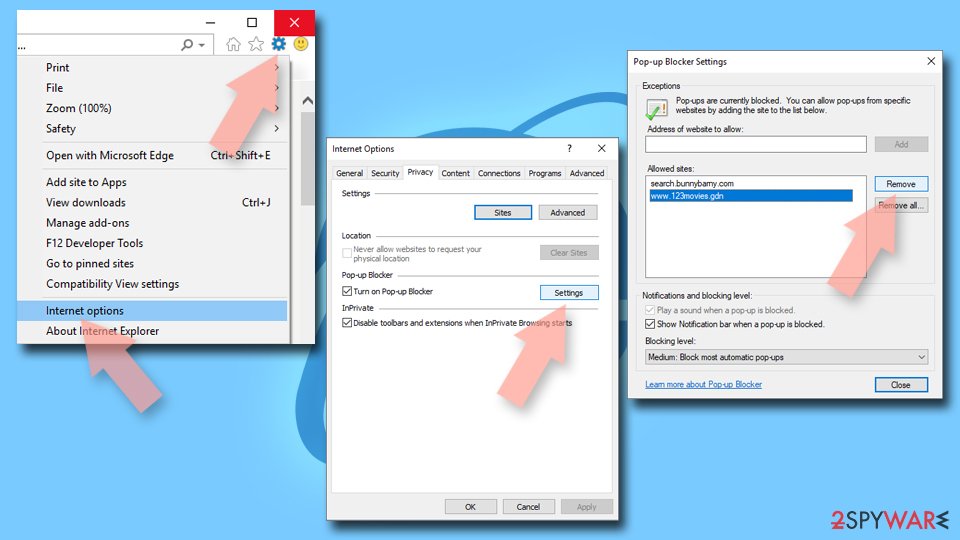
- Locate the web address in question under Allowed sites and pick Remove.

Did this guide help?
Be the first to comment