

Blamedbuckie.fun is a fake website that asks visitors to enable push notifications

Blamedbuckie.fun is a misleading website created by scammers. After encountering it, users are presented with a message that asks them to confirm that they aren't robots, there's 18+ content to be shown, a YouTube video to be played, or similar. These are common phishing[1] techniques used to make people click the “Allow” button within the notification prompt, which would immediately allow the site to send information to users without restrictions.
Only sometime later people would notice strange Blamedbuckie.fun pop-ups showing up on their screens. They would show up at random times irrespectively of which website is being visited at the time or even if a browser is not actively being used. The activity is very intrusive and annoying, hence many people want to get rid of them ASAP.
It is worth noting that the contents of these Blamedbuckie.fun ads can also be misleading or even malicious. By clicking shown links (be it intentionally or accidentally), users might end up on malicious websites, where they would be tricked into installing malware or potentially unwanted programs.
Likewise, they could be tricked into disclosing their personal information or losing money to fake services. Thus, we recommend ignoring the ads and remove them by following the guide below.
| Name | Blamedbuckie.fun |
| Type | Push notifications, ads, pop-ups, scam |
| Distribution | The website gains access to deliver any information as soon as the “Allow” button is pressed within the push notification prompt |
| Symptoms | Notifications are shown at the top of all other ads and often carry potentially dangerous content |
| Risks | If you click on links provided by the website, you might end up infecting your system with malware/PUPs, disclosing your personal information to cybercriminals, or losing money for useless services |
| Removal | To block the intrusive pop-ups, you need to access your browser's settings section. Also, perform a scan with SpyHunterCombo Cleaner anti-virus to check for infections |
| Other tips | Use FortectIntego to remediate the system after adware infection. The tool can also be used to clean web browsers automatically |
The adware problem
If you ever wondered why you see malicious content online, there could be a few reasons for that. First of all, it is worth noting that the internet security level has drastically increased over the years, and leading search providers such as Google use special filters to ensure users are not directed to malicious websites when using the search engine.
However, when it comes to redirects on various high-risk websites, dangerous activity is highly uncontrolled. Fake “Download” buttons or malicious scripts can result in redirects to fake websites. We recommend staying away from high-risk sites to avoid this.
Another reason why you may end up on Blamedbuckie.fun is adware.[2] This potentially unwanted software is commonly spread via software bundling, fake updates, or other deceptive methods, which makes users unaware of this presence on the system. Thus, it is important to check the device for adware, even if you don't think that you have installed it recently.
You should check the installed browser extensions and remove everything you don't recognize. Likewise, adware might be installed on the system level, so you should get rid of these apps too. If you are not quite sure how to do this, we strongly recommend you perform a full system scan with anti-malware software, such as SpyHunterCombo Cleaner or MalwarebytesMalwarebytes.
After you finish with PUP and malware removal, you should then clean your browsers to prevent unwanted data tracking and a possible return of ads. You can use FortectIntego PC repair and maintenance utility, which can also be used to fix any damaged system components related or unrelated to malware attacks.
Scam method examples
Push notifications scam sites are extremely common. Blamedbuckie.fun is one of many identical websites that try to scam users into subscribing, and they all use the exact same methods for that – Notificationscity.com, News-duboma.cc, and Saumeechoa.com are just a few examples we have recently described in our articles.

There are several messages that are meant to convince users to subscribe. First of all, the element of surprise (due to unexpected redirects) is pretty powerful here, as users don't have enough time to think it through before proceeding. They are usually met with one of the following messages:
- Click Allow to watch the video
- Your file is ready to download – press Allow to continue
- Can't play this video! Perhaps your browser doesn't allow video playback. Please click the Allow button to watch the video
- Press “Allow” to verify, that you are not a robot
- If you are 18+, click Allow, etc.
Evidently, these messages are all fake, and the “Allow” button is presented as something entirely different. While most users have seen requests to enable push notifications on other websites, under these circumstances, they might believe the messages and hit the “Allow,” which would automatically allow the site to send information via the API,[3] built-in to every modern web browser.
Removal of Blamedbuckie.fun ads
When you are sure that adware and other malicious software are removed from your device, you can then proceed to remove the annoying push notifications. To do this, you will have to access browser settings and perform the steps listed below:
Google Chrome
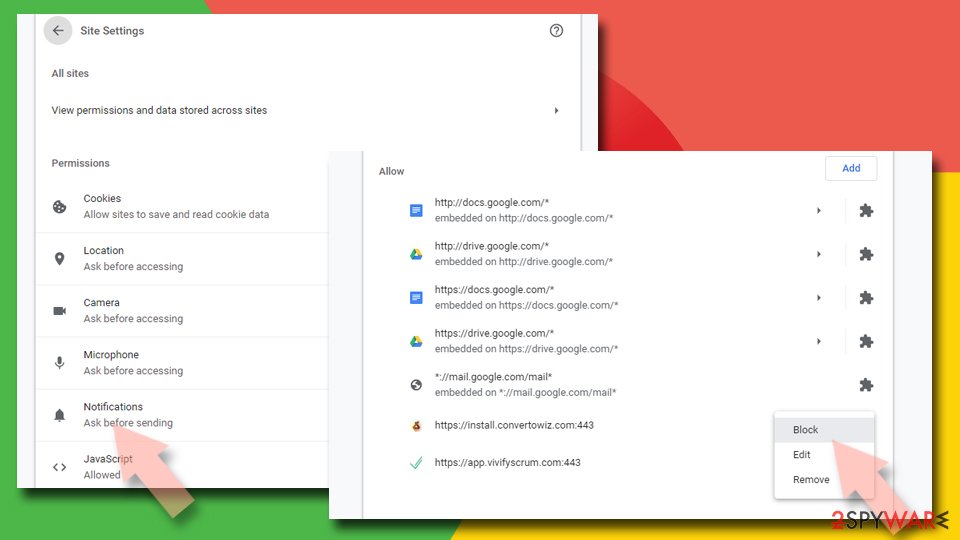
- Open the Google Chrome browser and go to Menu > Settings.
- Scroll down and click on Advanced.
- Locate the Privacy and security section and pick Site Settings > Notifications.
- Look at the Allow section and look for a suspicious URL.
- Click the three vertical dots next to it and pick Block. This should remove unwanted notifications from Google Chrome.

Google Chrome (Android)
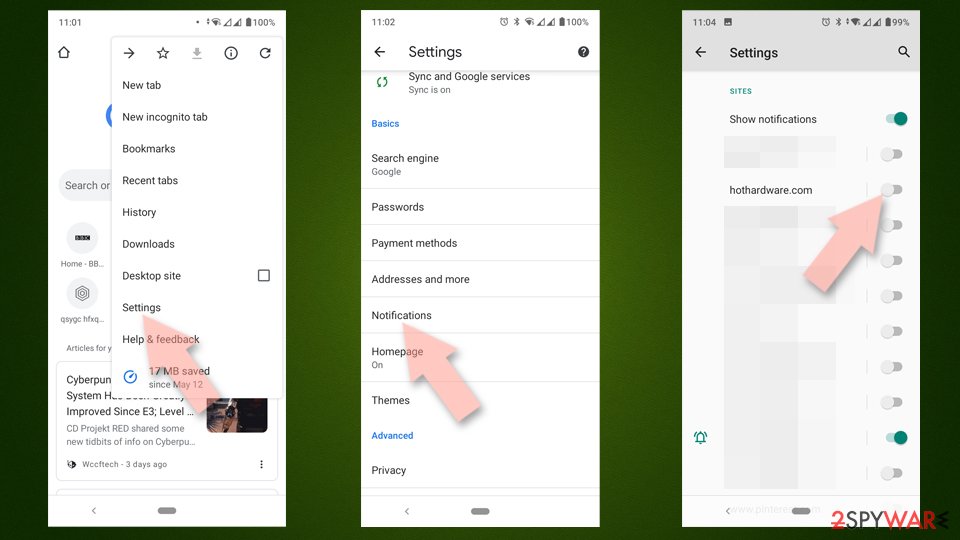
- Open Google Chrome and tap on Settings (three vertical dots).
- Select Notifications.
- Scroll down to the Sites section.
- Locate the unwanted URL and toggle the button to the left (Off position).

Mozilla Firefox
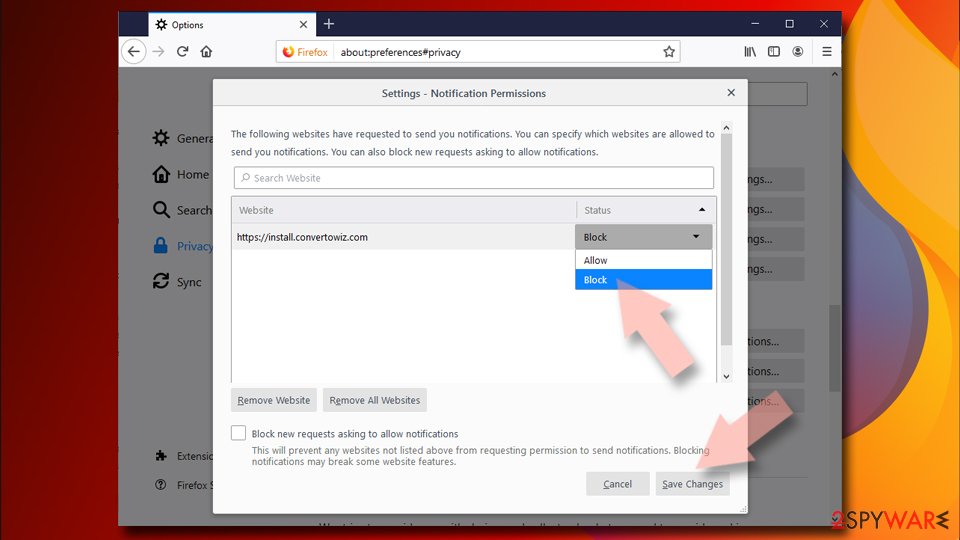
- Open Mozilla Firefox and go to Menu > Options.
- Click on Privacy & Security section.
- Under Permissions, you should be able to see Notifications. Click the Settings button next to it.
- In the Settings – Notification Permissions window, click on the drop-down menu by the URL in question.
- Select Block and then click on Save Changes. This should remove unwanted notifications from Mozilla Firefox.

Safari
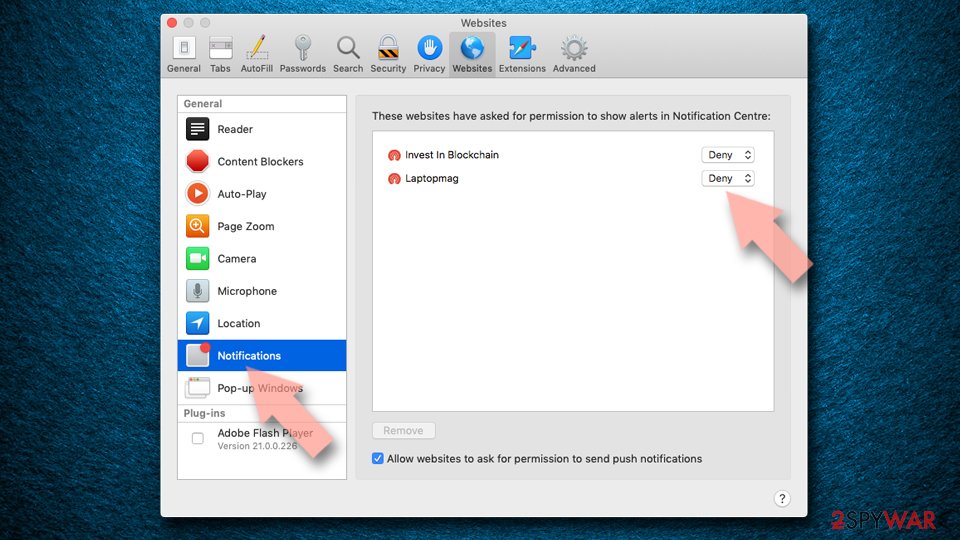
- Click on Safari > Preferences…
- Go to the Websites tab and, under General, select Notifications.
- Select the web address in question, click the drop-down menu and select Deny.

MS Edge
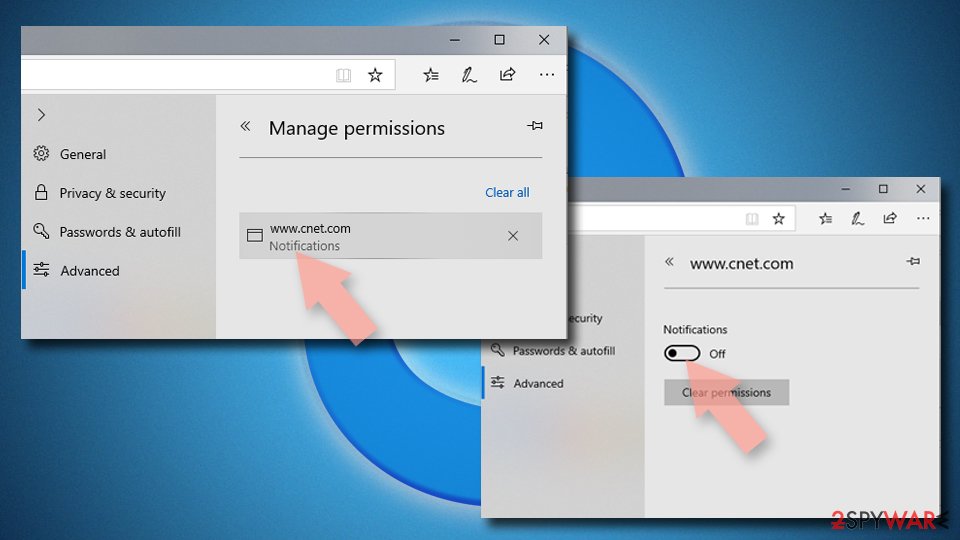
- Open Microsoft Edge, and click the Settings and more button (three horizontal dots) at the top-right of the window.
- Select Settings and then go to Advanced.
- Under Website permissions, pick Manage permissions and select the URL in question.
- Toggle the switch to the left to turn notifications off on Microsoft Edge.

MS Edge (Chromium)
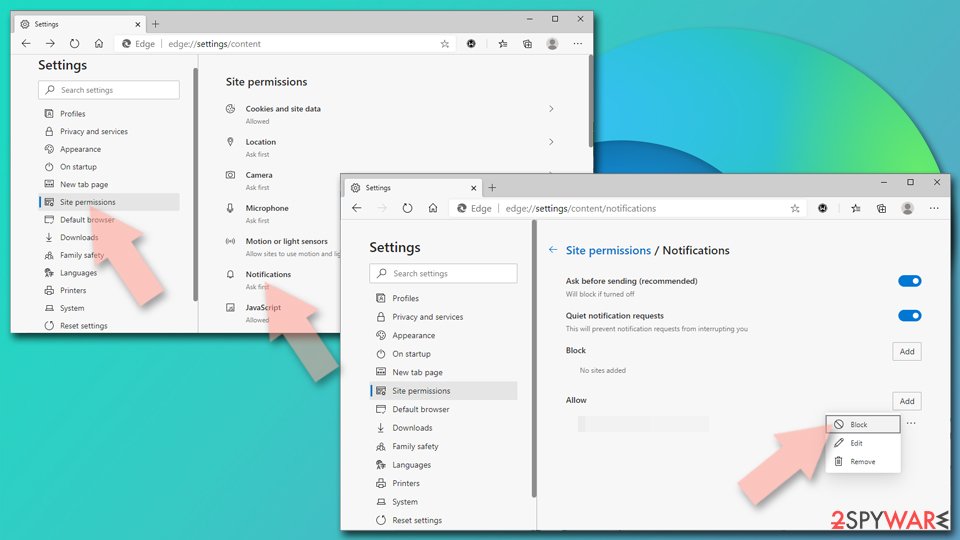
- Open Microsoft Edge, and go to Settings.
- Select Site permissions.
- Go to Notifications on the right.
- Under Allow, you will find the unwanted entry.
- Click on More actions and select Block.

Internet Explorer
- Open Internet Explorer, and click on the Gear icon at the top-right of the window.
- Select Internet options and go to the Privacy tab.
- In the Pop-up Blocker section, click on Settings.
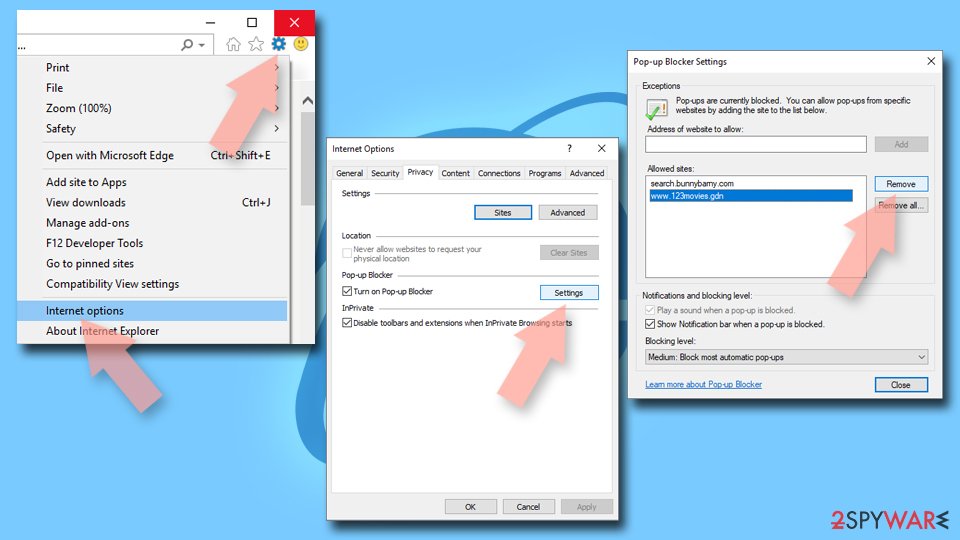
- Locate the web address in question under Allowed sites and pick Remove.

Did this guide help?
Be the first to comment