

Why should you not rely on Currentexplore.com search?
If you cannot live without search engines because you use them on a regular basis, make sure you do not get affected by Currentexplore.com virus, which has been noticed spreading around alongside various free applications. This suspicious program changes start page, new tab page settings and replaces default search engine value with Currentexplore.com. Our spyware research team has also noticed clones of this application that also spread around the web, and these clones promote similar, but differently named search engines, such as Lookupopinion.com, PleaseDiscover.com, and many more similar search tools. Such programs are known as browser hijackers, and they should be removed from the system without any hesitation. As we have stated already, Currentexplore.com browser hijacker can change start page, new tab and default search engine settings without user’s approval, and such unexpected changes can greatly scare the user and make him or her think that the system has been severely compromised. Besides, Currentexplore.com redirect problems, system slowdowns, pop-up ads and other issues will not let the user browse the web calmly, and such issues should not be ignored.
This potentially unwanted program (PUP) seeks to be installed on as many computer systems as possible because it aims to convince users to use a particular web search tool. This search tool generates altered search results that can hold deceptive links leading to shady third-party websites that need to be promoted. Each click on such corrupted links generates pay-per-click revenue for developers of this hijacker, but sadly, puts victim’s computer at risk. It appears that some websites advertised via this search engine can be untrustworthy or even provide malicious downloads or links pointing to other insecure Internet sites. Although another part of advertised links can be safe, we do not think that you should continue using such shady search tool. Besides, if you care about virtual security and privacy, then you should remove Currentexplore.com redirect virus now. For that, you can use FortectIntego.
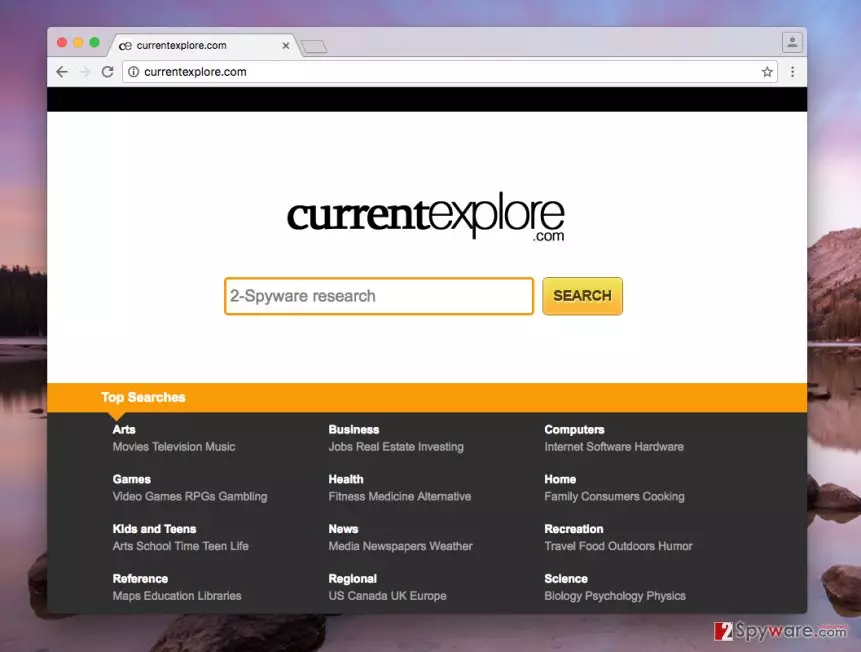
Although Currentexplore.com search seems to be different and interesting-looking search engine, it shouldn’t be trusted. The browser hijacker that brings this search tool to you also collects some information about your interests every time you browse the Internet. It can find out what ads do you click on, what websites you enjoy visiting, and what search terms do you use in your web searches. Unfortunately, search queries can contain some personal details, so keep in mind that they can reach this suspicious computer parasite, too. Besides, this PC pest might also share such information with its affiliates. If you do not want to get in trouble by disclosing information describing your browsing habits to some untrustworthy parties, you should take actions to complete Currentexplore.com removal as soon as possible.
How this application finds its way into the computer system?
It is obvious that such unknown search engines are not actively used by many computer users. However, quite many people report that this URL has replaced their previous homepage address. It means that this browser hijacker spreads silently and installs itself on users’ computers without letting them know. How can it happen? Shockingly, in a legitimate way. Currentexplore.com hijack occurs with the help of other free programs, which spread it alongside them and present it as a “recommended program.” Such additional programs are added almost to every freeware or shareware application, so it is important to watch what you install on the system. It is extremely important to check Custom or Advanced option when installing new software on the system because then you will be introduced to additional programs added to your download. You can refuse to install them by deselecting ticks next to them.
How to remove Currentexplore.com hijacker?
You will not remove Currentexplore.com virus just by searching for its executive files through the system. To eliminate this PC parasite and make your browsers clean again, you have to check each affected browser for components related to this hijacker. Instructions on how to do it are provided below this article. It is highly recommended to complete Currentexplore.com removal by using the anti-malware tool because it can detect all spyware and malware components that can hide deeply in the computer system. If you need any assistance, please let us know – you can send us a question via “Ask Us” page or share your thoughts in the comments section below.
Uninstall from Windows
Uninstall from Windows 10/8:
- Type Control Panel into the Windows search box and open the result.
- Under Programs, select Uninstall a program.


Uninstall from Windows 7/XP:
- Click on Windows Start > Control Panel (Windows XP users should click on Add/Remove Programs).
- In Control Panel, select Programs > Uninstall a program.


Remove the unwanted program:
- In the Programs and Features window, look for any recently installed suspicious entries, select them, and click Uninstall.
- If User Account Control appears, click Yes to confirm, then complete the removal.


Delete from macOS
Remove the unwanted application:
- From the menu bar, select Go > Applications.
- In the Applications folder, look for any suspicious entries, then drag them to Trash (or right-click and pick Move to Trash).


Delete leftover files and folders:
- Select Go > Go to Folder.
- Enter /Library/Application Support and remove any suspicious folders related to the unwanted program.
- Repeat the same check in the /Library/LaunchAgents and /Library/LaunchDaemons folders, deleting any suspicious entries.

- Finally, empty the Trash to permanently remove the leftovers.

Remove from Microsoft Edge
Delete unwanted extensions from MS Edge:
- Select Menu (three horizontal dots at the top-right of the browser window) and pick Extensions.
- From the list, pick the extension and click on the Gear icon.
- Click Remove.


Clear cookies and other browser data:
- Click on the Menu (three horizontal dots at the top-right of the browser window) and select Settings > Privacy, search, and services..
- Under Clear browsing data, pick Choose what to clear.
- Select Cookies and other site data and Cached images and files. (apart from passwords, although you might want to include Media licenses as well, if applicable) and click on Clear.


Restore new tab and homepage settings:
- Click the menu icon and choose Settings.
- Then find On startup section.
- Click Remove next to any suspicious startup page.
Reset MS Edge if the above steps did not work:
- Press on Ctrl + Shift + Esc to open Task Manager.
- Click on More details arrow at the bottom of the window.
- Select Details tab.
- Now scroll down and locate every entry with Microsoft Edge name in it. Right-click on each of them and select End Task to stop MS Edge from running.


Instructions for Chromium-based Edge
Delete extensions from MS Edge (Chromium):
- Open Edge and click select Settings > Extensions.
- Delete unwanted extensions by clicking Remove.


Clear cache and site data:
- Click on Menu and go to Settings.
- Select Privacy, search and services.
- Under Clear browsing data, pick Choose what to clear.
- Under Time range, pick All time.
- Select Clear now.


Reset Chromium-based MS Edge:
- Click on Menu and select Settings.
- On the left side, pick Reset settings.
- Select Restore settings to their default values.
- Confirm with Reset.
- This will disable extensions and reset startup pages but will not delete bookmarks, saved passwords, or browsing history.


Remove from Mozilla Firefox (FF)
Remove dangerous extensions:
- Open Mozilla Firefox browser and click on the Menu (three horizontal lines at the top-right of the window).
- Select Add-ons.
- In here, select the unwanted extension and click Remove.


Reset the homepage:
- Click three horizontal lines at the top right corner to open the menu.
- Choose Settings.
- Under Home, set your preferred homepage and new tab settings.
Clear cookies and site data:
- Click Menu and pick Settings.
- Go to Privacy & Security section.
- Scroll down to locate Cookies and Site Data.
- Click on Clear Data...
- Select Cookies and Site Data and Temporary cached files and pages, then click Clear.


Reset Mozilla Firefox
If clearing the browser as explained above did not help, reset Mozilla Firefox:
- Open Mozilla Firefox browser and click the Menu.
- Go to Help and then choose Troubleshooting Information.

- Under Give Firefox a tune up section, click on Refresh Firefox...
- Once the pop-up shows up, confirm the action by pressing on Refresh Firefox.



Remove from Google Chrome
Delete malicious extensions from Google Chrome:
- Open Google Chrome, click on the Menu (three vertical dots at the top-right corner) and select More tools > Extensions.
- In the newly opened window, you will see all the installed extensions. Uninstall all suspicious extensions related to the unwanted program by clicking Remove.


Clear cache and web data from Chrome:
- Click on Menu and pick Settings.
- Under Privacy and security, select Clear browsing data.
- Select Browsing history, Cookies and other site data, as well as Cached images and files.
- Click Clear data.


Change your homepage:
- Click menu and choose Settings.
- Look for a suspicious site in the On startup section.
- Click on Open a specific or set of pages and click on three dots to find the Remove option.
Reset Google Chrome:
If the previous methods did not help you, reset Google Chrome to eliminate all the unwanted components:
- Click on Menu and select Settings.
- In the Settings, scroll down and click Advanced.
- Scroll down and locate Reset and clean up section.
- Now click Restore settings to their original defaults.
- Confirm with Reset settings.


Delete from Safari
Remove dangerous extensions:
- Open Safari, click Safari in the menu at the top-left of the screen, and select Preferences.
- Go to the Extensions tab, look for any suspicious entries, and click Uninstall to remove them.


Clear history and website data:
- Click Safari in the menu and pick Clear History.
- Set Clear to all history and confirm with Clear History.


Reset Safari:
- Click Safari in the menu and select Preferences > Advanced.
- Enable Show Develop menu in menu bar.
- From the menu bar, click Develop and select Empty Caches.


Did this guide help?
4 comments
Layla
Very suspicious search tool, I must say!
pwrnt
Dont use this search engine! Honest advice from a victim!
Lada82
Thank you for providing these instructions! very useful!
David
I wish I have never came across currentexplore search. it is very annoying search tool, besides, fills up the results page with ads... useless search and thats it