

How reliable is Daiksearch2016.com?
Daiksearch2016.com virus should not be trusted at any costs since it happens to be a browser hijacker. It means that it is able to occupy your browser and reroute you to the domains contrary to your preferences. Thus, by controlling the traffic of browsing experience, it might highly infuriate some users. Whether you are frustrated already, or you encounter a browser hijacker for the first time, remove Daiksearch2016.com. It has been revealed that the hijacker is infected itself, thus, it is only a matter of time when it misleads you to the infected domain as well. In addition, the hijacker has its other “siblings” already roaming around the web: led-search2016.com, newsearch2016.com, and paper-search2016.com. Moreover, all of them share identical homepage designs and even URL domain names. Even if you think that their promoted quick access reference links are practical, find out more about the hijacker and whether it may be damaging to the operating system. In addition, besides Daiksearch2016.com removal options, you should also find out more about the distribution tendencies of the hijacker to escape the hijack again.
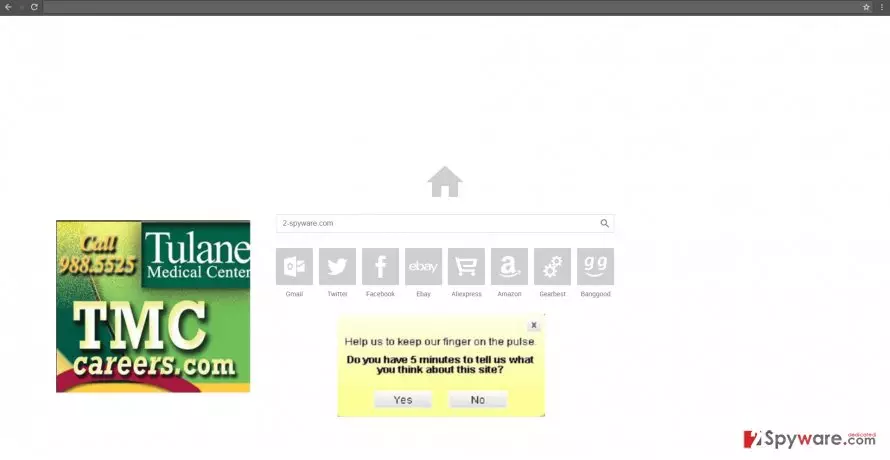
Daik Search2016 is no novelty for cyber specialists. After conducting a deeper analysis, it becomes obvious that the crooks have been hunting for temporary users. On the other hand, they aim to collect as many views and clicks. They aim to attract users’ attention simply by offering access to various shopping, sports, social network, arts and health related domains. However, such veneer should be treated with suspicion. Usually, legitimate applications do not include links to other domains. Such indirect advertising is beneficial for the owners of the hijacker and their partners, but it causes users’ negative feedback. Excessive advertising becomes a highly disturbing issue when it evolves into Daiksearch2016.com redirect. In other words, you might find yourself in a different domain after clicking on a search result or while canceling the ad. Besides this phenomenon being highly annoying, it might increase the risk of a cyber attack. Redirect domains frequently happen to be “enhanced” with malware. They might be mediators for trojans as well. You can quickly get rid of the PUP by launching FortectIntego.
When did the hijacker occupy my computer?
Unfortunately, users themselves contribute to the distribution of the PUP. Daiksearch2016.com hijack is likely to have happened when you were installing a newly downloaded audio manager or another free application. As a result of hopping through the installation guide without giving it a second look, you overlooked the add-on with the hijacker. Thus, clicking the “Install” button did not only enabled the primary program to enter the system but the PUP as well. Fortunately, there is another course of actions which minimizes the risk of a cyber infection. After starting the installation guide, opt for “Advanced” settings. They will reveal optional tools. Likewise, you will be able to prevent the installation of suspicious applications.
How quickly can I terminate Daiksearch2016.com?
If you do not have time to meddle with the hijacker, entrust Daiksearch2016.com removal to an anti-spyware application. This utility scans throughout the entire registry and other system files of and eliminate the hijacker completely. It also comes in handy locating the affiliated elements called “helper objects.” If they remain on the system, the hijacker exploits the opportunity to occupy the device again. Furthermore, you may also go through manual Daiksearch2016.com removal guidelines. There are several of them provided below which are applicable or different search engines. Next time you are about to install a new application, pay an attentive look to post any add-ons.
Uninstall from Windows
Uninstall from Windows 10/8:
- Type Control Panel into the Windows search box and open the result.
- Under Programs, select Uninstall a program.


Uninstall from Windows 7/XP:
- Click on Windows Start > Control Panel (Windows XP users should click on Add/Remove Programs).
- In Control Panel, select Programs > Uninstall a program.


Remove the unwanted program:
- In the Programs and Features window, look for any recently installed suspicious entries, select them, and click Uninstall.
- If User Account Control appears, click Yes to confirm, then complete the removal.


Delete from macOS
Remove the unwanted application:
- From the menu bar, select Go > Applications.
- In the Applications folder, look for any suspicious entries, then drag them to Trash (or right-click and pick Move to Trash).


Delete leftover files and folders:
- Select Go > Go to Folder.
- Enter /Library/Application Support and remove any suspicious folders related to the unwanted program.
- Repeat the same check in the /Library/LaunchAgents and /Library/LaunchDaemons folders, deleting any suspicious entries.

- Finally, empty the Trash to permanently remove the leftovers.

Reset Internet Explorer
Remove dangerous add-ons:
- Open Internet Explorer, click on the Gear icon (IE menu) on the top-right corner of the browser
- Pick Manage Add-ons.
- You will see a Manage Add-ons window. Here, look for suspicious plugins. Click on these entries and select Disable.


Change your homepage if it was altered:
- Open IE and click on the Gear icon.
- Select Internet Options.
- In the General tab, delete the Home page address and replace it by your preferred one (for example, Google.com).
- Click Apply and then select OK.


Delete temporary files:
- Press on the Gear icon and select Internet Options.
- Under Browsing history, click Delete...
- Select relevant fields and press Delete.


Reset Internet Explorer:
- Click on Gear icon > Internet options and select Advanced tab.
- Select Reset.
- In the new window, check Delete personal settings and select Reset.


Remove from Microsoft Edge
Delete unwanted extensions from MS Edge:
- Select Menu (three horizontal dots at the top-right of the browser window) and pick Extensions.
- From the list, pick the extension and click on the Gear icon.
- Click Remove.


Clear cookies and other browser data:
- Click on the Menu (three horizontal dots at the top-right of the browser window) and select Settings > Privacy, search, and services..
- Under Clear browsing data, pick Choose what to clear.
- Select Cookies and other site data and Cached images and files. (apart from passwords, although you might want to include Media licenses as well, if applicable) and click on Clear.


Restore new tab and homepage settings:
- Click the menu icon and choose Settings.
- Then find On startup section.
- Click Remove next to any suspicious startup page.
Reset MS Edge if the above steps did not work:
- Press on Ctrl + Shift + Esc to open Task Manager.
- Click on More details arrow at the bottom of the window.
- Select Details tab.
- Now scroll down and locate every entry with Microsoft Edge name in it. Right-click on each of them and select End Task to stop MS Edge from running.


Instructions for Chromium-based Edge
Delete extensions from MS Edge (Chromium):
- Open Edge and click select Settings > Extensions.
- Delete unwanted extensions by clicking Remove.


Clear cache and site data:
- Click on Menu and go to Settings.
- Select Privacy, search and services.
- Under Clear browsing data, pick Choose what to clear.
- Under Time range, pick All time.
- Select Clear now.


Reset Chromium-based MS Edge:
- Click on Menu and select Settings.
- On the left side, pick Reset settings.
- Select Restore settings to their default values.
- Confirm with Reset.
- This will disable extensions and reset startup pages but will not delete bookmarks, saved passwords, or browsing history.


Remove from Mozilla Firefox (FF)
Remove dangerous extensions:
- Open Mozilla Firefox browser and click on the Menu (three horizontal lines at the top-right of the window).
- Select Add-ons.
- In here, select the unwanted extension and click Remove.


Reset the homepage:
- Click three horizontal lines at the top right corner to open the menu.
- Choose Settings.
- Under Home, set your preferred homepage and new tab settings.
Clear cookies and site data:
- Click Menu and pick Settings.
- Go to Privacy & Security section.
- Scroll down to locate Cookies and Site Data.
- Click on Clear Data...
- Select Cookies and Site Data and Temporary cached files and pages, then click Clear.


Reset Mozilla Firefox
If clearing the browser as explained above did not help, reset Mozilla Firefox:
- Open Mozilla Firefox browser and click the Menu.
- Go to Help and then choose Troubleshooting Information.

- Under Give Firefox a tune up section, click on Refresh Firefox...
- Once the pop-up shows up, confirm the action by pressing on Refresh Firefox.



Remove from Google Chrome
Delete malicious extensions from Google Chrome:
- Open Google Chrome, click on the Menu (three vertical dots at the top-right corner) and select More tools > Extensions.
- In the newly opened window, you will see all the installed extensions. Uninstall all suspicious extensions related to the unwanted program by clicking Remove.


Clear cache and web data from Chrome:
- Click on Menu and pick Settings.
- Under Privacy and security, select Clear browsing data.
- Select Browsing history, Cookies and other site data, as well as Cached images and files.
- Click Clear data.


Change your homepage:
- Click menu and choose Settings.
- Look for a suspicious site in the On startup section.
- Click on Open a specific or set of pages and click on three dots to find the Remove option.
Reset Google Chrome:
If the previous methods did not help you, reset Google Chrome to eliminate all the unwanted components:
- Click on Menu and select Settings.
- In the Settings, scroll down and click Advanced.
- Scroll down and locate Reset and clean up section.
- Now click Restore settings to their original defaults.
- Confirm with Reset settings.


Delete from Safari
Remove dangerous extensions:
- Open Safari, click Safari in the menu at the top-left of the screen, and select Preferences.
- Go to the Extensions tab, look for any suspicious entries, and click Uninstall to remove them.


Clear history and website data:
- Click Safari in the menu and pick Clear History.
- Set Clear to all history and confirm with Clear History.


Reset Safari:
- Click Safari in the menu and select Preferences > Advanced.
- Enable Show Develop menu in menu bar.
- From the menu bar, click Develop and select Empty Caches.


Did this guide help?
2 comments
3xclockwise
Where do they come from?...
mcFly455
Finally, got rid of it!