

Globaletes.org shows fake conformation prompts to make users accept push notifications from unsafe sources

Globaletes.org is one of many deceptive websites created by unscrupulous individuals to make money through unethical means. Specifically, when users visit this site, often due to accidental clicks or malware infections, they are shown misleading information designed to make them believe that clicking the “Allow” button on the notification prompt is a normal action.
If users agree to this prompt, Globaletes.org will begin to send persistent and disruptive ads as push notifications, which can appear in various corners of the screen depending on the browser being used. This can be especially bothersome when using browsers like Google Chrome, Mozilla Firefox, or Microsoft Edge.
It is important not to interact with any ads from Globaletes.org, as they may lead to the installation of unwanted software or malware, or result in personal information being stolen or money being wasted on worthless products. Our guide provides steps to remove these unwanted notifications and check if your system is infected.
| Name | Globaletes.org |
| Type | Push notifications, ads, pop-ups, scam |
| Distribution | Users allow push notifications after they click the “Allow” button within the prompt |
| Symptoms | You may start seeing intrusive pop-ups on your desktop – clicking these may lead to insecure or even malicious websites |
| Risks | Push notifications may include incorrect information and links to dangerous websites. If you click the ad, your system might be infected with malware, your identity might be stolen, or you could lose money |
| Removal | To block the intrusive pop-ups, you need to access your browser's settings section. Also, perform a scan with SpyHunterCombo Cleaner anti-virus to check for infections |
| Other tips | You should remove caches and other web data after the elimination of PUPs to prevent data tracking with the FortectIntego repair and maintenance tool. You can also repair damaged system components with it |
Scamming techniques used
The main goal of misleading and fraudulent websites is to generate revenue through advertisements. Unfortunately, dishonest individuals often resort to deceptive advertising networks, which compromises the quality of ads. This is why you might see harmful or misleading links in the push notifications from Globaletes.org.
These deceptive ad networks are attractive to scammers because they offer high payouts, benefiting the scammers rather than the users. Since few people would willingly accept harmful advertisements, scammers use various tricks to get users to agree to receive these notifications. For example, they might use misleading prompts like:
- Press “Allow” to verify, that you are not a robot
- Download is ready – click Allow to download your file
- Just one more step! “Allow” to continue
- If you are 18+, click Allow
- Click “Allow” to win a prize and get it in our shop!
Clicking the “Allow” button is a major mistake. It grants the website permission to send persistent push notifications anytime your browser is open, leading to a constant stream of unwanted ads.

What can you expect from Globaletes.org ads?
The push notification feature in browsers is an API that website developers can use to send notifications. When a user visits a site, if they haven’t disabled push notification prompts, they will be asked if they want to allow notifications from that site. Many people may click “Allow” without much thought, as the context of the prompt might seem unfamiliar.
Soon after, users may start seeing suspicious pop-ups, which usually appear in the top-right corner on Mac devices or the bottom-right corner on Windows computers. On phones, these notifications simply show up like any other phone alert. Even though some of these notifications might contain regular ads, many include deceptive or harmful links. With Globaletes.org, you might come across:
- Get-rich-quick schemes
- Fake giveaways or lottery winnings
- Links to sites promoting unwanted software or malware
- Phony virus alerts or security software expiration notices
It’s important not to click on any links from these unreliable sources, as they may lead to further malicious activity. To stop these intrusive notifications and check for adware on your system, follow the instructions provided below.
Remove unwanted push notifications
Users often wonder if push notifications are caused by a computer virus. It’s important to clarify that they are not. Push notifications originate from the web browser and will only appear if users have given their permission.
However, many deceptive websites send notifications that users did not intentionally agree to receive. To prevent this from happening, you should access your browser settings and block notifications from Globaletes.org (or any similar sites). Instructions on how to do this can be found below.
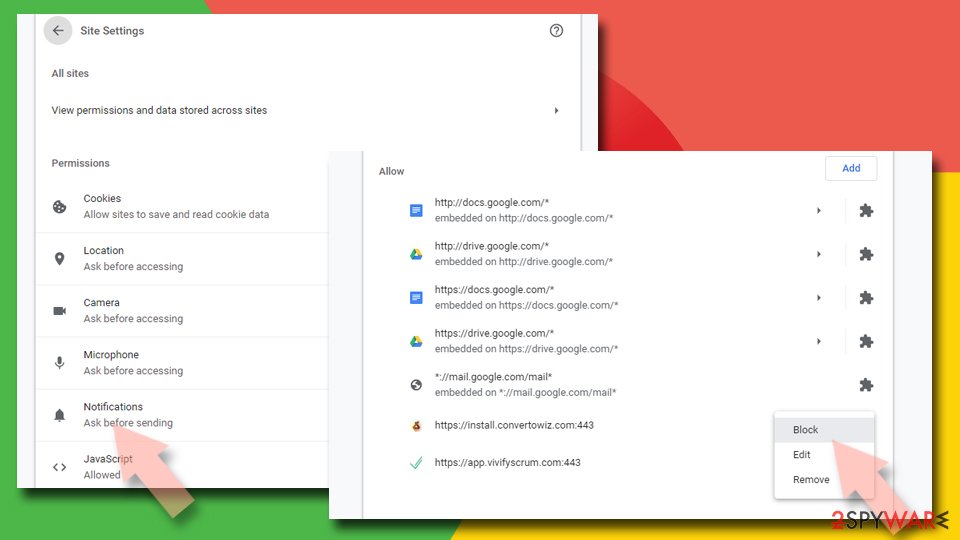
Google Chrome (desktop)
- Open the Google Chrome browser and go to Menu > Settings.
- Scroll down and click on Advanced.
- Locate the Privacy and security section and pick Site Settings > Notifications.
- Look at the Allow section and look for a suspicious URL.
- Click the three vertical dots next to it and pick Block. This should remove unwanted notifications from Google Chrome.

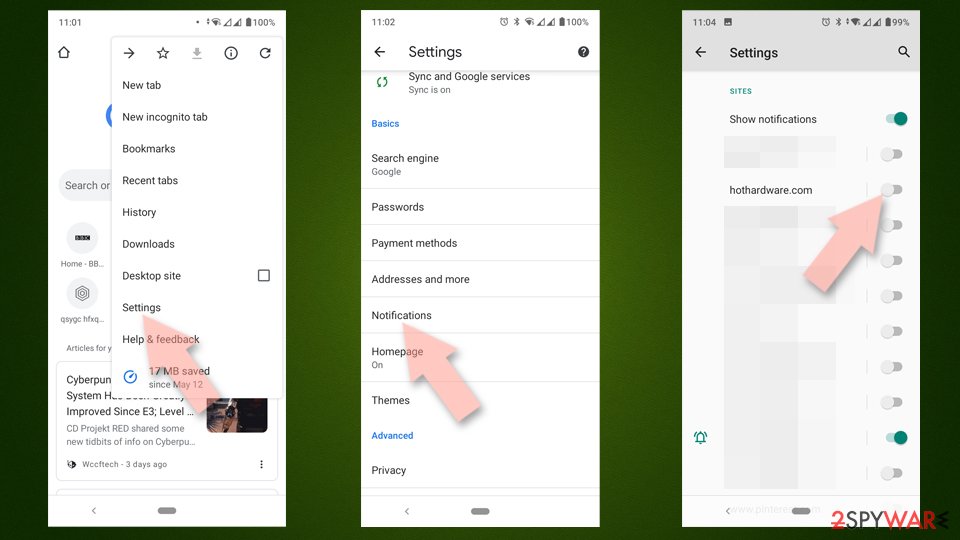
Google Chrome (Android)
- Open Google Chrome and tap on Settings (three vertical dots).
- Select Notifications.
- Scroll down to the Sites section.
- Locate the unwanted URL and toggle the button to the left (Off setting).

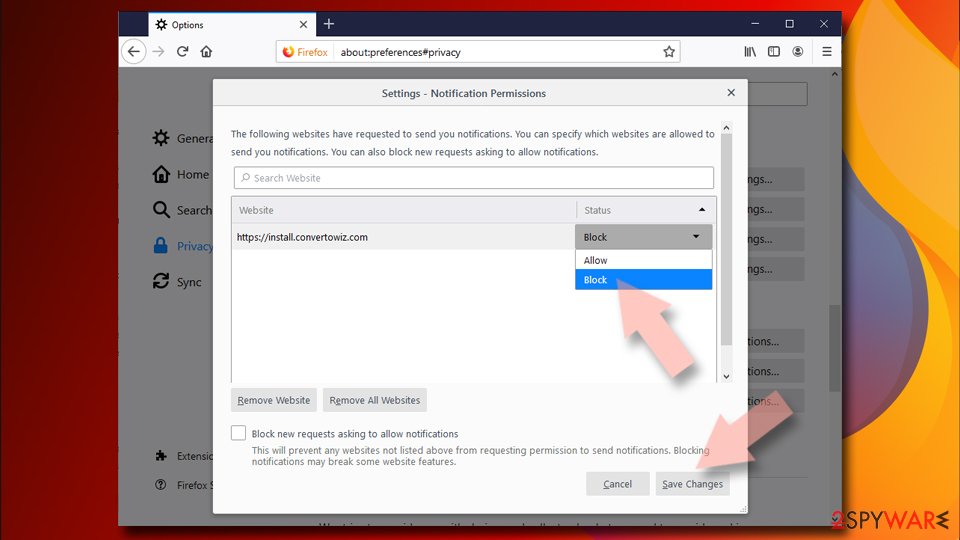
Mozilla Firefox
- Open Mozilla Firefox and go to Menu > Options.
- Click on Privacy & Security section.
- Under Permissions, you should be able to see Notifications. Click the Settings button next to it.
- In the Settings – Notification Permissions window, click on the drop-down menu by the URL in question.
- Select Block and then click on Save Changes. This should remove unwanted notifications from Mozilla Firefox.

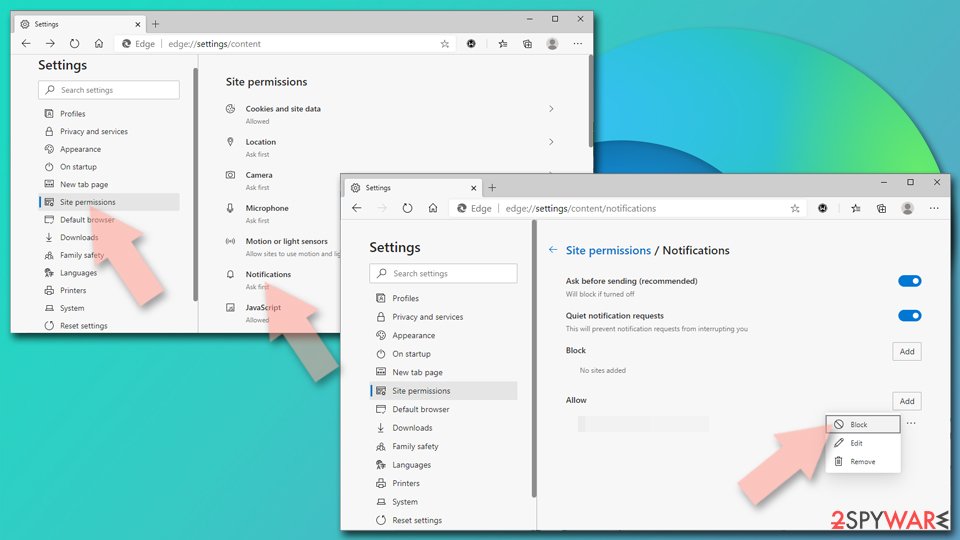
MS Edge (Chromium)
- Open Microsoft Edge, and go to Settings.
- Select Site permissions.
- Go to Notifications on the right.
- Under Allow, you will find the unwanted entry.
- Click on More actions and select Block.

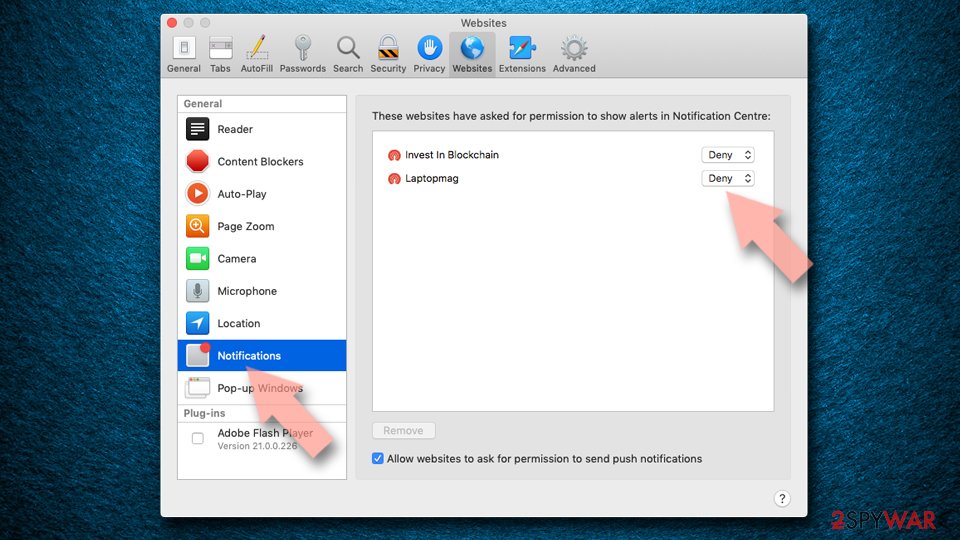
Safari
- Click on Safari > Preferences…
- Go to the Websites tab and, under General, select Notifications.
- Select the web address in question, click the drop-down menu and select Deny.

Internet Explorer
- Open Internet Explorer, and click on the Gear icon at the top-right of the window.
- Select Internet options and go to the Privacy tab.
- In the Pop-up Blocker section, click on Settings.
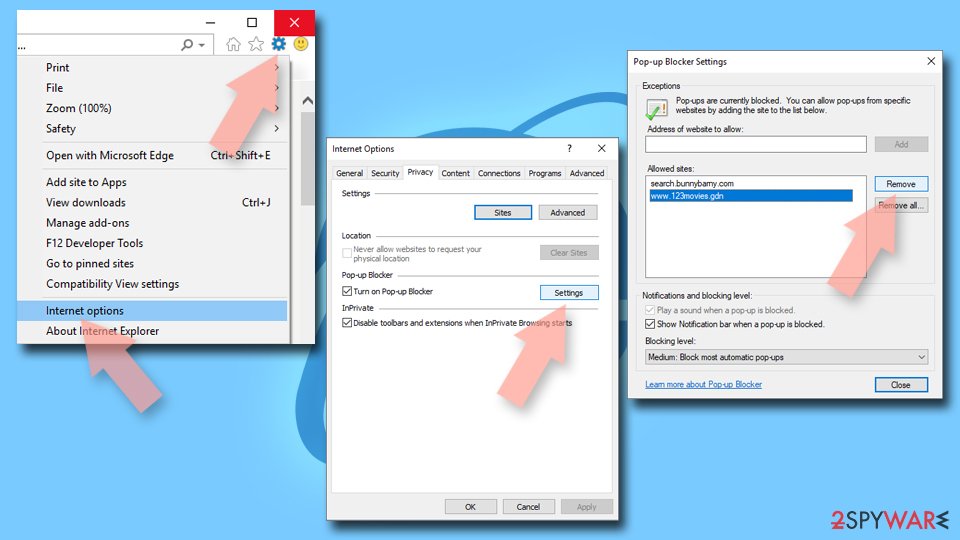
- Locate the web address in question under Allowed sites and pick Remove.

Get rid of adware or other threats
If you find yourself frequently redirected to Globaletes.org or similar websites, it’s likely that adware has infected your system. Adware is a type of software designed to overwhelm your screen with intrusive ads. Each interaction with these ads benefits the developers financially.
Adware is problematic due to its unclear distribution methods and dubious data tracking practices. The ads it generates can be extremely invasive, often presenting misleading or harmful content, making them difficult to ignore. Additionally, adware might use various techniques to stay hidden and avoid detection, such as:
- Not appearing in the list of installed programs
- Exploiting existing system processes
- Creating scheduled tasks to restart malicious processes
- Modifying registry settings to ensure it loads with every system startup
To address this issue, it’s advisable to run a system scan with reliable anti-malware software. Programs like SpyHunterCombo Cleaner, MalwarebytesMalwarebytes, or other effective tools can quickly identify and remove these threats. After removing the harmful applications, it’s crucial to clean your browser caches and remove any leftover files. Fortunately, FortectIntego can help with this cleanup by automatically finding and deleting these remnants for you.
Did this guide help?
Be the first to comment