

“Hubsync-dev” scam is a website that resembles a real platform
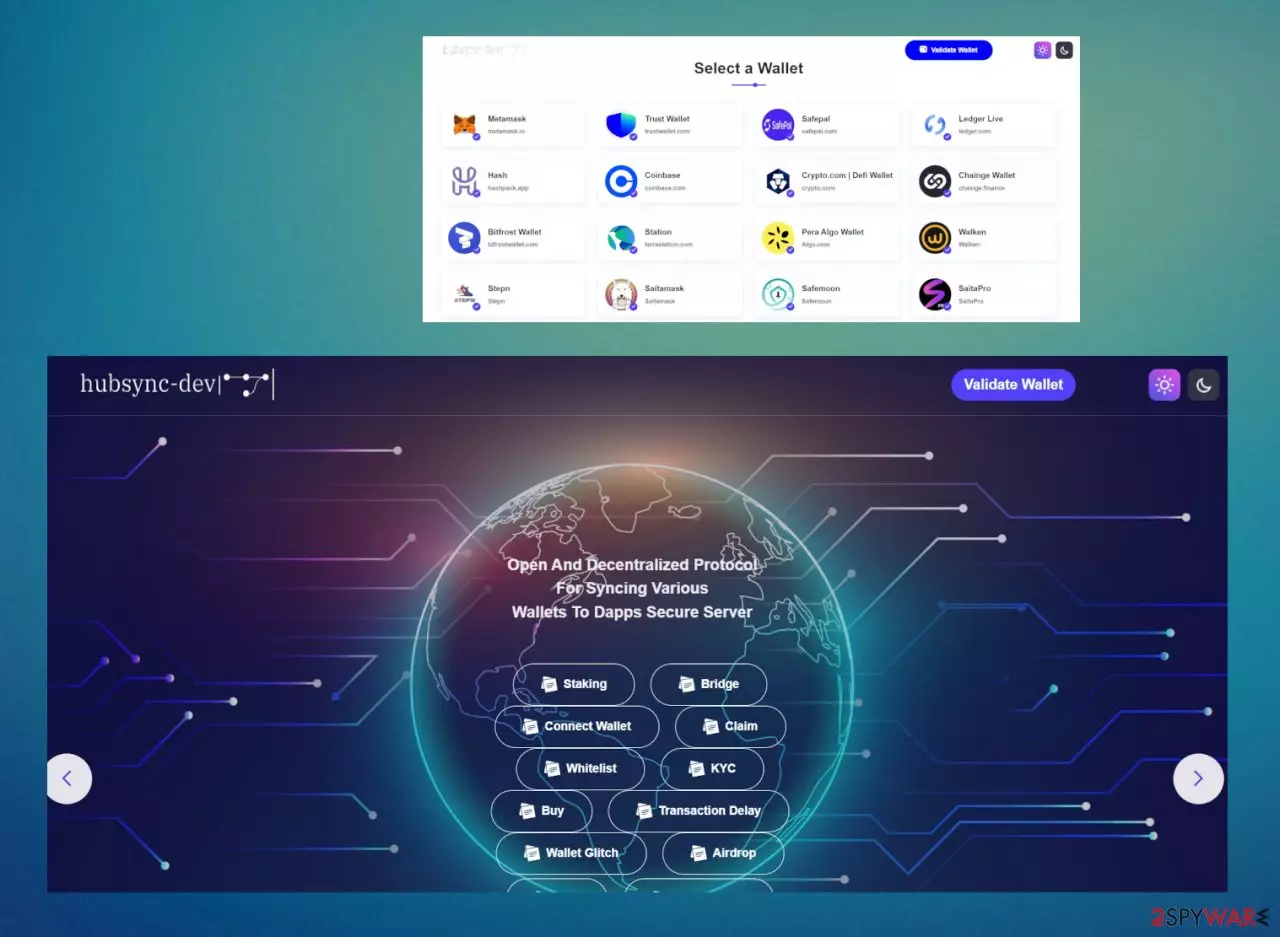
“Hubsync-dev” website is the fake version of a proper platform. The scam promotes hubsync-dev.pages[.]dev page that appears to be a real and legitimate one. Also, scams can deliver users other redirects to different domains. The initial aim is to disguise it as a platform and attract people.
The “Hubsync-dev” virus is a spamming campaign that aims to attract people to a website that appears as a legitimate platform for syncing crypto wallets. However, the website tries to trick people into providing personal or digital assets-related details so your money goes to their wallets.
“Hubsync-dev” scam scam claims to be a decentralized protocol for syncing digital wallets with decentralized applications (dApps). However, it's important to know that this scheme is not associated with any legitimate platforms or entities. Unfortunately, the resemblance tricks visitors into this crypto scam and results in lost money.
| Name | “Hubsync-dev” scam |
|---|---|
| Page | hubsync-dev.pages[.]dev |
| IP address | 172.66.44.168 |
| Type | Scam, fraud, social-engineering campaign |
| Danger | This scam and data gathering can cause monetary losses, stealing particular information about users remains the main goal of these scammers linked to the fake page |
| Distribution | Other social-engineering campaigns, third-party pages and PUPs |
| Elimination | Running AV tools like SpyHunterCombo Cleaner or MalwarebytesMalwarebytes is the best idea |
| Tips | Rely on FortectIntego for the damaged system parts |
The scam operates as a phishing site. Users encounter errors when interacting with the fake page and trying to connect their wallets. They are then prompted to retry or manually link their wallets by entering their login credentials. As all connection attempts fail, users are deceived into providing their passphrases.
The phishing site records this information and sends it to the scammers, allowing them to gain control of the victims' digital wallets and steal the funds stored within. Due to the nearly untraceable nature of cryptocurrency transactions, victims cannot retrieve their stolen assets.
Common tactics used in crypto scams:
- False claims about wallet syncing
- Promises of new coin/token promotions
- Fake airdrops or giveaways
- Phony account/wallet issues
- Bogus security updates
- Alerts about suspicious activity.
Online scams might get sneakier and more dangerous
Online scams are often poorly constructed and full of errors, but some are skillfully made to look like content from real companies, organizations, or authorities. This is how you can differentiate between real and fake hubsync-dev.pages[.]dev and similar platforms.
Many people encounter “Hubsync-dev” scam websites through various means. These include rogue advertising networks, spam emails, direct messages, text messages, browser notifications, social media posts, intrusive ads (known as malvertising), mistyped URLs (typosquatting), and adware.
Social media spam is particularly common in promoting cryptocurrency scams. These spam posts and direct messages often come from hacked accounts belonging to real projects, companies, celebrities, and influencers. Scammers behind this “Hubsync-dev” scam also use intrusive pop-up adverts that can execute cryptocurrency-draining scripts, which may appear even on legitimate sites that have been compromised.
Cybercriminals get more sneaky and advanced. This is only one of the similar campaigns, and you might even get exposed to malware that is more dangerous to your device than the “Hubsync-dev” scam. Of course, losing money or data is a great issue in these new technological ages.

Data and money loss, damage to the machine can be stopped with proper elimination of the virus
According to the Federal Trade Commission (FTC), over 46,000 individuals have reported losing more than $1 billion in cryptocurrency scams since the beginning of 2021. Crypto scams account for one out of every four dollars reported lost, making them more common than any other type of financial fraud.
To protect yourself from such scams, always double-check the legitimacy of any site before entering your digital wallet information. Be wary of unexpected prompts to enter sensitive information and stay informed about common scams targeting cryptocurrency users. By staying vigilant, you can better safeguard your digital assets from cybercriminals.
“Hubsync-dev” scam is a threat that needs to be removed. The infection can be found and removed using tools like SpyHunterCombo Cleaner or MalwarebytesMalwarebytes. This is not the way to fight scammers or get your funds back, but the solution for the altered system and infections that these intrudes might seed throughout the device.
Remove the threat and eliminate any infections related to “Hubsync-dev” scam. This is the only way to stop unwanted behavior and performance issues. However, there are issues with the machine that need fixing. This is where applications like FortectIntego come.
Despite the fact that this scam is focused on stealing data and funds, there are tons of third-parti pages and PUPs that might lead to system infections too, so make sure to clear the device form intruders.
Remove unwanted notifications from Google Chrome (desktop):
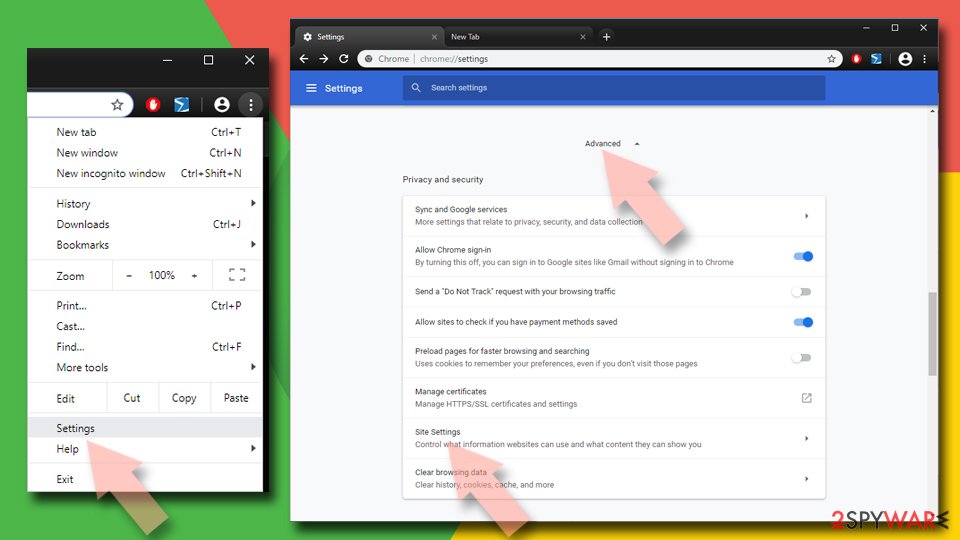
- Open Google Chrome browser and go to Menu > Settings.
- Scroll down and click on Advanced.
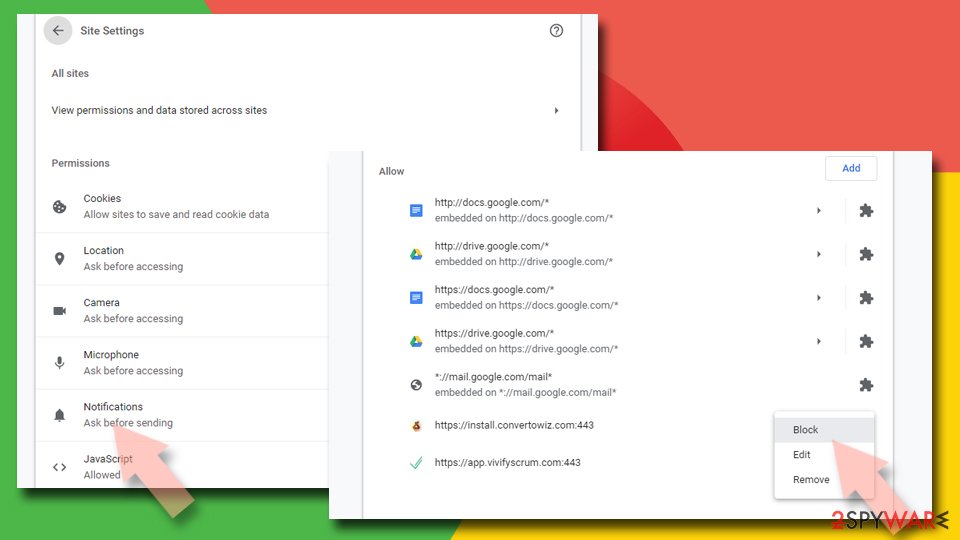
- Locate Privacy and security section and pick Site Settings > Notifications.
- Look at the Allow section and look for a suspicious URL.
- Click the three vertical dots next to it and pick Block. This should remove unwanted notifications from Google Chrome.


Remove unwanted notifications from Google Chrome (Android):
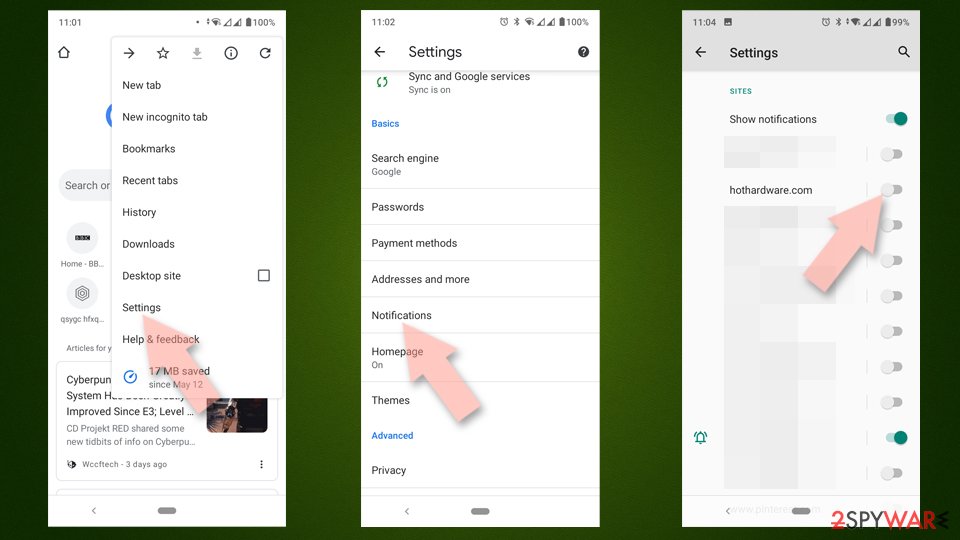
- Open Google Chrome and tap on Settings (three vertical dots).
- Select Notifications.
- Scroll down to the Sites section.
- Locate the unwanted URL and toggle the button to the left (Off setting).

Remove unwanted notifications from Mozilla Firefox:
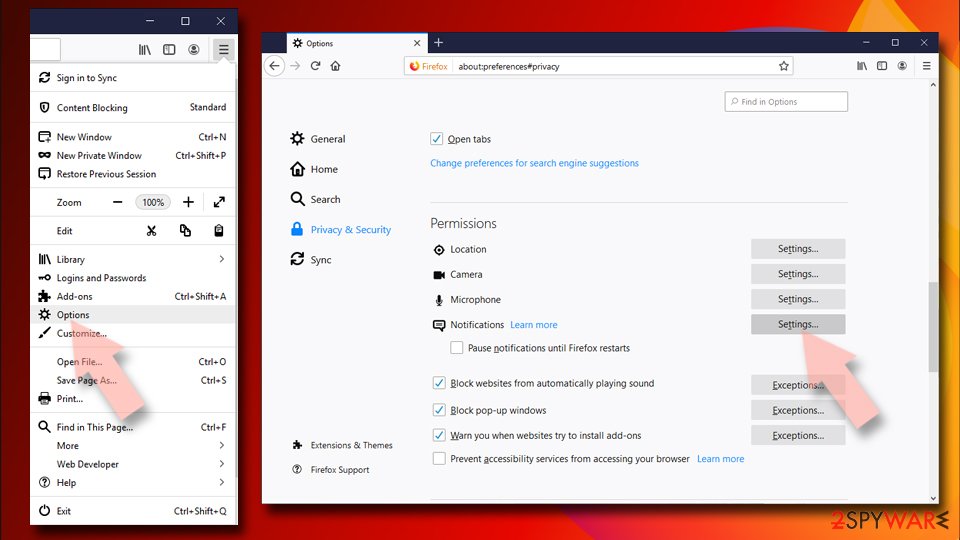
- Open Mozilla Firefox and go to Menu > Options.
- Click on Privacy & Security section.
- Under Permissions, you should be able to see Notifications. Click the Settings button next to it.
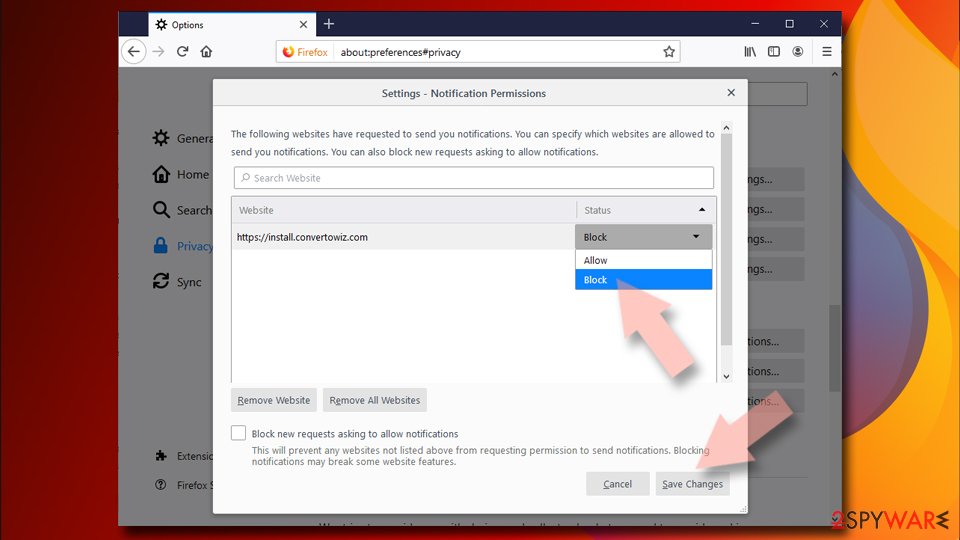
- In the Settings – Notification Permissions window, click on the drop-down menu by the URL in question.
- Select Block and then click on Save Changes. This should remove unwanted notifications from Mozilla Firefox.


Remove unwanted notifications from Safari:
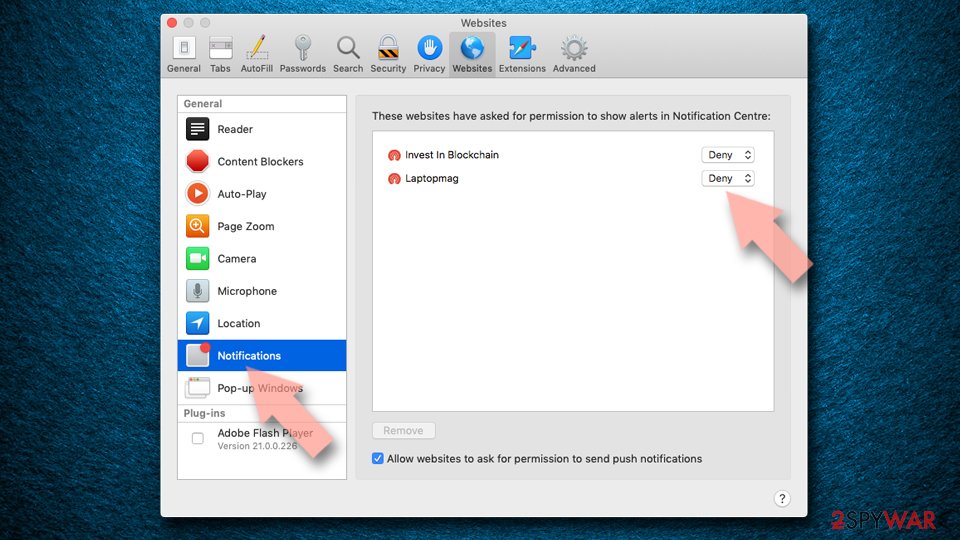
- Click on Safari > Preferences…
- Go to the Websites tab and, under General, select Notifications.
- Select the web address in question, click the drop-down menu and select Deny.

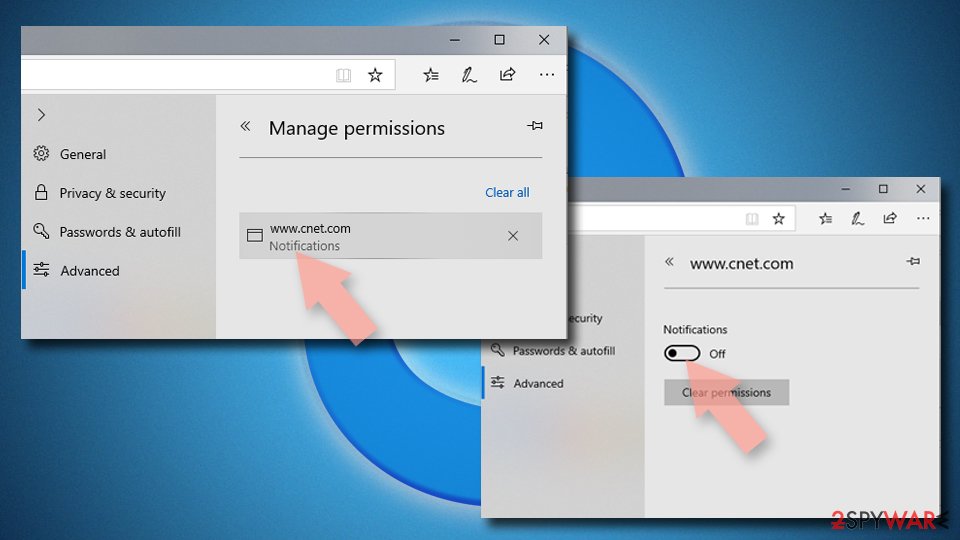
Remove unwanted notifications from MS Edge:
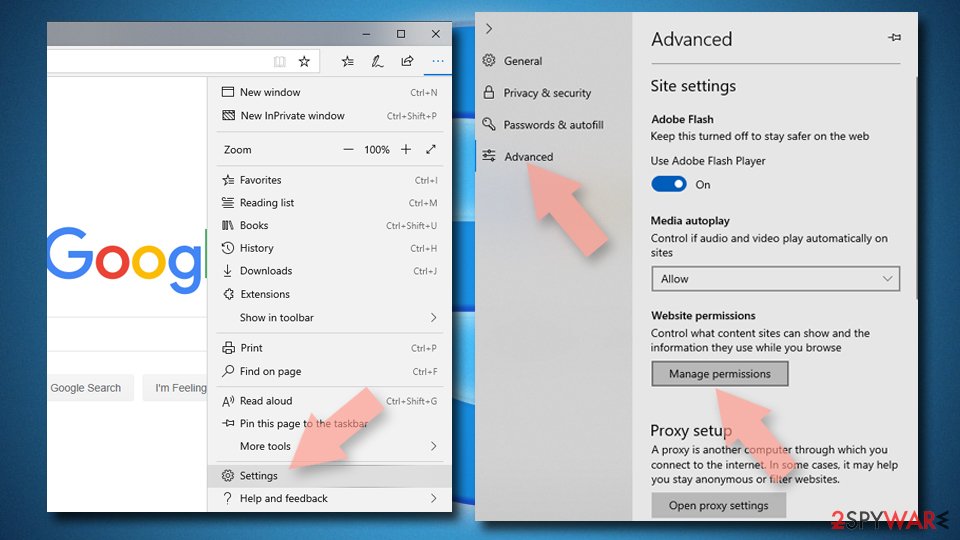
- Open Microsoft Edge, and click the Settings and more button (three horizontal dots) at the top-right of the window.
- Select Settings and then go to Advanced.
- Under Website permissions, pick Manage permissions and select the URL in question.
- Toggle the switch to the left to turn notifications off on Microsoft Edge.


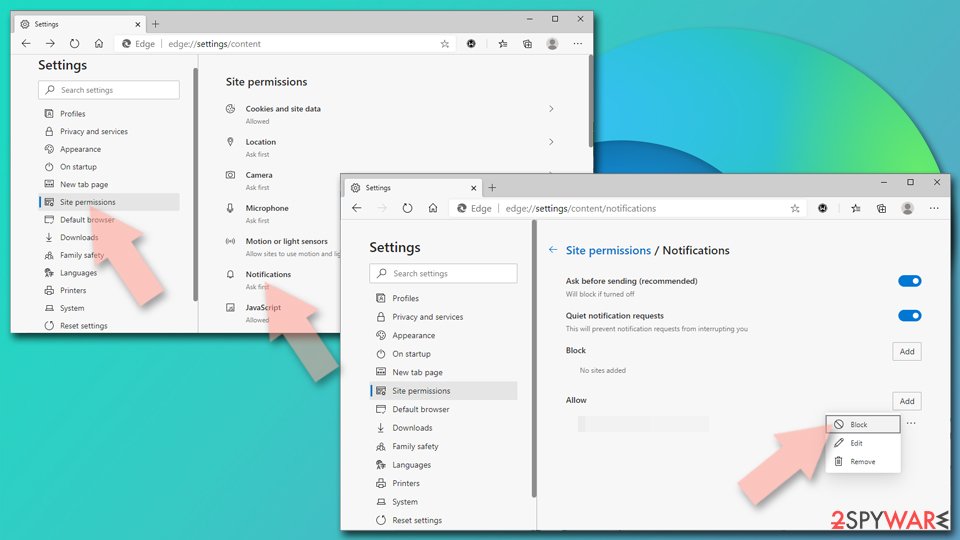
Remove unwanted notifications from MS Edge (Chromium):
- Open Microsoft Edge, and go to Settings.
- Select Site permissions.
- Go to Notifications on the right.
- Under Allow, you will find the unwanted entry.
- Click on More actions and select Block.

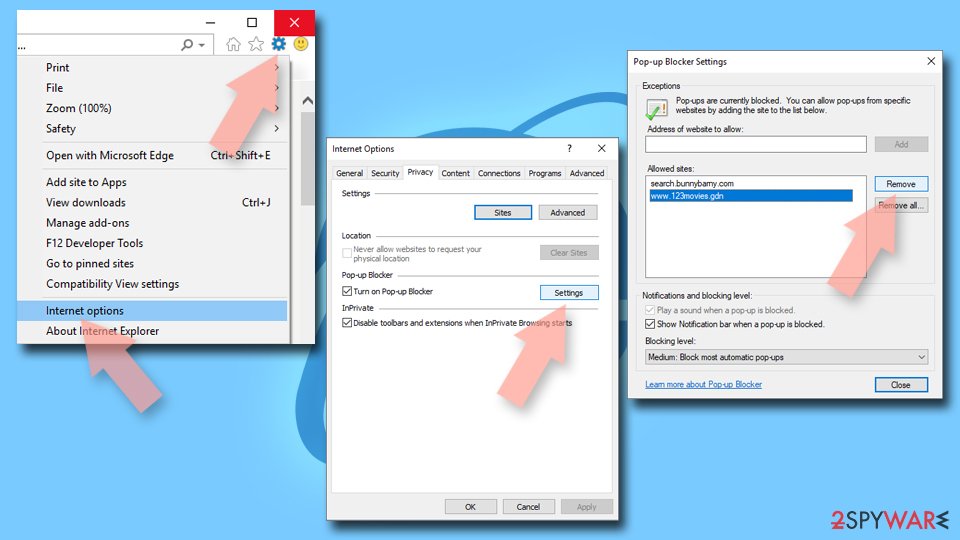
Remove unwanted notifications from Internet Explorer:
- Open Internet Explorer, and click on the Gear icon at the top-right of the window.
- Select Internet options and go to the Privacy tab.
- In the Pop-up Blocker section, click on Settings.
- Locate web address in question under Allowed sites and pick Remove.

Did this guide help?
Be the first to comment