

Iminentsearch.com is a fake search engine that appears on your PC without your permission
Iminentsearch.com virus is one of those annoying search sites that randomly appear in your browser without any permission asked. The computer security experts have a specific term for such programs and call them browser hijackers. Even though this branch of viruses is very broad and tens of similar malicious programs are being released every day, all of them work by almost identical principles. In this article, we will discuss these principles in greater detail.
However you want to remove iminentsearch.com from your device as quickly as possible, we recommend obtaining reputable antivirus software, such as SpyHunterCombo Cleaner or MalwarebytesMalwarebytes. In case the virus was removed, but the machine still does not work properly, try using a PC repair tool like FortectIntego.
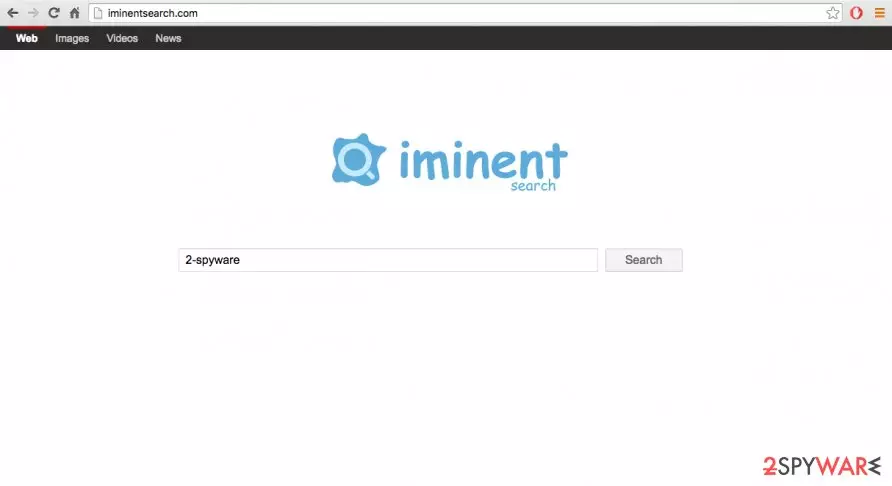
Browser hijackers rarely differentiate between different browsers. Therefore, the Iminentsearch.com hijack can easily occur on Mozilla Firefox, Google Chrome, or Internet Explorer. In fact, as soon as the virus settles on the computer, it will infect all the browsers that are installed on the system. Then the virus starts altering the browser’s settings by assigning them to a predetermined Iminent Search website. From this point on, browsing the web is no longer safe. If you tried looking for some information on this new suspicious search engine, you would find that it does not display the results you would normally see on Google, Bing or Yahoo. Instead, it may spam you with a mixture of sponsored links and ads, making the information search almost impossible. It is also important to note that browser hijacker like iminentsearch.com redirect their users to predetermined sites without a warning. This may be annoying if you are not interested in their content, or even dangerous if these sites promote some infectious software. Simply ignoring this virus and keep using the questionable search engine on your computer will only make matters worse. Therefore, to avoid the risk, it is advisable to take care of the iminentsearch.com removal immediately.
Browser hijackers might appear on the users PC's with some other software
If you find the iminentsearch.com website instead of your regular homepage or search engine, there are several ways it could have gotten there. The first and most common way for the potentially unwanted programs to infect computers is through stealthily installing along with other freeware and shareware applications. You heard correctly. This virus may enter your system if you download free software from the Internet.
The additional software package component is usually concealed within the advanced installation options, which are often bypassed by the ever-rushing users. Deceptive ads may also be users for the iminentsearch.com to sneak into the computer. The users who get infected this way usually remember clicking on some tempting-looking online offer which, in reality, downloaded this annoying hijacker to the computer instead. Consequently, suspicious online propositions, ads, or software updates should be avoided if you want to ensure the safety of your computer.
The iminentsearch.com removal can be done with a antivirus software or manually
If you want to remove iminentsearch.com from your computer, the first thing you should know is that you can do it either manually or automatically. For the manual Iminentsearch.com removal, you may need some trustworthy guidelines to follow. Luckily, our team of experts has already analyzed the virus and came up with the best removal technique. A detailed step-by-step guide is presented at the bottom of this article, so if you decide to remove the virus the manual way, you can freely use it.
However, you should keep in mind that these instructions are limited to the iminentsearch.com removal only, so the additional malware that could have been installed during the time this virus resided on your PC will not be terminated. To achieve a full system cleanup, you will need to use reliable antivirus tools, such as SpyHunter and scan your computer.
Uninstall from Windows
Uninstall from Windows 10/8:
- Type Control Panel into the Windows search box and open the result.
- Under Programs, select Uninstall a program.


Uninstall from Windows 7/XP:
- Click on Windows Start > Control Panel (Windows XP users should click on Add/Remove Programs).
- In Control Panel, select Programs > Uninstall a program.


Remove the unwanted program:
- In the Programs and Features window, look for any recently installed suspicious entries, select them, and click Uninstall.
- If User Account Control appears, click Yes to confirm, then complete the removal.


Delete from macOS
Remove the unwanted application:
- From the menu bar, select Go > Applications.
- In the Applications folder, look for any suspicious entries, then drag them to Trash (or right-click and pick Move to Trash).


Delete leftover files and folders:
- Select Go > Go to Folder.
- Enter /Library/Application Support and remove any suspicious folders related to the unwanted program.
- Repeat the same check in the /Library/LaunchAgents and /Library/LaunchDaemons folders, deleting any suspicious entries.

- Finally, empty the Trash to permanently remove the leftovers.

Remove from Microsoft Edge
Delete unwanted extensions from MS Edge:
- Select Menu (three horizontal dots at the top-right of the browser window) and pick Extensions.
- From the list, pick the extension and click on the Gear icon.
- Click Remove.


Clear cookies and other browser data:
- Click on the Menu (three horizontal dots at the top-right of the browser window) and select Settings > Privacy, search, and services..
- Under Clear browsing data, pick Choose what to clear.
- Select Cookies and other site data and Cached images and files. (apart from passwords, although you might want to include Media licenses as well, if applicable) and click on Clear.


Restore new tab and homepage settings:
- Click the menu icon and choose Settings.
- Then find On startup section.
- Click Remove next to any suspicious startup page.
Reset MS Edge if the above steps did not work:
- Press on Ctrl + Shift + Esc to open Task Manager.
- Click on More details arrow at the bottom of the window.
- Select Details tab.
- Now scroll down and locate every entry with Microsoft Edge name in it. Right-click on each of them and select End Task to stop MS Edge from running.


Instructions for Chromium-based Edge
Delete extensions from MS Edge (Chromium):
- Open Edge and click select Settings > Extensions.
- Delete unwanted extensions by clicking Remove.


Clear cache and site data:
- Click on Menu and go to Settings.
- Select Privacy, search and services.
- Under Clear browsing data, pick Choose what to clear.
- Under Time range, pick All time.
- Select Clear now.


Reset Chromium-based MS Edge:
- Click on Menu and select Settings.
- On the left side, pick Reset settings.
- Select Restore settings to their default values.
- Confirm with Reset.
- This will disable extensions and reset startup pages but will not delete bookmarks, saved passwords, or browsing history.


Remove from Mozilla Firefox (FF)
Remove dangerous extensions:
- Open Mozilla Firefox browser and click on the Menu (three horizontal lines at the top-right of the window).
- Select Add-ons.
- In here, select the unwanted extension and click Remove.


Reset the homepage:
- Click three horizontal lines at the top right corner to open the menu.
- Choose Settings.
- Under Home, set your preferred homepage and new tab settings.
Clear cookies and site data:
- Click Menu and pick Settings.
- Go to Privacy & Security section.
- Scroll down to locate Cookies and Site Data.
- Click on Clear Data...
- Select Cookies and Site Data and Temporary cached files and pages, then click Clear.


Reset Mozilla Firefox
If clearing the browser as explained above did not help, reset Mozilla Firefox:
- Open Mozilla Firefox browser and click the Menu.
- Go to Help and then choose Troubleshooting Information.

- Under Give Firefox a tune up section, click on Refresh Firefox...
- Once the pop-up shows up, confirm the action by pressing on Refresh Firefox.



Remove from Google Chrome
Delete malicious extensions from Google Chrome:
- Open Google Chrome, click on the Menu (three vertical dots at the top-right corner) and select More tools > Extensions.
- In the newly opened window, you will see all the installed extensions. Uninstall all suspicious extensions related to the unwanted program by clicking Remove.


Clear cache and web data from Chrome:
- Click on Menu and pick Settings.
- Under Privacy and security, select Clear browsing data.
- Select Browsing history, Cookies and other site data, as well as Cached images and files.
- Click Clear data.


Change your homepage:
- Click menu and choose Settings.
- Look for a suspicious site in the On startup section.
- Click on Open a specific or set of pages and click on three dots to find the Remove option.
Reset Google Chrome:
If the previous methods did not help you, reset Google Chrome to eliminate all the unwanted components:
- Click on Menu and select Settings.
- In the Settings, scroll down and click Advanced.
- Scroll down and locate Reset and clean up section.
- Now click Restore settings to their original defaults.
- Confirm with Reset settings.


Delete from Safari
Remove dangerous extensions:
- Open Safari, click Safari in the menu at the top-left of the screen, and select Preferences.
- Go to the Extensions tab, look for any suspicious entries, and click Uninstall to remove them.


Clear history and website data:
- Click Safari in the menu and pick Clear History.
- Set Clear to all history and confirm with Clear History.


Reset Safari:
- Click Safari in the menu and select Preferences > Advanced.
- Enable Show Develop menu in menu bar.
- From the menu bar, click Develop and select Empty Caches.


Did this guide help?
2 comments
Rossie
This is an iminent threat to your computer. Do NOT use this site if you see it on your PC.. Ive learned my lesson already...
DereckThomson
Its pathetic. This search engine is really useless. Out of a full page of search results there were like TWO legitimate links, while the other ones were sponsored ones