
miAPCP: what it is and how to remove it
miAPCP is the shady process that occurs running in the background of the device even though the user has no idea where the program came from. This is a potentially unwanted program related to PC Accelerate Pro company that distributes many shady applications for Windows.
Facts checked October 6, 2026. Removal steps tested on Windows 11 (26H2) and checked against Microsoft's and the browser makers' current documentation. Sections marked as our earlier report are the original text: they describe the threat as it was then and have not been reviewed since. The 2026 status, the removal steps and the questions are current.
Automatic
Get a free scan and check if your PC is infected.
Fortect finds malware, unwanted programs and the Windows damage they leave behind, and repairs it in one pass.
If miAPCPAS.exe returns after removal, a full scan can find the entry that brings it back.
Do it yourself · free Remove miAPCP yourself 4 steps, about 12 minutes, no software needed.
Start the steps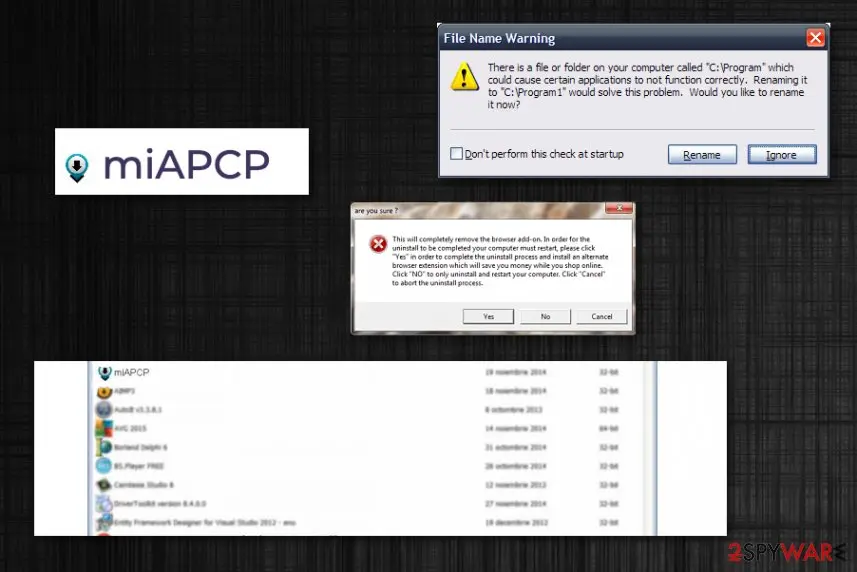
MiAPCP: summary
| Distribution | Application is offered on deceptive pages, redirects. Also, associated programs install the app without users' knowledge or permission. Malicious ads trigger the installation automatically |
|---|---|
| Name | miAPCP |
| Type | Potentially unwanted application[2] |
| Symptoms | Suspicious files and the program itself shows up running the background and causing high usage of resources |
| Issues | The process, data, or associated programs cannot be removed while the app is running. However, the PUP itself has no shortcut files that could be easily found, so the program continues to run |
| Relation | PC Accelerate Pro Inc. company is the developers of this shady app. The are many rogue system tools, fake AV engines and other applications developed and distributed by this company |
| Removal | Scan the PC with security software to find and remove the malware and anything installed with it. Fortect scans Windows for malware and repairs the system files and settings it damaged. Remove it nowTo use the full-featured product, you have to purchase a license for Fortect. The scan is free. |
Show 6 more facts
| Detection names | No Microsoft detection name is known |
|---|---|
| Damage | Not recorded in the old report |
| Files and processes | miAPCPAS.exe |
| Evidence | 4 write-ups by security sites; details still limited |
| First seen | 15 January 2020 |
| Facts checked | 6 October 2026 |
Is miAPCP safe? Why it is flagged
From our report of Jan 2020 · not reviewed since
More from our earlier report on miAPCP
- You should remove miAPCP by scanning the machine fully with the anti-malware program that detects and removes various intruders
- Unfortunately, this is the silent intruder and the program that keeps running in the background, affecting files and functions without your knowledge.
- To fix these alterations without additional damage, rely on PC repair or system tools like that may help indicate issues and clean the system
Check your PC and browser
- File:
miAPCPAS.exe
How to uninstall miAPCP
How to remove miAPCP
Uninstall the bundle first, then everything it added:
- programs
- extensions
- changed browser settings
Step 1: Uninstall programs you did not mean to install
Open Settings > Apps > Installed apps in Windows 11, or Settings > Apps > Apps & features in Windows 10, and sort the list by install date. Look at what appeared around the day the problem started and uninstall every program you do not recognise or did not choose.
Free converters, PDF and video tools, "system optimizers" and unknown browsers are the usual carriers of miAPCP. If a name is unclear, search for it before you remove it, so you do not uninstall a driver or a Windows component.
Full procedure with screenshots: Uninstall a program or app in Windows On uGetFix
Step 2: Remove it from startup
Whatever miAPCP installed usually starts with Windows. Open Task Manager with Ctrl + Shift + Esc, go to Startup apps in Windows 11 or the Startup tab in Windows 10, and disable what you do not know, starting with entries that have an empty Publisher column.
Open file location on the right-click menu shows the file, which helps you decide and tells you what to delete later. Disabling is safe: if something you need stops working, switch it back on.
Full procedure with screenshots: Stop apps from opening at startup On uGetFix
Step 3: Delete the folders left behind
What the uninstaller leaves behind is usually in the user folders. Open File Explorer, switch on View > Show > Hidden items (in Windows 10 View > Hidden items), and go through
%LocalAppData%,%AppData%, %ProgramData% and the two Program Files folders.Sort by Date modified and delete folders that appeared together with the problem and belong to no program you use. Folders with random names that hold
.exe,.dll, .js or .ps1 files are the strongest sign.Full procedure with screenshots: Remove what malware leaves behind in Windows
Step 4: Scan the PC, then run the offline scan
Open Windows Security > Virus & threat protection > Scan options, run a Full scan and remove everything it finds. Then select Microsoft Defender Antivirus (offline scan) and click Scan now: the PC restarts and scans before Windows loads, which finds files that hide while Windows runs.
Save your work first, because the offline scan takes about 15 minutes. Both scans are built into Windows 11 and Windows 10, and a second scanner from another vendor is a useful extra opinion.
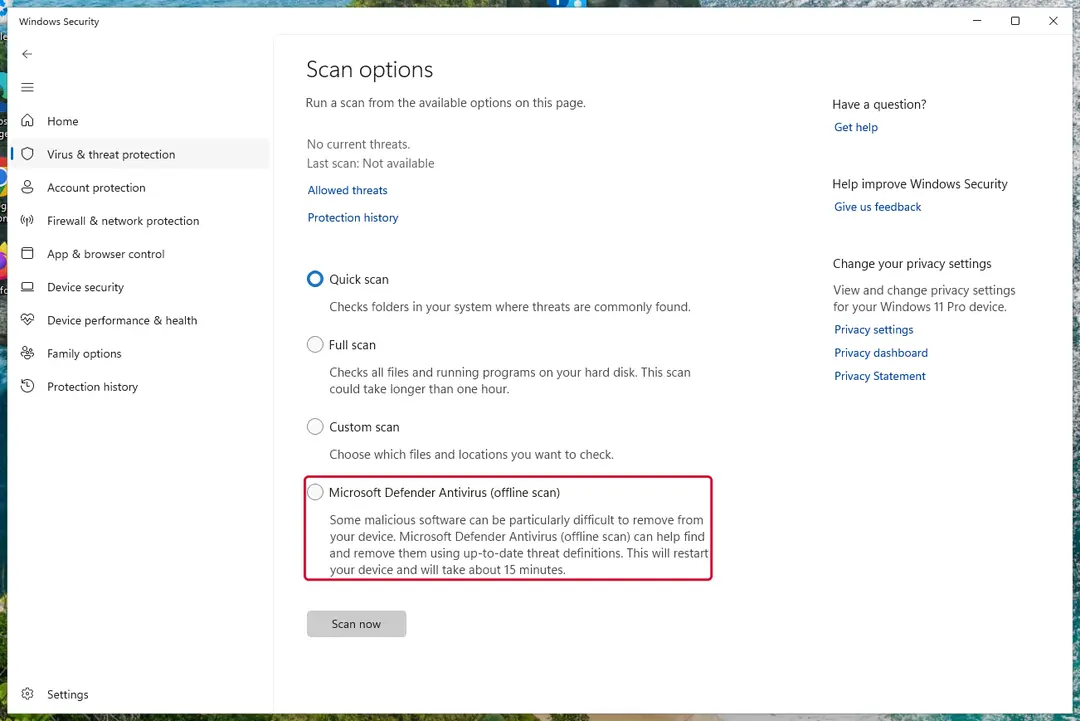
Windows 11: Windows Security > Virus & threat protection > Scan options. Full procedure with screenshots: Run a Microsoft Defender Offline scan
Instructions for each browser and system
The detailed steps for every browser and system this guide covers. Open the one you use.
Uninstall from Windows
Clean the machine from the suspicious application and remove all traces of miAPCP virus
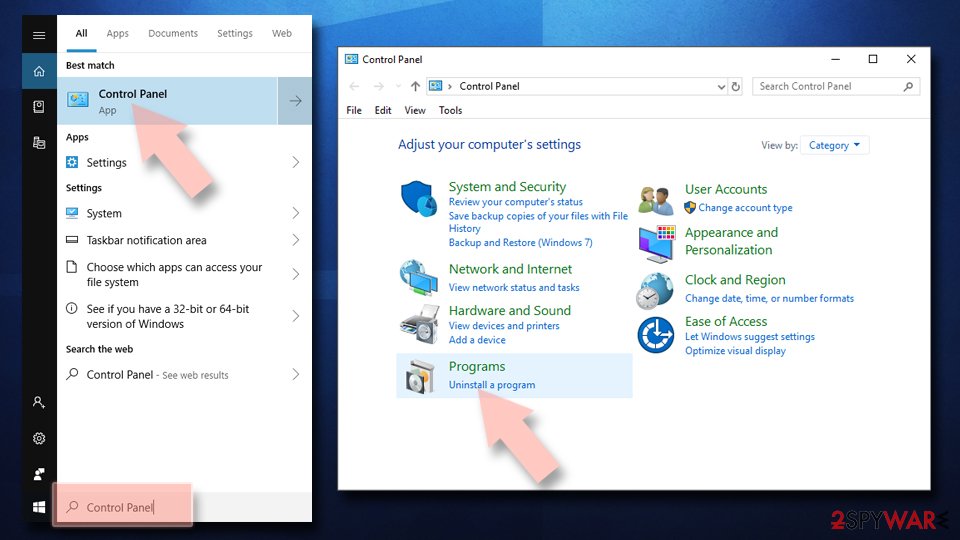
Uninstall from Windows 10/8:
- Type Control Panel into the Windows search box and open the result.
- Under Programs, select Uninstall a program.
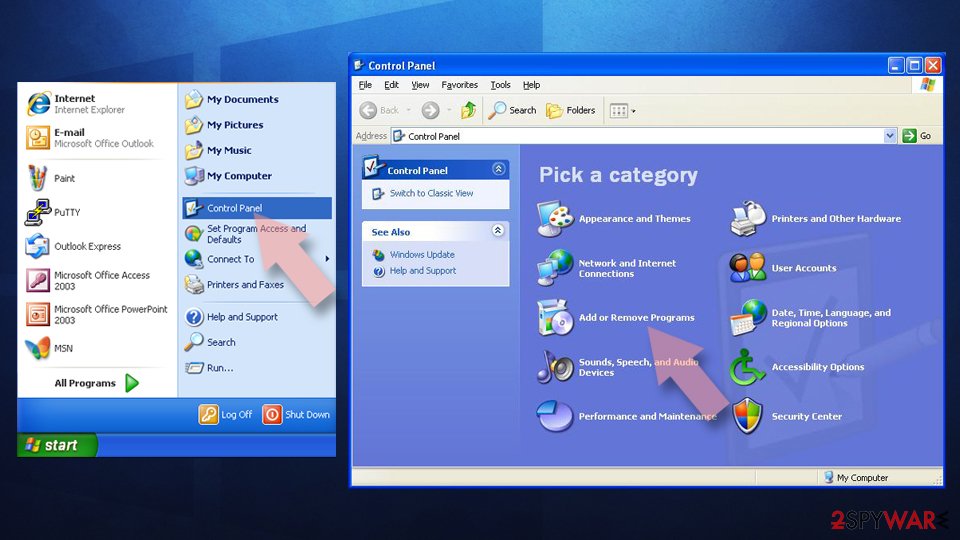
Uninstall from Windows 7/XP:
- Click on Windows Start > Control Panel (Windows XP users should click on Add/Remove Programs).
- In Control Panel, select Programs > Uninstall a program.
Remove the unwanted program:
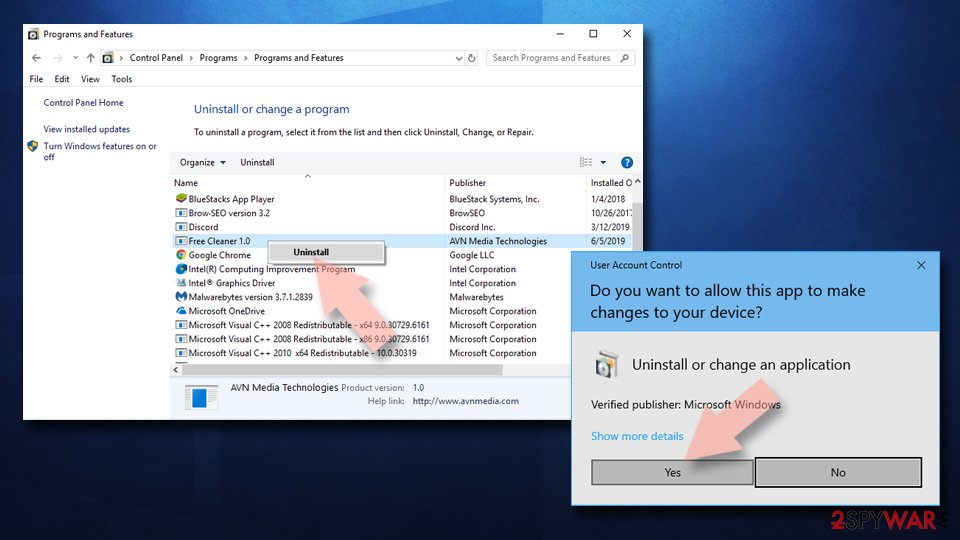
- In the Programs and Features window, look for any recently installed suspicious entries, select them, and click Uninstall.
- If User Account Control appears, click Yes to confirm, then complete the removal.
Delete from macOS
Get rid of this shady miAPCP tool
Remove the unwanted application:
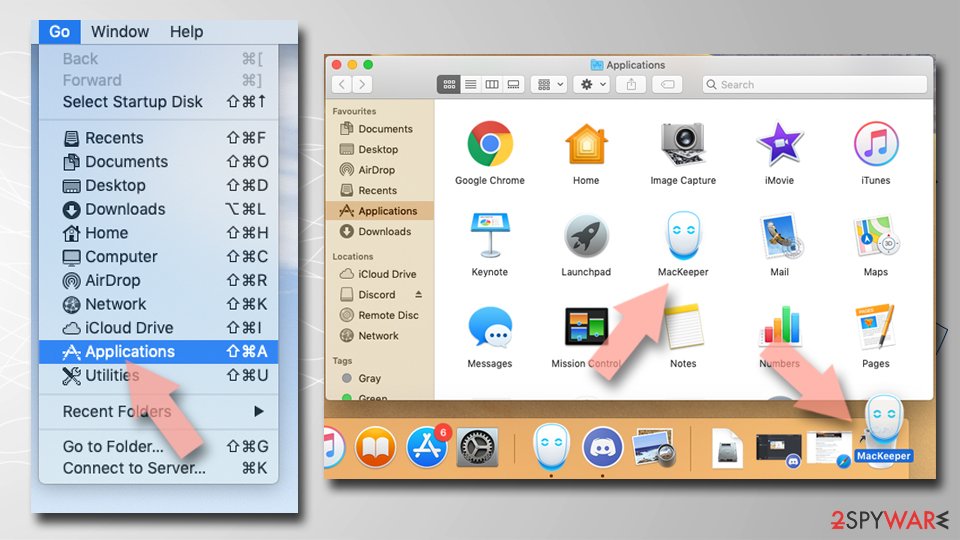
- From the menu bar, select Go > Applications.
- In the Applications folder, look for any suspicious entries, then drag them to Trash (or right-click and pick Move to Trash).
Delete leftover files and folders:
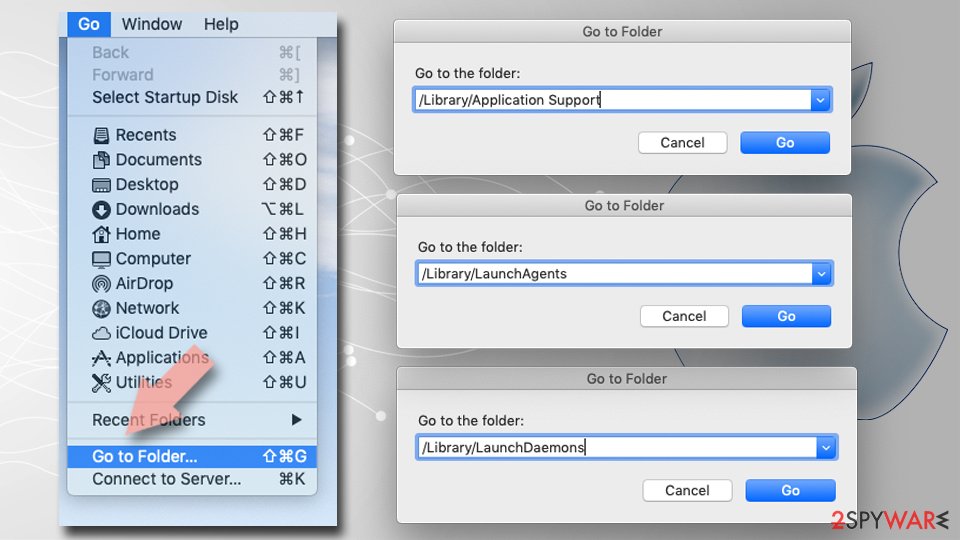
- Select Go > Go to Folder.
- Enter /Library/Application Support and remove any suspicious folders related to the unwanted program.
- Repeat the same check in the /Library/LaunchAgents and /Library/LaunchDaemons folders, deleting any suspicious entries.
- Finally, empty the Trash to permanently remove the leftovers.
Protect your privacy - employ a VPN
There are several ways how to make your online time more private - you can access an incognito tab.
However, there is no secret that even in this mode, you are tracked for advertising purposes. There is a way to add an extra layer of protection and create a completely anonymous web browsing practice with the help of VPN. This software reroutes traffic through different servers, thus leaving your IP address and geolocation in disguise.
Besides, it is based on a strict no-log policy, meaning that no data will be recorded, leaked, and available for both first and third parties. The combination of a secure web browser and VPN will let you browse the Internet without a feeling of being spied or targeted by criminals.
No backups? No problem. Use a data recovery tool
If you wonder how data loss can occur, you should not look any further for answers - human errors, malware attacks, hardware failures, power cuts, natural disasters, or even simple negligence.
In some cases, lost files are extremely important, and many straight out panic when such an unfortunate course of events happen. Due to this, you should always ensure that you prepare proper data backups on a regular basis.
If you were caught by surprise and did not have any backups to restore your files from, not everything is lost. is one of the leading file recovery solutions you can find on the market - it is likely to restore even lost emails or data located on an external device.
From our report of Jan 2020 · not reviewed since
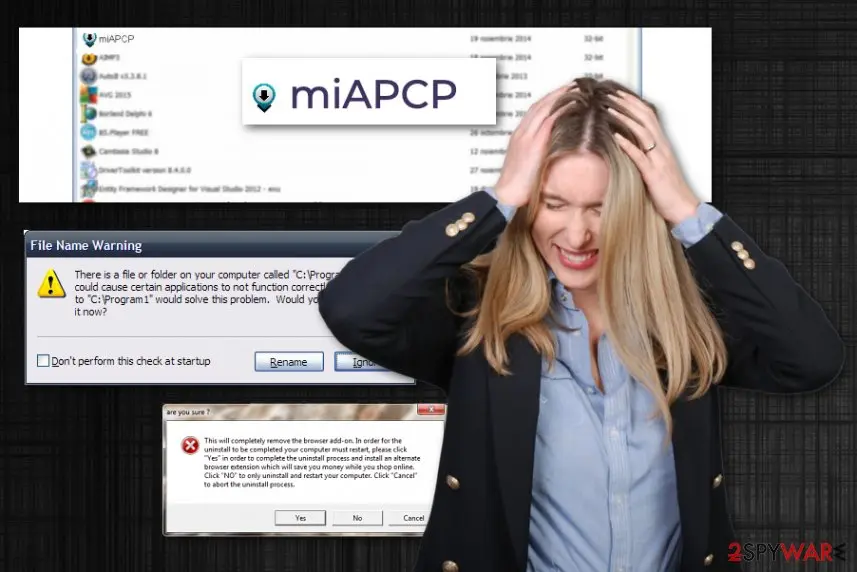
miAPCP is the questionable application that shows up running out of nowhere and is difficult to remove
miAPCP is the shady process that occurs running in the background of the device even though the user has no idea where the program came from.
This is a potentially unwanted program related to PC Accelerate Pro company that distributes many shady applications for Windows. This application appears on redirected pages and gets promoted on various freeware sites that push shady tools to users by claiming about useful functions.
This is the program that got reported by users online when they experienced suspicious activities and found the questionable app on the system. Since the program runs in the background, any files found on the machine cannot be deleted while it uses them.
However, files needed to find the miAPCP program are not located on any typical folders that applications get placed. This creates a circle of searching for files to remove, so the intruder is terminated fully.
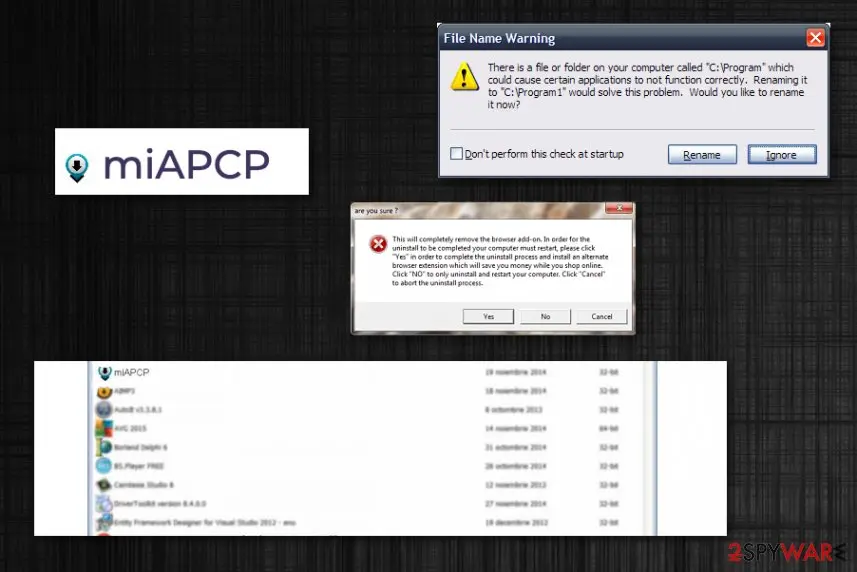
Since miAPCP virus is mainly appearing on Windows devices, it creates many files that launch all the needed processes and functions. The program is commonly installed in the Program Files (x86)\miMBAPCP directory and the main miAPCPAS.exe file, and it takes around 371.89 KB on disk.
In addition to that, other data is loaded on the machine, so the shady app takes up at least 12.63 MB on the disk. This is one of the reasons why the existence of the app creates problems with performance and disk space.
miAPCP – the program that is not creating shortcuts or different files that could be found and deleted directly from the machine. It appears as the background process instead and cannot be terminated or ended since there are files and programs using the app, according to system errors and pop-ups.
This is the main issue regarding the miAPCP PUP because users cannot simply remove it and control processes on the machine while the program is still running. These files added in various system folders also affect the detection and elimination processes:
Many people think that it should be possible to uninstall miAPCP as any other program, but the intruder is not a simple application. Developers of the app have shady purposes and goals, so you shouldn't wait too long before you choose the program that is designed to clean the machine fully.
Anti-malware tools or antivirus programs are needed for miAPCP removal because you cannot terminate the program that is nowhere to be found on the machine. It is barely possible to achieve when you try to find the application and all the associated files, programs. Also, this app has at least five versions that we know about, and each of them may have different techniques and aims.
Typically, potentially unwanted programs like miAPCP focus on redirects and advertising material that shows up on the screen and causes the additional appearance of possibly malicious online material. Users may get exposed to pages where malware gets promoted or directly spread.
In many cases, when visiting such websites the only thing required from the visitor is clicking on the content because pages are filled with redirect links, and one-click triggers either the automatic download of programs like miAPCP rogue tool or the reroute to the more infectious site.
You need to remove miAPCP and clean the system fully, so all processes can run without interruption. However, the process also includes changing all the system settings back to normal and altering registry entries, startup preferences. You may cause damage to the crucial files or settings if you don't have enough knowledge of IT.
To eliminate the shady programs with an anti-malware tool or AV engine and then get a PC repair or system optimization program that can terminate and potentially fix miAPCP virus damage. may help you clean some of these issues or repair registry entries.
Nevertheless, the existence of miAPCP and the fact that it runs in the background without particular intrusive PUP or adware symptoms makes it more harmful.
You can know that adware collects views and gathers data with those redirects, in these cases, there is no particular process that can be associated with the shady app or determined to be dangerous for the system. Get rid of it as soon as possible to avoid loss of data or damage to your computer.
- dit.exe
- ditx.exe
- miAPCPAS.exe
- miMBAPCP.exe
- miMBAPCPUpdater.exe
- RmiMBAPCP.exe
- uninstall.exe
From our report of Jan 2020 · not reviewed since
Deceptive content online delivers a variety of threats
Content online cannot always provide only positive outcomes because you cannot guarantee that every site you visit is safe to browse on.
Especially when the website involves promotional content, pushes system tools and programs that give no value to the machine or advertises services, products with intrusive pop-ups and banners.
Pay attention to pages that trigger redirects and additional pop-ups or include so much misleading content that it is impossible to reach the content of the page itself. Stay away from such sites, freeware sharing services, torrent pages, and distributors that promote their products using intrusive advertising campaigns.
Also, when you install any program or tool, choose Advanced or Custom options to see all the programs and products included in the setup. This way you can de-select any unwanted extras and see if the program is associated with any PUPs or not.
From our report of Jan 2020 · not reviewed since
Make sure to eliminate miAPCP PUP fully
Remember that miAPCP virus is a questionable program not capable of affecting the machine permanently, but it can easily access settings and files in the system that may possibly lead to loss of data or affected applications. You should react to suspicious processes and files appearing out of nowhere, so you can clean out the machine from any intruders that lure in the background.
You need to run the full system scan with anti-malware tool to remove miAPCP from the machine. Such a process allows you to find, detect, and terminate any program with shady or even malicious purposes. When such a tool suggested to reboot the machine - follow the steps and do that.
Programs designed to PUP like miAPCP removal, scan various places where those suspicious files may be added and clean additional places where potentially unwanted programs get their files loaded. However, rely on system tools when the alterations to settings and registry require fixing.
Questions about miAPCP
Is miAPCPAS.exe a virus?
The name miAPCPAS.exe is not enough to say. Malware often uses technical-sounding names, and harmless updaters often use odd ones. Check three things:
- the folder the file runs from
- the Digital Signatures tab in its properties
- the program that starts it (Startup apps, Task Scheduler or services)
A signed file from a company whose product you use is almost certainly fine. An unsigned file in a user folder that no installed program explains should be removed, and the PC scanned with Microsoft Defender in offline mode.
Can I end miAPCPAS.exe in Task Manager?
Ending an unknown process is safe in the sense that Windows will warn you before you close anything critical, and a restart brings back whatever Windows needs. Ending miAPCPAS.exe will not remove it, though: if a task or startup entry launches it, it returns at the next sign-in.
Use ending the process as a test. If something important stops working, it belonged to a program you use. If nothing changes and it comes back by itself, find and disable its starter, delete the file and scan the PC.
Is it safe to remove miAPCP?
Yes. Removing an unwanted program does not damage Windows, because programs like this are not part of the system. Before uninstalling, make sure it is not something you rely on: if the publisher is a company you know and you use the program, keep it.
If not, uninstall it from Installed apps, restart and check that an unfamiliar process called miAPCPAS.exe in Task Manager is gone. If something you need stops working afterwards, reinstall that program from its official website, choosing the custom installation so that the unwanted extra is not added again.
How long does removing miAPCP take?
Usually ten to twenty minutes. Uninstalling takes a minute; checking the Startup list, Task Scheduler and the browsers takes the rest. A full scan in Windows Security can add half an hour on a large drive, but you can keep using the PC while it runs.
Restart at the end and watch for an unfamiliar process called miAPCPAS.exe in Task Manager. If it is gone after a day of normal use, you are finished. If it returns, plan for an offline scan, which restarts the PC and takes around fifteen minutes.
Should I call miAPCP malware?
Most security vendors would call it a potentially unwanted program rather than malware. The difference is intent and consent:
- malware hides and harms
- while unwanted programs are installed with a click someone barely noticed
- then do more than expected
The sign reported here, an unfamiliar process called miAPCPAS.exe in Task Manager, is typical of the second group. In practice the label matters less than the result.
Whatever it is called, a program you did not choose should go, and the place it came from should be checked for other programs. Microsoft Defender can block this class of software if you switch on Potentially unwanted app blocking in Windows Security.
Does miAPCP use a lot of resources?
It depends on the program, and no measurements have been published for miAPCP. The sign reported is an unfamiliar process called miAPCPAS.exe in Task Manager. Check for yourself: open Task Manager, find its process and watch the CPU, memory and network columns for a minute while the PC is otherwise idle.
Steady use with nothing open is a strong reason to remove it. Even if it seems light, it may run more processes under other names, so sort Installed apps by date and remove anything else from the same day. Then restart and compare.
How do I remove miAPCP completely?
Work in three steps. First uninstall it from Settings > Apps > Installed apps, together with anything installed on the same day. Second, remove what restarts it: unknown entries under Settings > Apps > Startup and tasks in Task Scheduler with matching names.
Third, clean the browsers: extensions you did not add and changed search settings. Restart and watch for an unfamiliar process called miAPCPAS.exe in Task Manager; if it does not come back within a day, the removal is complete.
If it does, run a Microsoft Defender offline scan, which works before Windows starts and finds helpers that hide while the PC runs.
Can miAPCP see my passwords?
There is no report of that. Unwanted programs make money from ads, offers, data about your browsing or the use of your connection, not from stealing passwords, and the sign reported here is an unfamiliar process called miAPCPAS.exe in Task Manager.
That said, a bundle can contain more than one program, and you cannot be sure what else ran on the day it arrived. After removing miAPCP, run a full scan in Windows Security.
If it finds a password stealer or a trojan, change your passwords from another device. If the scan is clean and you see no unknown sign-ins, there is no need to change them.
Will Fortect remove miAPCP?
Fortect scans Windows for malware and unwanted programs and repairs the system files and settings they change, and its free scan shows what it finds on your PC before you decide anything.
For miAPCP, follow the plan above as well: the browser steps take back permissions and settings that no scanner treats as a threat, and uninstalling the program that brought it removes the source.
Run Microsoft Defender's full scan and, if anything was found, its offline scan as a second opinion. If the symptoms are gone after the plan and both scans are clean, there is nothing more to do.
Sources
- Reddit: i have unwanted software and cant get rid of it (read October 6, 2026)
- Wikipedia: Potentially unwanted program (read October 6, 2026)
- FTC: How to recognize, remove and avoid malware (read October 6, 2026)
- Microsoft Learn: Microsoft Defender Offline (read October 6, 2026)
- Microsoft Learn: How Microsoft names malware (read October 6, 2026)