

News-nuriga.com – a deceptive website that tricks innocent users into allowing malicious pop-ups to be displayed on their devices

News-nuriga.com works as a fake site meant to fool people into accepting push notifications they don’t want. The website tricks users into pressing the “Allow” button by pretending it’s something normal, like verifying a CAPTCHA or fixing a video problem. But, when users give this permission, they open up their browsers to unwanted pop-up ads that show up at unexpected times, and these ads won’t go away by themselves.
The notifications from News-nuriga.com often lead to harmful content, including phishing links that can direct users to dangerous websites. For instance, they may display fake virus alerts, fraudulent financial schemes, bogus giveaways, or other misleading messages aimed at exploiting the user.
We strongly advise against engaging with any ads or pop-ups coming from News-nuriga.com, as they could take you to risky parts of the web. By doing so, you could expose your device to malware, compromise sensitive personal information, or even waste money on fraudulent services or counterfeit products.
Additionally, these types of phishing attempts are frequently linked to the installation of unwanted software, such as adware, on your device. For that reason, we will provide comprehensive steps on how to identify and remove suspicious applications from your system and eliminate the annoying push notifications once and for all.
| Name | News-nuriga.com |
| Type | Push notifications, pop-ups, ads, scam |
| Distribution | The website can begin to show ads at any point after the “Allow” button within the notification prompt is clicked |
| Symptoms | Pop-ups show up on a regular basis on the screen – these ads often include inappropriate, scam, phishing, or other similar content |
| Risks | Shown pop-ups incorporate fake notices and push scams. Links can also lead to websites filled with malware |
| Removal | Push notifications can be stopped by blocking the web address of the malicious website via browser settings. Checking the device with SpyHunterCombo Cleaner security software is also recommended |
| Other checks | After the removal of adware and other PUPs, you should take your time to clean your browser from cookies and other trackers – FortectIntego can help you with that |
What exactly are push notifications?
The push notification API was originally designed for legitimate purposes, much like other useful web features. For example, a news site may offer visitors the option to subscribe to notifications, allowing them to stay informed on the latest developments more quickly. This can enhance user engagement and benefit the website by keeping the audience more connected.
However, despite the potential benefits, research from Mozilla shows that around 99% of push notification requests are ignored, which isn't surprising given that many users find them intrusive. The ability for a website to send pop-ups at any time can often feel like an unwelcome interruption.
As a result, even though numerous websites offer push notifications, most people tend to decline. This lack of familiarity provides an opening for cybercriminals to exploit. By using fake prompts and phishing tactics, they trick users into unknowingly subscribing to notifications, which are then used to push ads and other malicious content. This tactic is commonly seen with platforms like News-nuriga.com, where users may be unaware of the scheme until they start seeing disruptive ads.
Fortunately, removing unwanted notifications and resolving issues caused by News-nuriga.com is a straightforward process. Follow the steps below to regain control and eliminate any unwanted ads or pop-ups.

How to remove unwanted push notifications?
It’s crucial to understand that push notifications cannot be removed through security or other automated software; this is something you need to handle manually. Because many users are deceived into subscribing to push notifications from fraudulent websites, they often aren’t aware of what they’re dealing with or how to fix it. The good news is, the solution is simple: all you need to do is block the website’s URL within your browser’s site settings. Here’s how to do it:
Google Chrome
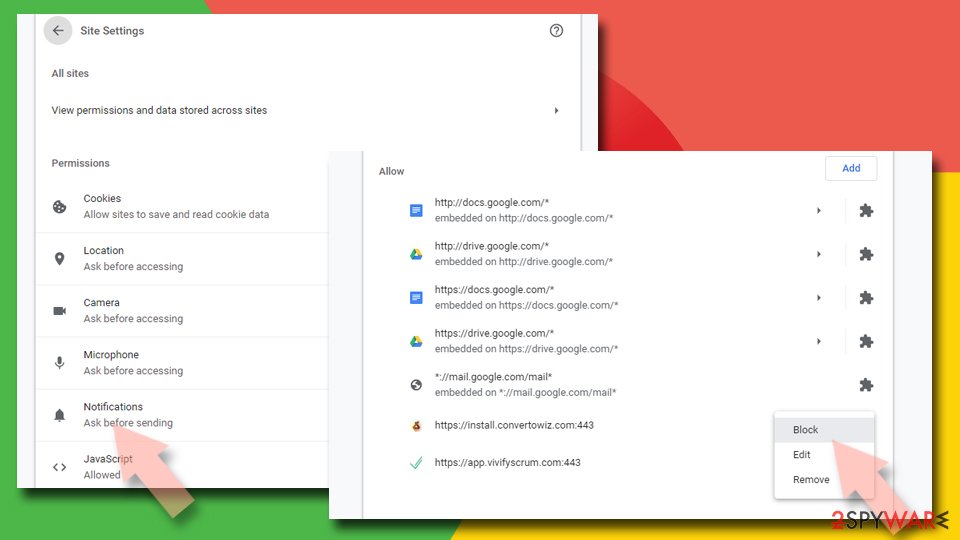
- Open the Google Chrome browser and go to Menu > Settings.
- Scroll down and click on Advanced.
- Locate the Privacy and security section and pick Site Settings > Notifications.
- Look at the Allow section and look for a suspicious URL.
- Click the three vertical dots next to it and pick Block. This should remove unwanted notifications from Google Chrome.

Mozilla Firefox
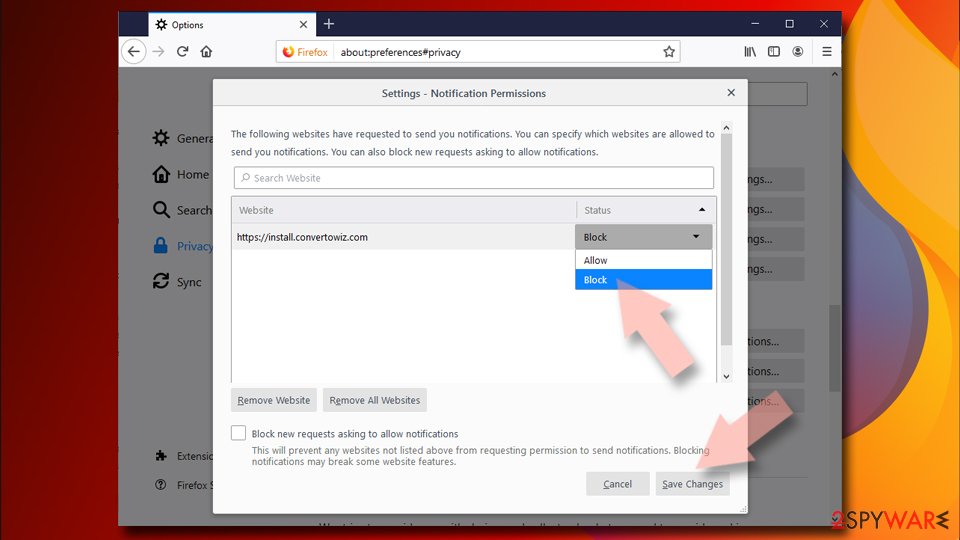
- Open Mozilla Firefox and go to Menu > Options.
- Click on Privacy & Security section.
- Under Permissions, you should be able to see Notifications. Click the Settings button next to it.
- In the Settings – Notification Permissions window, click on the drop-down menu by the URL in question.
- Select Block and then click on Save Changes. This should remove unwanted notifications from Mozilla Firefox.

Safari
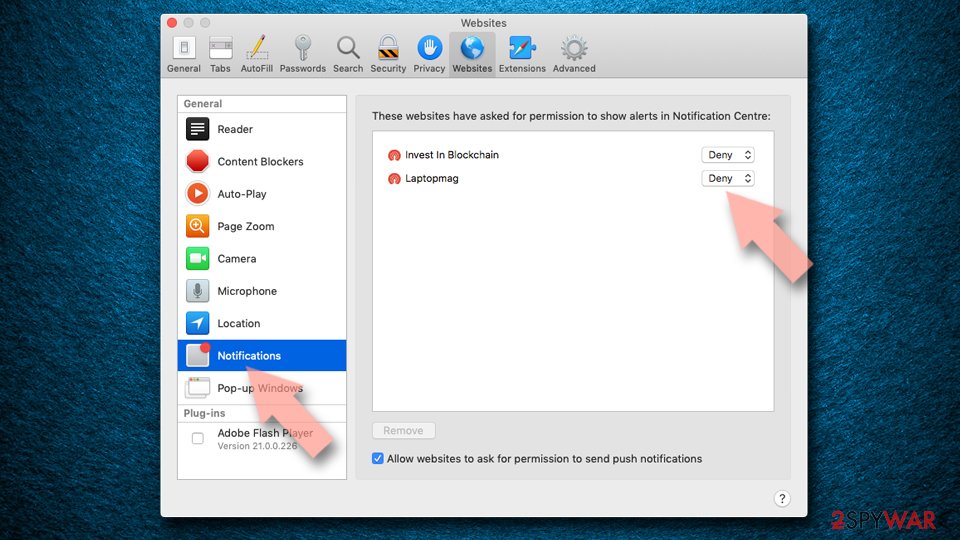
- Click on Safari > Preferences…
- Go to the Websites tab and, under General, select Notifications.
- Select the web address in question, click the drop-down menu and select Deny.

MS Edge
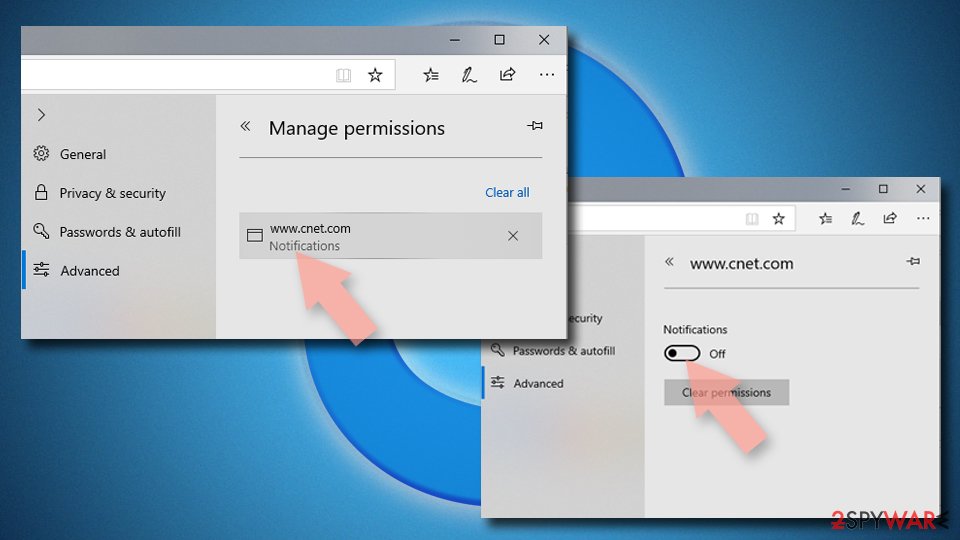
- Open Microsoft Edge, and click the Settings and more button (three horizontal dots) at the top-right of the window.
- Select Settings and then go to Advanced.
- Under Website permissions, pick Manage permissions and select the URL in question.
- Toggle the switch to the left to turn notifications off on Microsoft Edge.

MS Edge (Chromium)
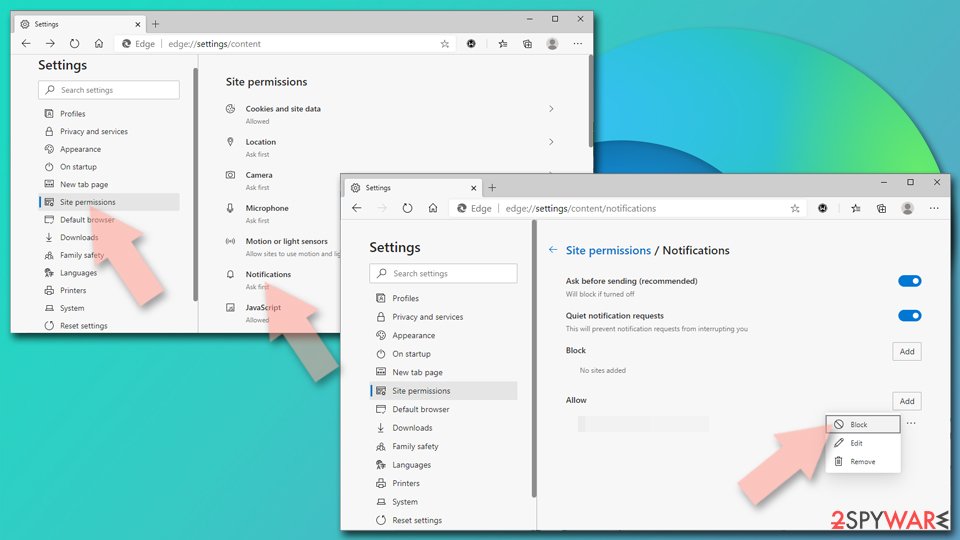
- Open Microsoft Edge, and go to Settings.
- Select Site permissions.
- Go to Notifications on the right.
- Under Allow, you will find the unwanted entry.
- Click on More actions and select Block.

Internet Explorer
- Open Internet Explorer, and click on the Gear icon at the top-right of the window.
- Select Internet options and go to the Privacy tab.
- In the Pop-up Blocker section, click on Settings.
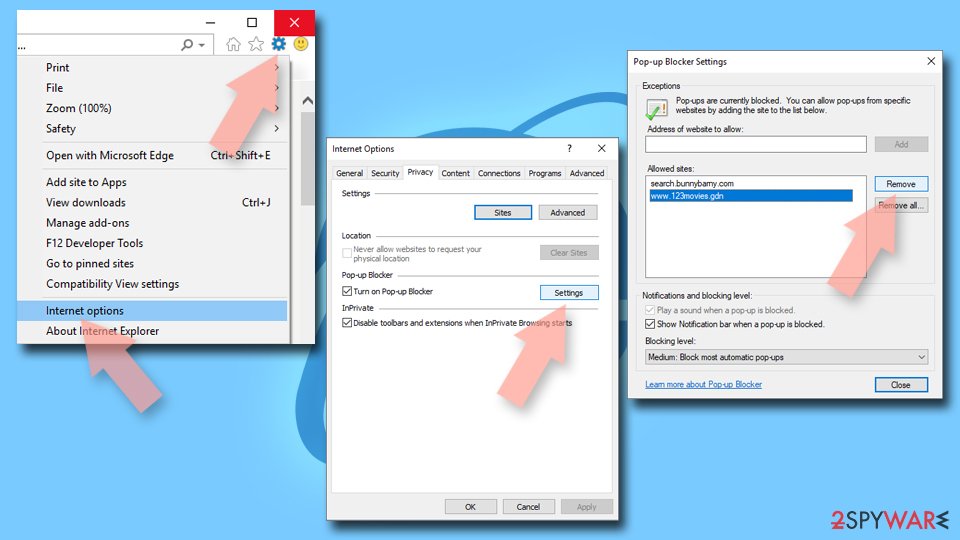
- Locate the web address in question under Allowed sites and pick Remove.

Checking the system for infections
As mentioned earlier, users are more likely to end up on malicious websites when they click on deceptive links. Another contributing factor is adware – potentially harmful software that is often spread through bundled software downloads and other questionable channels. Many users may not even realize that adware has been installed on their device. In some cases, adware can disguise itself as a legitimate program, tricking users into installing it intentionally.
Once adware is on your device, it may either begin displaying unwanted behavior right away or stay dormant for a while before causing disruptions. If you notice that your browser keeps redirecting you to suspicious websites, it’s crucial to act quickly. Running a full system scan using trusted security software like SpyHunterCombo Cleaner or MalwarebytesMalwarebytes is one of the most effective ways to detect and remove any malware or adware present on your device. If anything harmful is found, the software will eliminate it promptly.
We also recommend using a system repair and optimization tool FortectIntego after removing any unwanted programs. This kind of software can help fix any damage caused by malware and automatically clean up browser caches, trackers, and other leftover files, ensuring your system is fully restored. While manual removal is possible, following the instructions below, it may not be as thorough or efficient as using dedicated security software for the task.
Did this guide help?
Be the first to comment