

Oneettinlive.com shows misleading messages to encourage people to allow notifications, later used to push ads
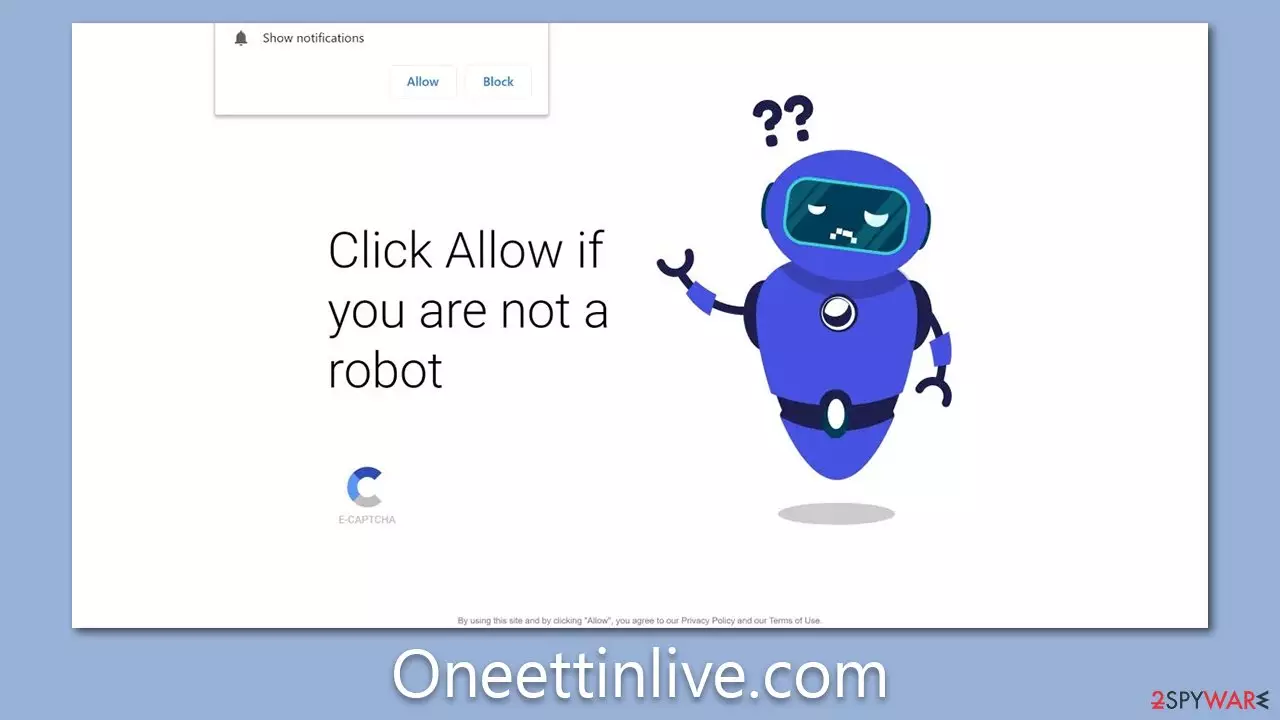
Oneettinlive.com is another dubious website that employs scamming tactics like many other sites of this type. It tricks users into subscribing to its push notifications, which will then bombard them with unwanted pop-up messages that contain fraudulent advertisements and phishing content. These ads may offer fake virus alerts, deceitful giveaways, or other scams designed to extract money or sensitive information from unsuspecting victims.
Users who fall for this scam may end up clicking on these ads, leading to financial losses or the installation of malicious software on their devices. To avoid these negative consequences, it is essential to refrain from interacting with Oneettinlive.com pop-ups and immediately unsubscribe from its notifications if you have accidentally subscribed – we explain this process in detail below. Additionally, you can protect yourself by installing an ad blocker, keeping your system updated with the latest security patches, and running regular malware scans to detect and remove any infections.
| Name | Oneettinlive.com |
| Type | Push notifications, ads, pop-ups, scam |
| Distribution | The only way the ads would start being shown is by users pressing the “Allow” button within the notification prompt |
| Symptoms | Push notifications that include misleading information links would show up on the desktop at random times |
| Risks | The ads shown within push notification prompts might include misleading messages and links to malicious websites. If clicked, you might end up infecting your system with malware, disclosing your personal information, or losing money |
| Removal | Access browser settings to stop intrusive push notifications. After that, make sure that your system is not infected with adware or malware – scan it with SpyHunterCombo Cleaner |
| Recovery | It is important to clean your browsers after removing potentially unwanted programs from your system – use FortectIntego for quick and reliable results |
Push notifications explained
Push notifications are a feature of web browsers that allow websites to send notifications to users, even when they are not currently browsing the site. These notifications appear as pop-ups on users' desktops or mobile devices, and can contain a wide range of content, from news alerts to reminders and messages from social media.
To make use of push notifications, websites must first ask users for permission to send them. This request typically appears as a pop-up when users first visit the site, asking if they would like to receive notifications from that site. If users accept, the website can then send notifications to their browser using the push notification API.
Unfortunately, scammers have found a way to exploit this feature to push unwanted ads and phishing content. By creating dubious websites like Oneettinlive.com and tricking users into subscribing to their push notifications, scammers can send pop-ups containing fraudulent ads and other malicious content, even when users are not actively browsing the site.
How you could have ended up on a scam site
There are several ways in which users can end up on push notification scam sites, but two of the most common methods are through clicking on links on various dubious websites or by having adware installed on their systems.
Dubious websites are often created by scammers to lure unsuspecting users into clicking on links that lead to push notification scam sites. These websites may offer enticing promises, such as free downloads, access to exclusive content, or sweepstakes entries, to entice users to click on their links. Once users click on these links, they may be directed to push notification scam sites that attempt to trick them into subscribing to unwanted notifications.
Adware, on the other hand, is a type of malicious software that is designed to display unwanted ads on users' devices. This software is often installed without users' knowledge through methods such as bundled downloads or drive-by downloads. Once the adware is installed on a system, it can inject ads into users' web browsing experience, including ads that lead to push notification scam sites such as Oneettinlive.com.
The cheap tricks
Users can easily be tricked into pressing the “Allow” button on push notification scam sites. Scammers use a variety of messages and tactics to convince users to allow notifications, such as claiming to verify that the user is not a robot, requiring permission to continue using a site, promising prizes or downloads, or even claiming that the user is over 18 and must click “Allow” to access certain content.

These messages are often accompanied by an image meant to lend legitimacy to the request, such as an image of a robot for the “not a robot” message or a video thumbnail for the “playback” message. However, the only purpose of these scam messages is to trick people into subscribing to push notifications that will deliver unwanted and potentially harmful ads.
Once users press “Allow,” they are subscribed to push notifications from the scam site, which can result in a barrage of pop-up ads, fake virus alerts, or other fraudulent content. Sometimes, these notifications may even lead users to other malicious pages or cause unwanted software downloads.
Oneettinlive.com ads removal
It is important to make some proper system checks if you are noticing suspicious behavior, such as pop-ups or redirects. While push notifications themselves may not cause harm, they can lead to malicious infections that may result in data theft, financial loss, or identity fraud. It's always better to be safe than sorry, so it's crucial to ensure that your systems are secure before dismissing these alerts.
The best way to safeguard your device from malware is to perform a thorough system scan using advanced anti-malware software like SpyHunterCombo Cleaner or MalwarebytesMalwarebytes. These tools can detect and eliminate any harmful files or programs present on your system. Additionally, using browser cleaning apps such as FortectIntego can prevent adware's data trackers from running.
To remove Oneettinlive.com ads, simply access your browser's settings and block the website's URL. To get started, select your preferred browser and follow these steps:
Google Chrome (desktop)
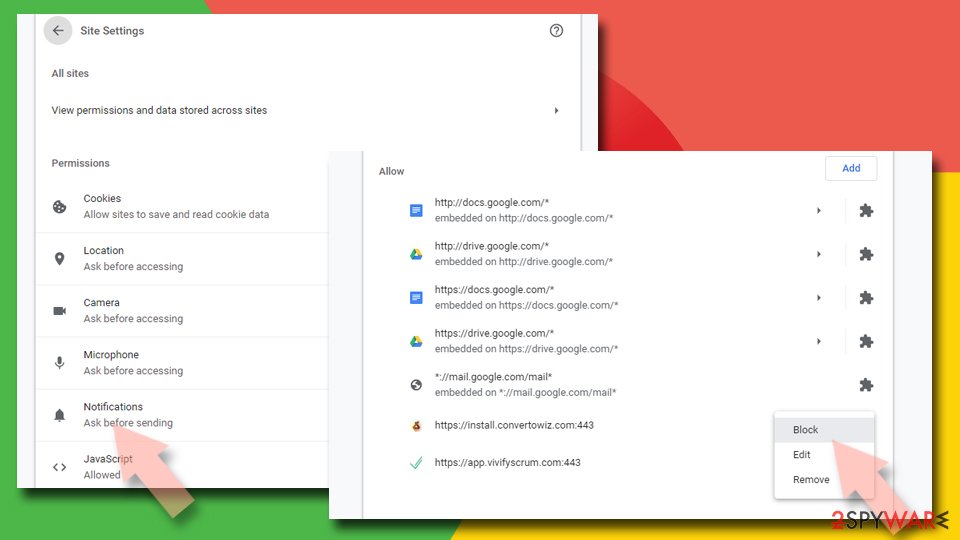
- Open the Google Chrome browser and go to Menu > Settings.
- Scroll down and click on Advanced.
- Locate the Privacy and security section and pick Site Settings > Notifications.
- Look at the Allow section and look for a suspicious URL.
- Click the three vertical dots next to it and pick Block. This should remove unwanted notifications from Google Chrome.

Google Chrome (Android)
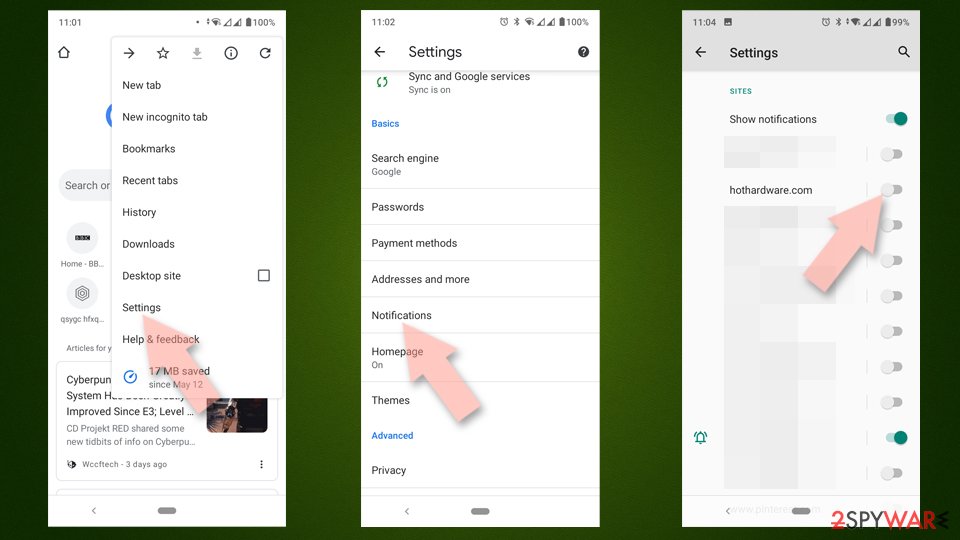
- Open Google Chrome and tap on Settings (three vertical dots).
- Select Notifications.
- Scroll down to the Sites section.
- Locate the unwanted URL and toggle the button to the left (Off setting).

Mozilla Firefox
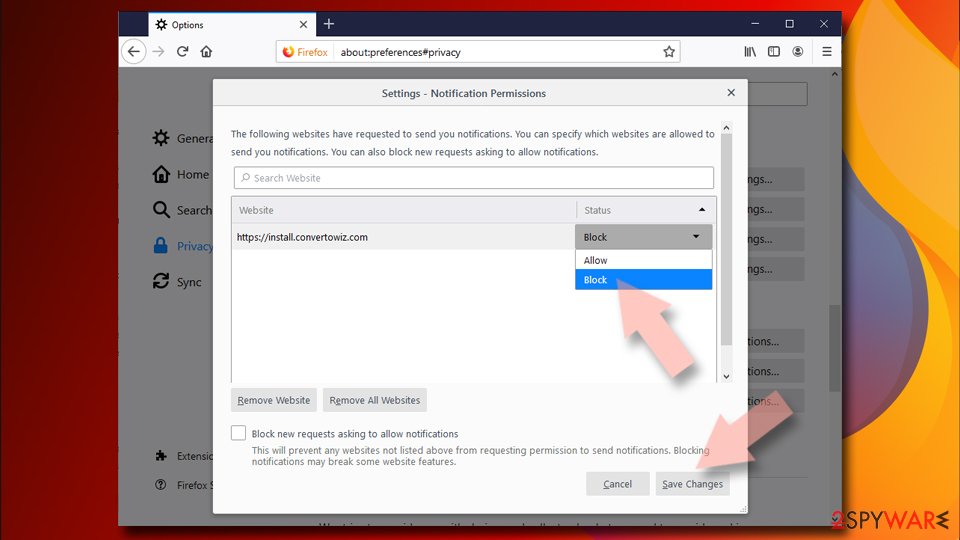
- Open Mozilla Firefox and go to Menu > Options.
- Click on Privacy & Security section.
- Under Permissions, you should be able to see Notifications. Click the Settings button next to it.
- In the Settings – Notification Permissions window, click on the drop-down menu by the URL in question.
- Select Block and then click on Save Changes. This should remove unwanted notifications from Mozilla Firefox.

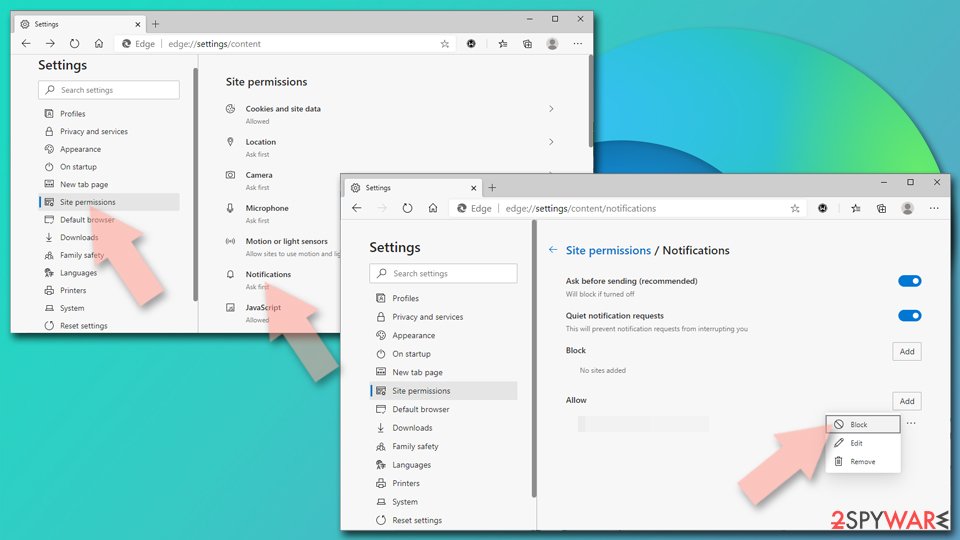
MS Edge (Chromium)
- Open Microsoft Edge, and go to Settings.
- Select Site permissions.
- Go to Notifications on the right.
- Under Allow, you will find the unwanted entry.
- Click on More actions and select Block.

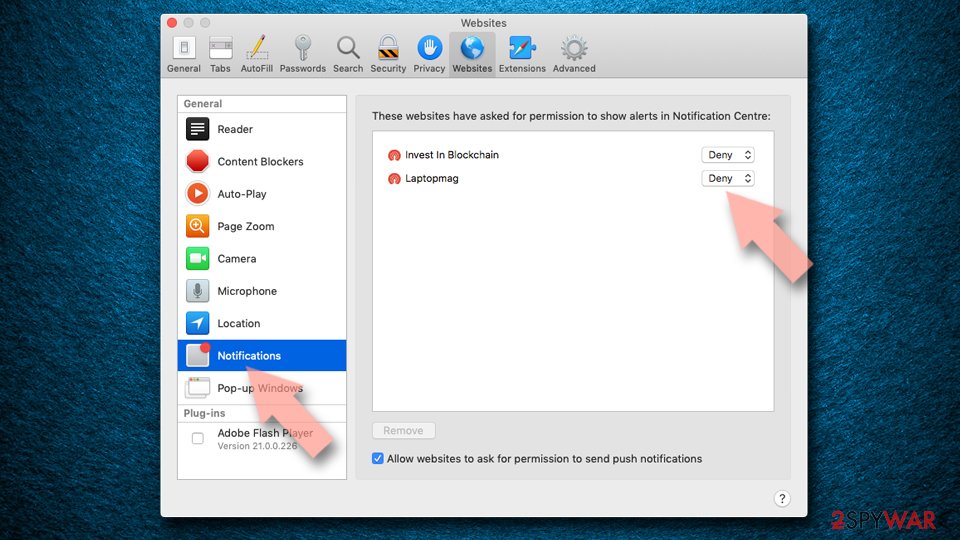
Safari
- Click on Safari > Preferences…
- Go to the Websites tab and, under General, select Notifications.
- Select the web address in question, click the drop-down menu and select Deny.

Internet Explorer
- Open Internet Explorer, and click on the Gear icon at the top-right of the window.
- Select Internet options and go to the Privacy tab.
- In the Pop-up Blocker section, click on Settings.
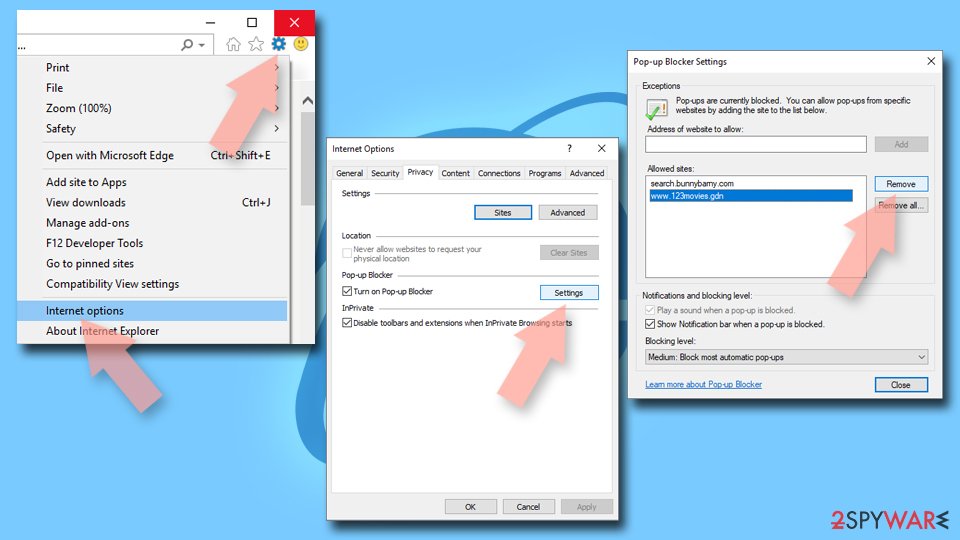
- Locate the web address in question under Allowed sites and pick Remove.

Did this guide help?
Be the first to comment